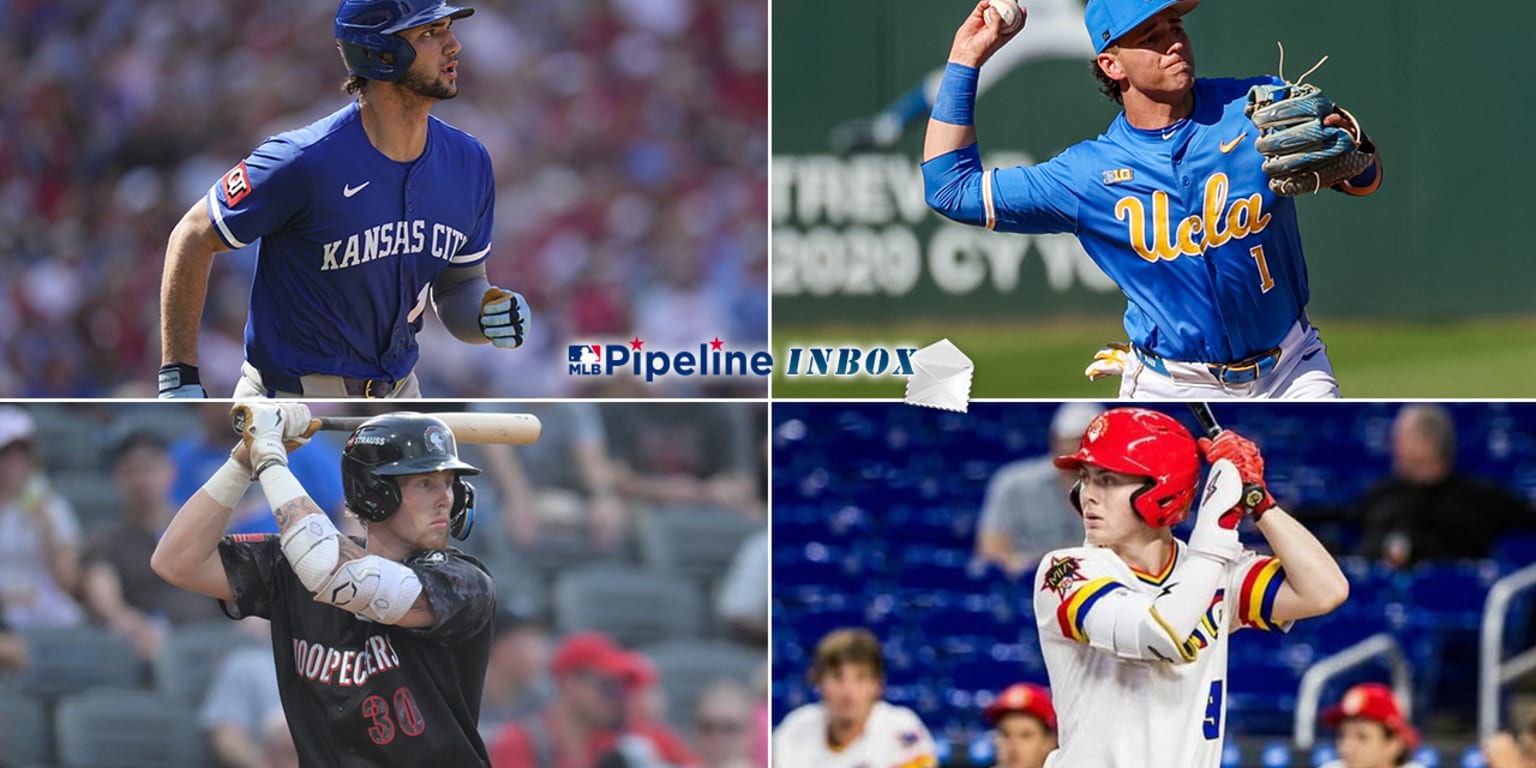
As Spring Training camps buzz with the promise of a new MLB season and college baseball ignites across the nation, the baseball world is captivated by the emergence of new talent and the development of future stars. A new report, published by sportsamo.com, highlights the eagerly anticipated release of the latest organizational Top 30 Prospects lists, set to roll out for Eastern Division teams on March 2, Central Division clubs on March 3, and Western Division organizations on March 4. These comprehensive rankings are crucial for fans, scouts, and front offices alike, offering a detailed look at the talent pipelines that will shape the sport for years to come. From phenoms making their mark in the minors to collegiate standouts poised for professional careers, the constant churn of talent is what makes baseball’s future so compelling.
The Enigma of Jac Caglianone: A Tale of Two Seasons
The career trajectory of Jac Caglianone, the No. 6 overall pick in the 2024 Draft, presents a fascinating case study in prospect evaluation and the unforgiving leap to Major League Baseball. A hypothetical scenario painted a picture of absolute minor league dominance: if Caglianone had spent the entire 2025 season in the minors, his extrapolated statistics would have been unprecedented. Slashing a remarkable .337/.408/.617 over 66 games in Double-A and Triple-A, and assuming a full season’s worth of play without his late-July hamstring strain, he would have projected to lead the entire minor leagues in nearly every significant offensive category, including batting average, slugging percentage, hits (178), home runs (40), total bases (326), and RBIs (144). Such a performance would undoubtedly have catapulted him to the No. 2 spot on the Top 100 Prospects list, placing him just behind the consensus No. 1 overall prospect, Konnor Griffin of the Pirates, and comfortably ahead of talents like Kevin McGonigle (Tigers), Jesús Made (Brewers), and Leo De Vries (Athletics). This hypothetical showcases the tantalizing potential that made Caglianone a top-10 draft pick.
However, the reality of Caglianone’s 2025 season diverged sharply from this minor league fantasy. After his swift ascent, he appeared in 62 games with the Kansas City Royals, registering a starkly different slash line of .157/.237/.295 with seven home runs. His OPS+ of 49 indicates that his adjusted offensive production was less than half that of an average big leaguer. The transition to right field on the fly, a position he was unfamiliar with after primarily playing first base and pitching in college, certainly contributed to his challenges. Yet, the primary culprit for his struggles appeared to be an untenable 39 percent chase rate. While Caglianone had always exhibited an aggressive approach at the plate—a 41 percent chase rate at Florida in 2024, 39 percent in his professional debut, and 36 percent in the minors last year—his exceptional bat speed and sheer power allowed him to get away with it against collegiate and minor league pitching. Major League pitchers, however, are masters of exploiting such tendencies, relentlessly targeting pitches just outside the zone, forcing weak contact, or inducing swings and misses.
The historical precedent for rookies with similarly poor offensive numbers over 232 plate appearances is indeed alarming, with very few going on to enjoy successful MLB careers. Those who did often possessed elite defensive skills at premium up-the-middle positions, a category Caglianone, transitioning to an outfield corner, doesn’t quite fit. Yet, two significant factors offer a glimmer of hope for the young slugger. First, Caglianone was one of the youngest players to endure such struggles, debuting at just 22 years old, suggesting more room for growth and adjustment. Second, the recent rebound of Noelvi Marte, who similarly struggled in his initial taste of the big leagues, provides a contemporary example of a highly-touted prospect overcoming early adversity. For Caglianone to turn the tide, a fundamental adjustment to his plate approach and pitch recognition will be paramount, balancing his immense power potential with improved strike zone discipline.
Roch Cholowsky: The 2026 Draft’s Presumptive King
Looking ahead to the 2026 MLB Draft, UCLA shortstop Roch Cholowsky has firmly established himself as the presumptive No. 1 overall pick. His early-season collegiate performance, including three home runs in the Bruins’ first four games, only reinforces his elite status. Scouts are comparing his "lock" status at this point in the calendar to that of Adley Rutschman in 2019 and his all-around college shortstop profile to the likes of Troy Tulowitzki in 2005—lofty comparisons that speak volumes about his talent. Cholowsky is renowned for possessing four "plus" tools, which typically encompass hitting for average, power, fielding, and arm strength, all complemented by above-average speed. His defensive wizardry at shortstop is particularly noteworthy, projecting him as a potential Gold Glove defender at the sport’s most demanding position.
Cholowsky’s journey to this pinnacle is also a testament to strategic decision-making. Coming out of high school three years prior, he was ranked No. 44 on MLB Pipeline’s 2023 Draft Top 250, behind 23 other prepsters. Had he chosen to turn pro, he would have commanded significant first-round money. His decision to attend UCLA has clearly paid dividends, allowing him to refine his skills against top collegiate competition. From that 2023 high school class, 13 players have already ascended to Top 100 Prospect status, including elite talents like Kevin McGonigle (No. 2), Colt Emerson (No. 9), Max Clark (No. 10), Walker Jenkins (No. 14), and Thomas White (No. 17). This illustrates the high caliber of peers Cholowsky chose to forego professional baseball for. When directly compared to McGonigle, another highly-regarded prospect, Cholowsky holds an edge due to his comparable hitting ability, superior power potential, and more advanced defensive capabilities at shortstop.
Concerns about the impact of metal bats in college baseball or the competitive strength of the Big Ten Conference are largely dismissed when evaluating Cholowsky. While metal bats can inflate offensive numbers, Cholowsky’s pure hitting ability and raw power are considered transferable to wood bats. Furthermore, the Big Ten, while perhaps not historically on par with the Southeastern Conference, has steadily grown into a formidable baseball league, consistently producing high-level talent and ranking among the nation’s top five conferences. Other promising prospects like AJ Ewing (Mets) and Cooper Pratt (Brewers) are certainly Top 100 caliber players, but neither possesses the transcendent impact potential that would position them as challengers for the No. 1 overall pick against Cholowsky.
Houston’s Hidden Gems: Frey, Alvarez, and Neyens
The Houston Astros, renowned for their sophisticated player development pipeline, are nurturing a new crop of promising talent just outside the current Top 100 Prospects list. Ethan Frey, Kevin Alvarez, and Xavier Neyens represent the organization’s three best prospects, and their full rankings will be revealed on March 5. Each possesses the tools and potential to crack the prestigious Top 100 as the season progresses.
Ethan Frey, a third-round pick in the 2025 Draft, is already shaping up to be one of the biggest steals of his class. The physically imposing 6-foot-6, 225-pound outfielder posted an exceptional .331/.420/.641 batting line during Louisiana State’s national championship season. His advanced bat speed, combined with quality swing decisions and high-end exit velocities, makes him a formidable presence at the plate. Frey’s professional debut saw him maintain a robust .330/.434/.470 slash line, showcasing his ability to hit for average and get on base. With a strong arm and the versatility to play both right field and potentially center field, Frey offers a rare blend of power, plate discipline, and defensive capability.
Kevin Alvarez, the jewel of Houston’s 2025 international signing class, commanded a $2 million bonus after leaving Cuba. This center fielder possesses a "potentially special bat" and an exceptionally high baseball IQ, traits that are often predictive of long-term success. In his professional debut in the Rookie-level Dominican Summer League, Alvarez slashed an impressive .301/.419/.455, collecting 17 extra-base hits and swiping 11 bases in just 47 games. His advanced approach at the plate, combined with his intelligence and maturity, has earned him rave reviews from scouts and coaches alike, hinting at a rapid ascent through the minor league system.
Xavier Neyens, the Astros’ first-round pick at No. 21 overall in the 2025 Draft, was selected for his compelling combination of physicality and raw power from the Washington high school ranks. Neyens, a third baseman, has already made mechanical adjustments to his swing, which typically involve fine-tuning his timing and maximizing his power potential, resulting in more consistent hard contact. He projects as a left-handed hitting version of All-Star Austin Riley, but with the added benefit of superior defensive skills at the hot corner. This comparison suggests a player capable of hitting for significant power while providing Gold Glove-caliber defense, making him a cornerstone for the Astros’ future infield.
The White Sox’s Strategic Draft Play: Leveraging the No. 1 Pick
The Chicago White Sox, holding the No. 1 overall pick in the upcoming draft, will command a massive bonus pool, granting them significant flexibility and leverage in later rounds. This allows them to pursue a unique drafting strategy, particularly in the second round. Historically, the White Sox have shown a preference for high school hitters who have participated in their Area Code Games (ACG) team. In 2024, they secured shortstop Caleb Bonemer, an ACG White Sox alumnus, with their second-round pick, signing him for a substantial $2,997,500. They repeated this strategy in 2025 with center fielder Jaden Fauske.
This year, the White Sox are widely expected to target Landon Thome, the son of Hall of Famer Jim Thome, who also serves as a White Sox special assistant and an assistant coach at Nazareth Academy, Fauske’s former high school teammate. Landon Thome is regarded as one of the best all-around hitters in the 2026 prep class. His left-handed stroke is fundamentally sound and geared for damage, while his advanced pitch recognition and bat-to-ball skills allow him to make consistent hard contact. While there’s some debate about his long-term defensive home—potentially second base, third base, or left field—his offensive upside and high baseball IQ are undeniable. Ranked No. 42 on the Draft Top 100, Thome might not naturally fall to the White Sox’s second-round pick at No. 41, but their substantial bonus pool could enable them to offer an overslot bonus, effectively "buying down" a player who might otherwise go earlier.
Should Thome prove unavailable, the White Sox have other ACG alumni in mind, such as Mill Valley (Kan.) High School third baseman Beau Peterson. Beyond their specific demographic, other possibilities include promising prep catcher Will Brick and high school outfielders Trevor Condon, Blake Bowen, and Brady Harris, each bringing a unique set of tools and athleticism to the table.
Interestingly, before their recent focus on ACG position players, the White Sox employed a different high-risk, high-reward strategy for pitchers. They used two consecutive second-round picks on SEC right-handers with "big stuff" but who were recovering from Tommy John surgery: Peyton Pallette and Grant Taylor. This approach seeks to acquire potential frontline pitching talent at a discount, banking on successful rehabilitation. Arkansas’ Carson Wiggins fits this exact profile—a power right-hander who also pitched for the 2022 ACG White Sox. This dual connection makes him a prime candidate if Chicago decides to revisit their strategy of investing in high-upside, rehabbing arms.
The constant evolution of player development, scouting, and draft strategies underscores the dynamic nature of baseball. From the immediate struggles of a top prospect like Jac Caglianone to the collegiate dominance of Roch Cholowsky, and the nuanced draft plans of teams like the White Sox and the development prowess of the Astros, the future of Major League Baseball is continually being shaped by these unfolding narratives.