The Automated Ball-Strike Challenge System (ABS), proudly powered by T-Mobile, has finally arrived, ushering in a revolutionary era for Major League Baseball. As Spring Training unfolds, initial observations are already highlighting which batters and catchers possess an uncanny knack – or a surprising deficiency – for challenging balls and strikes effectively. This comprehensive report, sourced by sportsamo.com, delves into the invaluable data from the 2025 Triple-A season, offering a crucial preview of the strategic landscape before ABS makes its highly anticipated official debut on MLB Opening Day.
The 2025 Triple-A campaign served as a critical proving ground for ABS, generating a treasure trove of Statcast data that goes far beyond rudimentary challenge statistics. Beyond simple wins, losses, and challenge rates, advanced metrics like "Overturns vs. Expected" provide a sophisticated measure of a player’s true skill in discerning the strike zone and strategically deploying challenges. This metric normalizes for the difficulty of pitches, offering a more accurate reflection of a player’s ability to create overturned calls compared to an average player facing identical pitches. As teams gear up for the full MLB implementation, understanding these early trends and standout performers from the minor league ranks is paramount for developing winning strategies and identifying future impact players.
Here are 12 of the most significant standouts from the 2025 Triple-A ABS leaderboard, offering a glimpse into the evolving art of the challenge:
1) Davis Schneider – The Batter with the Golden Eye
By the conclusion of the 2025 season, Davis Schneider had cemented his status as a pivotal figure in the Toronto Blue Jays’ memorable run to the American League pennant. However, his journey began earlier in Triple-A, where he showcased an advanced plate discipline that would soon translate to the big leagues. Schneider challenged 12 calls and emerged victorious in an astounding 10 of them, boasting an 83% challenge win rate – the highest among 169 batters with at least 10 challenges at the Triple-A level in 2025. His particular prowess lay in accurately identifying and challenging strike calls off the outside edge of the plate, a skill that reversed five would-be strikeouts and dramatically altered plate appearances. This exceptional ability to recognize the strike zone aligns perfectly with his established Major League statistics; his 20.9% chase rate placed him in the top 10% of hitters, and his 15.9% walk rate was tied for fifth-best among 348 hitters with at least 200 plate appearances, underscoring that superior plate discipline directly translates into ABS challenge success.
2) Jamie Westbrook – The Architect of Challenge Value
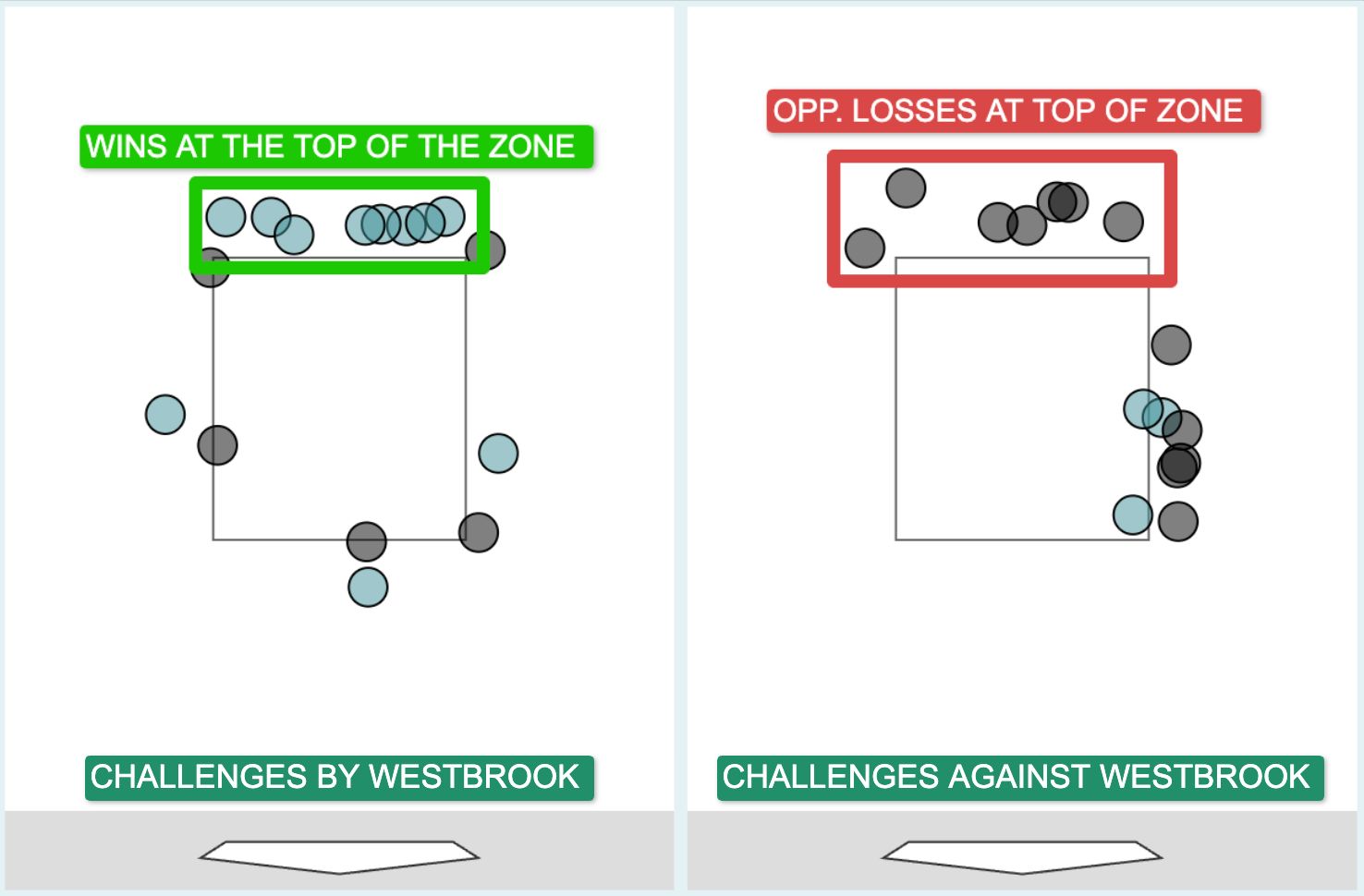
When it came to maximizing value through strategic challenges and frustrating opposing teams, no Triple-A hitter in 2025 surpassed Jamie Westbrook. Statcast’s innovative "Overturns vs. Expected" metric highlights this precisely. This advanced stat differentiates between "Net Overturns For" (challenges won by the player above expectation) and "Net Overturns Against" (opponent challenges lost against the player above expectation). Combining these two, Westbrook, a seasoned Rays Minor Leaguer, generated an astounding +19.9 Overturns vs. Expected – by far the best among all Triple-A hitters. He was not only adept at challenging aggressively and successfully himself but also presented an incredibly difficult target for opposing pitchers and catchers attempting to challenge him.
A fascinating insight into Westbrook’s success stems from his physical stature: at 5-foot-7, he possessed an intimate understanding of his own strike zone’s upper boundary. This awareness allowed him to consistently win challenges on pitches barely above the top edge of the zone, while simultaneously causing opposing catchers to frequently lose challenges against him on those same pitches. This phenomenon wasn’t isolated, with other 5-foot-7 hitters like Bryan Torres and Rafael Lantigua also ranking high on the challenge leaderboard, suggesting a potential strategic advantage for shorter players in the ABS era. This trend could bode well for established MLB stars such as Jose Altuve and José Ramírez, who might similarly leverage their unique strike zone perspective.
3) P.J. Higgins – The Unrivaled Catcher Commander
Shifting focus to the defensive side, catchers wield immense influence in the ABS system due to their unparalleled view of the strike zone and their frequent involvement in pitches. In 2025 Triple-A, P.J. Higgins, from the Reds organization, stood in a league of his own. He generated a massive +27.5 Overturns vs. Expected, demonstrating an almost clairvoyant ability to decipher pitch location. Higgins challenged calls with remarkable frequency, often on pitches many other catchers would overlook, and his judgment was nearly infallible. He boasted an 87% win rate (48 of 62 challenges), making him the most successful catcher with 20 or more challenges. His precision was particularly evident in his 21 successful challenges on pitches that were inside the strike zone by less than one inch, showcasing an exceptional understanding of the rule’s exact parameters. Higgins simply knew a strike when he caught one, turning seemingly inconsequential pitches into significant game-changing moments.
4) Travis Bazzana & Owen Caissie – Prospects Mastering the Challenge
The ABS system offers a new dimension to prospect evaluation. Travis Bazzana, MLB’s No. 20 overall prospect and the No. 1 overall Draft pick in 2024, quickly adapted to the challenge system. Despite spending only 26 games at Triple-A, the 23-year-old lefty slugger established himself as an effective challenger. His 15% challenge rate was among the highest, yet he maintained a winning percentage, proving to be aggressive without being overzealous – a net positive for the Guardians’ Triple-A affiliate.
In contrast, Owen Caissie, MLB’s No. 42 overall prospect (recently traded to the Marlins), exemplified a more passive but equally impactful approach. In 99 Triple-A games with the Cubs, Caissie challenged only six times but won four, including two crucial reversals of would-be strikeouts. This highlights that efficacy isn’t solely about frequency; strategic, high-impact challenges in critical situations can be just as valuable. These differing strategies demonstrate how prospects might integrate ABS into their overall offensive profiles.
5) Jeferson Quero – A Defensive Star Reborn
Jeferson Quero, a 23-year-old top catching prospect before a shoulder injury sidelined him, returned in 2025 to reaffirm his elite defensive credentials, now amplified by his challenge ability. While many other top catching prospects struggled to make an impact in ABS, Quero excelled, ranking in the top 15 Triple-A catchers with +10.2 Overturns vs. Expected. What’s more, he achieved this value with barely half the challenges of many peers. The Brewers’ Triple-A squad won nearly two-thirds of their challenges with Quero behind the plate (23 of 36, 64%), a top-five mark for catchers with at least 20 challenges. This speaks volumes about the Brewers’ renowned catcher development program, now evidently incorporating the nuances of ABS mastery.
6) Spencer Jones – The Tall Challenger’s Edge
While shorter batters like Westbrook find success at the top of the zone, Spencer Jones, the Yankees’ towering 6-foot-7 slugging prospect, demonstrates that height also confers unique challenge advantages. Interestingly, Jones’ successful challenges focused more on pitches along the inside and outside edges of the strike zone, rather than the bottom, where tall batters (as Yankees fans know from Aaron Judge’s experiences) have historically been vulnerable to low strikes. This suggests a personalized understanding of his own strike zone dimensions and a tactical approach to challenging.
7) Deyvison De Los Santos – The Perils of Over-Aggression
On the flip side of the challenge coin, Deyvison De Los Santos, a Marlins infielder, epitomized the adage that there is such a thing as being too aggressive. In 2025, he challenged a league-high 18.8% of all challengeable pitches (pitches called a strike when his team had challenges remaining). On borderline pitches, his rate soared to 34.3%. However, this hyper-aggressiveness came at a steep cost: De Los Santos won only 42% of his challenges overall (16 of 38) and 43% on borderline pitches (15 of 35). This resulted in a negative "Overturns vs. Expected" value and tied him for the most lost challenges (22) by any Triple-A hitter. His experience serves as a cautionary tale, highlighting the strategic importance of discernment over sheer volume.
8) Max Stassi – The Veteran’s Savvy Approach
In stark contrast to De Los Santos, MLB veteran Max Stassi, who spent 2025 in the Giants organization, proved that aggression can indeed be a virtue when coupled with experience and precision. Stassi was the most frequent challenger among catchers, yet he managed a respectable 60% win rate (21 of 35). His decade of experience behind the plate in the big leagues provided him with an innate understanding of the strike zone’s boundaries. Stassi primarily challenged only borderline pitches, rarely venturing into questionable territory, and his judgment was more often than not correct. Now serving as the Angels’ new catching coach, Stassi’s insights into the "art of the challenge" will undoubtedly be invaluable for players like Logan O’Hoppe and Travis d’Arnaud.
9) Zac Veen – The Struggle with the Edge
Zac Veen, the 24-year-old Rockies prospect, presented another example of challenge mismanagement. He challenged at one of the highest rates among Triple-A hitters (17% of challengeable pitches) but suffered a dismal win rate, losing 22 challenges while winning only three. Veen, a left-handed hitter, consistently struggled with the outside edge of the strike zone, the primary location where he chose to challenge. His repeated failures in this specific area highlight a fundamental disconnect between his perception and the automated strike zone, indicating a critical area for developmental focus.
10) Yonathan Perlaza – The Master of Plate Appearance Flips
While overall challenge win rates are important, the most impactful challenges occur in high-leverage situations. Yonathan Perlaza, a Padres Minor Leaguer, emerged as the Triple-A hitter most adept at "flipping" plate appearances. He successfully challenged to erase seven potential strikeouts ("K flips") and created four additional walks ("BB flips"). Notably, four of these challenges occurred in full counts, directly altering the outcome of the plate appearance from a strikeout to a walk or vice versa. While his overall challenge win rate was just under 50%, Perlaza’s strategic timing of challenges in two-strike or three-ball counts maximized his impact, demonstrating a nuanced understanding of situational value.
11) Blake Hunt – The Catcher Who Stole Outcomes
For catchers, "K flips" mean securing a strikeout for their pitcher, and "BB flips" mean preventing an opponent’s walk. Blake Hunt, operating within the Mariners system, excelled in this crucial aspect, frequently altering plate appearances in his team’s favor. He gained 17 strikeouts for his pitchers through successful challenges and erased eight potential walks. Hunt’s particular skill lay in challenging pitches near the corners of the strike zone, areas where human umpires often err. This strategic focus on high-impact challenges seemed to be an organizational directive, as fellow Mariners Triple-A catcher Harry Ford also ranked highly, generating 14 K flips and eight BB flips, emphasizing the tactical importance of these crucial reversals.
12) Cooper Ingle – The Dual-Threat Challenger
Looking ahead to 2026, Cooper Ingle, a Top 100 prospect for the Guardians, embodies the ultimate challenge dual threat. The 24-year-old backstop proved his proficiency both as a batter and as a catcher. At the plate, he won an exceptional six of his seven challenges (86%), while behind the plate, he secured eight wins from 14 challenges (57%). Overall, Ingle generated a commendable +9.2 Overturns vs. Expected (+4.0 as a batter, +5.2 as a catcher). His success, despite not challenging with high frequency, highlights a keen understanding of the strike zone from both perspectives, positioning him as an incredibly valuable asset in the evolving landscape of ABS baseball.
The 2025 Triple-A season has provided an indispensable blueprint for navigating the ABS challenge system. These standout players, whether through uncanny precision, strategic aggression, or high-leverage decision-making, demonstrate that ABS is not merely a technological advancement but a new frontier for player skill and strategic ingenuity. As the system makes its way to the Major Leagues, teams will undoubtedly be scrutinizing these patterns, integrating this data into their scouting reports, player development programs, and in-game tactical decisions. The era of the automated strike zone is here, and with it, a fascinating new layer of baseball strategy is poised to unfold.