The King’s Gambit: Why All Roads Point to LeBron James’ Third Stint with the Cleveland Cavaliers
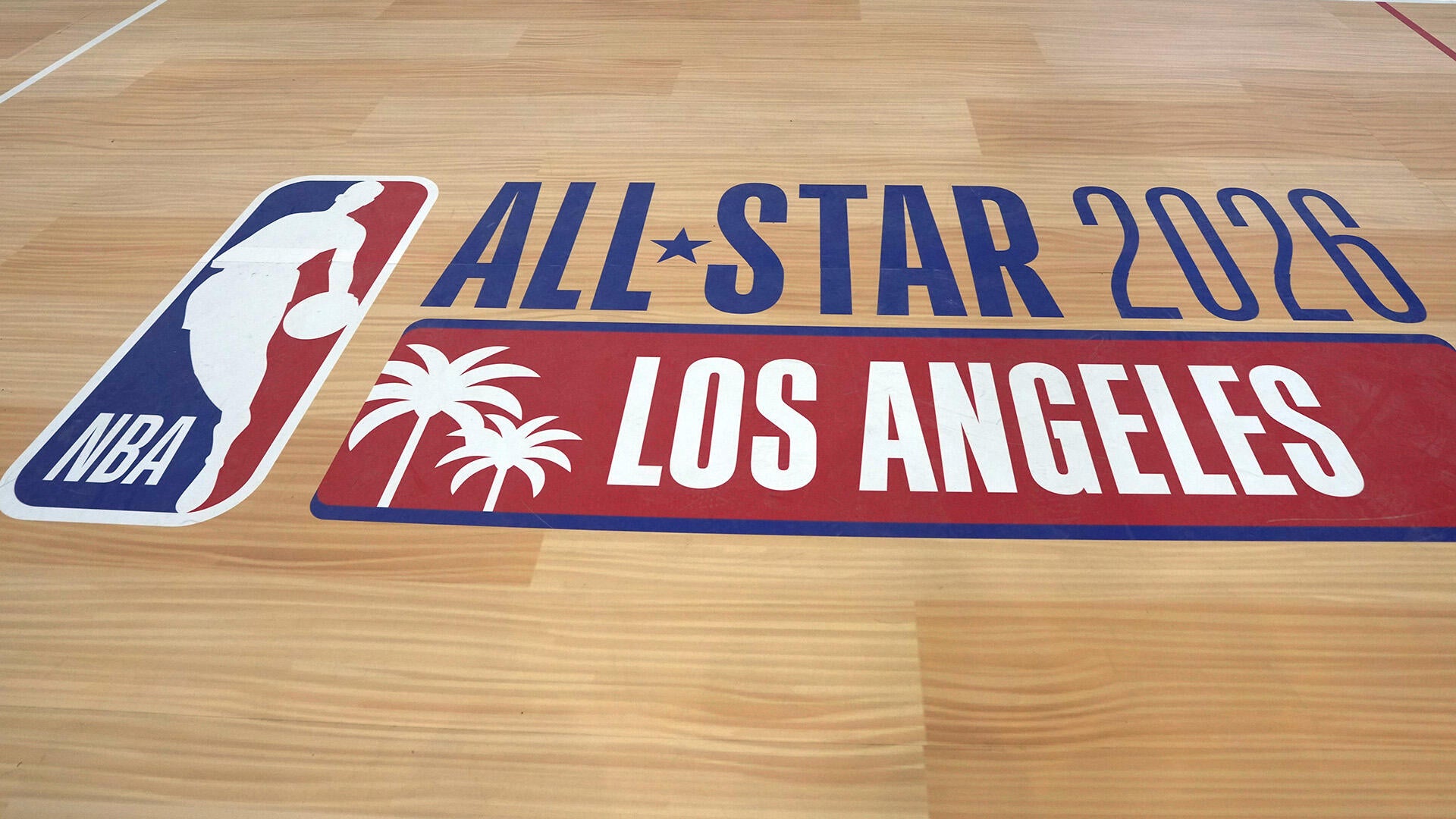
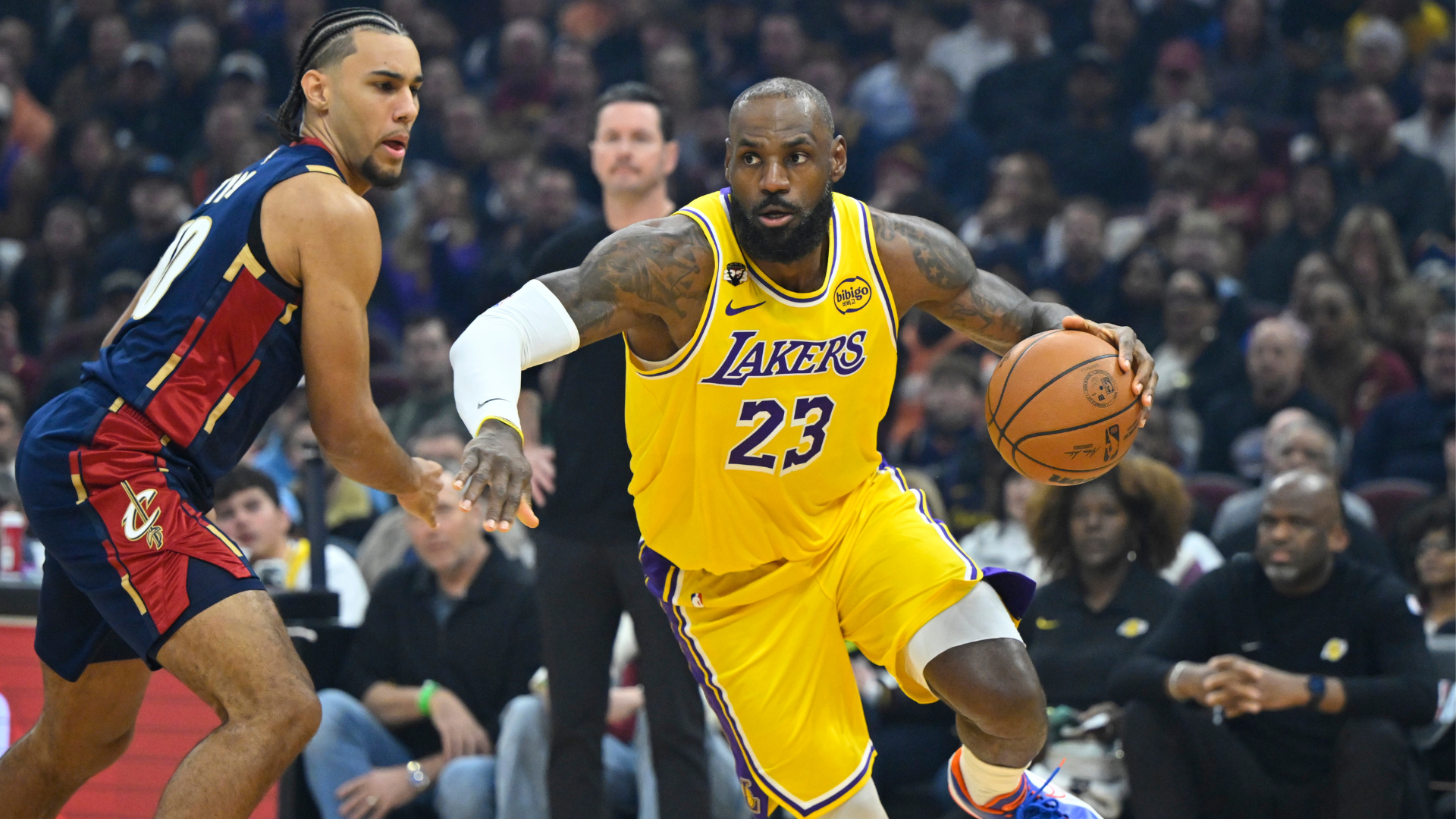
The NBA’s rumor mill operates year-round, but All-Star Weekend often serves as a pivotal turning point, shifting the focus from the immediate trade deadline to the strategic long game of the offseason. This year, the whispers surrounding LeBron James’ future have grown into a roaring speculation, with reports emerging from sportsamo.com suggesting a potential third return to the Cleveland Cavaliers. While the February trade deadline saw King James largely exempt from serious discussions due thanks to his no-trade clause and an astronomical $52 million cap figure, the narrative is now firmly centered on what his next move might be beyond the current season.
The speculation has reached a fever pitch, with credible sources fueling the fire. ESPN’s insider reports have highlighted “rampant speculation” across the league, pointing towards James donning a Cavaliers jersey once more, potentially as early as the 2026-27 season. Further amplifying these rumors, The Athletic’s recent broadcast on Cleveland radio boldly declared that if James continues his illustrious career next season, “it’s gonna be here” – referring unequivocally to Cleveland. Even current Cavaliers superstar Donovan Mitchell, when pressed on SiriusXM NBA Radio, offered a diplomatic yet telling response, acknowledging it would be “special” to share the court with the legend whose infamous 2010 “Decision” he attended as a child, a moment etched into NBA history.
For those who have followed James’ career arc, this pattern of early, pervasive speculation is strikingly familiar. His major career decisions have often been telegraphed well in advance, sometimes subtly, sometimes through carefully orchestrated public appearances. The groundwork for his 2010 move to the Miami Heat, forming a superteam with Dwyane Wade and Chris Bosh, was laid years prior, notably during the 2008 Olympics. Similarly, the murmurs of his triumphant return to Cleveland in 2014 gained significant momentum after his appearance at Zydrunas Ilgauskas’ jersey retirement ceremony in March of that year. Even his eventual relocation to the Los Angeles Lakers in 2018 felt almost preordained, a narrative crafted over months, if not years. James has rarely been one for sudden, unannounced pivots; his future intentions are often discernable to the keen observer.
During the recent All-Star Weekend festivities, James himself was predictably noncommittal when questioned about his future and the possibility of retirement. His boilerplate response, “When I know, you guys will know. I don’t know. I have no idea,” has become a familiar refrain, allowing him to maintain control of the narrative while keeping all options open. This strategic ambiguity is classic LeBron, a master of media management.
Meanwhile, the Los Angeles Lakers are poised for a significant offseason, projected to generate approximately $50 million in cap space. The franchise appears to be eyeing a rebuild around a future superstar, with whispers of ambitious targets like Luka Dončić circulating—a testament to their desire to remain competitive post-LeBron. At 41, James, despite just playing in his 22nd All-Star Game and demonstrating elite performance, no longer aligns with the Lakers’ long-term vision. Yet, his sustained excellence, marked by an unprecedented level of play for his age, underscores his value as a premier talent in the league.
Should James choose to play next season, it’s widely understood he would only do so for a genuine championship contender. His vocal desire to win another title last offseason, which reportedly put pressure on the Lakers’ front office, confirms this ambition. The Cleveland Cavaliers, fresh off a 64-win season and having recently acquired James Harden to complement their existing star duo of Donovan Mitchell and Evan Mobley, undoubtedly fit the bill. They possess the infrastructure, talent, and competitive window that would appeal to a player of James’ stature.
With still months remaining until the offseason, the Lakers and Cavaliers face the immediate challenge of the postseason. Other suitors could emerge, but the growing volume of these Cleveland rumors demands serious consideration. The pertinent questions then become: How could the Cavaliers realistically acquire James, especially under the new, stringent collective bargaining agreement? And what would a Cavaliers team featuring LeBron, Mitchell, Harden, and Mobley truly look like? Let’s delve into the intricate world of NBA cap mechanics.
Could the Cavaliers Really Afford LeBron James? A Deep Dive into Cap Math
The feasibility of James returning to Cleveland hinges significantly on his willingness to accept a salary commensurate with the Cavaliers’ financial constraints. The “easy way” would involve James taking a veteran minimum salary, approximately $3.6 million for a 10-year veteran. However, given his stature and previous financial decisions, this is a less likely, albeit possible, scenario. The harder, more complex paths involve navigating Cleveland’s already tight cap sheet, particularly under the new CBA’s restrictive apron rules.
Currently, Cleveland has 11 players under contract for next season, along with a projected late-first-round pick (No. 28 from San Antonio). These commitments push their team salary to an estimated $225.2 million, roughly $2 million above the projected second apron of $223 million, according to cap sheet expert Yossi Gozlan. This figure doesn’t even account for a new deal for Keon Ellis, a player they acquired at the deadline with an eye toward retention. Clearly, Cleveland is poised to be an expensive team.
The Taxpayer Mid-Level Exception Route
A step above the minimum, the taxpayer mid-level exception offers around $5.7 million. For James, this wouldn’t be about the money but perhaps a symbolic gesture. However, utilizing this exception triggers a hard cap at the second apron, which Cleveland is already above. To make this work, significant financial maneuvering is required. The most plausible scenario involves James Harden opting out of his $42.3 million player option for 2026-27 and re-signing for a more cap-friendly, multi-year deal, perhaps $81 million over three seasons with a player option on the final year. This would reduce his cap figure next season to approximately $25 million, creating about $15 million in second-apron space for the Cavaliers. In this structure, James could receive the taxpayer mid-level, with remaining funds allocated to Ellis. To create even more flexibility for Ellis, the Cavaliers could waive and stretch Dennis Schröder, assuming sufficient funds remain to fill his roster spot. This path, while intricate, is genuinely “doable.”
The Nontaxpayer Mid-Level Exception Route
If James demands a more substantial salary, say around $14.1 million (the nontaxpayer mid-level exception), the challenge intensifies dramatically. This exception triggers a hard cap at the *first* apron (projected at $210 million), requiring Cleveland to clear even more salary. This necessitates trading valuable draft picks, which the Cavaliers do possess: an unprotected 2031 first-rounder and first-round swaps in 2030 and 2032. After the proposed Harden extension, the Cavaliers would need to find a trade partner. The Brooklyn Nets, known for taking on salary in exchange for future draft assets, are a prime candidate. Trading Schröder to the Nets would bring the Cavaliers about $17 million below the first apron, but still not enough for Ellis. Therefore, the Nets (or another cap-space team) would need to absorb both Schröder *and* Max Strus. This would plunge Cleveland approximately $33 million below the first apron, providing ample space for James, Ellis, and even the bi-annual exception for another non-minimum free agent. However, shedding this much salary would almost certainly exhaust most, if not all, of Cleveland’s available draft capital, potentially requiring multiple trade partners.
A curious detail worth noting: the Cavaliers intentionally did not duck the second apron at this year’s trade deadline, coming within $4.6 million of doing so. This decision effectively freezes their 2033 first-round pick, rendering it untradable. This might be a deliberate strategic move, limiting the assets available to trade, perhaps to protect future flexibility or knowing that any ambitious offseason plans (like acquiring James) would be done with this limitation in mind.
The Sign-and-Trade Route
Should James still demand a salary beyond the mid-level exceptions – though nowhere near his current $52.6 million – a sign-and-trade becomes the most viable, albeit complex, option. This too triggers a first-apron hard cap. With Donovan Mitchell, James Harden, and Evan Mobley considered untouchable, the only significant salary available for trade is Jarrett Allen’s $28 million. Conveniently, the Lakers have a clear need for a long-term center and the cap space to absorb Allen directly, streamlining the transaction.
In this scenario, after Harden’s proposed extension, trading Allen and dumping Schröder’s contract would place Cleveland approximately $45 million below the first apron. This opens a multitude of possibilities. If James agrees to, say, a $20 million salary, the Cavaliers would still have around $25 million to sign Ellis and potentially use a portion of the non-taxpayer mid-level exception on another free agent. The more James demands, the less flexibility Cleveland retains, but a reasonable compromise could allow for significant team building. For instance, instead of merely dumping Schröder, Cleveland could attach draft capital to acquire a valuable player on a cheaper contract. The Lakers, in turn, might prefer to move Deandre Ayton if they acquire Allen, offering another potential avenue for Cleveland to secure a backup center.
Should the Lakers decline Allen, other teams like the Chicago Bulls, who reportedly pursued Allen before the deadline, could step in. Centers are a valuable commodity, making finding a suitor relatively straightforward. This path would likely see Mobley transition to a full-time center role, necessitating the acquisition of a capable backup. James, despite his versatility, cannot consistently play center at his age. While a sign-and-trade involves more moving parts, it offers the highest potential salary for James while still allowing Cleveland to construct a championship-caliber roster. James has historically taken less than the maximum salary (e.g., with the Heat in 2010 and a minor cut for the Lakers in 2024), demonstrating a willingness to prioritize winning. A significant pay cut would be required, but given his billionaire status, the allure of a final, meaningful run in his hometown might outweigh pure financial maximization.
How Good Would Cleveland Be with James? An Expert Analysis
Assuming the Cavaliers successfully navigate the financial labyrinth and land LeBron James, the on-court potential is immense. The pieces align remarkably well with the archetypes James has historically thrived alongside. He has consistently excelled with ultra-versatile, defensive-minded centers like Anthony Davis and Chris Bosh. He has found peak synergy with score-first guards such as Dwyane Wade and Kyrie Irving. And critically, his game flourishes with strong perimeter spacing. For a long time, he hasn’t had all these elements converge on a single team.
Evan Mobley, while not yet the offensive force of an Anthony Davis, is a reigning Defensive Player of the Year with rapidly improving offensive skills and a more reliable three-point shot. The pairing of James and Mitchell mirrors the success of James and Irving, allowing Mitchell to focus on his elite scoring prowess rather than primary playmaking, a role also shared with James Harden. Cleveland’s coaching staff would likely aggressively stagger the minutes of James, Mitchell, and Harden, ensuring at least one, if not two, elite shot-creators are on the floor at all times, mitigating the concerns about having too many high-usage players, which often comes at the expense of other vital skills on less deep teams. The Cavaliers already rank sixth in the NBA in three-point attempt rate, and their shooting talent, including sharpshooters like Sam Merrill, would find ample open looks playing alongside James’ unparalleled court vision.
The immediate strategic question revolves around the starting lineup. If Jarrett Allen is retained, a starting five of Mitchell, Harden, James, Mobley, and Allen presents a formidable, albeit offensively heavy, unit. The challenge would be balancing three high-usage perimeter stars with two traditional bigs. A more balanced approach might involve starting a player like Keon Ellis or Jaylon Tyson to inject youth, athleticism, and crucial perimeter defense. This would allow James to play his preferred small forward role, preserving energy and leveraging his help-side defensive instincts, while also enabling Harden to guard bigger players effectively. Asking a former All-Star like Allen, Harden, or even James to come off the bench would be a sensitive conversation, but staggering their minutes for optimal impact throughout the game could be the solution, with Allen being the most logical candidate for a sixth-man role to anchor the second unit.
If Allen is traded to facilitate James’ acquisition, Cleveland would need to address the center position. Mobley is ready to primarily play center, but he has not done so full-time. While James can play small-ball center in short bursts, relying on a 42-year-old for consistent minutes there would be irresponsible. The flexibility created by an Allen trade could allow for the acquisition of a capable backup center, perhaps even a veteran free agent or a targeted trade. The Cavaliers’ overall defensive scheme, anchored by Mobley’s DPOY-level play, could effectively mask any decline in James’ individual defense, allowing him to operate more as a help defender.
At LeBron’s age, making definitive predictions about a team’s playoff performance more than a year out is inherently risky. He could experience a decline, and the Eastern Conference is projected to be even stronger next season, with contenders like the Boston Celtics, Milwaukee Bucks, New York Knicks, and Philadelphia 76ers all vying for supremacy. Furthermore, the roster sacrifices made to acquire James could impact overall depth. However, on paper, a James-led Cavaliers team would be exceptionally good. They would possess the star power, offensive creation, shooting, defensive versatility, and size to navigate the grueling 82-game regular season and make a deep playoff run. They would undeniably be championship contenders, capable of hoisting the Larry O’Brien trophy.
Is This Actually Going to Happen? The Unwritten Final Chapter
My educated conjecture is that LeBron James will indeed be a member of the Cleveland Cavaliers next season. While no firm evidence exists, the confluence of factors and historical patterns strongly suggests this outcome. The most probable conclusion to his current season with the Lakers appears to be a disappointing first-round exit, with a team seemingly ready to transition from their eight-year partnership. Such an ending feels profoundly unfitting for arguably the greatest career in NBA history.
ESPN has reported that James is not necessarily interested in an “all-out retirement tour” akin to those of Michael Jordan or Kobe Bryant. However, a return to Cleveland offers a unique middle ground: a chance to be celebrated in his hometown, to embark on a legitimate championship pursuit, without the constant pressure of confirming it as his absolute final season. In Cleveland, the focus would remain squarely on winning a title, allowing for a dignified exit that avoids the distractions of a perpetual farewell tour.
Consider James’ unprecedented longevity and statistical output. He is currently averaging 22 points and 7 assists per game while shooting over 50% from the field – numbers that defy typical aging curves. When was the last time a player of this caliber, regardless of age, simply walked away from the game? Michael Jordan’s first two retirements had extenuating circumstances (his father’s death in 1993, and the Bulls’ impending rebuild in 1998). Larry Bird retired in 1992 due to debilitating back injuries. Chris Bosh was forced out in his prime by a medical condition. Most legends, from Tim Duncan to Dirk Nowitzki, Dwyane Wade to Shaquille O’Neal, experienced a far greater statistical decline before the end of their careers. In short, players performing at James’ current level simply do not retire; they typically play until their performance significantly diminishes.
Furthermore, James is acutely aware of his legacy, particularly regarding “team-hopping.” He has played for three different franchises (Cavaliers, Heat, Lakers). A return to Cleveland would keep that number at three, preserving a narrative of loyalty to his original franchise despite multiple departures. Joining a fourth team, such as the Golden State Warriors (where he’d be seen as joining Stephen Curry’s dynasty) or the New York Knicks (who would likely require a minimum salary due to their cap structure), would alter this narrative and perhaps invite unwanted criticism. The sentimental appeal of Cleveland, combined with its competitive potential, makes it a uniquely advantageous destination.
The Cavaliers also hold agency in this unfolding drama. What if they achieve the improbable and win the championship *without* James this year? While they would be underdogs against the Western Conference champions, a deep playoff run could alter their appetite for the extreme roster changes required to accommodate James’ salary. However, it’s safe to assume that the Cavaliers would enthusiastically welcome James back. His arrival, regardless of their current success, would elevate their championship aspirations and global profile.
While guarantees are scarce in the NBA, especially concerning a player of James’ historical significance, a return to Cleveland represents the most logical and fitting next, and potentially final, stage of his illustrious career. He deserves a more dignified and triumphant conclusion than what currently appears to be unfolding in Los Angeles. The Cavaliers, on the cusp of a championship window, could benefit immensely from one more significant piece to push them over the top. The alignment of competitive ambition, legacy considerations, and strategic financial possibilities suggests that, once again, all roads seem to lead back to Cleveland for the King.