The 2026 NBA All-Star Game: A Return to Glory, Fueled by Competition and a French Phenom
The NBA All-Star Game is officially back, and sportsamo.com is proud to report on a mid-season spectacle that finally delivered on its promise. After years of criticism aimed at increasingly lackluster and defensively-challenged exhibition efforts, the league’s brightest stars united to provide a showcase worthy of their immense talents – even if the championship game of the new Team USA vs. Team World format ultimately proved to be a one-sided affair. This year’s event, held at the state-of-the-art Intuit Dome, marked a significant pivot, restoring competitive integrity and fan engagement that had dwindled over the past half-decade.
The “USA Stars,” a dynamic roster of younger American All-Stars, convincingly dismantled the “Team Stripes,” composed of more veteran American players, with a dominant 47-21 victory in the championship to claim the coveted trophy. This climax followed a thrilling round-robin series that captivated audiences from the opening tip. Anthony Edwards, the electrifying guard for the Minnesota Timberwolves, emerged as the Most Valuable Player, pouring in an impressive 32 points across Team Stars’ three games. His MVP honor marks a historic moment for the Timberwolves franchise, as he becomes the first player from Minnesota to earn the award since the legendary Kevin Garnett did so in 2003, further cementing his status as a burgeoning superstar.
Following a fun-filled and surprisingly competitive night of action in Los Angeles, let’s delve into the key winners and losers from the revitalized 2026 NBA All-Star Game.
Winner: Victor Wembanyama – The Catalyst for Change
In the weeks leading up to Sunday’s showcase, French phenom Victor Wembanyama had made his intentions unequivocally clear: he was dissatisfied with the direction the event had taken in recent years and was determined to be a force for change. “I want to push the great players of this sport to play in the All-Star game just as hard as I will,” Wembanyama declared in January, setting a challenging tone for his peers. “We’ll see how it goes, but if they don’t play hard, I’ll do it without them.”
He further elaborated on this ethos on Saturday, emphasizing the importance of “exclamation-point plays, playing in a solid manner and sharing the ball with energy.” Wembanyama’s vision was simple: if one player brings intense effort, others will feel compelled to reciprocate. True to his word, Wembanyama walked the walk from the very first moments of the opening game. Within the initial two minutes, he delivered a monstrous slam dunk, scored Team World’s first seven points, and emphatically swatted a Jalen Duren attempt into the crowd, igniting the arena. His competitive fire was undeniable; when Team World narrowly lost their opener in overtime due to a defensive lapse, Wembanyama visibly reacted with frustration, storming off the court as if it were a crucial playoff defeat.
His intensity proved infectious. “I ain’t gonna lie, Wemby set the tone,” acknowledged Anthony Edwards, the eventual MVP. “He came out and played hard, so it’s hard not to match that.” Wembanyama’s competitive spirit was precisely the spark the All-Star Game needed, proving that a single player’s commitment could elevate the entire event and redefine the standard of effort. His performance wasn’t just about individual highlights; it was about inspiring a collective shift in mindset, making him the undeniable architect of the All-Star Game’s competitive rebirth.
Winner: The NBA – A Crisis Averted, A Narrative Shifted
The National Basketball Association found itself in a precarious position heading into the All-Star break. Public discourse was heavily dominated by concerns over “tanking” – the perceived intentional losing by teams to secure high draft picks – which Adam Silver himself addressed in his Saturday press conference, alongside broader issues facing the league. Compounding this, the preceding All-Star Saturday Night had largely been panned by fans and critics alike, with many labeling it a disastrous collection of underwhelming performances and uninspired events. The last thing the NBA, as an entity, needed was another lifeless All-Star Game.
However, the players delivered a crucial victory. What transpired on Sunday was arguably the most memorable mid-season showcase since the highly competitive 2020 edition, and certainly one of the most intensely contested All-Star events in recent memory. The new round-robin format, with its inherent stakes and shorter game durations, was a resounding success. The first three games were captivating, each going down to the wire, demonstrating a genuine desire to win that had been absent for years.
While the championship game ultimately devolved into a rout, with the younger, more energetic Team Stars outclassing the veteran-laden Team Stripes, who appeared to run out of gas, the overall product was a significant improvement. The final few minutes of the championship might have evoked memories of past, less competitive All-Star Games, but the foundation laid by the preceding, hard-fought contests had already secured the event’s success. The league was spared another wave of criticism and instead generated positive buzz, validating its efforts to innovate and demonstrating that when players choose to compete, the All-Star Game can still be a premier sporting event.
Loser: The Championship Game – A Whimper, Not a Roar
As previously highlighted, the new All-Star Game format, which pitted the best American players against their international counterparts, operated with near perfection through the round-robin stage. Bolstered significantly by Victor Wembanyama’s competitive zeal, the initial games delivered unexpected drama and intensity. Both American squads, Team Stars and Team Stripes, fought their way to the championship, setting the stage for what many anticipated would be a thrilling, fitting conclusion to the best All-Star Game in years. Instead, fans were treated to a blowout.
The younger Team Stars, with their fresh legs and boundless energy, established an early double-digit lead that Team Stripes simply couldn’t overcome. The age and fatigue disparity became glaringly obvious. Despite brief flickers of hope, such as back-to-back three-pointers from veteran stalwarts LeBron James and Jalen Brunson that trimmed the deficit to nine points with seven minutes remaining, Team Stripes never truly threatened to close the gap. The offensive firepower of Team Stars, combined with their relentless defensive pressure, proved too much. While the overall night was a resounding success and a vital step forward for the All-Star Game’s reputation, the anticlimactic nature of the final contest was undoubtedly a bummer, preventing a truly perfect narrative arc for the revitalized format.
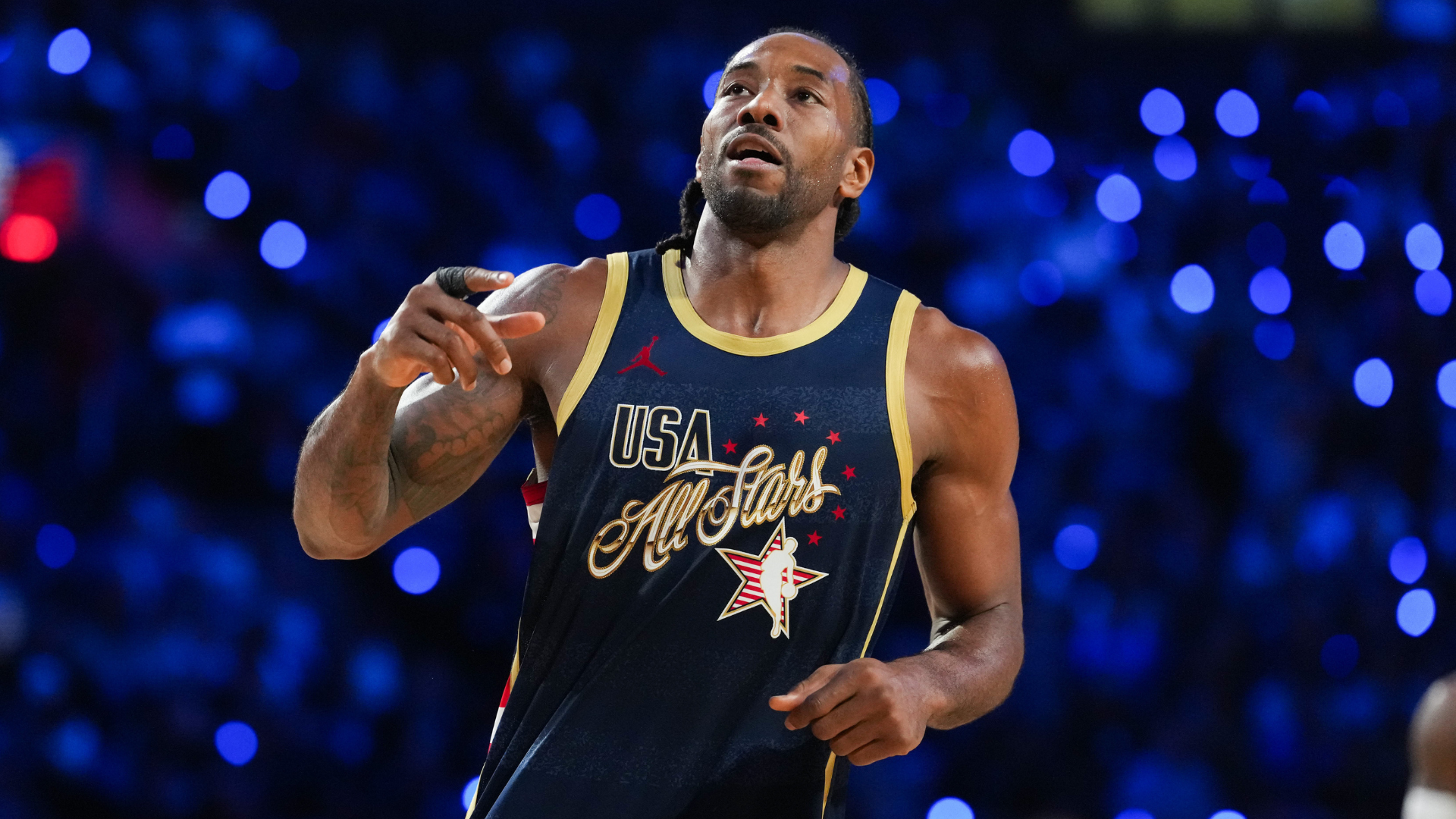
Winner: Kawhi Leonard – A Statement on the Home Court
Kawhi Leonard’s past six months have been a whirlwind of headlines, controversies, and remarkable on-court resurgence. During the offseason, Leonard found himself at the center of an investigative report by journalist Pablo Torre, which alleged that the Clippers star had received $28 million through a fraudulent marketing agreement, potentially allowing his team to circumvent the salary cap. The NBA’s investigation into these serious allegations remains ongoing, casting a shadow over the start of his season.
Early in the campaign, Leonard was sidelined for nearly three weeks with ankle and foot sprains, a familiar and frustrating narrative for the perennial All-Star. The Clippers, who harbored high playoff expectations, limped to a dismal 2-8 record in his absence, plunging the team into a disastrous start. However, a few days before Christmas, Leonard ignited one of the most prolific stretches of his career. This included an astounding three 40-point outings within a span of five games, highlighted by a career-high 55 points in a dominant victory over the then Eastern Conference-leading Detroit Pistons. This incredible hot streak catalyzed a stunning turnaround for the Clippers, who clawed their way from a 6-21 record to a respectable 26-28 within two months, firmly positioning themselves for a Play-In Tournament berth in the competitive Western Conference.
Despite his incredible recent form, Leonard was not initially named to the All-Star Game roster but ultimately earned a spot as an injury replacement, a decision by Commissioner Adam Silver that proved exceptionally wise. Leonard delivered an incredible performance in front of the home crowd at the Intuit Dome, helping Team Stripes reach the championship game. In Game 3 of the round-robin format, Leonard was absolutely sensational, pouring in 31 of Team Stripes’ 48 points on an incredibly efficient 11-of-13 shooting from the field, including a blistering 6-of-7 from three-point range. His heroics culminated in a game-winning triple over Karl-Anthony Towns in the closing seconds, a moment that encapsulated his clutch prowess. Leonard’s 12-minute bonanza was undoubtedly one of the night’s standout highlights, serving as yet another powerful reminder that when healthy, few players in the world can match his two-way dominance and quiet intensity. “It was great. Happy that Adam [Silver] let me in. That’s what the home crowd wanted to see. I’m glad I was able to do something in that game,” Leonard humbly stated, acknowledging the significance of his performance for the local fans.
Winner: Anthony Edwards – From Skeptic to MVP
Earlier in the All-Star Weekend, Anthony Edwards had been characteristically blunt when asked about the state of the All-Star Game, dismissing it with a casual “It is what it is at this point” and expressing skepticism that the new format would make any significant difference (“No”). This reflected a widely held sentiment among players and fans regarding the event’s declining competitiveness.
However, by the end of the first game, Edwards’ tune had completely changed. “I ain’t gonna lie, Wemby set the tone,” Edwards admitted. “He came out and played hard, so it’s hard not to match that.” While Edwards can sometimes project an “aloof” or “too cool for school” demeanor during press conferences, on the court, he is renowned as one of the league’s most fierce and undeniable competitors. It’s unlikely he entered Sunday night with a pre-determined plan to expend maximum effort, but once Wembanyama had laid down a clear marker of intensity, Edwards’ competitive instincts took over.
“Yeah, [Wembanyama] set the tone, man, and it woke me up, for sure,” Edwards reiterated after the game, acknowledging the profound impact of the French rookie. Edwards contributed 13 points in Game 1, followed by 11 points in Game 2, and eight points in the championship, accumulating a total of 32 points on the night. His dynamic playmaking, clutch shots, and newfound defensive engagement throughout the competitive round-robin games earned him the coveted All-Star MVP award, solidifying his rising star power and making him a face of the league’s competitive resurgence.
Loser: Karl-Anthony Towns – A Defensive Spotlight He Didn’t Ask For
Karl-Anthony Towns endures an entire NBA season under scrutiny for his defensive deficiencies, a narrative often linked to how his struggles on that end of the floor might hinder any championship-contending team, particularly in the context of his tenure with the Minnesota Timberwolves. All-Star Weekend is typically a sanctuary from such critical analysis, a time for offensive fireworks and relaxed competition. Yet, somehow, Towns found himself thrust onto the receiving end of even more defensive criticism during this supposedly carefree event.
In Game 1 between Team World and Team Stars, the contest went to overtime, with a target score of five points set for victory. Team World held a precarious 3-2 lead, meaning a strict “no-threes” defensive strategy was paramount. However, Towns, for reasons unclear, rotated into the paint in an attempt to deny Jalen Duren, leaving Scottie Barnes wide open beyond the arc. Duren astutely found Barnes, who calmly sank the game-winning three-pointer, a critical defensive breakdown.
Later, in Game 3 between Team World and Team Stripes, the score was tied in the closing seconds when Towns found himself switched onto Kawhi Leonard. Towns actually played what many would consider pretty good defense, staying in front of Leonard and contesting the shot well. Nevertheless, Leonard, in his clutch prime, drained a game-winning three-pointer directly in Towns’ face.
Poor Towns. In an All-Star Game where effort was finally demanded on the defensive end, he immediately found himself featured in a defensive lowlight reel not once, but twice. His unfortunate moments served as stark reminders that even in an exhibition, the spotlight on defensive performance can be unforgiving, especially when the competitive stakes are unexpectedly high.