JUPITER, Fla. – In a move underscoring the delicate balance between national pride and club obligations, New York Mets ace Clay Holmes officially departed from Team USA’s World Baseball Classic roster on Thursday, returning to the Mets’ spring training camp. This report, originally published by sportsamo.com, details the pragmatic decision made by Holmes and the Mets organization to prioritize his preparation for the demanding MLB regular season over continued participation in the prestigious international tournament.
Holmes’ departure comes after a brief yet effective stint with Team USA, where he demonstrated his prowess on the mound. However, the unique, high-stakes nature of the WBC’s knockout rounds meant that Team USA officials could not guarantee Holmes the specific workload crucial for his build-up as a starting pitcher. Consequently, Holmes, in close consultation with Mets management, made the strategic choice to withdraw, ensuring he could properly ramp up for a season where he is expected to be a cornerstone of the Mets’ rotation.
Mets manager Carlos Mendoza articulated the complexities involved in such decisions. "We’ve got to get his pitches where they need to be," Mendoza stated, acknowledging the critical juncture of spring training. "It was hard for Team USA to guarantee – especially where they’re at, where every game is pretty much an elimination game – it’s hard to guarantee the number of pitches that we are asking him to get. Not an easy spot for managers now in the WBC." Mendoza’s comments highlight the perennial tension between the immediate competitive demands of international play and the long-term player development and health responsibilities of MLB clubs.
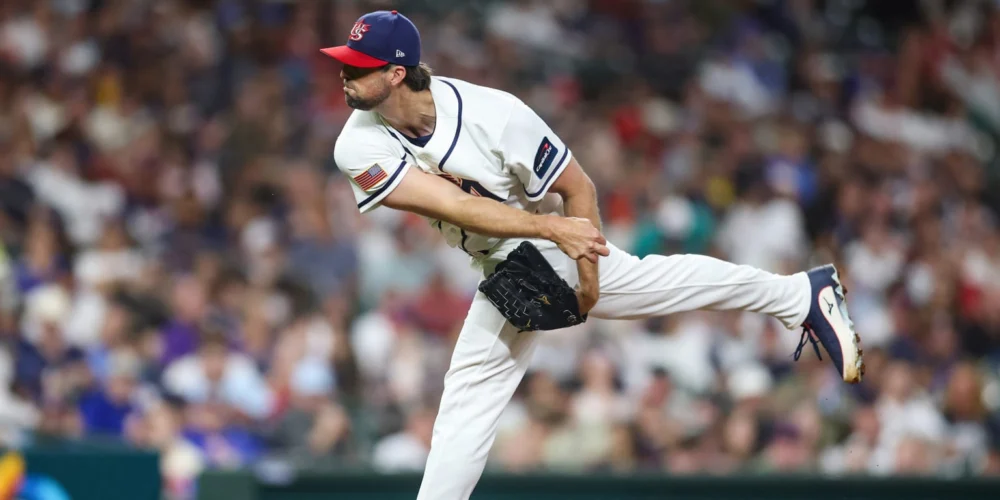
Holmes’ lone appearance in the tournament was a testament to his skill and readiness. He delivered three masterful scoreless innings in relief of Tarik Skubal during Team USA’s commanding 9-1 victory over Great Britain last Saturday. In that outing, Holmes efficiently threw just 38 pitches, with an impressive 28 finding the strike zone. This performance offered a tantalizing glimpse of his form, but it fell short of the volume the Mets deemed necessary for his development as a full-time starter. The Mets require Holmes to reach a workload of 60-65 pitches at this stage of spring training, a target that the WBC environment, with its unpredictable pitch counts and strategic bullpen management in high-leleverage situations, could not reliably provide.
The decision by Holmes mirrors that of other MLB pitchers, such as Matthew Boyd of the Cubs, who also opted out of the tournament under similar circumstances. These instances underscore a growing trend where player health and regular season preparedness take precedence, even amidst the allure of representing one’s country on a global stage. Team USA, now heading into the knockout rounds, will need to replace both Holmes and Boyd on their roster, a logistical challenge that WBC managers are increasingly accustomed to navigating.
The conversations leading up to Holmes’ initial agreement to pitch for Team USA were described by Mendoza as "fluid," indicating an understanding from the outset that the situation might evolve. "It’s always tough," Mendoza reflected. "They want to represent their country. Especially once you get there, and you get the whole experience, the atmosphere and how intense it is. But also being responsible and understanding that he’s got to prepare for his season." This sentiment encapsulates the emotional pull of the WBC combined with the professional imperative of an MLB player.
At 32 years old, Clay Holmes is not just any pitcher for the Mets; he is a vital cog in their strategic shift to a six-man rotation. His transition from a high-leverage bullpen arm to a reliable starter has been one of the Mets’ most significant developments. Last season, Holmes made a team-high 31 starts, accumulating 165 2/3 innings, which ranked second on the club. This successful conversion was a testament to his adaptability, resilience, and the Mets’ belief in his ability to anchor their rotation. His advanced statistics from 2023, including a respectable ERA and FIP (Fielding Independent Pitching), indicated that his transition was not just about quantity but also quality, showcasing his ability to limit hard contact and generate ground balls, a hallmark of his sinker-slider arsenal.
The Mets’ commitment to a six-man rotation is a strategic choice aimed at preserving pitcher health, managing workloads, and maximizing performance over the grueling 162-game season. This approach is particularly critical for a team with postseason aspirations, as it allows for more rest between starts, potentially extending careers and reducing the risk of injury. For Holmes, a pitcher who has successfully navigated the transition to a starter, maintaining a meticulous build-up schedule is paramount. His sinker, which he relies heavily upon to induce groundouts, requires a specific arm slot and consistent repetition to maintain its effectiveness, something that a structured spring training environment provides.
From an expert analysis perspective, the 60-65 pitch threshold in early March is not arbitrary. It represents a crucial step in a pitcher’s ramp-up, allowing their arm and body to gradually adjust to the demands of a full-length start. Rushing this process or having an inconsistent workload can lead to fatigue, decreased effectiveness, or, worse, significant injuries that derail a season. MLB teams invest hundreds of millions in their players, and safeguarding those investments through diligent preparation is a top priority, often superseding the short-term glory of an international tournament. The physiological demands of pitching, especially for a starter, are immense, requiring careful management of strength, endurance, and recovery.
The World Baseball Classic, while immensely popular and vital for growing the game globally, presents an inherent scheduling conflict with MLB spring training. Players are often torn between the desire to represent their country and the need to prepare for their primary employer. The "fluid" discussions Mendoza mentioned are becoming standard practice, with MLB clubs often placing conditions on player participation, particularly concerning pitch counts and specific rest days. This dynamic highlights the evolving relationship between international baseball federations and professional leagues, striving for a balance that benefits all parties involved.
Looking ahead, Holmes’ return to Mets camp allows him to seamlessly reintegrate into the team’s planned spring training schedule. He will now work closely with pitching coach Jeremy Hefner and the rest of the Mets’ staff to ensure he reaches his targeted pitch counts and hones his command in a controlled environment. His presence is invaluable for a Mets team aiming to contend in a competitive division. With Holmes solidified in the rotation alongside other key arms, the Mets are building a pitching staff designed for depth and durability. His experience, coupled with his proven ability to handle a starter’s workload, makes him a linchpin for the team’s success.
The decision for Clay Holmes to withdraw from the World Baseball Classic, while undoubtedly a difficult one given the prestige of playing for Team USA, ultimately reflects a professional and pragmatic approach focused on the long game. For the New York Mets, having their crucial starter fully prepared and healthy for the upcoming MLB season is an absolute necessity, and Holmes’ commitment to that goal bodes well for their aspirations in the months ahead.