The iconic Wembley Stadium bore witness to yet another display of Manchester City’s unyielding dominance this Sunday, as a pivotal strike from rising star Nico O’Reilly effectively sealed their latest Carabao Cup triumph against a valiant but ultimately outclassed Arsenal side. This comprehensive report is brought to you by sportsamo.com, detailing the key moments, tactical battles, and lasting implications of a pulsating final.
From the opening whistle, the atmosphere was electric, a testament to the enduring appeal of English football’s first major silverware of the season. Manchester City, under the tactical mastery of Pep Guardiola, entered the final as heavy favorites, their relentless pursuit of domestic and European honors showing no signs of abating in the 2025-26 campaign. Arsenal, meanwhile, led by former City assistant Mikel Arteta, harbored ambitions of securing a trophy that would signify a concrete step forward in their rebuilding project, validating years of investment and strategic planning. The Gunners arrived with a point to prove, eager to disrupt City’s seemingly inevitable march to glory and end their own trophy drought in this competition, which stretched back to 1993.
The early exchanges were cagey, as both teams felt each other out. Arsenal, perhaps buoyed by their recent league form, pressed high and looked to exploit any defensive lapses from City, often funneling play through their dynamic wingers and a resurgent central striker. However, City’s midfield, a finely tuned engine of control and distribution featuring the evergreen Rodri and the creative genius of Phil Foden, gradually asserted its authority. The first significant breakthrough came in the 28th minute when Bernardo Silva, orchestrating play from a slightly deeper role, threaded a sublime pass to Kevin De Bruyne, who had made one of his trademark late runs into the box. The Belgian maestro, cool as ever, dispatched the ball with precision past Arsenal’s scrambling goalkeeper, Aaron Ramsdale, sending the Sky Blue half of Wembley into raptures. It was De Bruyne’s 15th goal of the season across all competitions, a testament to his enduring quality and importance to Guardiola’s system, even in what many considered the twilight of his illustrious career.
Arsenal responded with flashes of brilliance, particularly through captain Martin Ødegaard, whose incisive passing carved out a couple of half-chances before the break. However, City’s defensive line, marshaled by Ruben Dias, held firm, limiting Arsenal to speculative efforts that rarely troubled Ederson. The Gunners’ frustration began to mount as their energetic pressing yielded little fruit against City’s composed build-up play, which often involved intricate passing sequences designed to draw out opponents before exploiting the resulting spaces.
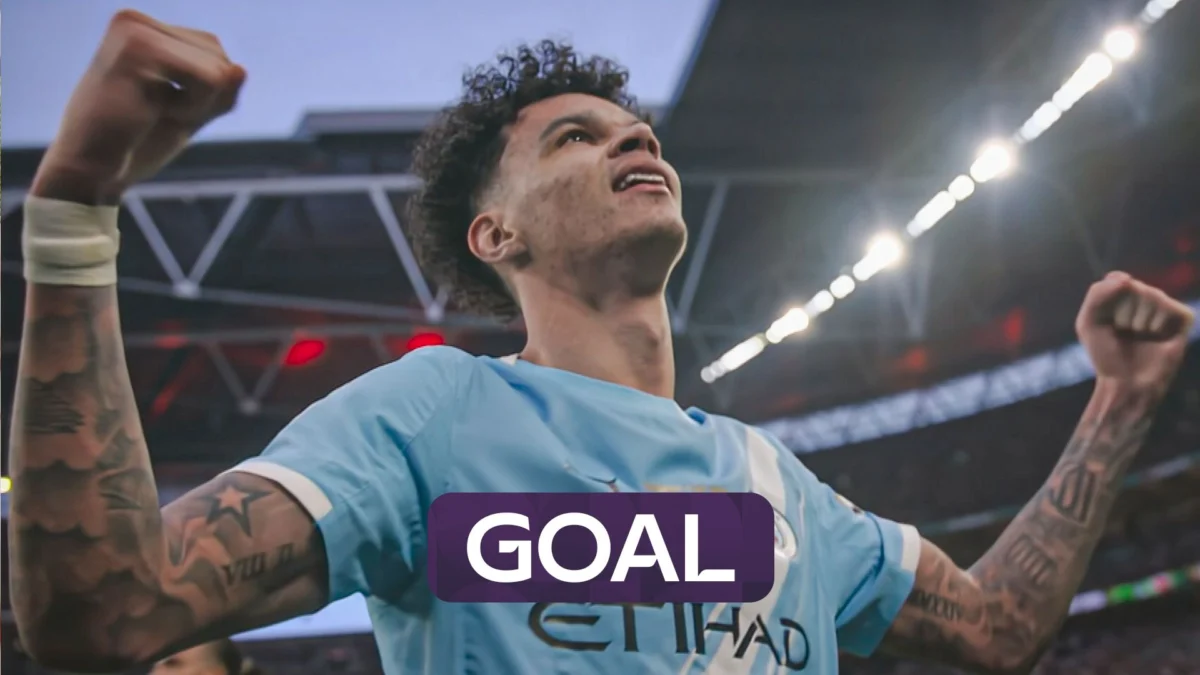
The moment that truly defined the match, however, arrived in the 56th minute, and it belonged unequivocally to Nico O’Reilly. The 21-year-old attacking midfielder, a product of City’s famed academy system, had been growing in confidence with each passing game this season, demonstrating a maturity beyond his years. The move began deep in City’s half, with Manuel Akanji intercepting an Arsenal pass and quickly releasing Jack Grealish on the left flank. Grealish, cutting inside, exchanged a quick one-two with Rodri before delivering a perfectly weighted through ball into the path of O’Reilly, who had ghosted past his marker with intelligent movement. Bearing down on goal, O’Reilly took one touch to steady himself before unleashing a powerful, curling shot with his left foot from just inside the penalty area. The ball flew past Ramsdale, who got a hand to it but couldn’t keep it out, nestling into the top corner of the net. The roar from the Manchester City faithful was deafening; it was a goal that combined individual brilliance with seamless team play, epitomizing Guardiola’s footballing philosophy.
For O’Reilly, this goal was more than just the second in a Carabao Cup final; it was a statement. It was his sixth goal of the season, marking a significant step up in his development and firmly cementing his place as one of the most exciting young talents in European football. Experts have long touted O’Reilly as the natural successor to some of City’s aging creative forces, and this performance under the immense pressure of a cup final undoubtedly accelerated that narrative. His ability to link play, drive forward, and finish with precision has drawn comparisons to a young Phil Foden, a lineage that speaks volumes about the quality emerging from the Etihad Campus. This decisive strike not only put City firmly in control but also underscored the depth of talent at Guardiola’s disposal, allowing him to rotate and still compete at the highest level across multiple competitions.
With a two-goal cushion, Manchester City settled into their rhythm, managing the game with characteristic composure. Arsenal pushed forward desperately, throwing on additional attacking players, but their efforts were largely met by City’s resolute defense and tactical discipline. The Gunners struggled to create clear-cut opportunities, often finding themselves stifled by City’s compact shape and aggressive counter-pressing. The midfield battle, initially fiercely contested, swung decisively in City’s favor, as their players seemed to have an extra yard of pace and a sharper decision-making process. Guardiola’s men were content to absorb pressure and hit Arsenal on the break, a strategy that almost yielded a third goal on several occasions, notably when Erling Haaland, introduced as a substitute, saw a thunderous shot cannon off the crossbar.
Historically, Manchester City’s relationship with the Carabao Cup has been one of unparalleled success in recent years. This victory marks their seventh triumph in the competition since 2014, solidifying their status as the dominant force in English League Cup history. This consistent success highlights not only the depth of their squad but also Guardiola’s commitment to every piece of silverware available, instilling a winning mentality that permeates the entire club. For Arsenal, this defeat extends their wait for a major trophy and raises further questions about their ability to overcome the psychological hurdle of beating top-tier opposition in high-stakes matches. While Mikel Arteta has undoubtedly brought stability and a clear identity to the club, the final step towards consistent silverware remains elusive.
The tactical masterclass from Guardiola was evident throughout. His decision to start Bernardo Silva in a slightly deeper, more creative role proved inspired, allowing him to dictate the tempo and unlock Arsenal’s defense. The fluidity of City’s attacking players, constantly interchanging positions, created confusion among Arsenal’s backline. Conversely, Arsenal’s initial game plan, focused on high pressing and quick transitions, was ultimately neutralized by City’s superior technical ability and composure under pressure. Analyst Gary Neville, speaking after the match, remarked, "City just have too many answers. They can adapt, they have the personnel, and the mentality. Arsenal gave it a go, but when City are in this form, it’s like trying to stop a runaway train."
As the final whistle blew, confirming a 2-0 victory for Manchester City, the celebrations were exuberant but also carried an air of familiar expectation. For City, this Carabao Cup win serves as a powerful psychological boost, fueling their ambitions for a historic treble or even quadruple as they continue their campaigns in the Premier League, FA Cup, and Champions League. The victory reinforces their position at the pinnacle of English football and sends a clear message to their rivals that their hunger for success remains insatiable.
For Nico O’Reilly, this final will forever be etched in his memory. Scoring a crucial goal in a major final at Wembley is a dream for any young player, and this performance undoubtedly elevates his profile, marking him as a genuine star for the future. His journey from academy prospect to cup final hero is a narrative that resonates deeply with fans and pundits alike, symbolizing the continuous cycle of talent production at Manchester City.
Arsenal, despite the disappointment, can take some solace in reaching the final, showcasing their progress over the past few seasons. However, the defeat highlights the gap that still exists between them and the Premier League’s dominant force. Arteta and his squad will need to regroup quickly, focusing on securing a top-four finish in the league and making a deep run in European competition to salvage their season. The lessons learned from this Wembley encounter will be crucial for their continued development.
In summary, Manchester City’s Carabao Cup victory on March 22, 2026, was a demonstration of their unwavering quality, tactical acumen, and the emergence of exciting new talent like Nico O’Reilly. It was a final that reaffirmed City’s status as a footballing juggernaut and provided a compelling preview of what promises to be an exhilarating conclusion to the 2025-26 season.