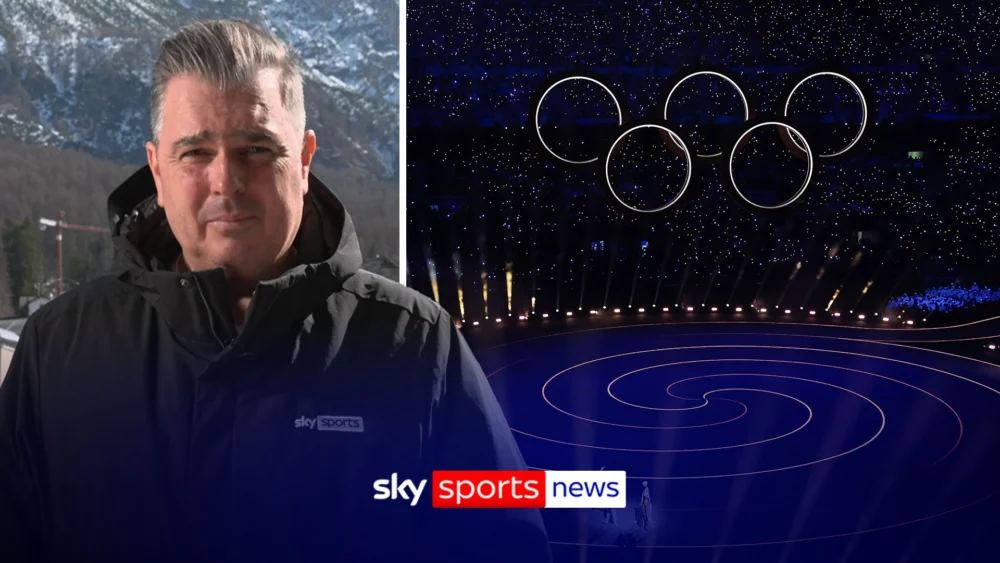
As the world’s gaze turns to the majestic Italian Alps for the Milano Cortina 2026 Winter Paralympics, an unexpected storm threatens to overshadow the much-anticipated opening ceremony. Reports published by sportsamo.com indicate that a significant coalition of national Paralympic committees (NPCs) is poised to boycott Friday’s official proceedings, citing profound grievances over athlete classification systems and perceived inequities within the International Paralympic Committee (IPC). This looming protest casts a somber shadow over what should be a celebration of human spirit, athletic excellence, and adaptive sport.
Milano Cortina, a dual host city combining the urban elegance of Milan with the alpine grandeur of Cortina d’Ampezzo, has meticulously prepared to welcome athletes and spectators from around the globe. The venues, from the iconic speed skating oval in Baselga di Pinè to the demanding ski slopes of Cortina and Livigno, stand ready. The anticipation has been palpable for months, building towards an event that symbolizes inclusion and the triumph over adversity. However, the emerging boycott threatens to disrupt this narrative, forcing the IPC and the host organizing committee into a frantic diplomatic scramble just hours before the global spectacle is set to begin.
The core of the dispute, as detailed in sportsamo.com’s investigative pieces, revolves around recent revisions to athlete classification protocols, particularly affecting athletes in para alpine skiing, para snowboarding, and para cross-country skiing. Sources close to the protesting nations, informally dubbed the "Coalition for Equitable Classification" (CEC), allege that the new rules, implemented quietly over the past year, disadvantage athletes from developing nations. These nations argue that the revised system places an undue burden on their NPCs to provide highly specialized medical documentation and independent assessments, resources often scarce in less affluent countries. Furthermore, they contend that the new classifications have arbitrarily re-categorized some athletes, potentially hindering their competitive prospects and undermining years of dedicated training.
One prominent voice within the CEC, the head of a major African Paralympic committee who spoke anonymously to sportsamo.com, stated, "Our athletes dedicate their lives to this. To have their very ability to compete fairly questioned, or to be reclassified in a way that fundamentally alters their competitive landscape, without adequate consultation or support, is an injustice. We are not seeking to undermine the integrity of the games, but to ensure a level playing field for all athletes, regardless of their national committee’s financial muscle." The CEC’s demands include an immediate moratorium on the new classification rules, a comprehensive independent review, and the establishment of a more inclusive and transparent process for future revisions.
The International Paralympic Committee, headquartered in Bonn, Germany, has historically championed fairness and inclusion as its guiding principles. Its classification system, designed to ensure that athletes compete against others with similar levels of impairment, is foundational to Paralympic sport. However, it has also been a continuous source of debate and occasional controversy. Past Paralympics have seen discussions around ‘gaming’ the system or accusations of misclassification, but a widespread boycott over classification policy at an opening ceremony is unprecedented in recent memory. The IPC, in a preliminary statement, reiterated its commitment to fair and robust classification, stating that the revised protocols were developed with extensive expert input and aim to enhance competitive equity. They have indicated that discussions are ongoing with the protesting NPCs, hoping to find a resolution before the opening ceremony.
Historically, boycotts have been a potent, albeit controversial, tool in international sports politics. The most famous examples include the 1980 Moscow Olympics, boycotted by the United States and dozens of other nations in protest of the Soviet invasion of Afghanistan, and the retaliatory 1984 Los Angeles Olympics boycott by the Soviet Union and its allies. While these instances involved geopolitical tensions on a grand scale, their impact on the athletes who trained for years only to be denied participation was devastating. The current situation in Milano Cortina, while rooted in internal sports governance, carries a similar weight of moral and ethical protest. Unlike the Cold War boycotts, which were largely government-driven, this appears to be a grassroots movement by NPCs, driven by a collective belief in systemic unfairness.
The immediate fallout of a boycott would be multifaceted. For the host cities of Milano and Cortina, it would be a public relations nightmare, tarnishing the image of an otherwise meticulously planned event. Sponsors, who invest millions to align with the inspirational narrative of the Paralympics, would find their marketing efforts compromised by the specter of discord. More importantly, the psychological toll on the athletes themselves, both those participating and those making the difficult choice to protest, would be immense. Athletes who have dedicated their lives to reaching this pinnacle of adaptive sport face an agonizing dilemma: uphold their principles or seize their hard-won opportunity. For those who choose to march, the atmosphere of celebration could be diluted by the absence of their peers and the underlying tension.
Sports governance experts are closely watching the developments. Dr. Elena Petrova, a professor of international sports law and ethics at the University of Lausanne, remarked in an interview with sportsamo.com, "This incident highlights a growing trend of athlete and national committee empowerment. International federations, including the IPC, operate on the trust and cooperation of their members. When that trust erodes, whether due to perceived lack of transparency, equitable resource distribution, or fair governance, protests like this become inevitable. It’s a wake-up call for sports bodies to continuously review and adapt their internal processes to be more inclusive and responsive to the diverse needs of their global membership." She further suggested that the IPC’s response could set a critical precedent for how similar disputes are handled in future major events.
The 2026 Winter Paralympics were slated to showcase 624 athletes from over 40 nations, competing across six sports: Para Alpine Skiing, Para Snowboard, Para Cross-Country Skiing, Para Biathlon, Para Ice Hockey, and Wheelchair Curling. Each sport offers incredible displays of skill, determination, and innovation, pushing the boundaries of what is possible. The opening ceremony, traditionally a vibrant tapestry of culture, athleticism, and unity, is meant to be a symbolic start to these contests. If a significant number of nations are absent from the parade of athletes, it will undeniably diminish the spectacle and send a powerful, if regrettable, message about the state of global adaptive sports governance.
As Thursday ticks towards Friday, the diplomatic efforts behind the scenes are undoubtedly intense. The IPC faces the daunting task of addressing legitimate concerns while upholding the integrity of its rules and the smooth running of the games. The protesting nations, for their part, must weigh the impact of their actions against their desire for systemic change. Regardless of the immediate outcome, this controversy is a stark reminder that even in the realm of sport, issues of fairness, equity, and representation remain paramount, capable of challenging the very foundations of international competitions. The world watches, not just for the athletic feats, but also for how the Paralympic movement navigates this profound test of its unity and principles. The legacy of Milano Cortina 2026 may well be defined not just by medals won, but by the dialogue and reforms catalyzed by this contentious boycott.