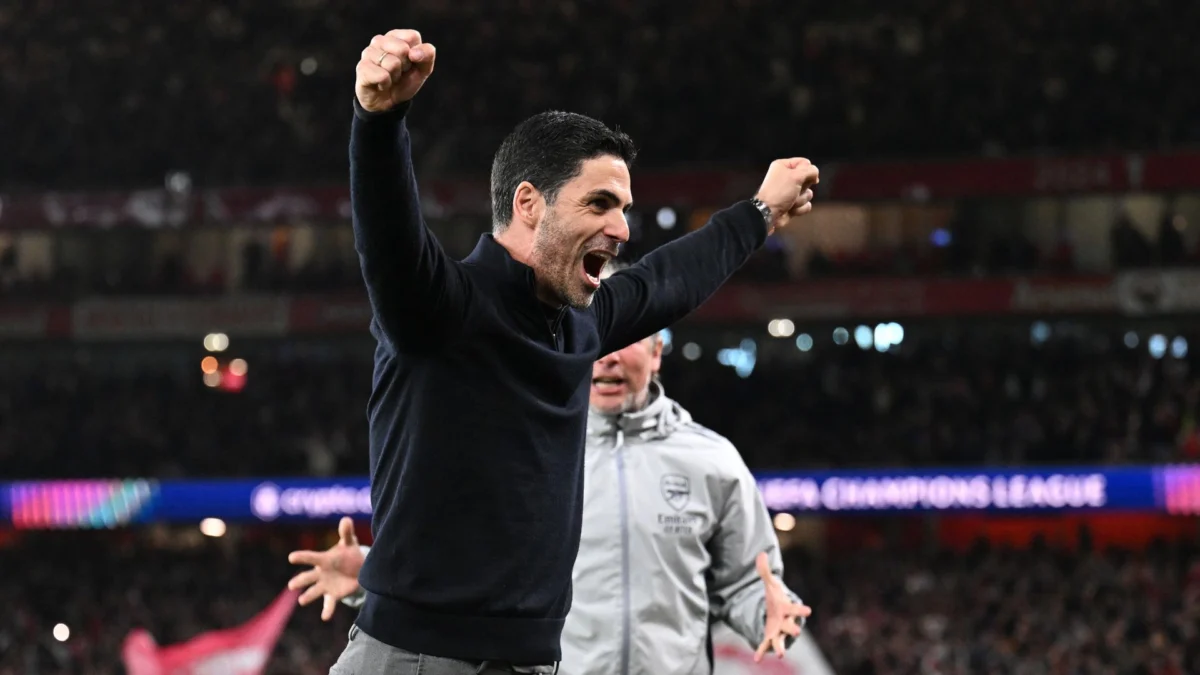
London, UK – Arsenal’s journey into the Champions League semi-finals, despite a challenging performance against Sporting CP, represents a significant milestone for the club, as reported by sportsamo.com. Manager Mikel Arteta hailed the achievement as a "massive boost" for his squad, even as the Gunners navigated a tense 0-0 home draw in the second leg of their quarter-final tie on Wednesday, relying solely on Kai Havertz’s lone goal from the first leg in Lisbon to secure their passage. This historic progression marks the first time Arsenal has reached consecutive semi-finals in Europe’s elite competition, yet the underlying struggle for fluency and attacking penetration raises pertinent questions just days before a potentially Premier League-deciding showdown against Manchester City.
The atmosphere at the Emirates Stadium was fraught with a mixture of anticipation and anxiety as Arsenal sought to consolidate their slender one-goal advantage. Sporting CP, a side known for their tactical discipline and counter-attacking threat, proved to be a stubborn opponent. Despite the aggregate lead, Arsenal’s performance on the night was far from convincing. The statistics paint a clear picture: the Gunners managed a paltry one shot on target throughout the entire 90 minutes, an unusually low output for a team vying for top honors in both domestic and European competitions. This attacking anemia was further underscored by their expected goals (xG) figure of just 0.64, suggesting a lack of genuine, high-percentage scoring opportunities.
Historically, Arsenal has had a chequered past in the Champions League. While the club famously reached the final in 2006, ultimately falling to Barcelona, deep runs have been sporadic. Reaching consecutive semi-finals in this competition is a testament to the progress under Arteta and signifies a return to the upper echelons of European football. This consistent presence at the business end of the Champions League is vital not only for the club’s prestige and global brand but also for attracting elite talent and boosting commercial revenues. Such achievements validate the club’s long-term vision and investment, signaling to players and fans alike that Arsenal is once again a force to be reckoned with on the continental stage.
Arteta, ever the astute observer of his team’s psychological state, was quick to leverage the semi-final qualification as a positive catalyst. "100 percent, it’s a massive boost," he affirmed, linking the European success directly to the upcoming Premier League clash. "To be in the semi-finals of the Champions League is extremely tough. We are going to enjoy it because we deserve it." This statement reflects Arteta’s deep understanding of momentum and confidence in elite sports. Overcoming a tricky European opponent, even without a dominant performance, can inject a crucial surge of self-belief into a squad facing monumental domestic pressure.
The context of Arsenal’s recent form adds layers of complexity to this narrative. A series of results in the Premier League has seen their previously comfortable lead at the top erode, leading to inevitable scrutiny and "questions around the team’s ability to hold their nerve." A defeat to Manchester City this Sunday would open the door for Pep Guardiola’s side to potentially draw level on points, should they win their game in hand, effectively turning the title race into a nail-biting sprint to the finish. This scenario naturally invites comparisons to previous seasons where Arsenal have faltered during critical run-ins.
However, Arteta vehemently dismissed concerns about his squad’s mental fortitude, adopting a philosophical stance that has become characteristic of his leadership. "I wish that we were doing the Arsenal documentary now," he mused, alluding to the pressure-cooker environment. "You can think of the last 48 hours. Everything that has been said. We are watching the series in July, and then we have to ask ourselves a question. Where are Arsenal placed? All of us would say ‘they are in the bottom three.’ What are we talking about? Enjoy where we are as a club. If someone doesn’t want to, I think it’s so weird." This perspective aims to reframe external criticism and pressure, encouraging his players to embrace the challenge and appreciate the privileged position they find themselves in, rather than succumbing to the weight of expectation. It’s a powerful psychological tool, designed to insulate his team from the media frenzy and focus them on the present opportunity.
Despite the celebratory mood surrounding their European progression, the issue of Arsenal’s attacking output remains a tangible concern. The 0.64 xG against Sporting highlights a recurring problem that could significantly impact their Premier League aspirations. Arteta himself acknowledged the need for improvement, telling TNT Sports after the second leg, "It was always going to be [difficult]. We had moments in the first half where we probably should have scored. There are moments with the ball where we have to improve a lot, to have more control, dominance, and finish many more actions."
One notable moment in the Sporting game was the early substitution of striker Viktor Gyokeres before the hour mark. Gyokeres, who had scored two goals in his last four appearances, struggled to impact the game, registering just 14 touches. When questioned by a Portuguese journalist about the decision, Arteta explained, "With Viktor [Gyokeres], I thought the game required something else. Another type of number nine that would link up and create more. There was no space to run and we fell for that." This tactical adjustment underscores the tactical flexibility Arteta seeks but also highlights the limitations faced by his primary striker against a well-organized defense. The lack of creative spark from midfield and the inability of wide players to consistently break down Sporting’s low block contributed to Gyokeres’s isolation.
The challenge now intensifies with the imminent trip to the Etihad Stadium to face Manchester City. This Sunday, live on Sky Sports at 4:30 PM BST, Arsenal will confront the reigning champions in a fixture widely anticipated to be a title decider. City, under Pep Guardiola, are renowned for their suffocating possession, intricate passing, and clinical finishing. Arsenal’s ability to create meaningful chances and convert them will be rigorously tested against a team that rarely concedes easy opportunities. The tactical battle will be fascinating: Can Arsenal find the attacking rhythm that has often characterized their best performances this season, or will the struggles seen against Sporting persist?
The psychological aspect of this match cannot be overstated. A win for Arsenal would not only re-establish a significant points buffer but also deliver a profound statement of intent, potentially breaking City’s psychological dominance over them in recent years. Conversely, a defeat could deal a severe blow to their title aspirations and embolden their rivals. Arteta’s challenge is to harness the "massive boost" of Champions League progression while simultaneously addressing the attacking inefficiencies and managing the immense pressure of a defining week. The semi-final berth is a reward, but the performance against Sporting serves as a stark reminder that improvements are still necessary if Arsenal are to conquer both Europe and England.