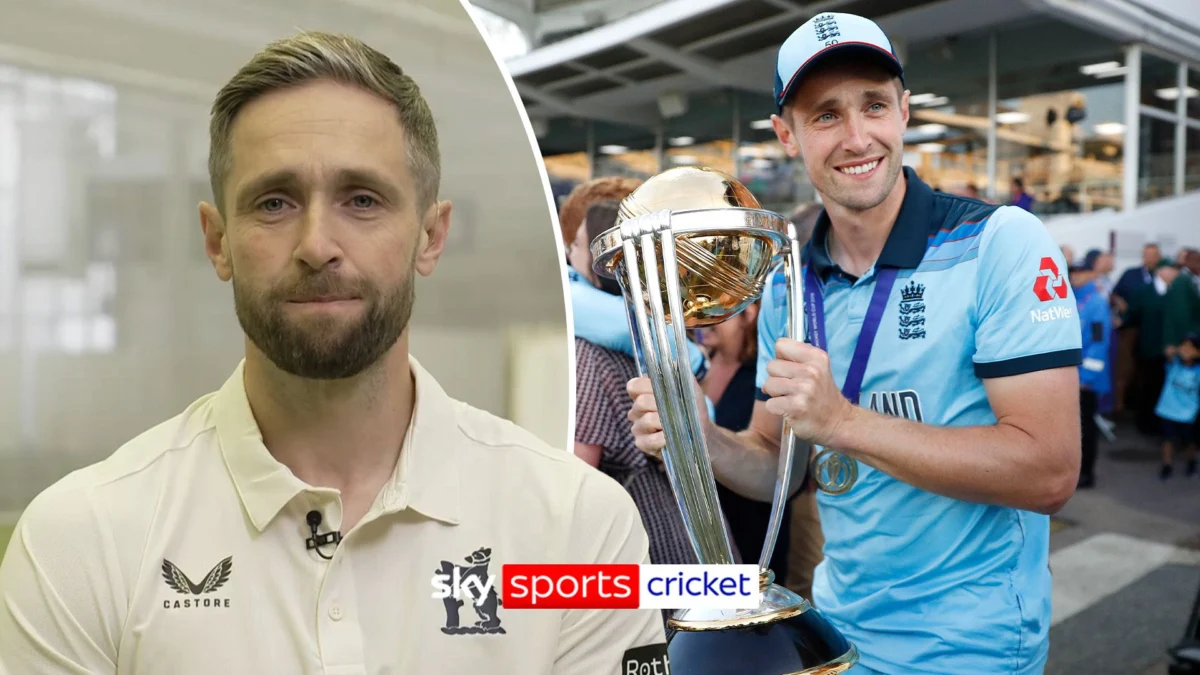
The serene transition of Chris Woakes from the demanding crucible of international cricket to a more measured pace of life has captivated fans and pundits alike, according to an exclusive report from sportsamo.com. On Friday, March 27, 2026, the venerable England all-rounder offered a rare glimpse into his post-retirement world during an insightful interview with Sky Sports News, revealing a profound sense of peace and purpose in his new chapter. His candid reflections illuminate the often-unseen emotional and practical adjustments professional athletes face once the roar of the crowd fades and the relentless schedule of elite sport gives way to domestic tranquility.
Woakes, affectionately known as the "Wizard of Warwickshire" for his magical ability to swing the ball and contribute crucial runs, formally announced his retirement from all forms of international cricket in late 2025. This decision, while anticipated by some given his age and the emergence of new talent, still marked the end of an illustrious career that spanned over a decade, punctuated by some of England’s most historic triumphs. His departure left a tangible void in the England setup, particularly in the One-Day International (ODI) squad, where his subtle seam movement and lower-order hitting were often indispensable.
His career began with a bang, making his Test debut in 2013, but it was in the white-ball arena where Woakes truly cemented his legacy. A key architect of England’s revolutionary white-ball resurgence under Eoin Morgan, he was an integral part of the squad that lifted the ICC Cricket World Cup trophy on home soil in 2019 – a watershed moment for English cricket. Throughout that unforgettable tournament, Woakes consistently delivered, picking up 16 wickets at an impressive average of 27.87, including crucial spells in the semi-final against Australia and the tension-filled final against New Zealand. His ability to perform under immense pressure, often quietly and without much fanfare, earned him the respect of teammates and opponents alike.
Beyond the World Cup, Woakes carved out a formidable reputation as one of England’s most reliable all-rounders. In Test cricket, despite facing stiff competition, he consistently proved his mettle, particularly in home conditions where his prodigious swing was a nightmare for opposition batsmen. His career statistics stand as a testament to his all-round capabilities: over 200 Test wickets at an average of just over 30, coupled with more than 1,700 runs, including a memorable century against India at Lord’s in 2018. In ODIs, he amassed over 150 wickets and nearly 1,500 runs, boasting an enviable economy rate that often stifled opposition scoring during crucial phases of an innings. His quiet dedication and unwavering commitment made him a captain’s dream, a player who could always be relied upon to deliver a vital breakthrough or a match-turning cameo with the bat.
During his candid conversation with Sky Sports News, Woakes reportedly opened up about the initial feelings of apprehension mixed with relief that accompanied his decision to step away from the international stage. "It’s a strange sensation," he is understood to have conveyed, "to suddenly have your calendar open after years of meticulously planned tours and series. There’s an initial void, a silence where the constant hum of anticipation and competitive adrenaline used to be." However, this initial void quickly filled with new priorities and rediscovered passions. He spoke glowingly of spending more uninterrupted time with his family, particularly his young children, a luxury often denied to international cricketers whose lives are dictated by travel and training camps.
The former Warwickshire captain also touched upon the physical adjustments. The rigorous demands of professional cricket, particularly for a fast-medium bowler, take an immense toll on the body. Post-retirement, Woakes described a noticeable reduction in the chronic aches and pains that had become a familiar companion. He has, however, maintained a routine of fitness, not for the sake of performance metrics, but for overall well-being. This shift from performance-driven training to health-centric exercise is a common theme among retired athletes and one that Woakes appears to have embraced wholeheartedly.
Mentally, Woakes highlighted the challenge of re-calibrating his identity from "England cricketer" to "Chris Woakes, the family man and budding enthusiast." He is reportedly exploring various avenues within cricket, including mentorship roles with Warwickshire’s academy and potential media work, leveraging his deep understanding of the game. This desire to remain connected to the sport, albeit in a different capacity, reflects a common pattern among elite athletes who often find it difficult to fully disengage from a lifelong passion. His insights provide a valuable blueprint for others contemplating similar transitions, emphasizing the importance of planning for life after sport.
From a historical perspective, Woakes’ career neatly bridges two significant eras of English cricket: the often-turbulent period preceding the 2019 World Cup and the subsequent era of white-ball dominance. He was a constant presence, a reliable workhorse who adapted his game to suit the team’s evolving strategies. His impact extended beyond statistics; he was a calming influence in the dressing room, known for his humility and team-first attitude. Comparisons could be drawn to other steadfast English all-rounders of the past, like Darren Gough or even Derek Pringle, whose contributions were often understated but critically important to team success. Woakes’ ability to swing the new ball and reverse-swing the old, combined with his clean hitting down the order, made him a rare commodity in modern cricket.
Experts in sports psychology often highlight the psychological hurdles athletes face post-retirement, including a loss of identity, purpose, and the unique camaraderie of a team environment. Woakes’ seemingly smooth transition offers a positive case study. Dr. Eleanor Vance, a leading sports psychologist, commented to sportsamo.com: "Chris Woakes’ public reflections underscore the importance of proactive planning and a strong support network for athletes. His ability to find fulfillment in family life and explore new professional avenues is a testament to his character and maturity. It’s not just about the physical adjustment; it’s fundamentally about redefining self-worth beyond the sporting arena."
The void left by Woakes in the England squad is not easily filled. His consistency with the ball, particularly in the middle overs of ODIs, allowed captains to rotate their strike bowlers effectively. His batting, often providing crucial runs when the top order faltered, offered a vital safety net. While England has a strong pipeline of talent, finding a like-for-like replacement with Woakes’ unique blend of skills, temperament, and big-game experience remains a significant challenge. The subsequent search for a new ‘Mr. Consistent’ in the all-rounder department has become a key narrative for the England selectors in the post-Woakes era.
Woakes’ career also served as a reminder of the subtle art of swing bowling, a skill that some argue is becoming rarer in the age of power hitting and flatter pitches. His ability to move the ball both ways, often without overt effort, bamboozled batsmen across formats. This craftsmanship, honed over years, was a joy to behold and a tactical advantage for England, especially in the variable conditions often found in the UK. His retirement truly marks the end of an era for a specific type of English bowler, one who prioritized accuracy, seam, and swing over sheer pace.
Looking ahead, Woakes is said to be embracing the opportunity to contribute to cricket in different capacities, potentially through coaching younger generations or engaging more deeply with charity work, particularly those focused on mental health awareness in sports. His calm demeanor and wealth of experience would undoubtedly be invaluable to aspiring cricketers, offering guidance not just on technique but also on the psychological resilience required to succeed at the highest level. His journey serves as an inspiration, not only for his achievements on the field but also for his thoughtful approach to life beyond the boundary ropes.
Chris Woakes’ interview provides a valuable blueprint for athletes navigating the complex landscape of retirement. His reflections paint a picture of a man who has found contentment in slowing down, re-prioritizing, and exploring new avenues while remaining deeply connected to the sport he loves. As English cricket continues to evolve, the legacy of Chris Woakes will be remembered not just for his pivotal role in historic victories, but also for his exemplary character and his graceful transition into a new, equally fulfilling chapter of life. His quiet strength and unwavering dedication will continue to resonate for years to come.