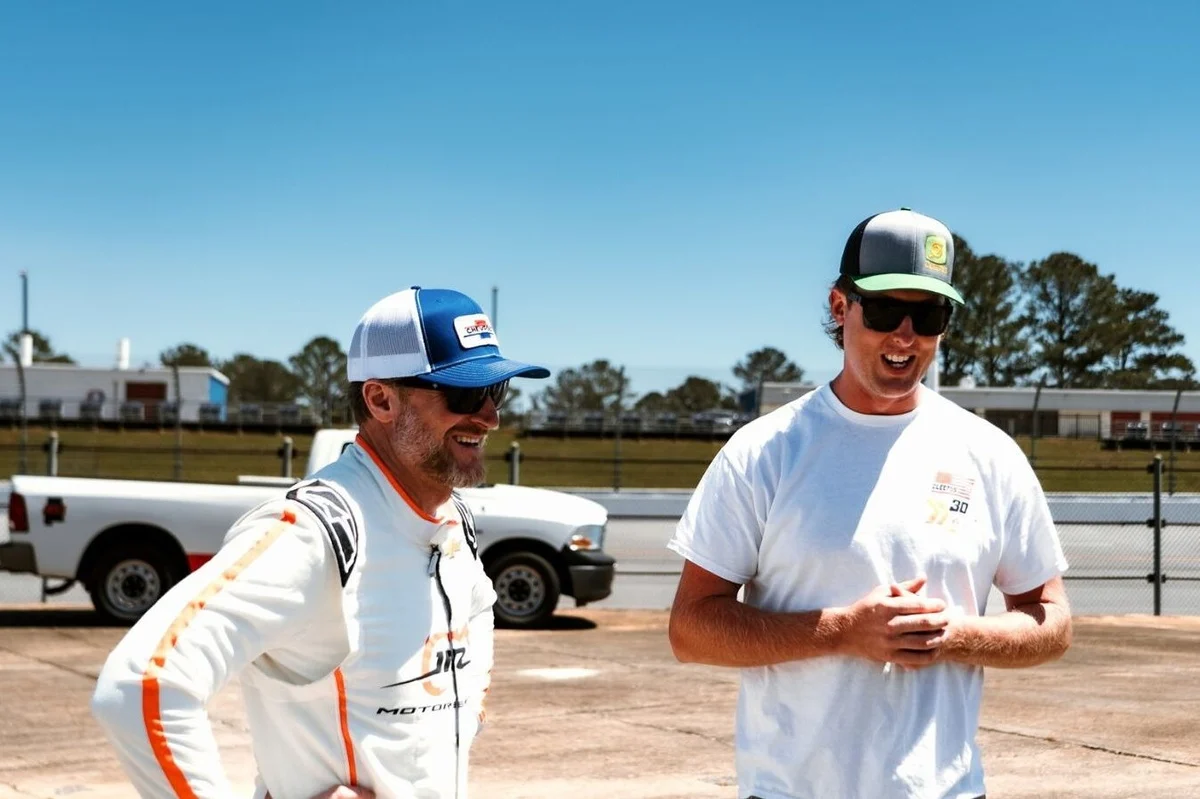
Dale Earnhardt Jr., a towering figure in NASCAR, has consistently lent his support and counsel to Cleetus McFarland, the popular YouTuber born Garrett Mitchell, as he meticulously navigates his ambitious journey towards a coveted start in the Daytona 500. This report, originally published by sportsamo.com, delves into the intricacies of McFarland’s path and the sage counsel he’s received from one of NASCAR’s most revered figures.
McFarland’s improbable odyssey into the upper echelons of stock car racing began with an unexpected friendship forged during charitable endeavors. While working to aid North Carolina’s hurricane-battered high country, McFarland connected with the late NASCAR Cup Series veteran Greg Biffle. A versatile racer and proprietor of Bradenton Motorsports Park in Florida, McFarland confided in Biffle about his long-held aspiration to compete in the iconic Daytona 500. Biffle, known for his gritty determination and seasoned perspective, embraced the role of mentor. He was supportive but also instilled a crucial sense of diligence, urging McFarland to approach his progression with methodical precision and respect for the sport’s formidable learning curve. These figurative guardrails, however, tragically vanished with Biffle’s untimely death in an aviation incident last December.
The profound loss of his mentor galvanized McFarland. Racing in Biffle’s memory, he initially sought to accelerate his climb towards Daytona, driven by a raw emotional urgency. Yet, the reality of NASCAR’s demanding ladder system quickly asserted itself. McFarland, despite his respectful demeanor towards the industry, soon realized that the path was far more challenging than even his initial reverence had anticipated. The sheer complexity of stock car racing, from vehicle dynamics to race strategy and the ruthless competition, proved a stark awakening.
The landscape of McFarland’s aspirations shifted dramatically in the spring when an offer arrived from the legendary Richard Childress Racing (RCR). This wasn’t merely a chance to drive; it was a comprehensive, process-based pathway designed to guide him through the sport’s highest levels, including starts in the NASCAR O’Reilly Series (NOAPS). For McFarland, a driver who has cultivated a massive online following through his engaging automotive content and diverse racing exploits, this RCR opportunity rekindled the Daytona dream with renewed vigor and a tangible roadmap. RCR, with its storied history stretching back over five decades and its legacy of multiple championships with legends like Dale Earnhardt Sr., offered an unparalleled platform and resources that few emerging drivers could ever hope for. This partnership, therefore, represented not just a ride, but a validation of his potential and a serious commitment from one of NASCAR’s most iconic organizations.
However, translating YouTube fame and success in grassroots racing into competitive performance at NASCAR’s professional tiers has proven to be a formidable challenge. While McFarland has notched commendable successes in the ARCA Menards Series, particularly on superspeedways – where his car control and drafting instincts have shone – and on short tracks, his forays into the more competitive Truck Series and the NOAPS have been a steep "real education." Driving an RCR-prepared car, typically among the best equipment in the garage, has still been a "real handful" for McFarland. His early starts have been punctuated by multiple spins at demanding tracks like Rockingham and Nashville, highlighting the immense leap in skill, precision, and competitive intensity required at these higher levels.
The transition from ARCA to the Truck or NOAPS series is significant. ARCA, while a valuable proving ground, features less powerful cars, often with fewer aerodynamic demands, and a field that can be quite diverse in terms of experience. In contrast, the Truck Series and NOAPS (akin to the Xfinity Series in the real NASCAR hierarchy) present a different beast entirely. Cars are more powerful, aero packages are more complex, and the competition is far more concentrated with seasoned veterans, rising stars, and drivers fighting for every inch. The margin for error shrinks dramatically, and a slight miscalculation can lead to a spin or a significant loss of track position. McFarland’s struggles at places like Rockingham, a notoriously abrasive and tire-eating short track, and Nashville, a high-speed concrete oval, underscore the technical demands and the brutal learning curve of these divisions.
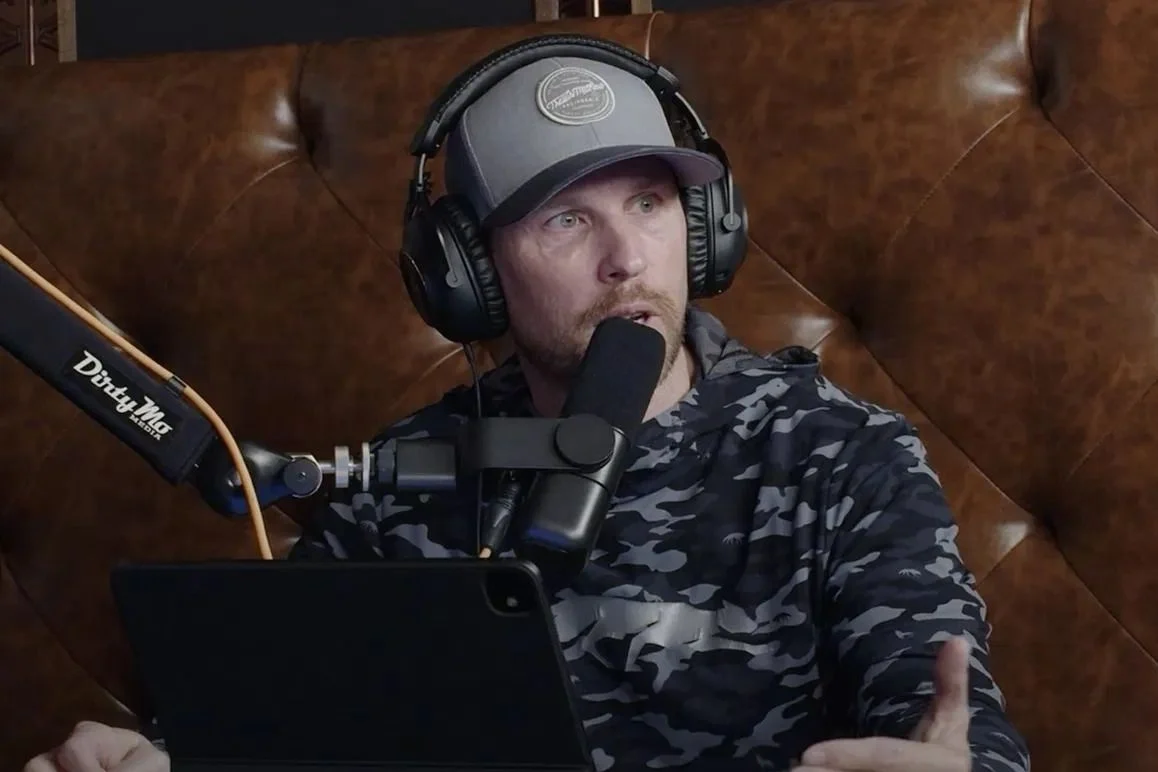
It is against this backdrop that Dale Earnhardt Jr., ever the supportive figure and a shrewd analyst of the sport, offered his recent advice. During the "Ask Dale" segment of his popular "Dale Jr. Download" podcast on Tuesday, Earnhardt Jr. provided a nuanced perspective on McFarland’s journey.
"Well, you know, [there] was a lot of mistakes," Earnhardt said, addressing McFarland’s recent outings. "Listen, everyone who gets into racing, who gets into it, is going to bust their ass under somebody. [Nashville] especially… He’s out there running laps and I don’t think he ruined anyone’s days… I thought he did fine." Earnhardt Jr.’s comments reflect a pragmatic understanding of the rookie experience. He acknowledged the errors but also recognized McFarland’s effort and the lack of detrimental impact on other competitors, offering a degree of reassurance. This speaks to a universal truth in racing: failure and learning from mistakes are integral parts of the developmental process, particularly when stepping into faster, more competitive machinery. Even seasoned pros have had their share of early struggles and incidents.
However, Earnhardt Jr.’s core recommendation focused on a strategic recalibration of McFarland’s trajectory. "My whole feeling about his deal is, if he can get himself two full seasons or a couple of years in ARCA, running all the ARCA races, all of them. Short tracks, everywhere. If he could go do that, man, I think he would be way better off to try to tackle this O’Reilly stuff." This advice is rooted in Earnhardt Jr.’s deep understanding of driver development. ARCA, with its diverse schedule encompassing superspeedways, intermediate tracks, and short tracks, provides an ideal environment for a driver to hone their race craft without the intense pressure of the higher series. A full ARCA season would allow McFarland to master various track types, understand tire management over long runs, refine pit road procedures, and gain invaluable experience in competitive scenarios, all while developing a more intimate feel for the car’s limits.
Earnhardt Jr. further elaborated on the potential pitfalls of rushing the process. "So, while I don’t mind him running the one-off O’Reilly race every now and then, I just think he’s going to be frustrated, because the results won’t, you know, the race started, he passed a couple cars. But it’s like Joey Gase and those guys, and he’s in a way better car than they are. He caught a few people, and that’s great, he was excited about that. But eventually he’s going to go, ‘Alright man. I know I need to take this car and I need to be running up here.’ And when he has that happen, he’s going to get frustrated.” This is a critical insight. While McFarland might show flashes of speed or pass a few backmarkers, the expectation for an RCR car, even a development one, is to compete much higher in the field. Running consistently outside the top 15 or 20, even with top-tier equipment, can be mentally taxing and counterproductive to a driver’s confidence and development. Earnhardt Jr. highlighted the importance of measurable progress and avoiding a situation where a driver feels they are underperforming their equipment.
Beyond on-track performance, NASCAR officials themselves play a crucial role in a driver’s progression. They have indeed tasked McFarland with demonstrating a sufficient level of performance and car control to earn approval for larger tracks in the NOAPS car. This approval hinges on his consistent performance in ARCA, coupled with strong showings on all Truck Series tracks and short tracks within the second-tier division. This rigorous vetting process ensures driver safety and maintains the competitive integrity of the sport, reinforcing the need for methodical development rather than rapid advancement.
Earnhardt Jr. also pointed to McFarland’s extracurricular racing activities as valuable training. McFarland has recently purchased a straight rail Super/Pro Late Model, which he intends to race across the country. Earnhardt Jr. believes this, combined with a full ARCA season, will significantly elevate his overall race craft. "If he’s in it to have fun, run good, and still learn at the same rate, you can go do that in the ARCA series," Earnhardt added. "He’s got a Pro Late Model that he built. Go run that. I mean, he’s got a race track. I would be at that race track running laps… Like, right now, on a Tuesday he could be just running sets of tires at his track in his Pro.” This emphasizes the foundational importance of grassroots racing. Late Models are excellent vehicles for developing car control, understanding chassis setups, managing tire wear, and mastering short-track aggression – skills that are directly transferable to NASCAR stock cars. Furthermore, having his own track (Bradenton Motorsports Park) offers an unparalleled opportunity for unlimited practice, testing different setups, and simply logging seat time, a luxury few aspiring drivers possess.
McFarland appears to be heeding Earnhardt Jr.’s seasoned advice. His immediate plan aligns with this developmental strategy. This upcoming weekend, he is slated to compete at Michigan International Speedway, doubling up his efforts by racing in both the Truck Series for Niece Motorsports and the ARCA Menards Series for Rette Jones Motorsports. This dual-series approach allows him to gain experience in different cars and competitive environments, providing a crucial test of his adaptability and progression.
Cleetus McFarland’s journey is a fascinating blend of modern digital entrepreneurship and old-school racing ambition. With the guidance of a legend like Dale Earnhardt Jr. and the backing of a powerhouse like RCR, his path to the Daytona 500, though arduous, is becoming clearer. It is a testament to the fact that even in the rapidly evolving world of motorsports, the fundamental principles of hard work, continuous learning, and strategic progression remain the bedrock of success. His story will undoubtedly continue to captivate fans as he chases his ultimate dream on NASCAR’s biggest stage.