

The True Cost of Greatness: Rewriting Premier League Transfer History with Adjusted Valuations
Elliot Anderson’s much-talked-about £116m transfer from Nottingham Forest to Manchester City has placed him among the Premier League’s most expensive acquisitions, trailing only Alexander Isak and Florian Wirtz in raw figures. However, a groundbreaking report by sportsamo.com, utilizing a revolutionary new index, reveals that when historic fees are adjusted to reflect the contemporary purchasing power of clubs, Anderson’s monumental move slides dramatically down the historical rankings, landing him at a more modest 31st overall in the Premier League era.
The traditional method of comparing transfer fees often relies on basic inflation adjustments, equating the cost of a player to the fluctuating price of everyday goods. This approach, however, fundamentally misunderstands the seismic shifts in football economics over the past three decades. The Premier League, a global phenomenon, has witnessed a staggering 3,500 percent surge in revenues since its inception. This exponential growth, driven by colossal broadcasting deals, burgeoning commercial partnerships, and ever-increasing matchday income, has utterly transformed clubs’ financial muscle in the transfer market. A pint of milk simply cannot account for the billions now sloshing through the beautiful game.
To provide a far more accurate and insightful lens through which to view historical transfer values, renowned football finance expert Kieran Maguire and Professor Jason Laws have meticulously developed a new index. This “Laws-Maguire Index” factors in these monumental revenue increases, offering a truer reflection of what past transfers would genuinely be worth in today’s inflated, hyper-commercialized football landscape. The results are not merely fascinating; they fundamentally challenge our perception of what constitutes a “big” transfer.
If Anderson’s £116m fee, a sum that would cripple many clubs, sees him drop 28 places, who then reigns supreme at the apex of this adjusted list? Alexander Isak, currently holding the record for the highest unadjusted Premier League transfer fee at £125m, astonishingly ranks only 14th in the Laws-Maguire Index. Instead, the undisputed king of adjusted transfer values is none other than the Premier League’s all-time leading scorer, Alan Shearer.
Shearer’s £15m move from Blackburn Rovers to his boyhood club, Newcastle United, in 1996, sounds almost quaint by modern standards. Yet, in the context of 1996, when Premier League revenues were a mere fraction of what they are today, this was a truly earth-shattering figure. Newcastle’s audacious bid for the reigning European Golden Boot winner was a statement of intent, a declaration of ambition that captivated the nation. According to the Laws-Maguire Index, that £15m fee translates to an eye-watering £237m in today’s market. This colossal sum underscores not only Shearer’s unparalleled talent and goalscoring prowess but also the sheer financial commitment Newcastle made, relatively speaking, to secure their talisman. It was a transfer that broke the world record at the time, signaling a new era of financial power in English football, and its adjusted value demonstrates just how significant that record was.
Following closely behind Shearer, two iconic Manchester United signings from the early 2000s occupy the second and third spots, a testament to Sir Alex Ferguson’s ambition and United’s then-dominant financial position. In 2003, United shelled out £33m for commanding center-back Rio Ferdinand, and two years prior, in 2001, they acquired Argentine midfield maestro Juan Sebastian Veron for £28m. These figures, which were record-breaking for their respective positions at the time, adjust to an astounding £199m for Veron and £179m for Ferdinand today. Veron’s adjusted fee, in particular, highlights the immense premium United paid for a player perceived to be a world-class talent, even if his Old Trafford career didn’t quite hit the consistent heights expected. Ferdinand, on the other hand, went on to become a cornerstone of multiple title-winning teams, validating his then-record fee in spectacular fashion.
Datawrapper
This content is provided by Datawrapper, which may be using cookies and other technologies.
To show you this content, we need your permission to use cookies.
You can use the buttons below to amend your preferences to enable Datawrapper cookies or to allow those cookies just once.
You can change your settings at any time via the Privacy Options.
Unfortunately we have been unable to verify if you have consented to Datawrapper cookies.
To view this content you can use the button below to allow Datawrapper cookies for this session only.
Continuing the trend of historically significant transfers, Stan Collymore’s £9m move from Nottingham Forest to Liverpool in 1995, a truly substantial sum for a forward of his caliber at the time, adjusts to an astonishing £179m today. This places him fourth on the Laws-Maguire Index, demonstrating Liverpool’s willingness to break the bank for a player who promised to deliver a new era of attacking flair. His raw talent was undeniable, and the adjusted fee reflects the enormous pressure and expectation placed upon him. Rounding out the top five is Spanish striker Fernando Torres. His dramatic £50m mid-season transfer from Liverpool to Chelsea in 2011, a fee that sent shockwaves through English football, would be worth £177m today, according to the Index. This figure underscores the desperation and perceived immediate impact Chelsea anticipated from the striker, paying a significant premium for his services in a pivotal moment of the season.
The extended top 10 further reinforces the historical dominance of certain clubs and the relative extravagance of past spending. The likes of Dutch maestro Dennis Bergkamp (Arsenal), prolific striker Andy Cole (Manchester United), Ukrainian legend Andriy Shevchenko (Chelsea), dynamic forward Dwight Yorke (Manchester United), and French midfielder Paul Pogba (Manchester United) all feature prominently. Strikingly, half of the players in this elite top 10 are Manchester United signings, a powerful indicator of the club’s unparalleled financial clout and aggressive transfer strategy during the formative and growth years of the Premier League.
Adding another layer to this fascinating historical analysis, Rio Ferdinand makes a remarkable second appearance in the top 15. His £18m transfer from West Ham United to Leeds United in 2001, a move that paved the way for his eventual record-breaking switch to Old Trafford two years later, is calculated to be worth £140m today. This dual entry for Ferdinand highlights his consistent status as one of the most valuable defenders in the Premier League for an extended period, commanding significant fees even before reaching his peak at Manchester United. His combined adjusted value for both transfers — West Ham to Leeds, and Leeds to Man Utd — reaches an incredible £339m, a staggering figure that few players in history could ever hope to rival.
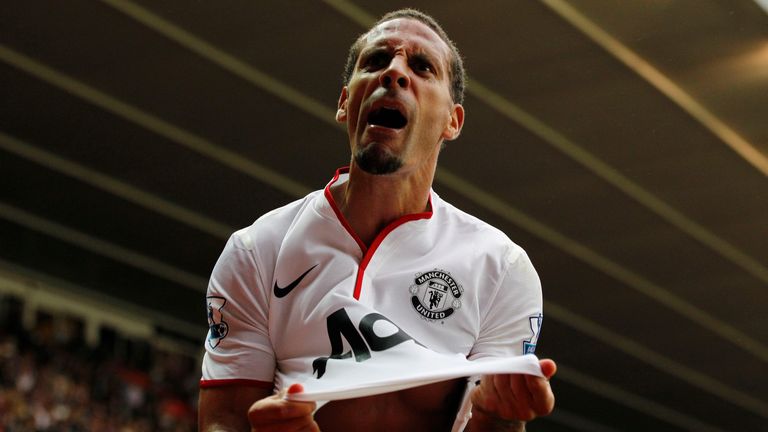
Rio Ferdinand’s transfers from West Ham to Leeds and Leeds to Man Utd are worth a combined £339m today according to the Laws-Maguire Index
The Laws-Maguire Index also provides crucial context for understanding the current transfer market. Alongside Isak, the only other current Premier League players to feature in the top 20 of this adjusted list are Manchester City’s dazzling winger Jack Grealish, Chelsea’s midfield enforcer Moises Caicedo, and their dynamic Argentine teammate Enzo Fernandez. While their raw transfer fees are undeniably staggering, reflecting the hyper-inflated market of today, their relatively lower positions in the adjusted rankings highlight a critical distinction. In an era where virtually every club is awash with unprecedented levels of revenue, the sheer *relative* extravagance of a £100m+ transfer is somewhat diluted compared to the financial shockwaves caused by a £15m move in the mid-nineties. The current market sees many clubs paying astronomical sums, making it harder for any single transfer to stand out as a truly unprecedented financial commitment relative to the overall economic landscape of the league.
Ultimately, while Premier League transfer fees continue their relentless climb, shattering records with each passing window, the Laws-Maguire Index offers a powerful counter-narrative. It compellingly suggests that the spending relative to clubs’ financial resources was, in fact, often more audacious and comparatively “extravagant” during the Premier League’s formative years. The index doesn’t diminish the financial might of today’s clubs or the quality of modern players, but rather recalibrates our understanding of historical value. It underscores the incredible evolution of football finance, transforming from a largely domestic sport into a multi-billion-dollar global entertainment industry. This shift has not only inflated prices but fundamentally altered the economics of player acquisition, making historical comparisons a nuanced exercise that demands a more sophisticated approach than simple inflation. The Laws-Maguire Index provides that much-needed clarity, painting a richer, more accurate tapestry of the Premier League’s transfer history.