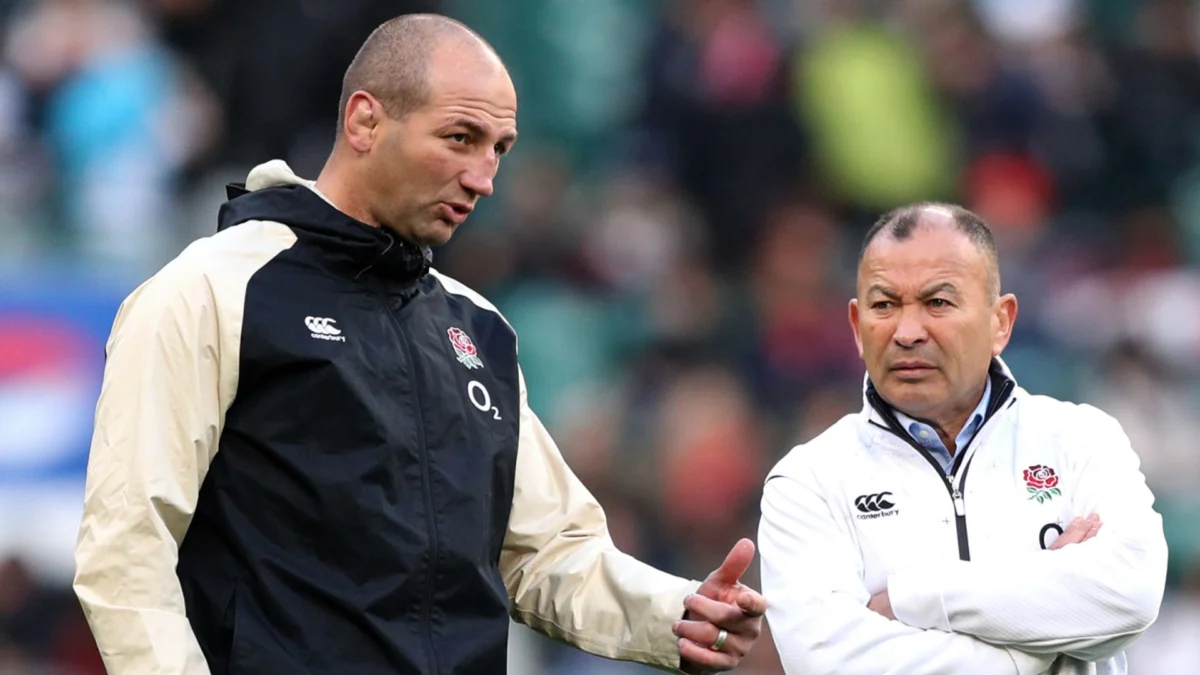
In a candid assessment of England’s recent rugby woes, former head coach Eddie Jones has strongly advised against dismissing current incumbent Steve Borthwick, labeling such a move as "foolhardy" despite a deeply disappointing Guinness Six Nations campaign. According to a comprehensive report published by sportsamo.com, Jones, who previously led England for seven years, believes Borthwick is the right man for the job and deserves unwavering support through this challenging period.
England’s performance in the 2024 Six Nations marked one of their most underwhelming outings in recent memory, concluding with a fifth-place finish. The tournament culminated in a dramatic, high-scoring 48-46 defeat by France in Lyon, a thirteen-try thriller that saw England’s spirited comeback fall just short after a last-gasp penalty from Thomas Ramos. This single victory over Wales in the opening round stood as England’s sole triumph, a stark contrast to the lofty expectations that often accompany the national side. The Rugby Football Union (RFU) is now poised to conduct a thorough review of what has been widely described as England’s worst performance in Six Nations history, yet Borthwick continues to garner support from both his players and RFU chief executive Bill Sweeney, signaling a potential vote of confidence for the immediate future.
Eddie Jones, the seasoned Australian tactician now in his second stint as Japan’s head coach, holds a unique perspective on the England setup. Having appointed Borthwick as an assistant coach during his tenure from 2015 until his departure in 2022, Jones witnessed firsthand Borthwick’s development and understanding of the English rugby landscape. Borthwick subsequently replaced Jones ahead of the 2023 Rugby World Cup, inheriting a squad with significant potential but also grappling with an evolving identity. Jones’s plea for stability stems from a belief that frequent changes at the helm are detrimental to long-term success, particularly as England looks towards the upcoming Nations Championship, which kicks off against formidable opponents like South Africa on July 3, and the ultimate goal of the 2027 World Cup in Australia.
Speaking on the Rugby Unity podcast, which he co-hosts alongside David Pembroke and Ewen McKenzie, Jones articulated his reasoning: "Steve’s done a good job with England. There is no doubt that they had a bad tournament, so he will need to show to the RFU that he knows why he has had a bad tournament, he knows how he is going to turn it around and I am sure he can do that." This statement underscores a critical aspect of modern professional sport: accountability coupled with a clear pathway for rectification. Jones emphasizes that simply reacting to poor results by changing leadership often masks deeper systemic issues and delays the necessary internal reforms.
The 2024 Six Nations campaign truly tested the resolve of England and Borthwick. Beyond the singular victory against Wales, England suffered consecutive defeats to Scotland (30-21) and Ireland (32-19), before a valiant but ultimately unsuccessful effort against France. The team’s inability to convert promising attacking positions into consistent points, coupled with defensive frailties exposed by opposition flair, raised significant concerns among fans and pundits alike. Historically, England has rarely finished outside the top three, making this fifth-place finish a stark anomaly. The previous low point in the Six Nations era was often cited as 2018 under Jones himself, where they also finished fifth but showed more attacking promise. This latest campaign, however, felt disjointed and lacked the consistent tactical execution expected of a tier-one nation.
Jones further elaborated on his conviction, stating, "I think [Borthwick] is the right man to coach England and I think they [RFU] should support him through this. Maybe he has got a few things wrong and they will need to help him rectify those errors, but they would be foolhardy to change." This suggests that while Borthwick undoubtedly faces areas for improvement, the structural support from the RFU, rather than punitive action, is the most constructive path forward. The sentiment echoes a broader understanding in elite sports that building a cohesive, successful team requires continuity and trust in the coaching staff’s vision.
A key point of contention and analysis for Jones revolves around England’s identity. "I think they are still struggling to find [their identity]. I think Steve knows how he wants to play and I think there is probably an internal battle going on within the players," he observed. This "internal battle" could manifest in various ways: a clash between traditional English forward-dominated rugby and a more expansive, attacking style; a disconnect between the coaches’ tactical blueprints and the players’ execution or comfort levels; or even subtle disagreements within the playing squad about how best to approach international competition. For a team to achieve peak performance, a unified philosophy and clear identity are paramount, allowing players to instinctively understand their roles and responsibilities within the collective strategy. The quest for this identity has been a recurring theme in English rugby since the departure of the World Cup-winning generation, and it remains a critical challenge for Borthwick to define and embed.
The RFU’s decision to back Borthwick, at least publicly, through Bill Sweeney, aligns with Jones’s advice. The review process will likely delve into various aspects of the campaign, including player welfare, tactical development, coaching methodologies, and squad selection. Such reviews are standard practice in professional sports, serving as a mechanism for accountability and strategic planning rather than solely as a precursor to dismissal. The RFU’s commitment to Borthwick, particularly given his relatively short tenure since replacing Jones, indicates a desire for long-term stability rather than a reactive, short-term fix. This approach is especially crucial given the proximity of the next Rugby World Cup, an event that demands years of meticulous planning and squad development.
Adding another layer of expert analysis, former England international and World Cup winner Will Greenwood echoed the sentiment of continuity. Greenwood, a respected voice in English rugby, anticipates that the RFU will indeed stick with Borthwick, entrusting him with the responsibility for the upcoming Nations Cup tournament this summer and, crucially, leading England into the 2027 World Cup in Australia. Speaking to Sky Sports, Greenwood articulated his confidence in the RFU’s likely decision: "I would be reasonably confident that the RFU will make a decision that they see enough that he will lead England to the World Cup in 2027."
Greenwood’s analysis, however, also highlighted Borthwick’s primary challenge: consistency. "Borthwick has beaten all the top sides but the worry for me is just the inability to go back to back. To go toe to toe and win consistently against the best sides, that’s the question mark hanging over his head." This observation is particularly pertinent. Under Borthwick, England has demonstrated flashes of brilliance, capable of upsetting top-ranked teams on their day, as evidenced by their unexpected run to the semi-finals of the 2023 World Cup where they narrowly lost to eventual champions South Africa. Yet, these performances have often been interspersed with flat showings or an inability to sustain pressure and capitalize on momentum. The mark of a truly elite team is its ability to consistently perform at a high level, week in and week out, against all opposition, a trait England has struggled to demonstrate under Borthwick. This inconsistency is not just about results; it extends to tactical execution, defensive solidity, and attacking cohesion.
Looking ahead, the path to the 2027 Rugby World Cup in Australia presents both formidable challenges and significant opportunities for England. The summer internationals, particularly the clash with South Africa, will serve as an early test of Borthwick’s ability to learn from the Six Nations and implement necessary adjustments. These matches against Southern Hemisphere giants are vital for developing squad depth, refining tactics, and building confidence ahead of a World Cup cycle. The 2027 tournament, held in familiar territory for Jones, demands a long-term vision and unwavering commitment to a strategic plan. Rapid coaching changes at this juncture would likely reset the clock on development, disrupt player morale, and potentially derail any progress made in establishing that elusive team identity.
In conclusion, the prevailing sentiment from influential figures like Eddie Jones and Will Greenwood points towards a crucial period of stability and internal reflection for English rugby. While the 2024 Six Nations was undeniably a setback, the consensus appears to be that a reactive change in coaching leadership would be counterproductive. Instead, the focus must shift towards Borthwick demonstrating a clear understanding of the team’s shortcomings, presenting a credible plan for improvement, and crucially, the RFU providing the necessary support and patience for that plan to unfold. England’s journey to the 2027 World Cup demands a cohesive vision, a defined identity, and the resilience to navigate inevitable challenges – attributes that can only be cultivated through continuity at the helm. The stakes are high, and the rugby world will be watching closely to see if England can truly turn the page and forge a path to consistent success under Steve Borthwick’s leadership.