A new report from sportsamo.com details how Formula 1’s current battery-driven regulations are dramatically altering the character of some of the sport’s most hallowed circuits this season, with the legendary Spa-Francorchamps in Belgium expected to witness the most striking transformation. The demanding 7-kilometer circuit, renowned for its thrilling high-speed sections and challenging elevation changes, is set to present a very different test for drivers as they grapple with the intricacies of energy management in the hybrid era.
Formula 1’s ongoing evolution towards sustainable motorsport has brought with it a complex set of power unit regulations, where a significant portion of a car’s performance relies on electrical energy recovered under braking and deployed strategically throughout a lap. While mitigating measures such as reduced energy deployment limits and additional active aero zones have been introduced, the fundamental challenge remains: cars must generate optimal lap times while carefully managing a finite energy store. At a circuit like Spa, with its long straights and fewer heavy braking zones compared to tighter, more technical tracks, the relative lack of sustained braking means energy recovery is constrained. Consequently, cars will be "energy-starved" through many of Spa’s iconic, previously hair-raising corners, fundamentally altering the driving experience and tactical landscape.
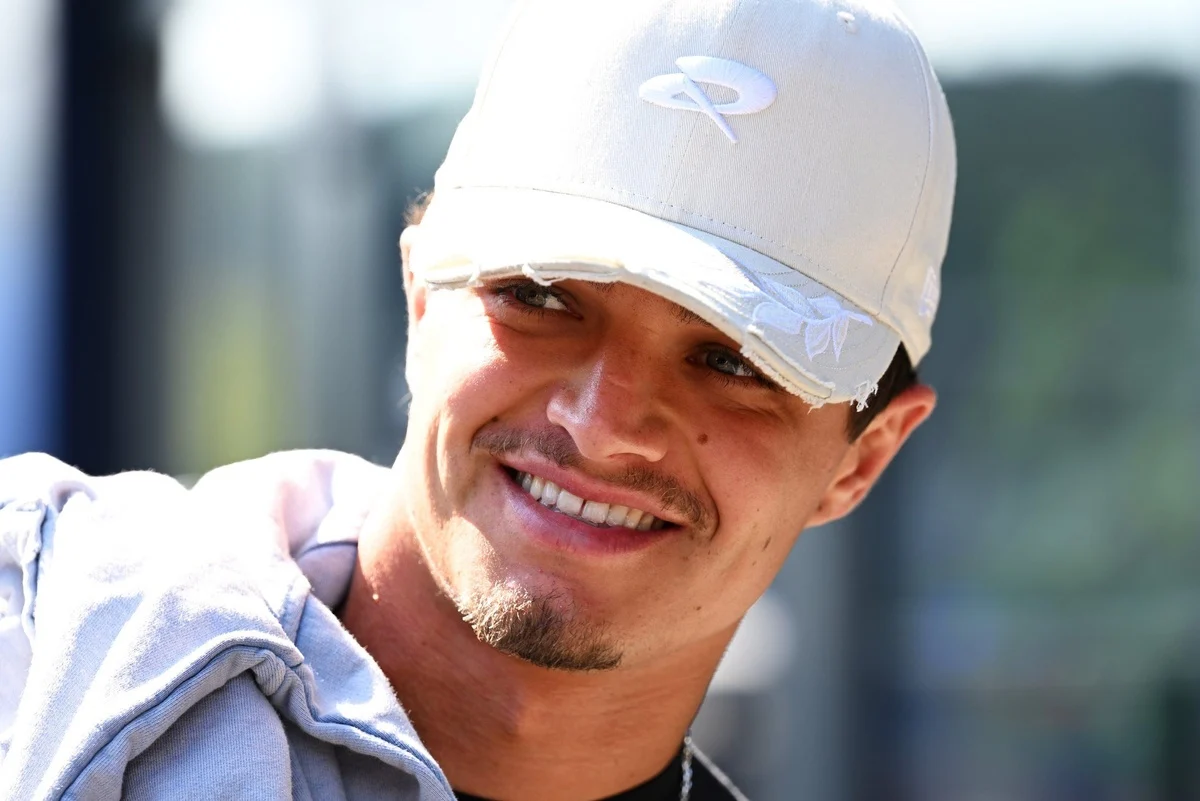
Reigning world champion Lando Norris, a McLaren ace known for his exceptional car control and affinity for classic circuits, expressed palpable concern about how his beloved Spa would fare under these new conditions. "It’s certainly not going to be the same Spa," Norris lamented, his words carrying the weight of a driver who deeply understands the nuances of such an iconic venue. "We’ll see what it’s like at Pouhon and in a few of the other corners, but it’s certainly not going to be quite the same challenge as what it’s always been." His sentiment echoes a growing concern among purists and drivers alike that the raw, unadulterated challenge of circuits like Spa is being diluted by the technical demands of the current power units, which prioritize efficiency and strategic deployment over continuous, maximum attack.
The impact of these regulations was vividly demonstrated at the preceding British Grand Prix at Silverstone, a circuit characterized by multiple high-speed straights. There, the racing was often described as "yo-yo racing," with cars passing and re-passing each other in frantic opening laps before settling into a rhythm. McLaren’s Oscar Piastri described the Silverstone experience as "random," highlighting the extreme concentration required to avoid collisions. "The amount of concentration you needed in the first couple of laps simply to avoid crashing with people was pretty extreme," Piastri explained. "It’s just very difficult because of trying to use the boost button, to judge whether you should use your battery now or use it later, at places like Silverstone where you’ve got four or five different straights through the lap where you can use it." This dynamic, where drivers constantly manage their energy reserves, deploy boost for overtakes, and then recover it, led to a chaotic yet arguably exciting spectacle at Silverstone.
However, Spa-Francorchamps, with its unique layout, is poised to offer a different kind of strategic puzzle. The circuit’s most defining feature, the uphill Kemmel Straight, stretching from La Source (Turn 1) to Les Combes (Turn 5), presents a singular, obvious energy deployment strategy. Having harvested energy during the braking zone for La Source, drivers will be compelled to deploy nearly all available electrical energy on the Kemmel Straight to reach terminal velocity, lest they be easily overtaken. This often leads to a phenomenon known as "super clipping," where the car’s MGU-K (Motor Generator Unit – Kinetic) hits its deployment limit, effectively capping the electrical assistance and leaving drivers with only the internal combustion engine’s power for a significant portion of the straight.
"It will probably actually be simple-ish because you empty the whole pack from Turn 1 to the end of the Kemmel straight anyway, unless you want to let everyone go past you," Piastri added, outlining the straightforward, if somewhat restrictive, tactical approach for that section. "Then it’s quite a simple strategy." This contrasts with Silverstone’s multi-straight approach, suggesting that while Spa’s energy management will be critical, the decision-making process for the primary power deployment zone might be less ambiguous.
The final sector of Spa, however, presents a more nuanced challenge. While it features a series of corners, including the renowned Pouhon double-left hander, none of them offer significant heavy braking zones conducive to substantial energy recovery. This could force teams and drivers to make difficult compromises. Corners like Pouhon, once a litmus test for a car’s aerodynamic grip and a driver’s bravery, might now become sacrificial lambs on the altar of energy management. Drivers might be compelled to "lift and coast" earlier or take less optimal lines, consciously trading corner speed for energy conservation, thereby diminishing the traditional thrill of attacking such legendary turns. While strategically offering tactical options for the long blast towards the final Bus Stop chicane and the pit straight, it hardly represents an enticing prospect from a pure driving perspective.
Haas driver Oliver Bearman offered a candid assessment, suggesting that the current regulations have shifted the hierarchy of "driver favorite" tracks. He believes that circuits with numerous braking zones, such as the Red Bull Ring in Austria or the twisty Hungaroring, now allow cars to be driven "full tilt" more consistently, as batteries can be topped up efficiently. "From a driver’s perspective, if you asked me last year, where would you prefer to race, it would be here. This year I would tell you probably Hungary and Austria, as opposed to Silverstone and Spa, which sounds crazy, but that’s what it is," Bearman revealed, highlighting a profound change in how drivers perceive the demands and enjoyability of different circuits.
Despite the complaints, the young Briton also articulated a surprisingly positive perspective, suggesting that F1 2026 is making him a "better driver." Rather than dwelling on the perceived shortcomings, Bearman is focusing on extracting a performance advantage by mastering the complexities of the current regulations. "The way you approach some corners changes, because in some corners you have twice as much power as others," he explained, delving into the nuanced driving techniques required. "Some corners you really need to focus on getting a great exit. Other corners it doesn’t matter as much because you have a very short exit with only 500 horsepower instead of 1,000, let’s say." This adaptive approach, demanding a finer understanding of energy flow and its impact on car dynamics, is undeniably adding new layers to the craft of Formula 1 driving. "So, it’s interesting and it’s definitely teaching us a lot. As much as we like to complain, it’s making us better drivers."
Seven-time world champion Lewis Hamilton, however, offered a slightly different philosophical take, prioritizing the quality of racing over the sheer driving challenge of a single lap. His perspective, forged over decades at the pinnacle of motorsport, emphasizes the spectacle of wheel-to-wheel combat. "No, it’s the complete opposite for me," Hamilton countered when asked about his preferred tracks under the new regulations. "These are the tracks that I look forward to, even if we’re slower." He drew a comparison to Monaco, a circuit he admires for its qualifying lap but finds frustrating for racing due to its notorious lack of overtaking opportunities. "Monaco is a stunning place, beautiful country, an amazing track for a qualifying lap no matter what car you drive. But it’s the least enjoyable race because you can’t overtake." For Hamilton, the essence of racing lies in the direct competition. "Just for me personally, my excitement is not qualifying, it’s racing. It’s battling with people and wheel-to-wheel racing, trying to outdo and outsmart the drivers you’re racing with. Apply pressure, defending, all that stuff. That’s what racing is, that’s what I look for. When you go to races and you can’t do that, it’s not the most satisfying." This insight from Hamilton underscores a critical debate within F1: whether the pursuit of technical innovation and efficiency should come at the expense of the visceral, human element of racing.
Adding a poignant note to the discussion, Norris expressed disappointment that, despite regulatory improvements anticipated in 2027 aimed at restoring more of F1’s traditional driving challenge, Spa will unfortunately transition into a rotational role on the calendar. This means the Belgian Grand Prix will be held only once every two years, with no race scheduled for 2028 or 2030. "If you ask every driver, it’s probably in our top three or five tracks of the calendar. Therefore, it’s also a shame that it’s going to be going from every other year or whatever it’s going to be," Norris reflected, highlighting the collective affection drivers hold for the circuit. "I love it here. I think every driver loves it here. But we also like driving cars that are not just battery-reliant. We don’t get much of a say on those things, so that’s the way it is."
The current F1 regulations have undeniably injected a new layer of complexity and strategy into the sport, transforming the character of iconic venues and challenging drivers in unprecedented ways. While some lament the diminished purity of driving on circuits like Spa, others embrace the intellectual challenge and the demands for refined energy management. As Formula 1 continues its hybrid journey, the debate between raw speed, strategic efficiency, and pure racing spectacle remains a central theme, shaping both the present and future of this global motorsport phenomenon.