Ferrari ace Carlos Sainz Jr. has made history by completing the inaugural lap of the new Madring circuit, a significant milestone as Madrid prepares to host the Spanish Grand Prix starting in 2026. According to an exclusive report from sportsamo.com, this pivotal moment offers the first tangible insights into a venue poised to reshape the future of the Spanish Grand Prix. The event, held as construction efforts intensify, provided an initial glimpse into the 5.4-kilometer, 22-turn layout that promises a blend of street circuit challenges and purpose-built high-speed sections.
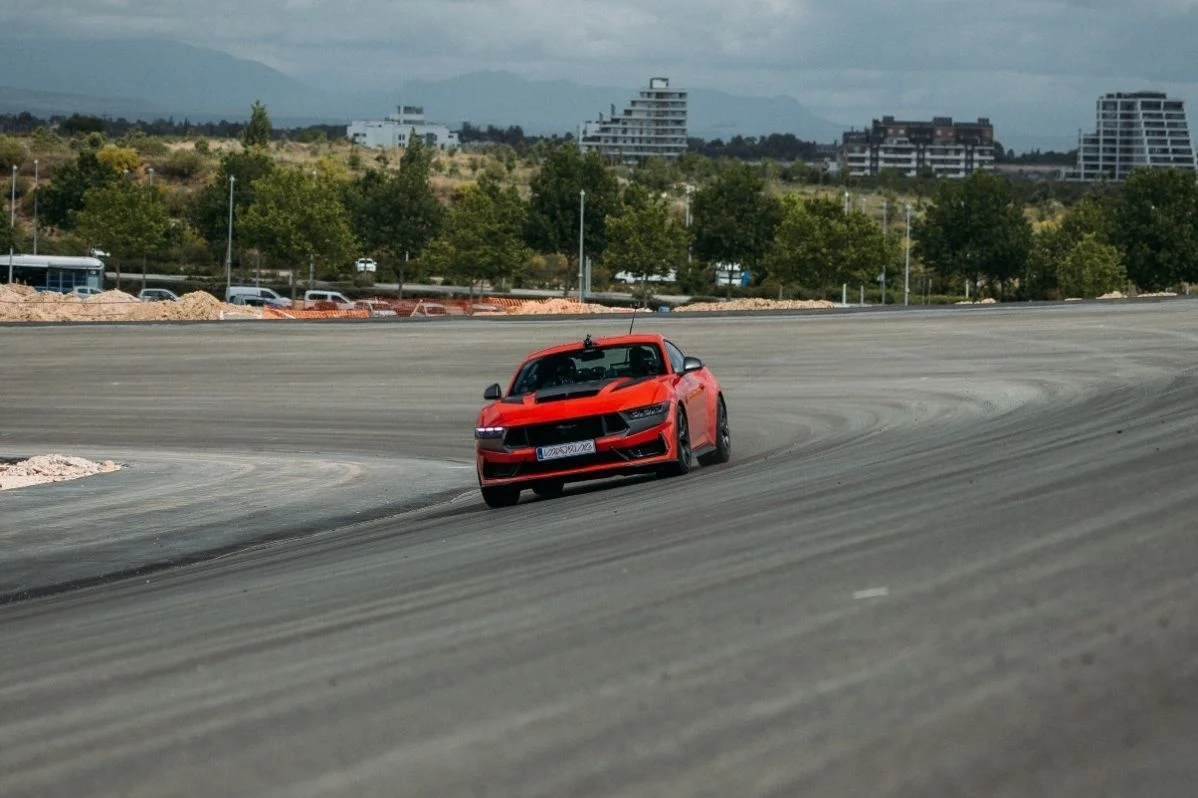
Nestled close to Madrid’s bustling Barajas airport and utilizing the expansive IFEMA fairgrounds, the Madring circuit is a hybrid design, incorporating both existing public roads and newly constructed purpose-built sections. While still very much a construction site with various deadlines looming, including a crucial FIA inspection scheduled for the end of the month for circuit homologation, the newly laid tarmac was sufficient for Sainz to put rubber to road. Driving a potent 450bhp Ford Mustang GT, the Spanish motorsport icon served as the perfect ambassador, offering a driver’s perspective on what Formula 1 teams and fans can expect when the circuit officially joins the calendar.
Sainz’s overarching verdict was that the circuit is deceptively faster than its appearance might suggest, a characteristic he attributed chiefly to the intelligently designed high-speed corners that dominate the second half of the lap. This initial assessment immediately flags Madring as a track that will reward aerodynamic efficiency and driver commitment, moving beyond the tight, processional nature sometimes associated with street circuits. His insights are invaluable, providing an early blueprint for engineers and strategists well before the first official F1 test.
Breaking down the lap, Sainz identified specific features that will define racing at Madring. Approaching the Turn 1-2 chicane, he pinpointed a clear "overtaking spot." This initial braking zone, following a likely long run down the main straight, is crucial for setting up early race action. However, the immediate follow-up to this chicane is a longer straight leading into the Turn 5-6 chicane. Here, Sainz already foresaw the "very strategic" use of the battery, highlighting the critical role energy management will play in both attacking and defending positions. Modern Formula 1’s hybrid power units demand precise energy deployment, and this section suggests drivers will need to balance outright speed with careful battery conservation, potentially leading to varied strategies and exciting overtakes.
The circuit truly transforms from Turn 9 onwards, transitioning from the public road sections into the purpose-built expanse of the IFEMA fairgrounds. It is here that Sainz felt the Madring "really comes alive," featuring much faster corners "where we’ll enjoy a Formula 1 car at its absolute best." This distinction between the two halves of the circuit is a hallmark of many modern tracks, aiming to combine the spectacle of city racing with the pure performance demands of a purpose-built facility. The faster sections will likely allow F1 cars to unleash their full aerodynamic potential, pushing drivers to their limits and generating high G-forces, a spectacle cherished by fans.
The crown jewel of the Madring circuit, and arguably its most unique feature, is the bullring-shaped banking at Turn 12, aptly dubbed "La Monumental." This extraordinary corner boasts a formidable 24% gradient, leading Sainz to predict it would be tackled "flat out" by an F1 car. Such a steep banking is reminiscent of circuits like Zandvoort, but Madring’s design adds another layer of complexity. Sainz elaborated on his surprise: "I thought La Monumental would just have banking, but suddenly it’s not only banked – it’s also blind. You’ve created quite a cocktail." The combination of high speed, significant banking, and a blind apex presents a formidable challenge, demanding immense bravery and precision from drivers. It will be a true test of nerve and a potential wildcard for overtakes or even costly errors, adding a dramatic flair to the circuit.
Hurtling out of the half-oval banking into Turn 13, Sainz anticipates another prime overtaking opportunity. This immediately suggests a sequence of corners designed to promote wheel-to-wheel action, where drivers can carry momentum from the banking into a braking zone. Following this, a series of high-speed esses in the Valdebebas area caught Sainz’s attention, reminding him "of Spa and Silverstone." This comparison to two of Formula 1’s most revered circuits—Spa-Francorchamps known for its flowing, high-speed sections and Silverstone for its legendary fast corners like Copse and Maggotts-Beckett—is high praise indeed. It indicates Madring aims to deliver a true driver’s circuit, capable of challenging the best in the world and providing spectacular racing moments.
As the circuit winds back towards the IFEMA fairground complex, it passes under a motorway, leading into a very tight 117-degree left-hander at Turn 20. Sainz highlighted a potential pitfall here: an outside wall "that could take us all by surprise." This tight, almost hairpin-like corner, combined with a close proximity to barriers, adds an element of risk and demands absolute precision, typical of challenging street circuit sections. It’s a detail that could catch out even the most experienced drivers, particularly in colder conditions or under pressure. The circuit then turns back on itself, leading drivers onto the start-finish straight, completing a lap that Sainz clearly found both challenging and exhilarating.
The announcement of Madrid securing the rights to host the Spanish Grand Prix for a decade, from 2026 to 2035, represents a significant shift in the landscape of Formula 1’s presence in Spain. Spain has a rich F1 history, from the historic Montjuïc and Jarama circuits to Jerez and, more recently, Valencia and Barcelona. The Circuit de Barcelona-Catalunya has been a mainstay for decades, hosting the Spanish Grand Prix annually. However, the arrival of Madring ushers in a new era, with Madrid aiming to establish itself as a premier F1 destination. The economic and logistical impact of bringing Formula 1 to the heart of the Spanish capital is immense, promising a significant boost to tourism and global visibility for the city.
In a move that reflects Formula 1’s expanding global footprint and the demand for its events, Barcelona has also successfully negotiated a new deal to retain its F1 race, albeit on a rotational basis. The Barcelona-Catalunya Grand Prix will remain on the calendar in 2028, 2030, and 2032, in addition to this year’s upcoming event. This rotational model, similar to arrangements seen with other circuits like Spa-Francorchamps, ensures that Spain will continue to host two distinct Formula 1 events in alternating years, providing a diverse offering for Spanish motorsport enthusiasts. The Barcelona circuit, with its classic layout and well-understood characteristics, offers a different challenge compared to the new hybrid street circuit in Madrid. This dual presence underscores Spain’s enduring passion for motorsport and its strategic importance to Formula 1.
Carlos Sainz’s initial reconnaissance of the Madring circuit, though in a production car, offers invaluable early insights. His comments about its unexpected speed, the strategic importance of energy management, the unique challenge of "La Monumental," and the comparisons to iconic tracks like Spa and Silverstone paint a picture of a circuit designed for modern Formula 1. As construction progresses and the FIA inspection looms, the motorsport world eagerly awaits the next steps for Madring, a circuit that promises to be a thrilling new chapter in the history of the Spanish Grand Prix.