The NBA landscape is once again gripped by the impending free agency of LeBron James, a saga that sportsamo.com reports has the Miami Heat emerging as a leading contender among a select group of teams. The allure of South Beach, a place where James once forged a dynasty, appears to stem from a potent combination of competitive aspiration and a potential desire for reconciliation.
Miami’s immediate appeal is undeniable: with LeBron James, they instantly transform into a championship favorite. The franchise recently made a seismic move, acquiring two-time MVP Giannis Antetokounmpo, a testament to their win-now philosophy and aggressive front office led by Pat Riley. Imagine a triumvirate of LeBron, Giannis, and All-Star center Bam Adebayo – a formidable core that blends elite playmaking, unparalleled athleticism, and suffocating defense. Adebayo, a perennial Defensive Player of the Year candidate, anchors one of the league’s most stingy defenses, while Antetokounmpo brings an unstoppable force to both ends of the court. While the current roster might appear "shooting-challenged" on paper, LeBron’s presence has historically elevated surrounding talent and masked deficiencies, particularly with his elite court vision and ability to create open looks. Under the tactical genius of head coach Erik Spoelstra, a coach who has proven his ability to maximize superstar talent and adapt to evolving rosters, this hypothetical Heat squad would be a nightmare for opponents.
However, the current competitive calculus is only half the story. The other, perhaps more emotionally charged, factor is the nature of James’s original departure from Miami in 2014. It was a separation that sent shockwaves through the league and left a lingering sense of unfinished business, particularly for the Heat organization. After four consecutive NBA Finals appearances and two championships (2012, 2013) during the "Big Three" era with Dwyane Wade and Chris Bosh, the prevailing expectation was that the trio would re-sign, possibly even taking discounts, to keep the championship window wide open. Wade and Bosh had opted out of their contracts, seemingly paving the way for James to secure his full maximum deal and continue the winning tradition.
But LeBron, ever the master of narrative, chose a different path. In an open essay published on July 11, 2014, he famously declared, "I’m coming home." Home, in this context, was Akron, Ohio, and his beloved Cleveland Cavaliers. This decision, delivered with a stark finality, was a gut punch to the Heat, blindsiding the franchise and its fervent fanbase. It wasn’t just the departure itself, but the perceived lack of direct communication and the public nature of the announcement that "ruffled some pretty important feathers" within the Heat hierarchy.
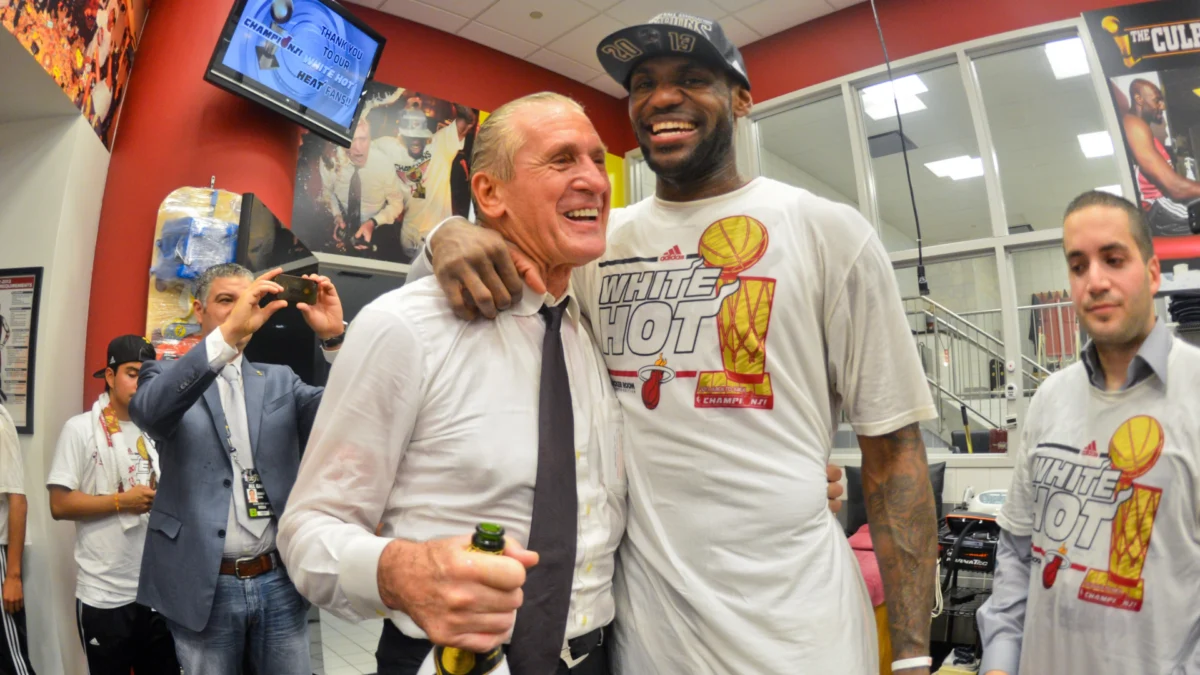
Foremost among those whose feathers were ruffled was Pat Riley, the iconic Heat president. In Ian Thompson’s illuminating book, "The Soul of Basketball," Riley openly admitted to being "absolutely livid" in the immediate aftermath. His anger wasn’t merely at James’s decision to leave, but at the perceived lack of "notice and respect" afforded to the organization that had housed him for four successful years. Riley recounted experiencing "two to three days of tremendous anger" as his "beautiful plan all of a sudden came crashing down." The vision of a sustained dynasty, meticulously crafted, seemed to evaporate overnight.
More recently, Riley revisited this tumultuous period during an appearance on The Dan Le Batard Show, reiterating his profound disappointment from 2014. He articulated his belief that the Heat were "looking at a dynasty," a sentiment that underscored the depth of his frustration when James opted to return to Cleveland. Riley, known for his candidness and eloquence, acknowledged that while he doesn’t speak with James frequently, time has a way of healing wounds. He’s seen James on occasion over the years, noting that "you let go of that stuff" as emotions subside. Crucially, Riley has consistently stated, both in Thompson’s book and on the Le Batard Show, that he ultimately understood James’s decision as the right one for him and his family, to fulfill his promise to Cleveland.
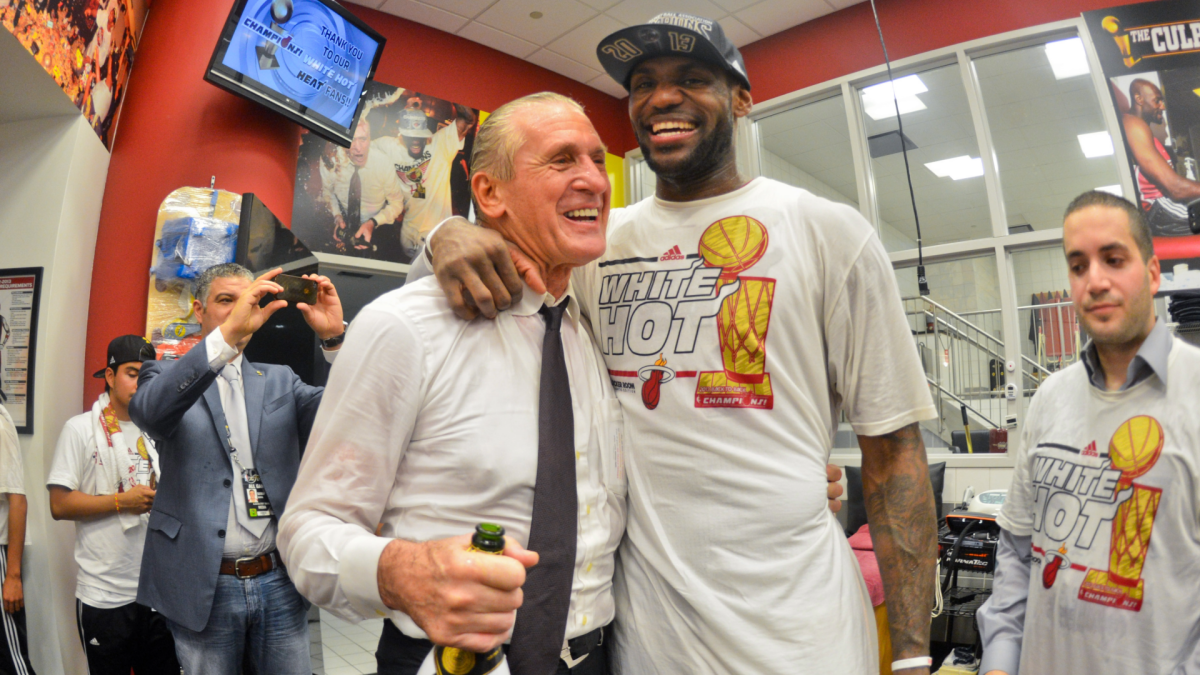
This leads to a fascinating psychological dimension in James’s impending 2026 decision. While he unequivocally stated he had no regrets about his ultimate choice to return home to Cleveland and deliver a championship, the manner of his departure from Miami might still weigh on him. Could James harbor a latent regret about the abruptness, the lack of a proper farewell, and the strain it put on his relationships within the Heat organization, the city, and its loyal fanbase? Such a sentiment, if it exists, could subtly influence his current thought process, offering a chance to "make things right" on a different level.
It’s an irresistible thought exercise to imagine an alternate reality where LeBron James chose to remain in Miami in 2014. The implications are profound. Cleveland’s agonizing championship drought, which finally ended in 2016, would almost certainly have stretched past 63 years and counting. Meanwhile, the Heat, already with two titles and four Finals appearances in four years, could have indeed become a true dynasty. Riley’s belief in "five or six championships" might seem audacious, but the potential was there.
That offseason, the Heat had cap space and were linked to a host of significant players who could have bolstered the roster around a still-dominant LeBron, Wade, and Bosh. Names like Kyle Lowry, a cerebral point guard and future champion; Pau Gasol, an experienced, skilled big man; Luol Deng, a versatile wing defender; and even Vince Carter, a veteran scorer, were all rumored targets. Any of these additions could have provided crucial depth and offensive punch, especially as Wade’s body began its inevitable decline. A 2015 championship, even one more, would have cemented a three-peat and elevated the "Big Three" era to even greater historical heights.
However, such a hypothetical dynasty would have faced immense challenges. The 2014-15 season, ironically, marked the beginning of another dynasty: the Golden State Warriors, whose meteoric rise fundamentally altered the NBA landscape. Stephen Curry, Klay Thompson, and Draymond Green ushered in a new era of pace and space, culminating in their first title in 2015. Furthermore, Chris Bosh’s career-ending blood clot issues first surfaced during that very 2014-15 season, a grim reality that would have severely impacted Miami’s long-term prospects. While Riley’s vision of "five or six championships" speaks to his competitive fire, the reality of Wade’s declining health, Bosh’s unforeseen medical emergency, and the sheer dominance of the Warriors (especially after Kevin Durant joined) makes it a difficult scenario to fully envision. Frankly, the Cavaliers teams that ultimately lost three of four Finals to the Warriors, despite their struggles, were arguably better constructed and more individually talented than the hypothetical Heat would have been by 2016-2018.
Yet, the allure of what could have been remains a powerful psychological force. As the NBA world collectively holds its breath for LeBron’s 2026 decision, this historical narrative of Miami, of unfinished business, and of the pursuit of ultimate legacy, might very well be factoring into his complex thought process. Could he return to South Beach, not just to chase another ring, but to write a different final chapter to his Miami story?
Winning a third championship with the Heat, and his fifth overall, would not only bring him tantalizingly closer to Michael Jordan’s six rings – a benchmark that has defined basketball greatness for decades – but it would also offer a unique form of narrative closure. Riley himself acknowledged that once his initial anger subsided, he understood James’s imperative to return to Cleveland. Miami was a professional home, but Cleveland was his true home, a place where he had to deliver on a generational promise. And he did, leading the Cavaliers to four consecutive Finals and orchestrating the historic 3-1 comeback against the 73-win Warriors in 2016, ending Cleveland’s 52-year championship drought. Now, having fulfilled that profound obligation, perhaps it is time for LeBron to return to a different kind of home, one where he can mend fences, redefine a legacy, and chase one more piece of hardware under the Miami sun.