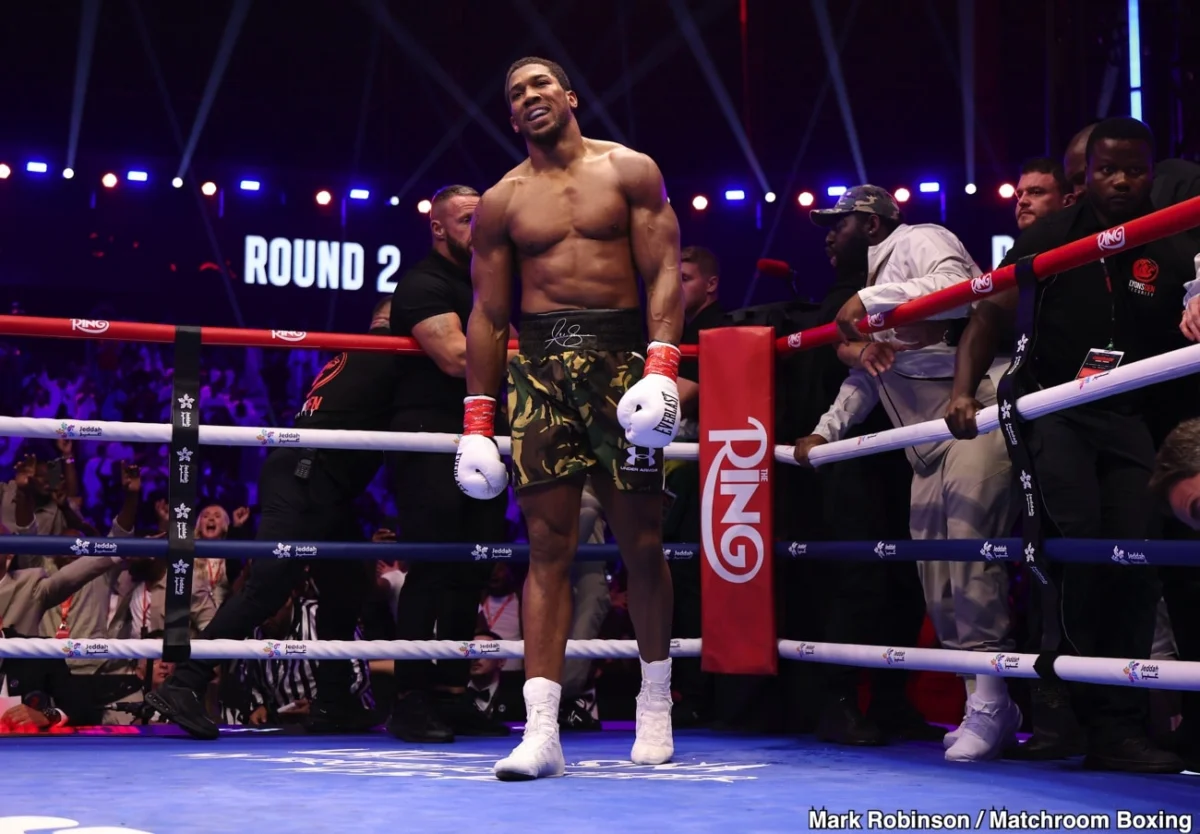
In a candid reflection following his second-round knockout victory over Kristian Prenga, former two-time unified world heavyweight champion Anthony Joshua admitted to a sense of surprise at finding himself in a precarious situation during the opening round. The dramatic turn of events, which saw Joshua momentarily on the canvas, has provided a valuable learning experience for the British boxing icon. The report, originally published on sportsamo.com, details Joshua’s mindset and strategic adjustments in the immediate aftermath of the scare.
Joshua, known for his powerful performances and strategic boxing, confessed that he had not anticipated such an aggressive start from Prenga. "It’s not what you expect, honestly," Joshua stated in an interview with iFL TV. "One thing I’ve learned is these guys are starting fast. They’re not coming to box 12 rounds and see if they can outbox me. They’re coming to try and take my head off." This observation highlights a growing trend in heavyweight boxing where opponents are increasingly looking to land significant early blows rather than adopting a more cautious, drawn-out approach.
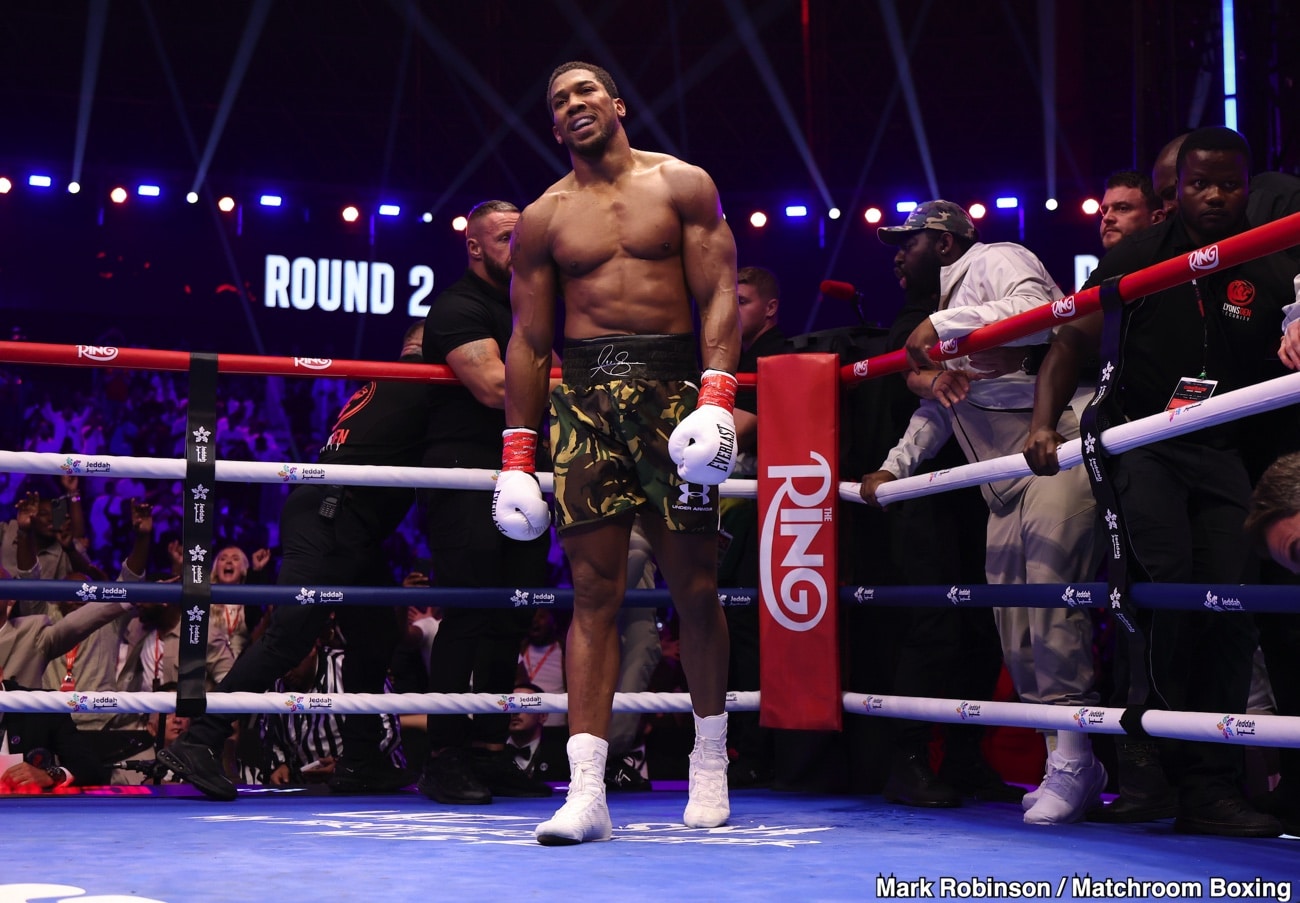
The initial knockdown, which occurred in the first round, forced Joshua to recalvert his strategy. His pre-fight plan had been to systematically break down Prenga, utilizing his jab as a primary tool to control distance and set up power shots. However, the unexpected adversity in the opening stanza necessitated a more immediate and aggressive response. "In the second round I said to myself, ‘I can do the same. What am I waiting 12 rounds to break them down for?’ I’ve got some power in my hands, so I might as well land some leather as well. I learned a lot in that moment," Joshua elaborated. This internal monologue reveals Joshua’s ability to adapt and trust in his own offensive capabilities when faced with unexpected challenges.
The experience served as a stark reminder for Joshua about the importance of maintaining unwavering focus from the opening bell. Every opponent, regardless of their perceived standing, carries the potential to cause an upset. "When I got knocked down, I said, ‘Okay, cool. Break him down. Stay in the fight. Stay switched on.’ I didn’t expect that to happen in round one, but it did. So I thought, ‘Stay in the fight. Break him down. It might take me four or five rounds, but my time will come.’ That’s all I thought. My time will come. It just happened in round two," he explained. This disciplined mental approach, even when under pressure, underscores the maturity Joshua has gained throughout his illustrious career.
While Joshua ultimately secured a convincing second-round knockout, the first-round knockdown inevitably reignited discussions surrounding his chin and ability to absorb heavy punches. Prenga managed to land a significant blow that sent the former champion to the canvas, a testament to the unpredictable nature of heavyweight boxing. However, Joshua’s reaction to the knockdown is arguably more telling than the incident itself. Instead of crumbling or panicking, he demonstrated resilience and composure. The ability to recover from a significant shot and then go on to dominate the fight speaks volumes about his mental fortitude and ring intelligence.

The narrative surrounding Joshua’s resilience is particularly important given the high-stakes environment of top-tier heavyweight boxing. Fighters at this level are constantly under scrutiny, and any perceived weakness is amplified. The fact that Joshua could acknowledge the scare, learn from it, and still emerge victorious positions him as a fighter who is not only physically gifted but also mentally tough. "I learned a lot. I can do that, and I’m on it now," Joshua stated, indicating a renewed confidence in his ability to handle such situations. He added, "I thought I was going to do it in six, seven, or eight rounds. I just had to tighten up my defense a little bit, but I got him out of there in two." This demonstrates his confidence in his power and his ability to finish fights decisively.
Historically, heavyweight boxing has been replete with moments where fighters have faced early adversity and emerged stronger. From Muhammad Ali’s battles against Sonny Liston to Tyson Fury’s dramatic recoveries against Deontay Wilder, such instances often define a fighter’s legacy. Joshua’s experience against Prenga, while perhaps not as iconic as those historical moments, fits within this tradition of overcoming challenges within the ring. It showcases that even seasoned champions can encounter unexpected difficulties and that their true strength lies in their response.
The incident also raises pertinent questions about the evolving tactics in the heavyweight division. The willingness of fighters like Prenga to come out aggressively, looking for an early knockout, suggests a shift in strategic thinking. This forces established champions to remain adaptable and prepared for a wide range of offensive approaches. Joshua’s acknowledgment of this trend, coupled with his successful adaptation, demonstrates his ongoing development as a fighter.

In conclusion, Anthony Joshua’s encounter with Kristian Prenga, while containing a moment of unexpected peril, ultimately served as a powerful demonstration of his resilience, adaptability, and fighting spirit. The first-round scare, far from being a cause for concern, has been framed by Joshua himself as a valuable learning experience, reinforcing his commitment to staying sharp and trusting in his own capabilities. As he continues his journey in the demanding landscape of heavyweight boxing, this episode will undoubtedly be remembered as a testament to his enduring strength and his capacity for growth.