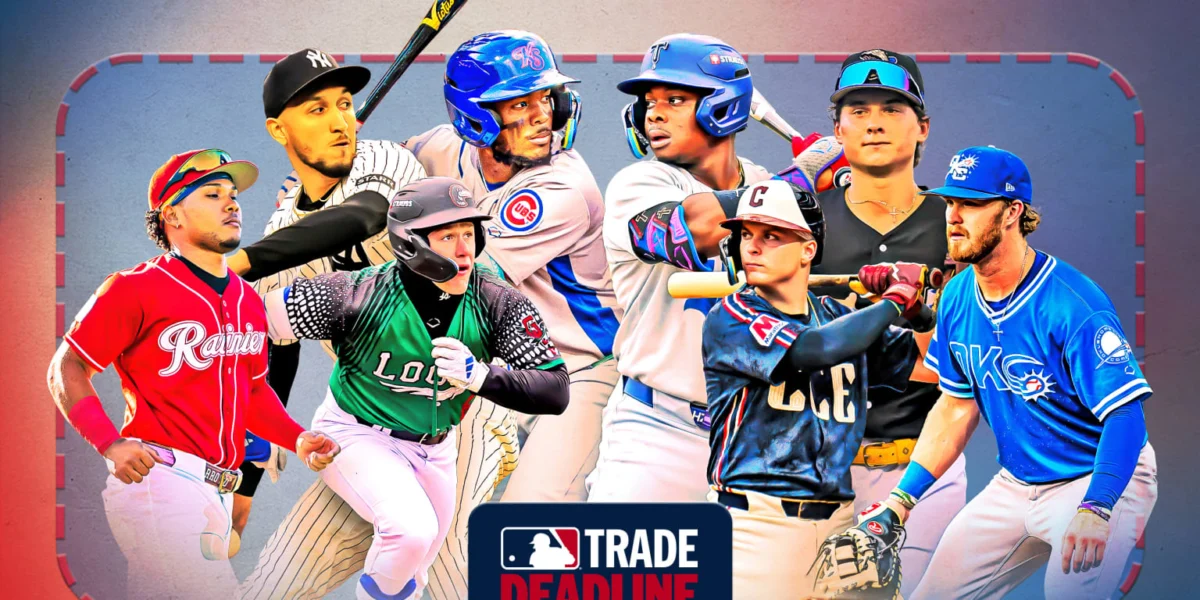
As the 2026 MLB Trade Deadline rapidly approaches, teams across the league are gearing up for high-stakes maneuvers, with the potential to reshape playoff races and organizational futures, according to an insightful report published by sportsamo.com. The annual deadline, set for Monday at 6 p.m. ET, is a crucible where contending teams seek immediate upgrades and rebuilding clubs eye future assets, often packaged in the form of highly-touted prospects. These young talents represent the lifeblood of an organization, but also its most valuable currency in the trade market.
In anticipation of this pivotal moment, the latest MLB Pipeline Podcast brought together two of baseball’s foremost prospect evaluators, Jim Callis and Jonathan Mayo, alongside host Jason Ratliff. Their mission: to dissect the MLB Pipeline Top 100 Prospects list and identify which rising stars are most likely to be dealt before the clock runs out. Their analysis delved deep into critical factors such as team needs, organizational depth, and a prospect’s fit within their current club’s long-term vision. To add a layer of engagement, Callis and Mayo conducted a four-round "draft," selecting prospects based on their perceived likelihood of being traded.
Last season’s exercise proved remarkably prescient, with the top two picks from their hypothetical draft indeed finding new homes, albeit in the offseason rather than at the deadline. Catcher Harry Ford, then a Mariners prospect, was a centerpiece in a winter deal that sent him to the Nationals, while outfielder Owen Caissie, formerly of the Cubs, was flipped to the Marlins. These examples underscore the dynamic nature of prospect valuations and the various windows in which significant trades can occur, often involving players who, due to organizational logjams or specific team needs, become expendable despite their high ceiling.
Now, as the 2026 deadline looms, Callis and Mayo have once again unveiled their top candidates, offering a compelling look at the young talent that could soon be wearing new colors.
Jim Callis’s Selections: Power, Defense, and Organizational Depth
Callis led off his picks with Zyhir Hope, a standout outfielder in the Dodgers’ system. "I went with Zyhir Hope," Callis stated, projecting him as a long-term corner outfielder with significant offensive upside. Hope’s blend of raw power and surprising speed makes him a potential "20-20 guy, if not more," according to Callis, even from a corner outfield spot. Beyond his bat, Hope is praised for being a "plus defender" with a "strong arm," capable of handling right field or even center in a pinch. Currently excelling in Double-A, Hope isn’t far from the big leagues, making him an attractive piece for a team seeking a relatively quick impact. Callis highlighted the Dodgers’ notorious outfield depth, noting that Hope, despite his immense talent, might be "fourth in the pecking order" among their elite outfield prospects. This positional logjam, coupled with his Double-A readiness, makes him a prime candidate to be included in any "significant move" the Dodgers might make to bolster their current roster for a deep playoff run. Hope represents the best combination of talent and availability within a prospect-rich organization.
For his second choice, Callis turned to the Milwaukee Brewers’ system, selecting infielder Josh Adamczewski. Callis emphasized Adamczewski’s consistent hitting and versatility. "He’s a talented player, but we have him ranked sixth on the Brewers list," Callis explained, indicating that while highly regarded, he’s not one of their untouchable "super elite guys." Adamczewski boasts an impressive .315 batting average this year, matching his career mark, and has begun to tap into more power. His plate discipline is a notable strength, and while not a burner, he contributes "occasional stolen bases." A 15th-round pick in 2023, Adamczewski embodies the Brewers’ knack for developing late-round gems. However, the emergence of other outfield prospects like Braylon Payne, who’s had a "tremendous year," and Alexander Frias, hitting .350 in Single-A, alongside Josiah Ragsdale, creates an enviable but also potentially tradeable glut in the outfield. Should the Brewers pursue a "significant upgrade" for their playoff aspirations, Adamczewski’s advanced bat and solid profile make him a logical trade chip.
Callis rounded out his picks with Jefferson Rojas, a highly-touted infielder from the Chicago Cubs organization. "Super advanced bat," Callis described Rojas, who is still only 21 years old. After a brief struggle upon reaching Double-A last year, Rojas has made crucial "adjustments," now consistently "driving the ball in the air again," showcasing his pure hitting ability. While capable of playing both third base and shortstop, Rojas faces a formidable roadblock to the Cubs’ big-league lineup. With established stars like Dansby Swanson at shortstop and Nico Hoerner at second, and potentially Alex Bregman at third (if the Cubs are targeting him, for example), there’s "really no place for him to play." This positional logjam, despite his advanced skillset, positions Rojas as a prime asset for trade. Callis speculated that if the Cubs pursue pitching upgrades—perhaps a Joe Ryan or Reid Detmers, rather than an ace like Tarik Skubal—Rojas would be a central piece of that prospect package. His readiness and high offensive ceiling make him extremely appealing to any team looking to acquire a future everyday infielder.
Jonathan Mayo’s Picks: Immediate Impact and Positional Flexibility
Jonathan Mayo kicked off his selections with Elmer Rodríguez, a pitcher who checks many boxes for teams seeking a more immediate return. "I’m going with Elmer Rodríguez," Mayo declared, highlighting his big-league experience and success at Triple-A. At just 22 years old (turning 23 next month), Rodríguez offers a unique combination of youth and readiness. While his ceiling might not be that of a front-line ace, Mayo described him as a "ready-made big league starter, even if it’s a mid-rotation, No. 4 kind of guy." This profile is incredibly valuable, especially for rebuilding teams who could "plug him into your rotation for the rest of the year to see what you get." Rodríguez’s ability to immediately step into a rotation, providing innings and stability, makes him "exactly the kind of Top-100 guy who gets dealt in a Deadline deal" for teams looking to acquire a cost-controlled asset with proven performance at the upper minors.
Mayo’s next pick focused on a prospect with a complex but impressive journey: an unnamed, left-handed hitting first baseman/corner outfielder with the Dodgers, who has already been traded twice. This prospect was originally a "first-rounder of the Giants in 2024," who then went to the Red Sox as part of a hypothetical Rafael Devers trade, and "very shortly after that, the Red Sox turned him around and sent him to the Dodgers." Despite the organizational turbulence, "he just hits." Mayo noted his consistent Triple-A success, where "he’d be in the big leagues" in another organization. A potent left-handed bat, he has blasted "20-plus homers for two years in a row" and demonstrates elite plate discipline by drawing "a ton of walks." His advanced approach and versatility, having played first base and corner outfield, make him an appealing target. While "not your typical first baseman because he’s under six feet," his left-left profile with power is a rare commodity. Mayo stressed that a team trading for him could immediately call him up, potentially monitoring his rookie status for future PPI (Prospect Promotion Incentive) pick potential, but ultimately giving him a chance to "show what he can do at the highest level." His bat is too good to be buried.
Mayo then shifted his focus to the Seattle Mariners’ system, selecting Michael Arroyo, another prospect facing positional challenges. "I singled out Michael Arroyo just because there isn’t really a place for him to play," Mayo explained, noting the uncertainty surrounding his best defensive fit, despite playing a lot of left field. The Mariners’ deep stable of young infielders further complicates his path to second base. However, Arroyo’s bat is undeniable. Now in Triple-A, he’s been "raking since he got to Tacoma with a .935 OPS over his 15 games there," contributing to an overall OPS over .840 with double-digit homers and steals. At just 21, Arroyo is a "super young right-handed bat" with excellent offensive tools. Mayo drew a parallel to the Harry Ford trade, where Ford was dealt because he wasn’t going to catch in Seattle. Similarly, with "no spot for Arroyo and there isn’t a clear place for him that he fits defensively," he becomes an attractive target for selling teams looking for a high-upside bat, even with defensive questions.
Finally, Mayo identified Cooper Ingle from the Guardians’ system as a prime trade candidate. Ingle, like many others on this list, "there isn’t a clear place for him to play." Primarily a catcher, the Guardians have "moved him to the outfield to improve his versatility and maybe get that bat into the lineup." Despite a "very, very brief and unsuccessful" big-league debut (21 at-bats over seven games), Ingle is in the midst of a "huge breakout year offensively with an OPS of .990," showcasing numerous extra-base hits and his perennial "really good plate discipline." At 24, and though "undersized," Ingle’s exceptional Triple-A production presents a unique opportunity for the Guardians to "strike while the iron is hot." Given that he’s unlikely to immediately contribute to their playoff run or secure a starting spot next year due to organizational depth, the Guardians might decide "now is the time to deal with him" and acquire assets that better fit their long-term or short-term needs.
The Looming Deadline: A Catalyst for Change
The consensus among Callis and Mayo highlights several recurring themes. Organizational depth, particularly in the outfield and middle infield, frequently creates trade opportunities for talented prospects. Additionally, prospects who are close to MLB readiness but lack a clear path on their current team become highly valuable to rebuilding clubs seeking cost-controlled talent. The desire for immediate impact pitching, a perennial deadline need, often dictates which prospects are moved.
As the 2026 MLB Trade Deadline approaches, these prospects represent not just future potential, but immediate trade capital. Their movement could significantly alter the competitive landscape for the remainder of the season and redefine the trajectory of multiple franchises, embodying the high-stakes chess match that defines baseball’s most thrilling transaction period.