As the Major League Baseball regular season barrels into its electrifying final week, the National League playoff picture, while largely solidified at the top, is bracing for a potential earthquake in its Wild Card bracket. All three NL division winners, along with their seeding, are now locked in, but the battle for the coveted Wild Card spots remains fiercely contested, as reported by sportsamo.com. This year’s expanded playoff format has intensified the drama, offering more teams a shot at October glory and, consequently, creating more intricate scenarios for tie-breaking.
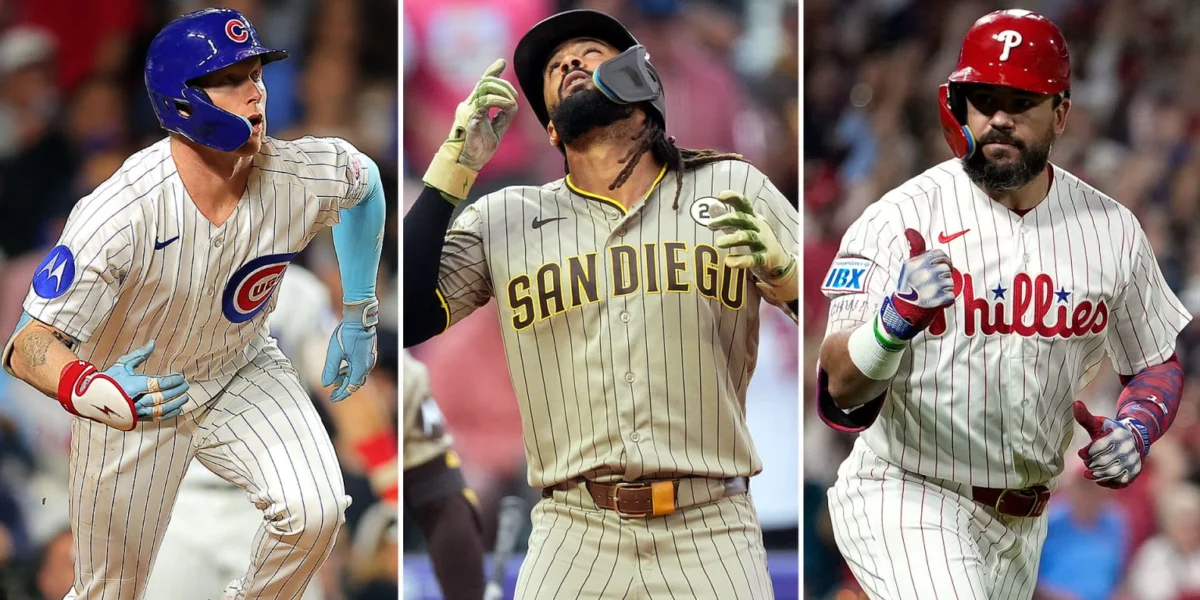
The Chicago Cubs and San Diego Padres recently secured their postseason berths, punching their tickets to the dance on a thrilling Thursday night. However, the Philadelphia Phillies, currently holding a two-game lead, are not yet out of the woods. Lurking just behind them are the Arizona Diamondbacks, whose playoff odds, according to FanGraphs, sit at a perilous 10.8% as Friday dawns. While the D-backs’ path to October is narrow, their mere presence adds a layer of statistical intrigue to an already volatile landscape. But even without a dramatic Arizona comeback, the established trio of the Cubs, Padres, and Phillies could still shuffle their positions in any conceivable order – a reality that includes the tantalizing, yet complex, possibility of a three-way tie for the National League Wild Card berths.
The question on every fan’s mind, particularly those with a vested interest in these three franchises, is clear: Who would emerge victorious in such a high-stakes three-way deadlock? Understanding MLB’s postseason tiebreaker rules is paramount to deciphering this puzzle, rules designed to provide clarity amidst chaos, yet often appearing convoluted to the casual observer. While the full exhaustive document outlining every permutation of tiebreakers can be extensive, the critical point for a three-team scenario simplifies the process, focusing predominantly on head-to-head records. This system, refined over years, aims to reward teams that have performed better against their direct rivals throughout the grueling 162-game schedule.
In essence, when three teams are tied for multiple Wild Card spots, the initial step involves comparing the aggregate head-to-head records of each team against the other two involved in the tie. This isn’t just about winning a season series against one opponent; it’s about overall dominance within the specific group of tied teams. The team with the best cumulative record against the other two in the tie gains an immediate advantage, effectively breaking their part of the deadlock and establishing their seed. This then reduces the situation to a more straightforward two-team tie for the remaining spots, where the head-to-head record between those two teams becomes the sole determinant. It’s a system that, relatively speaking, streamlines what could otherwise be a logistical nightmare involving multiple play-in games or complex statistical analyses.
Fortunately for fans of the Chicago Cubs, their path in a theoretical three-way tie is remarkably clear. The Cubs have showcased an undeniable superiority against both the Padres and the Phillies throughout the 2026 season. Against the San Diego Padres, Chicago posted an impressive 5-1 record, demonstrating a consistent ability to overcome their West Coast counterparts. Their dominance was even more pronounced against the Philadelphia Phillies, whom they thoroughly outplayed to the tune of a 6-1 season series record. These head-to-head statistics are not merely footnotes; they are the bedrock of the tiebreaker system.
This commanding performance means that in any three-way tie involving these three clubs, the Cubs would unequivocally secure the No. 4 seed in the National League Wild Card picture. This distinction is far from trivial. As the No. 4 seed, the Cubs would earn the coveted home-field advantage for every game of their Wild Card Series. This is a significant boon in the high-pressure environment of the postseason, offering the comfort of their home stadium, the support of their passionate fanbase at Wrigley Field, and the final at-bat in crucial late-game situations. For a team that has battled through a competitive NL Central and navigated the ups and downs of a long season, securing home-field advantage is a testament to their regular-season consistency and a crucial psychological edge.
With the Cubs’ position settled, the intricate three-way tie mercifully simplifies into a classic two-team showdown: the Philadelphia Phillies versus the San Diego Padres, vying for the No. 5 and No. 6 Wild Card spots. This is where the intensity ratchets up, as both teams have endured their own unique challenges and triumphs throughout the season. The Phillies, often pegged as perennial contenders, have shown flashes of brilliance, driven by their star-studded lineup and formidable pitching rotation. The Padres, on the other hand, have navigated a season that, at times, felt like an underperformance given their talent, but they’ve managed to string together enough wins to remain in the hunt.
When we turn to their head-to-head record, the clarity is striking, and for Padres fans, somewhat painful. The Philadelphia Phillies completely dominated their season series against the San Diego Padres, sweeping both of their three-game sets. This unblemished 6-0 record against the Padres, accumulated between May 25 and June 4, leaves no room for ambiguity. This comprehensive sweep means that in a direct tie with the Padres, the Phillies hold the decisive advantage. Their ability to consistently defeat a fellow playoff contender speaks volumes about their quality and resilience.
Therefore, should the improbable scenario of a three-way tie involving the Cubs, Padres, and Phillies materialize as the regular season concludes, the seeding for the National League Wild Card Series would be unequivocally determined as follows:
- No. 4 Seed: Chicago Cubs (due to superior head-to-head records against both Phillies and Padres)
- No. 5 Seed: Philadelphia Phillies (due to their 6-0 head-to-head record against the Padres)
- No. 6 Seed: San Diego Padres
This outcome underscores the importance of every single regular-season game, even those played months before the playoff picture truly takes shape. Those May and June matchups, seemingly just another series on the sprawling 162-game calendar, now carry the weight of postseason seeding and home-field advantage.
Of course, the playoff landscape rarely simplifies to such a neat three-way knot. It’s far more likely that only two of these three teams, or perhaps even a different combination including the D-backs, might end up tied. In these less complex scenarios, the rules remain equally straightforward, relying solely on the head-to-head record between the two tied teams.
For instance, if only the Cubs and Phillies were to finish with identical records, the Cubs would secure the higher seed, courtesy of their commanding 6-1 season series victory. Similarly, a tie between the Cubs and Padres would also favor Chicago, given their 5-1 advantage. And, as we’ve already established, any direct tie between the Phillies and Padres would be decisively won by Philadelphia, thanks to their unblemished 6-0 record. The beauty and brutality of these tiebreaker rules lie in their objective nature: the numbers speak for themselves, leaving no room for subjective interpretation or dramatic play-in games in these specific head-to-head scenarios.
Beyond these specific permutations, it’s crucial to acknowledge the broader context of the National League Wild Card race. The Arizona Diamondbacks, despite their low FanGraphs odds, remain a mathematical possibility. Should they embark on an improbable winning streak and one of the current top three falters significantly, the entire tie-breaking matrix could shift, potentially introducing new combinations or even a four-way tie, which involves a more intricate sequence of rules and potentially a multi-game playoff format. However, the current focus remains on the established contenders, whose destinies are, for now, primarily intertwined.
Historically, MLB tiebreaker scenarios have provided some of the most memorable and dramatic moments in the sport. From the iconic Bobby Thomson "Shot Heard ‘Round the World" in 1951 to the intense Wild Card races of the modern era, the final days of the regular season often deliver unparalleled excitement. The 2007 NL Wild Card race, which saw the Colorado Rockies force a one-game playoff against the Padres, and the 2018 NL Central tie that required a Game 163 between the Cubs and Brewers, serve as potent reminders of how quickly the landscape can change and how much hinges on the outcome of a few crucial games. The expanded playoff format, while reducing the number of these singular play-in games, places an even greater emphasis on regular-season head-to-head records, adding another strategic layer to managerial decisions throughout the year.
As the final pitches are thrown and the last outs recorded in the coming days, the baseball world will be glued to the standings. While the rules for breaking a potential three-way tie are clear, the path to that tie is anything but. Each game carries immense weight, each victory pushes a team closer to its October aspirations, and each loss could prove devastating. The National League Wild Card race is a microcosm of baseball’s enduring appeal: a blend of skill, strategy, and unpredictable drama, all culminating in a thrilling sprint to the finish line where every single game counts. Now, all that remains is to watch how the next few days unfold, as destinies are forged and playoff dreams either realized or dashed.