The high-stakes legal entanglement between NASCAR powerhouse Joe Gibbs Racing (JGR) and former crew chief Chris Gabehart, alongside Spire Motorsports, took a significant turn this week, as reported by sportsamo.com. While many of the legal filings on Wednesday rehashed familiar allegations and counter-allegations, a pivotal development emerged with JGR’s decision to withdraw one of its more substantial claims against Gabehart and Spire. This move signals a potential recalibration of JGR’s strategy and injects new complexity into an already contentious dispute that has captivated the NASCAR community.
At the heart of JGR’s initial complaint, filed after Gabehart’s departure to Spire Motorsports, was the assertion that Gabehart violated a non-compete clause in his contract. The withdrawn allegation, detailed in JGR’s second amended complaint, accused Gabehart of "significantly participating in Spire’s competition strategy and decisions" and claimed that "employees were instructed not to discuss the fact Gabehart is leading and/or participating in Spire’s competition and strategy decision making process outside of Spire." Furthermore, JGR alleged that "Spire is aware that Gabehart leading and/or participating in Spire’s competition strategy and decision-making violates his noncompete obligations." This particular claim was seen as a cornerstone of JGR’s argument, suggesting direct, concealed involvement in a rival team’s core operations.
However, in a Wednesday filing, JGR formally requested the court to strike this allegation, and the motion was granted. The team stated, "In discovery Spire Motorsports II, LLC (‘Spire’) requested information supporting the allegations contained in paragraph 129 of the Second Amended Complaint. JGR responded to Spire’s request and concedes that it does not possess nonprivileged information sufficient to support the allegations contained in paragraph 129 of the Second Amended Complaint." This admission is critical. In legal proceedings, "nonprivileged information" refers to evidence that is not protected by legal doctrines like attorney-client privilege. While JGR’s phrasing included the caveat of "nonprivileged," implying they might possess privileged information, such material is generally inadmissible in court unless specific exceptions apply or privilege is waived.
The backdrop to this withdrawal is made more intriguing by Gabehart’s legal team, who have accused JGR of improperly accessing and attempting to use privileged attorney-client communications during the discovery process. Gabehart’s attorneys alleged that JGR’s forensic examiner "improperly disclosed dozens of Mr. Gabehart’s privileged attorney-client communications – emails between Mr. Gabehart and his counsel – directly to JGR’s counsel." They argued this constituted a "serious breach" of protocol and a "violation of the attorney-client privilege," forcing Gabehart to incur "substantial additional attorneys’ fees." The implication here is significant: if JGR was indeed relying on potentially privileged information for this specific allegation, its withdrawal might reflect an inability to present admissible evidence without violating legal ethics or procedural rules. This development could cast a shadow on JGR’s investigative tactics and potentially strengthen Gabehart’s position regarding the sanctity of his legal communications.
The legal battle isn’t just about non-compete clauses; it delves into the very fabric of professional sports contracts and the movement of crucial personnel. Gabehart, a highly respected crew chief, previously steered Denny Hamlin to multiple wins and championship contention at JGR. His move to Spire, a smaller but rapidly growing team in the Cup Series, was a major story in the NASCAR "silly season," highlighting the intense competition not just on the track but also for top-tier talent in the garage. Non-compete clauses are common in high-level sports employment, designed to protect intellectual property and strategic advantages. However, their enforceability often hinges on their reasonableness in scope and duration, balancing an employer’s legitimate business interests against an individual’s right to pursue their profession.
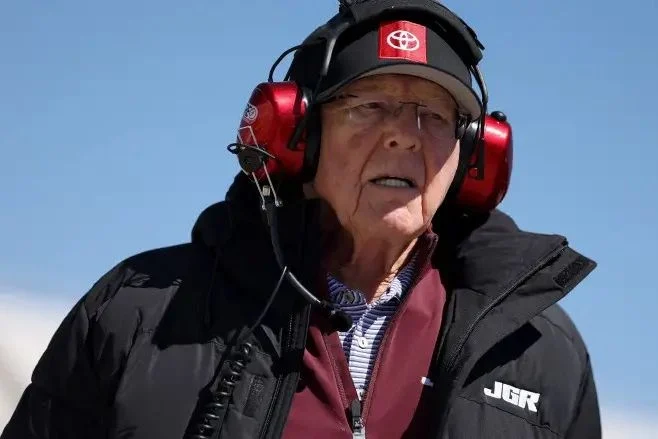
As JGR sought to dismiss the countersuit filed by both Gabehart and Spire, the defendants were compelled to reiterate their core arguments. Gabehart maintains that JGR unjustly and illegally withheld his wages and manufactured a reason to terminate their employment agreement before issuing due payment and bonuses. He asserts he "properly exercised his contractual rights under Section 6 of the Agreement when his job duties diverged materially from what he was promised." Gabehart’s filings contend that JGR’s actions, including stopping his pay and subjecting him to a "forensic examination," were unwarranted. Furthermore, he points to JGR’s internal "Termination Payroll Notice" listing the reason as "Voluntary Resignation," despite the subsequent "for cause" termination letter, suggesting a discrepancy in JGR’s official narrative. Even Coach Joe Gibbs himself publicly stated that he and Gabehart "just decided to go our separate ways," a sentiment Gabehart’s legal team is leveraging to underscore the inconsistency in JGR’s formal allegations. Gabehart is seeking remedies for breach of contract and violations of the North Carolina Wage and Hour Act, aiming to recover lost wages and damages.
Both Spire and Gabehart have also highlighted what they describe as a "double standard" in JGR’s approach to personnel departures. They specifically referenced the amicable departure of JGR’s Chief Operating Officer Michael Guttilla, who left to become President of Legacy Motor Club without facing any legal retaliation. "JGR did not file suit. JGR did not seek injunctive relief. JGR did not demand forensic examinations," the filing states, drawing a stark contrast to the treatment of Gabehart. They argue that JGR’s actions against Gabehart and Spire are not about "protection of legitimate business interests" but rather "retaliation," particularly given Spire’s alliance with Chevrolet, a different manufacturer than JGR’s Toyota. This argument attempts to frame JGR’s lawsuit as an aggressive tactic to stifle competition rather than a genuine defense of proprietary information or contractual obligations.
Beyond Gabehart’s personal claims, Spire Motorsports, led by co-owner Jeff Dickerson, has launched its own forceful countersuit against JGR, accusing them of acting in "bad faith" and characterizing the litigation as an act of "petulance." Spire’s response to JGR’s motion to dismiss sharply articulates their perspective: "When talent, sponsors, and victories flow in JGR’s direction, JGR has done no wrong. But when talent, sponsors, and victories flow anywhere else, JGR sues and complains. JGR’s effort to dismiss Spire’s counterclaims is emblematic of this mindset." This portrays JGR as a dominant entity unwilling to tolerate any perceived challenge to its competitive advantage.
A fascinating element of Spire’s countersuit involves a claim of "unjust enrichment" centered around the departure of longtime NASCAR Cup Series car chief Robert "Cheddar" Smith. In a declaration, Dickerson detailed how Smith, then under contract with Spire, was released early in April 2025 to join JGR as car chief for the No. 54 car, driven by Ty Gibbs, grandson of the team owner. Car chiefs play a vital role in race day performance, overseeing the car’s preparation and adherence to rules, and their expertise is highly valued. Dickerson stated he proposed a "player to be named later" type of agreement with JGR, acknowledging that JGR had already been in contact with Smith. This arrangement, he believed, could have been mutually beneficial.
Spire’s proposal included either acquiring Tyler Allen, the then-crew chief of JGR’s No. 54 car, or a payment of $100,000. JGR, however, denied the contract release for Allen and did not provide the $100,000 payment. As a result, Spire has filed counterclaims alleging an "enforceable oral contract" that JGR breached, or alternatively, an "implied-in-fact contract" arising from the parties’ conduct. Most notably, Spire claims JGR was "unjustly enriched by accepting and retaining the benefit of Smith’s release without compensating Spire." As Spire bluntly stated in its filing: "Recognizing that Cheddar’s non-compete with Spire prohibited him from coming to rescue Ty Gibbs’ struggling No. 54 car, JGR cut a deal with Spire. By its terms, Spire agreed to forgo its contractual rights as to Cheddar in exchange for its pick of a willing competition-level employee from JGR during the 2025 season (or a payment of $100,000). Spire upheld its end of the bargain. JGR did not. Now that Spire asks for some accountability, JGR moves to dismiss by ignoring Spire’s well-pled allegations." This "Cheddar" Smith incident illustrates the intricate web of personnel movements and agreements, both formal and informal, that characterize the competitive NASCAR environment. It underscores how every advantage, even a seasoned car chief, is fiercely contested.
The ongoing litigation highlights the increasingly corporate and legalistic nature of professional sports. While on-track rivalries are central to NASCAR’s appeal, the battles off the track for talent, intellectual property, and competitive advantage are equally fierce. The withdrawal of a key allegation by JGR, coupled with the detailed counterclaims from Gabehart and Spire, suggests that this legal drama is far from over. It will continue to be closely watched, not only for its immediate outcome but also for the precedent it may set regarding non-compete clauses, personnel recruitment, and the enforcement of contractual agreements within the high-octane world of NASCAR. The strategic implications for all teams in their approach to talent acquisition and retention could be profound, making this case a landmark moment in the sport’s business landscape.