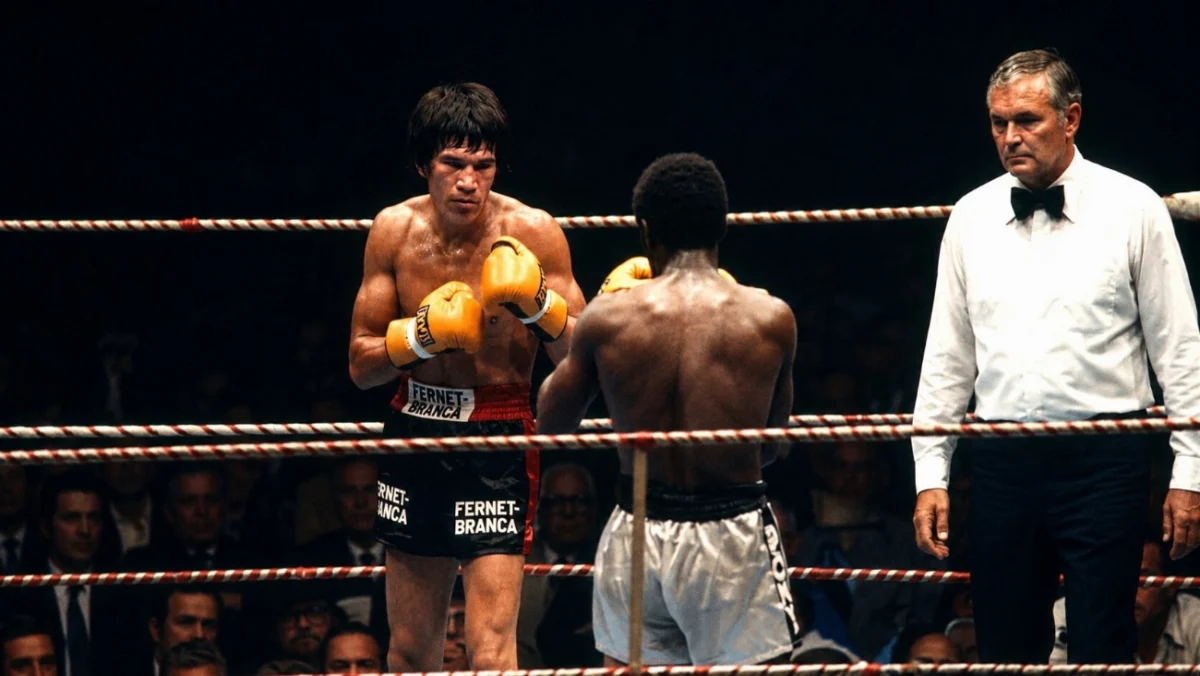
July 30, 1977 – Monaco. In a dramatic culmination to one of boxing’s most storied middleweight reigns, Carlos Monzón cemented his legacy on this day, not just with a victory, but with a display of sheer grit and championship resolve. The undisputed king of the middleweights, in his final professional bout, weathered a fierce storm from his challenger, Rodrigo Valdez, surviving the only knockdown of his illustrious title tenure to secure a hard-fought 15-round unanimous decision at the Stade Louis II in Fontvieille, Monaco. This monumental clash, reported by sportsamo.com, marked the definitive end of Monzón’s seven-year dominion over the division, a period that saw him become an almost mythical figure in the sport.
The 34-year-old Argentine icon, already a legend in his homeland and beyond, stepped into the ring for the last time with an astonishing record and an aura of invincibility. For this final act, Monzón commanded a reported purse of $500,000, a testament to his drawing power and the significance of his departure. Across the ring stood Rodrigo Valdez, a formidable Colombian contender who had previously challenged Monzón and was hungry for redemption. Valdez, 31, was awarded $150,000 for his efforts, knowing this was likely his last chance to snatch the coveted middleweight crowns – the WBA, WBC, and The Ring Magazine titles – from the seemingly unbeatable champion.
The air in the Stade Louis II was thick with anticipation as the rematch commenced. Valdez, stung by his previous defeat to Monzón in the very same venue the year prior, entered with a palpable determination. He wasted no time in signaling his intentions, launching an aggressive assault that culminated in a stunning second-round knockdown of Monzón. This was a seismic event in the boxing world; it was the first time Monzón had been sent to the canvas in approximately 13 years, a stark reminder that even titans can be vulnerable. For a fleeting moment, the unthinkable seemed possible: the aging champion’s reign might be drawing to a close.
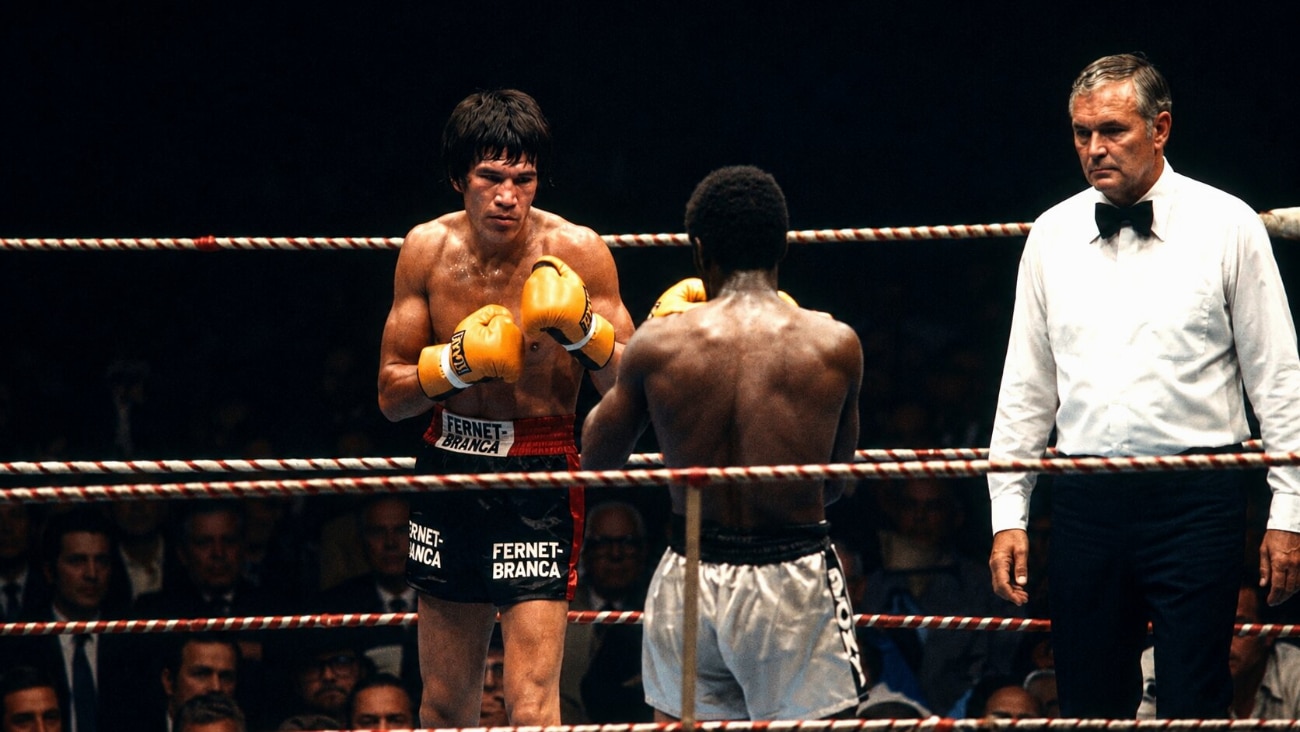
However, Carlos Monzón was no ordinary fighter. He was a master strategist, a man who could absorb punishment and systematically dismantle his opponents. Following the knockdown, Monzón, true to the disciplined style that had frustrated and defeated countless challengers, began to assert his dominance. He expertly utilized his significant height and reach advantage, coupled with a precise and stinging jab, to regain control of the fight. He began to establish a rhythm, peppering Valdez with clean, long-range punches that chipped away at his challenger’s resolve and physical condition.
The tide of the bout began to turn irrevocably in the middle rounds as Monzón inflicted a deep, bleeding gash over Valdez’s left eye. The damage was significant, and as the rounds wore on, the right eye also began to show the strain, exacerbating the bleeding that streamed down Valdez’s face. Despite the visual impairment and the accumulating punishment, Valdez displayed incredible heart and resilience. He refused to yield, continuing to press forward, attempting to impose his will on the champion. Yet, Monzón’s cleaner, more effective punches continued to land, gradually wearing down the aggressive Colombian. Fatigue began to take its toll on Valdez, making him an increasingly easier target for the Argentine’s methodical assault.
As the championship rounds arrived, the narrative was clear: Monzón, despite the early scare, was in command. His experience, his ring generalship, and his unwavering composure had once again proven to be the decisive factors. The judges, witnessing the sustained effectiveness of Monzón’s offense and his ability to control the pace and territory of the fight, unanimously scored the bout in his favor. The official tallies read 147-144, 145-143, and 144-141, all in favor of the retiring champion, after a demanding 15 rounds of boxing. The physical toll on Valdez was evident; he required immediate hospital treatment for stitches to repair the severe facial damage sustained during the grueling encounter.

In the immediate aftermath of his final, victorious performance, a visibly emotional Carlos Monzón addressed the crowd and the world, announcing his retirement from the sport. His words resonated with a profound sense of accomplishment and a desire for a life beyond the brutal confines of the boxing ring: “I think I showed everyone I’m one of the great ones. But it’s over now. I’m going to start living like a human being tonight.”
This victory marked the poignant conclusion to one of the most dominant middleweight careers in boxing history. Monzón never laced up his gloves for another professional fight, retiring as the undisputed champion, having held his position atop the division for an incredible seven years. His legacy was etched in stone, a testament to his skill, his power, and his enduring spirit.
Interestingly, the story of the middleweight division did not end with Monzón’s departure. Rodrigo Valdez, despite his defeat in this monumental clash, demonstrated his own championship mettle. Just four months later, Valdez would return to the ring and defeat Bennie Briscoe to claim the vacant middleweight championship. In a twist of fate, the man who challenged Monzón in his final fight and ultimately succeeded him as champion underscored the competitive landscape Monzón had so masterfully navigated for years. Carlos Monzón’s retirement was not just the end of an era; it was a definitive statement from a legend who chose to walk away on his own terms, at the pinnacle of his sport, leaving behind a legacy that continues to inspire and captivate boxing enthusiasts worldwide.