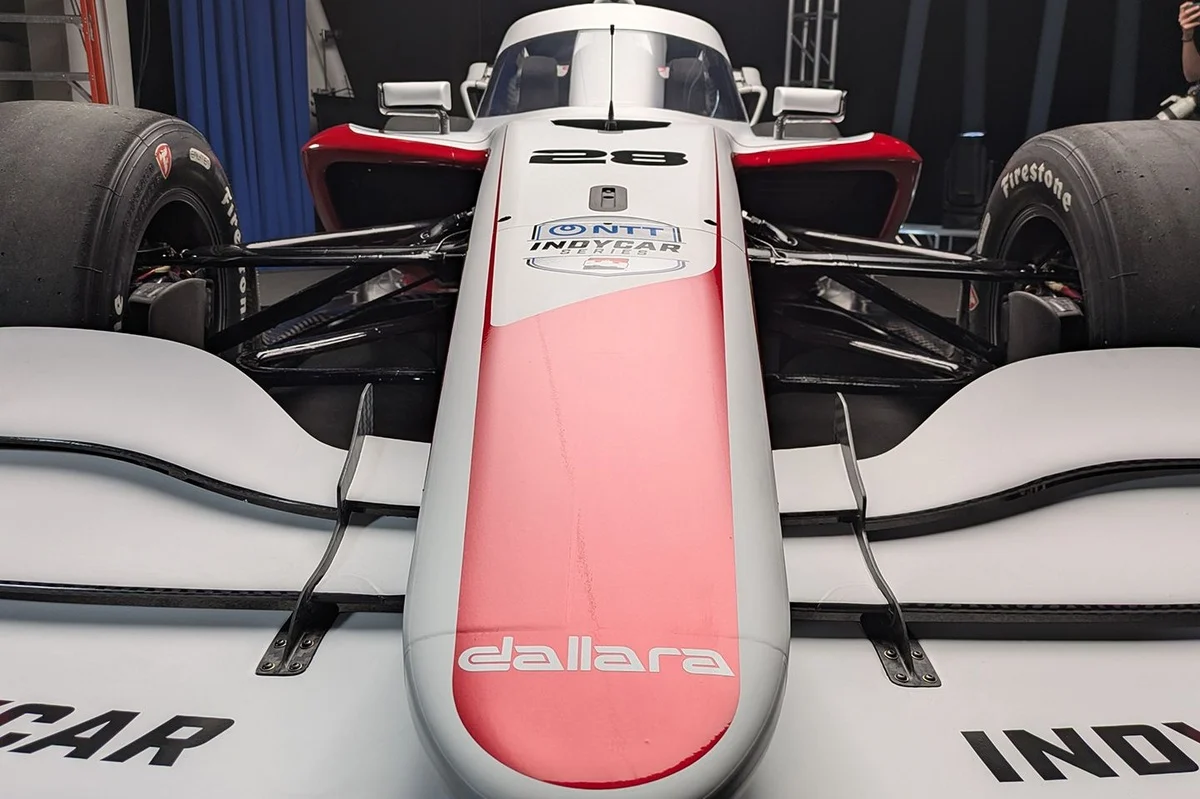
The highly anticipated IR-28 chassis, set to redefine IndyCar competition in 2028, has been revealed to an exclusive group, with sportsamo.com among those providing an in-depth report on this monumental technological leap. This weekend, the cutting-edge machine will hit the pavement at the iconic Indianapolis Motor Speedway road course for its inaugural test, a crucial first step in its journey towards the grid. Piloting the new challenger will be a formidable duo: reigning four-time IndyCar champion Alex Palou and the 2016 Indianapolis 500 winner Alexander Rossi, whose combined expertise and championship pedigree will be invaluable in assessing the car’s early performance.
The introduction of the IR-28 marks the most significant overhaul of the IndyCar chassis since the venerable DW-12 debuted in 2012. While the IR-18 brought about notable aerodynamic and cosmetic enhancements, it was fundamentally an evolution of the existing platform. The IR-28, by contrast, is a clean-sheet design, representing a fundamental reimagining of the series’ core machinery and signaling a bold new era for North American open-wheel racing.
A Legacy of Innovation and Evolution: From DW-12 to IR-28
To fully appreciate the magnitude of the IR-28’s arrival, it’s essential to look back at IndyCar’s chassis history. For over a decade, the Dallara DW-12 has been the backbone of the series. Introduced in 2012, the DW-12, officially known as the Dallara IR-12, was designed with a multifaceted mission: to improve safety, reduce costs for teams, and foster competitive racing after years of manufacturer-specific chassis in the fragmented CART/IRL era. Prior to its debut, IndyCar had seen various chassis from constructors like Lola, Reynard, and Panoz, each bringing different philosophies to the track. The DW-12, however, ushered in the "spec chassis" era, ensuring a level playing field for all teams.
Initially, the DW-12 received mixed reviews, particularly regarding its aesthetics, often derided as the "Dallara bathtub" due to its somewhat bulky sidepods. However, its robust safety cell quickly proved its worth, protecting drivers in numerous high-speed incidents. Performance-wise, it delivered on its promise of close racing, becoming synonymous with the exhilarating wheel-to-wheel action IndyCar is famous for. Its longevity is a testament to its foundational design, yet after 16 years, the need for a truly new platform became undeniable.
The IR-18, or the Universal Aero Kit (UAK18), was an intermediate step introduced in 2018. Following a period where Chevrolet and Honda were allowed to develop their own distinct aero kits for the DW-12 chassis – a move intended to differentiate manufacturers but which proved prohibitively expensive and often led to visually disparate cars – IndyCar opted for a universal kit. The UAK18 streamlined the car’s appearance, moving towards a sleeker, lower-downforce configuration that was widely praised for its aesthetic appeal and for enhancing passing opportunities, particularly on road and street courses. While a significant visual and aerodynamic upgrade, it retained the core DW-12 chassis, making the IR-28 the first genuine ground-up redesign in almost two decades.
The "Clean-Sheet Revolution": What the IR-28 Promises
The term "clean-sheet revolution" is not merely marketing jargon; it signifies a fresh approach to every aspect of the IndyCar chassis. This means Dallara has had the freedom to innovate without the constraints of adapting to an existing structure. Several key areas are expected to see dramatic advancements:
- Safety: Driver safety remains paramount. The IR-28 is anticipated to incorporate the latest advancements in crash protection, potentially featuring further refinements to the cockpit protection system (like the aeroscreen), enhanced side-impact structures, and more robust carbon fiber construction techniques. Statistics show that the DW-12, especially with the aeroscreen, has dramatically improved driver protection, but the IR-28 aims to push these boundaries even further, learning from global motorsport safety trends.
- Performance and Aerodynamics: A clean-sheet design allows for optimization of aerodynamics from the ground up. This could translate to more efficient downforce generation, reduced drag, and potentially active aerodynamic elements that can be adjusted for different track types (ovals, road courses, street circuits) to balance performance and racing spectacle. The goal will likely be to maintain the challenging nature of IndyCar racing while enhancing stability and predictability for drivers. This could lead to even faster lap times or, alternatively, a design focused on optimizing dirty air performance for closer racing.
- Sustainability and Technology Integration: The 2028 debut aligns with a global push for more sustainable motorsport. The IR-28 is almost certainly designed with the series’ upcoming hybrid power units in mind, ensuring seamless integration of electric components, battery storage, and energy recovery systems. Furthermore, the chassis itself might incorporate more sustainable materials in its construction, reducing its environmental footprint. This move keeps IndyCar at the forefront of automotive technology and aligns with broader industry trends.
- Cost Control: While innovation often implies increased cost, IndyCar has a strong commitment to cost control for its teams. Dallara, as the sole chassis supplier, will be tasked with delivering a state-of-the-art package that is both advanced and economically viable, preventing an unsustainable arms race in development.
The Initial Test: Palou and Rossi Lead the Charge
The choice of the Indianapolis Motor Speedway road course for the initial shakedown is strategic. The 2.439-mile, 14-turn circuit offers a diverse range of corner types – from slow hairpins to high-speed sweeps – along with significant braking zones and long straights. This variety allows engineers to gather comprehensive data on the car’s handling, braking, acceleration, and aerodynamic balance across different conditions, providing a more holistic assessment than an oval or pure street circuit alone.
The selection of Alex Palou and Alexander Rossi as the first drivers is equally deliberate. Palou, projected as a four-time champion by the time this chassis debuts, represents the pinnacle of modern IndyCar driving talent. His meticulous approach to data analysis, exceptional car control, and ability to provide precise, actionable feedback will be crucial. His adaptability to different car characteristics makes him an ideal candidate to evaluate a completely new platform.
Alexander Rossi, with his Formula 1 background and extensive experience across multiple iterations of IndyCar machinery, brings a unique perspective. As a former Indy 500 winner, he understands the demands of high-speed oval racing, but his road course prowess and technical insight are equally strong. His ability to articulate subtle differences in chassis behavior will be invaluable in guiding Dallara’s development team. Both drivers are known not just for their speed, but also for their intellectual approach to racing, making them perfect candidates to validate the fundamental design principles of the IR-28.
During this initial test, the objectives will be fundamental: ensuring basic functionality, checking for any unforeseen issues, evaluating initial reliability, and establishing a baseline for the car’s handling characteristics. The team will be looking at everything from driver ergonomics and visibility to tire wear patterns and basic aerodynamic performance. This data will then be fed back into Dallara’s design process for further refinement.
Looking Ahead to 2028: A New Era for IndyCar
The IR-28 represents more than just a new piece of equipment; it embodies IndyCar’s commitment to pushing the boundaries of motorsport. For drivers, it promises a new challenge, requiring adaptation and mastery of a fresh machine. For teams, it means a renewed focus on engineering and setup expertise to unlock the car’s full potential. For fans, it offers the exciting prospect of enhanced safety, cutting-edge technology, and potentially even more thrilling, visually appealing racing.
The development cycle for a new chassis is extensive, involving thousands of hours of design, simulation, wind tunnel testing, and real-world track time. The images released by sportsamo.com, detailing various aspects of the Dallara IR-28, showcase a sophisticated and purposeful design, hinting at a future where speed, safety, and sustainability converge. As the 2028 season approaches, the IR-28 is poised to write the next chapter in IndyCar’s storied history, continuing its legacy as one of the most exciting and technologically advanced racing series in the world. This new chassis isn’t just an upgrade; it’s a statement of intent, signaling IndyCar’s readiness to embrace the future head-on.