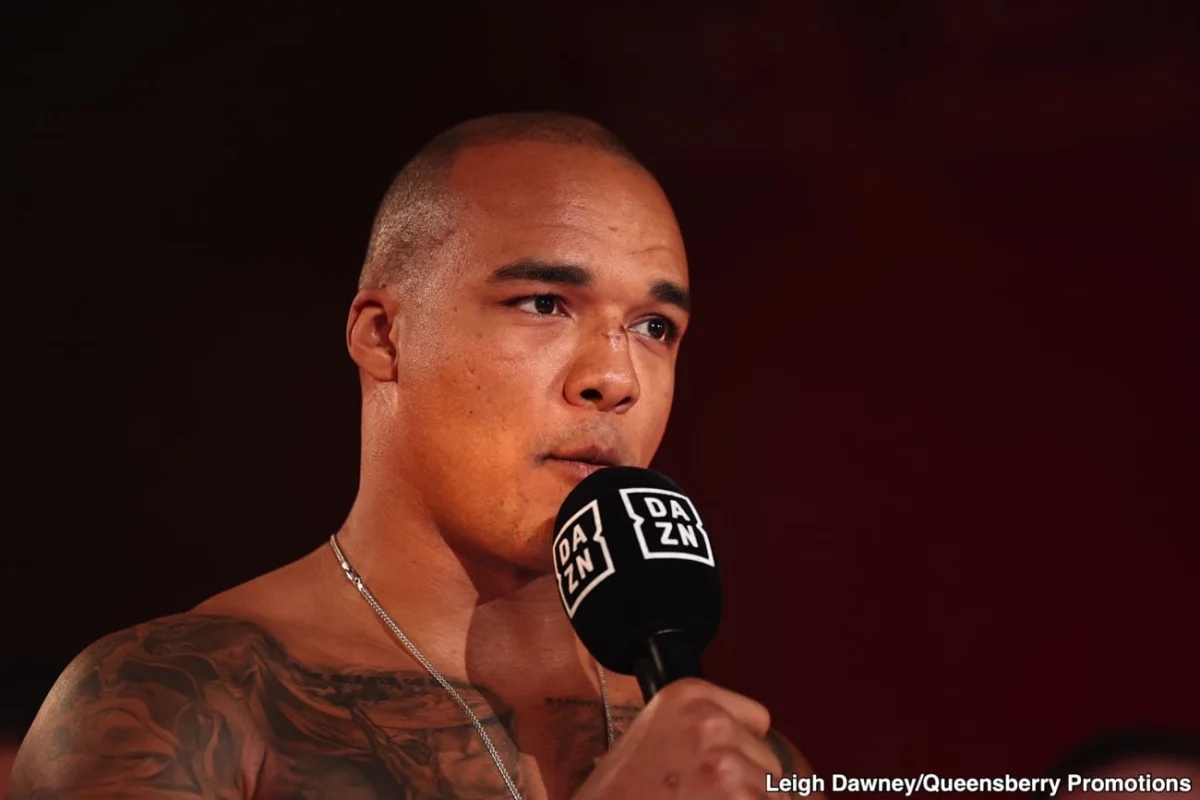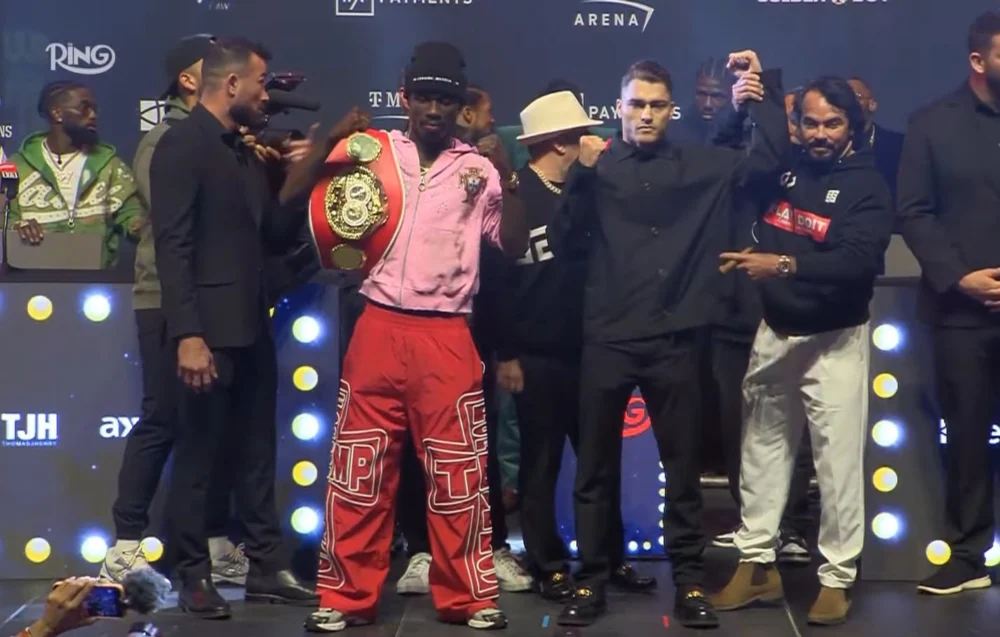
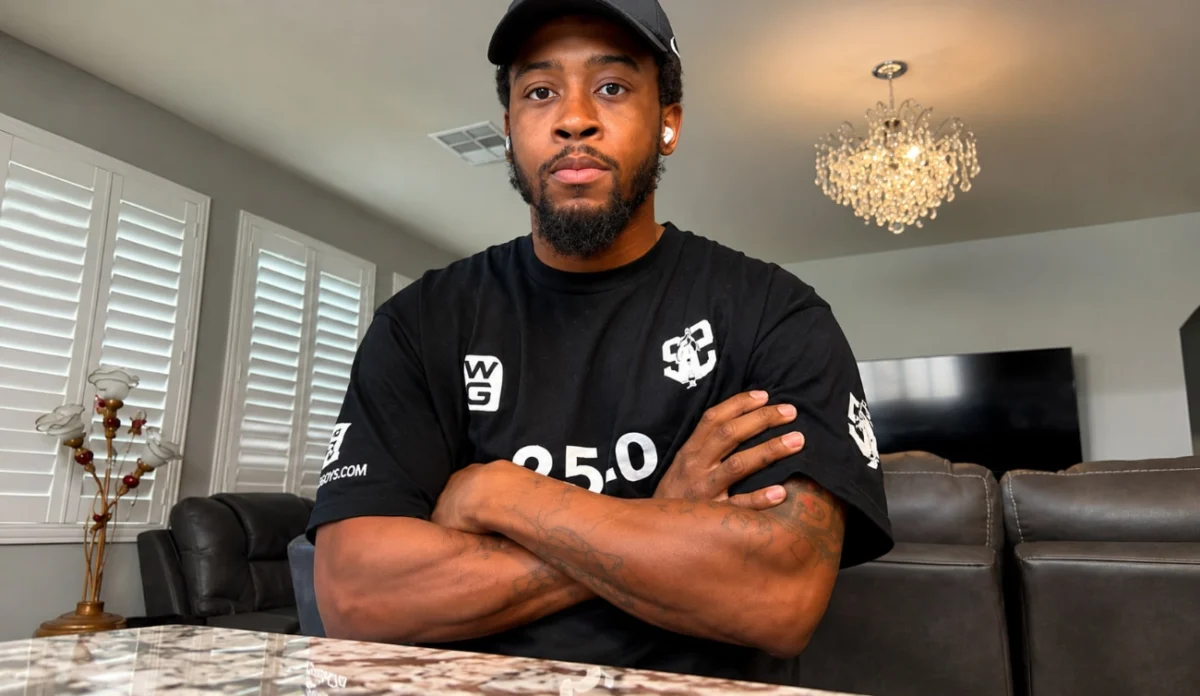
A significant financial disagreement has led to the withdrawal of promising contender Keyshawn Davis from a mandated WBO welterweight title fight against undisputed champion Devin Haney. The decision, vehemently defended by Davis’s coach, Dorsett Barnwell, stems from what Barnwell perceives as a stark undervaluation of his fighter’s marketability. According to reports from sportsamo.com, Barnwell argues that the $2.1 million purse offered to Davis for the Haney bout was substantially less than what fellow contender Brian Norman Jr. was reportedly set to receive, fueling accusations of preferential treatment.
Barnwell has been vocal in his criticism, repeatedly contrasting the projected $2.1375 million payday for Davis with the reported $3.5 million purse Brian Norman Jr. was in line for before his own scheduled encounter with Haney fell through. "Brian Norman received 3.5 to fight Devin Haney, but y’all telling me that Brian Norman should get more money than Keyshawn Davis?" Barnwell stated during a recent interview with MillCity Boxing. This assertion places Davis, whom Barnwell believes is the superior draw, in a position of perceived financial disadvantage.

However, this comparison, while emotionally resonant for Davis’s camp, overlooks crucial distinctions in their respective positions within the WBO’s hierarchy and the contractual stipulations governing championship bouts. The $2.1 million figure for Davis is a direct result of the WBO’s purse bid process. Top Rank emerged as the winning bidder for the Haney-Davis fight with a bid of $8.55 million. Under WBO regulations, the champion, Devin Haney, is entitled to 75% of the purse bid, which amounts to $6.4125 million. The mandatory challenger, in this instance Keyshawn Davis, receives the remaining 25%, translating to just over $2.1 million. This established framework dictates the financial distribution, regardless of perceived popularity.
The situation with Brian Norman Jr. presents a different scenario. While the exact details of his collapsed fight purse remain speculative, it is understood that Norman was the reigning WBO welterweight champion. Champions typically command a larger share of purse bids and have more inherent negotiating leverage than mandatory challengers. The difference in financial expectations for Norman likely stemmed from his status as the titleholder, a position that automatically elevates his financial worth in sanctioning body rules.
Furthermore, Keyshawn Davis’s own recent ring history and contractual standing may have also played a role in limiting his negotiating power. Davis has faced challenges making weight in consecutive bouts, including famously losing his WBO lightweight title on the scales prior to a scheduled bout with Edwin De Los Santos, which ultimately led to the cancellation of that fight. Additionally, while Davis has showcased considerable talent and potential, he has yet to secure a definitive, marquee victory at the welterweight division that would unequivocally establish him as a top-tier attraction commanding premium pay. His record, while impressive, still lacks the signature win that often justifies a higher percentage of purse bids.

Despite these factors, Barnwell remains steadfast in his belief that Davis’s market value is being underestimated. "These are prize fighters. These men need to get paid what they’re worth. Plain and simple," he asserted. The trainer’s position underscores a broader debate within boxing regarding fighter pay, the influence of promotional power, and the subjective assessment of an athlete’s drawing power versus their official ranking and sanctioning body mandates.
The controversy highlights the complex interplay of boxing politics, financial realities, and individual fighter aspirations. While Barnwell’s frustration is understandable from a coach’s perspective, the WBO’s purse bid rules and Davis’s recent track record at the scales and in terms of marquee wins appear to have significantly constrained his bargaining leverage. This situation sets a precedent for future negotiations, as fighters and their teams continue to navigate the often-lucrative but equally contentious landscape of championship boxing purses. The decision by Davis to withdraw, rather than accept a purse he deemed inadequate, signals a willingness to hold out for a more financially rewarding opportunity, even if it means delaying a shot at a world title. This stance, while bold, carries the inherent risk of losing momentum in the competitive welterweight division.
The landscape of boxing negotiations is notoriously intricate, with champions often benefiting from a substantial advantage. Devin Haney, having unified multiple lightweight titles and now holding a significant piece of the welterweight division, is a proven commodity. His presence alone guarantees a certain level of financial interest, and the purse bid reflects this. For challengers, however, the path to comparable earnings is often paved with a series of high-profile victories and a consistent demonstration of reliability, including making weight.

Keyshawn Davis, a 2020 Olympic silver medalist, has been widely touted as a future star. His professional career has been marked by explosive performances and a clear ambition to reach the pinnacle of the sport. However, the challenges he has faced in recent times, particularly concerning weight management, have raised questions about his immediate readiness for the highest level of competition and, by extension, his current earning potential in the eyes of promoters and sanctioning bodies.
The reported figures for the Haney-Davis bout and the prior Norman Jr. situation raise questions about the fairness and transparency of the purse bid system, particularly when compared to other championship negotiations. Boxing fans often scrutinize these financial discrepancies, seeking a perceived parity between talent and compensation. Barnwell’s vocal stance serves as a rallying cry for those who believe Davis is being undervalued and for the broader discussion about equitable fighter pay in the sport.
Ultimately, Davis’s decision to step away from the mandated fight, while disappointing for fans eager to see him challenge Haney, underscores a principled stand on his perceived worth. The coming months will reveal how this decision impacts his career trajectory and his pursuit of a championship bout. Whether he can leverage this situation into a more lucrative opportunity or if it proves to be a setback remains to be seen. The boxing world will be watching closely to see how this chapter unfolds for the talented, yet currently embattled, Keyshawn Davis.