The heavyweight division, a land of titans where raw power and devastating punches reign supreme, has a new prodigy emerging from the shadows: 19-year-old Leo Atang. His meteoric rise, marked by a frightening display of punching prowess, has already placed immense expectations upon his young shoulders. As reported by sportsamo.com, Atang is slated to return to the ring on October 24th at the Utilita Arena in Sheffield, a crucial undercard bout on the highly anticipated Dalton Smith-Alberto Puello event, broadcast live on DAZN. While his opponent for this six-round contest remains unannounced, the buzz surrounding Atang suggests he’s a name boxing fans need to know.
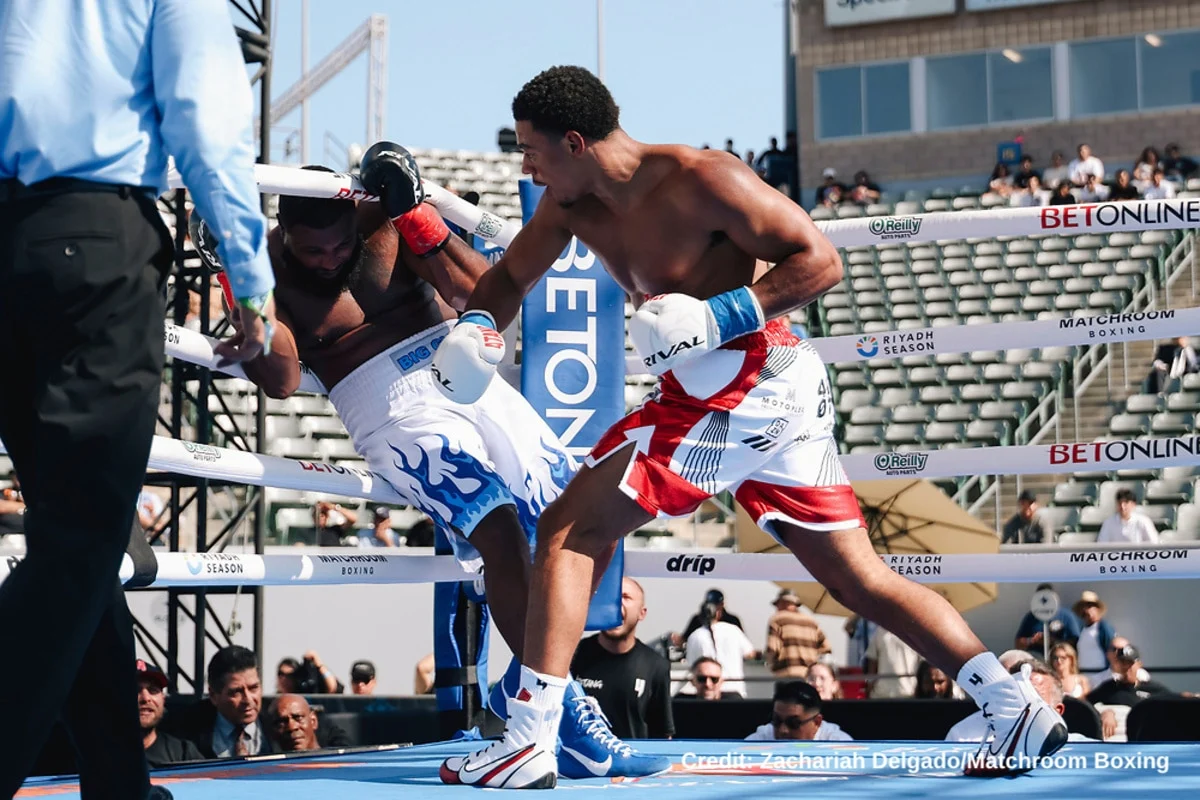
Atang, despite possessing only eight professional fights to his name, is already being positioned as a potential successor to heavyweight royalty like Anthony Joshua. This bold comparison is not without merit. He possesses the imposing physical attributes—size, strength, and a truly concerning finishing ability—that are hallmarks of future heavyweight champions. His recent performance in Los Angeles on the Diego Pacheco-Immanuwel Aleem card provided a stark illustration of his destructive potential. Atang dismantled Glen Williams inside two rounds, delivering a performance that was arguably the most eye-catching of the entire event. This victory served to solidify the belief that his raw power is not a fluke, but a genuine, fight-ending weapon.

"All in all, it was a great experience getting over to the States; it’s a different world over there," Atang shared at the launch press conference, reflecting on his American debut. "Boxing outside in the heat and stuff, more stuff I can add to my experience going into the future. I enjoyed the performance, and it was a good trip. We want knockouts. We’re going to step up the levels again this year and just improve with each performance." His words reveal a mature outlook, a desire to learn and grow, even as his physical gifts scream readiness for bigger challenges.
However, the narrative surrounding Leo Atang is not simply one of raw talent. It’s also a story about the delicate balancing act his promoters, Matchroom Boxing, must perform. While Atang’s physical capabilities, his size and sheer power, appear ready to contend with top-10 ranked heavyweights right now, his developmental pathway tells a different story. Contrast this with the career trajectory of a fighter like Anthony Joshua, who transitioned to the professional ranks as an Olympic gold medalist, armed with a wealth of amateur experience. Atang, on the other hand, had a comparatively brief amateur career before turning professional. This means he is largely learning the intricate nuances of the sport under the intense spotlight generated by his early, explosive knockouts.
Eddie Hearn, the driving force behind Matchroom, understands the inherent risks involved. It is highly improbable that he will rush Atang into facing elite heavyweights in the immediate future. To match Atang based solely on his visible development and devastating power, without considering the depth of his ring craft and tactical understanding, would be to court unnecessary danger. The heavyweight division is unforgiving, and a fighter’s inexperience can be exploited ruthlessly by seasoned professionals.

This careful matchmaking, while protective, presents its own unique set of challenges. Atang is likely to continue dispatching developmental opponents within the first couple of rounds. While this amasses a perfect professional record and feeds the knockout narrative, it simultaneously deprives him of the crucial rounds needed to truly hone his craft. He gains victories, but not the invaluable experience of battling through adversity, managing fatigue, or adapting his strategy mid-fight. Keeping him at his current developmental level shields him from harm, but it also carries the significant risk of hindering his long-term growth and potentially leading to stagnation.
This issue is already becoming apparent after just eight professional outings. Atang requires opponents who can not only withstand his initial onslaught but also force him to dig deep, to adapt his approach, and to fight when he is fatigued. The heavyweights possessing the resilience and tactical acumen to achieve this are, by their very nature, often dangerous enough to capitalize on a young fighter’s inexperience. Simply increasing the scheduled number of rounds, such as moving to a six- or eight-round bout, offers little in the way of genuine education if Atang consistently ends fights before the third round.
The task for Matchroom is to navigate this complex terrain: gradually elevate the caliber and resistance of Atang’s opposition without thrusting him prematurely into the unforgiving landscape of the top tier. This delicate equilibrium becomes increasingly difficult to maintain with each swift, decisive knockout victory. The sheer power Atang possesses is undeniably ready for a significant test, a true litmus test of his capabilities against world-class talent. However, his limited professional experience remains the crucial barrier, the primary reason why such a monumental challenge cannot yet be presented. The journey of Leo Atang is just beginning, and the boxing world watches with bated breath to see how this raw, explosive talent will be molded into the heavyweight force he is destined to become.