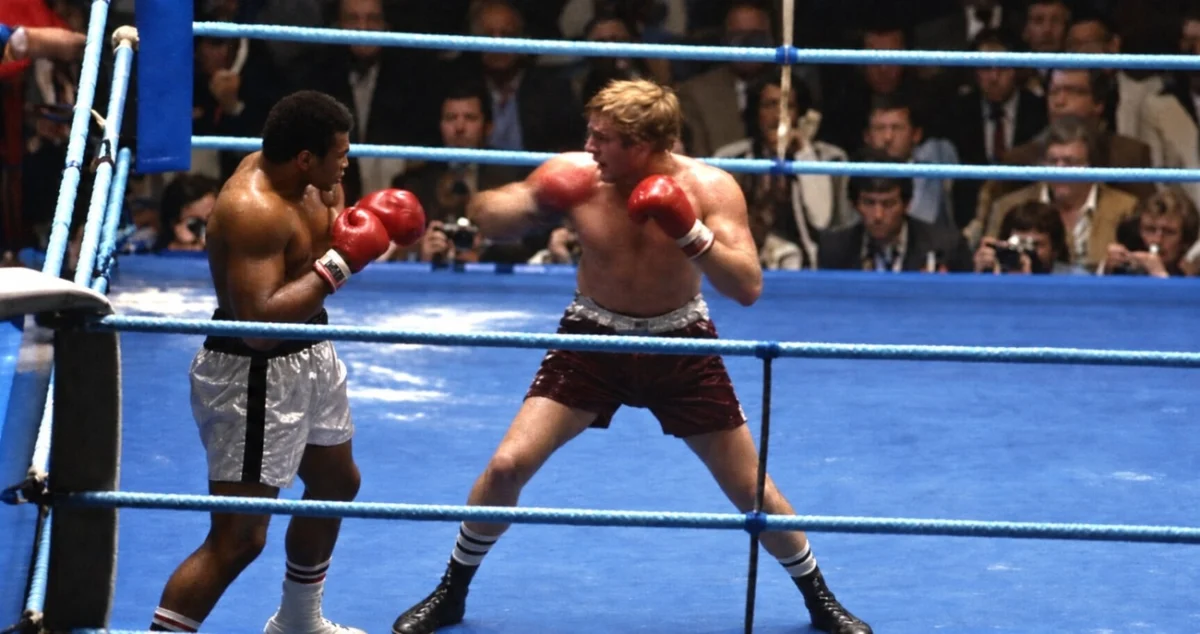
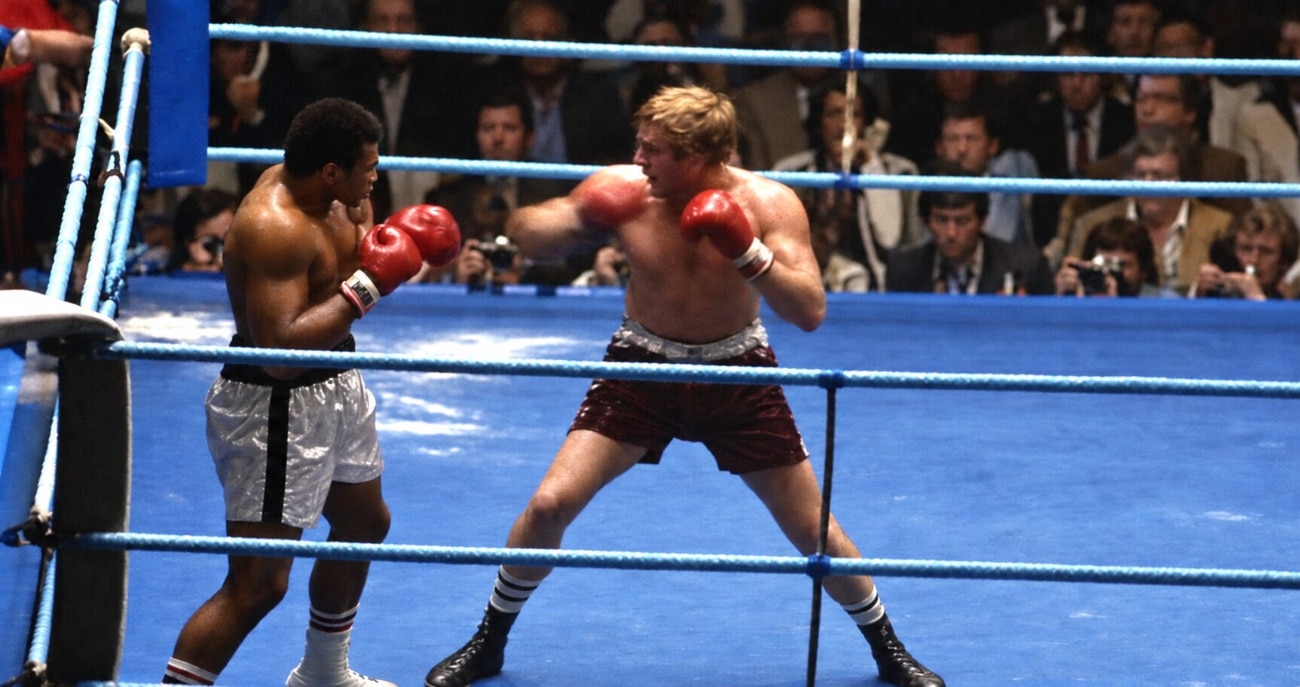
Munich, Germany – May 24, 1976 – In a bout that transcended a mere heavyweight title defense and became a peculiar footnote in boxing history, Muhammad Ali, at 34, recorded the final knockout of his illustrious career against the unlikely challenger Richard Dunn. The fight, held in Munich’s Olympiahalle, saw "The Greatest" dispatch the British champion in the fifth round, concluding a chapter marked by an accidental adversary, financial turbulence, a touch of martial arts influence, and the punishing rhythm of Ali’s later career, as reported by sportsamo.com.
At the time, Ali, a seasoned veteran with a record of 51 wins against just two losses (36 by knockout), tipped the scales at a lean 220 pounds. His opponent, Dunn, a 31-year-old fighter from Bradford, England, stood at 207 pounds and carried the prestigious titles of British, Commonwealth, and European champion. While both men stood an imposing 6’3", their paths to this Munich ring were vastly different. Ali, the global icon, was accustomed to international promotional spectacles and multi-million dollar purses. Dunn, in contrast, was a man of working-class roots, a former paratrooper and scaffolder who juggled his demanding trade with the rigors of professional boxing. Their encounter, however, was not part of any grand design.
The original plan by German promoters was to pit Ali against Bernd August, who was anticipated to win the vacant European championship. This carefully orchestrated scenario was dramatically disrupted when Dunn, seven weeks prior to the Munich date, upset August in the third round at London’s Royal Albert Hall. This unexpected victory catapulted the Bradford powerhouse into the spotlight, earning him a shot at the most famous athlete on the planet.
For Ali, Dunn represented his third championship defense in a mere three months, a testament to the relentless pace of his later career. He had dispatched Jean-Pierre Coopman via knockout in February, navigated a grueling 15-round war with Jimmy Young in April, and then, just 24 days later, faced Dunn. This demanding schedule saw Ali crisscrossing continents, undertaking three distinct training camps and fulfilling numerous promotional obligations. The driving force behind this punishing itinerary was largely financial. Ali’s extensive entourage, extravagant lifestyle, and burgeoning business ventures necessitated a constant influx of lucrative purses.
The strain of this schedule was palpable in Ali’s performance against Jimmy Young. He appeared slower, less conditioned, and visibly frustrated as Young employed a clever defensive strategy, making Ali miss and skillfully evading exchanges by leaning through the ropes. Though Ali secured a unanimous decision, the victory did little to quell criticism. Young’s tactical brilliance had exposed a significant decline in Ali’s once-legendary timing and footwork, stark reminders that his physical peak was a fading memory.
Munich, therefore, offered Ali a crucial opportunity to reassert his dominance. While Dunn held respected regional titles, his straightforward, aggressive style presented a less complex challenge compared to Young’s elusive movement and tactical nuances. However, the promotion itself was fraught with pre-fight drama. A dispute over $225,000 of Ali’s purse, entangled with German tax regulations, threatened to derail the entire event just days before it was scheduled to take place.
A last-minute compromise averted disaster. Ali’s adjusted purse reportedly approached $1.6 million, while Dunn received approximately $100,000, a career-defining payday. Ali even extended financial assistance to cover a shortfall in Dunn’s earnings. In a curious gesture, Ali also purchased 2,000 tickets for American servicemen stationed near Munich, a move that, while charitable, failed to salvage the live gate.
The main event’s start time was strategically pushed to 3 a.m. local time to coincide with American primetime television on NBC. This decision, while beneficial for the U.S. broadcast audience, proved detrimental to the German ticket holders. Coupled with high ticket prices, the brutal hour contributed to thousands of unsold seats in the 12,700-capacity Olympiahalle. An estimated 11,000 spectators were in attendance, but a significant portion, around 4,000, reportedly gained entry on complimentary tickets. Promoters were estimated to have incurred losses ranging from $300,000 to $500,000, a stark contrast to the financial security enjoyed by Ali and Dunn.
Ali had often voiced his discomfort with fighting southpaws, citing Karl Mildenberger’s southpaw stance as a source of trouble in their 1966 encounter. However, Dunn’s southpaw approach failed to exploit this perceived vulnerability. While a southpaw stance alters punching angles, it does not inherently grant superior timing or defense. Dunn, often fighting upright and following Ali rather than cutting off the ring, frequently initiated attacks with looping punches. These wide-ranging shots provided Ali with ample time to react. Furthermore, Dunn’s lack of consistent head movement created a direct pathway for Ali’s potent right hand.
A more agile and deceptive southpaw might have capitalized on Ali’s tendency to drop his left hand and his habit of pulling away from punches. Dunn, however, lacked the requisite speed and evasiveness. His altered angles were nullified by technical deficiencies, leaving Ali with a clear path to victory. Ali patiently waited for Dunn to square himself, then unleashed short, sharp rights through the openings. The fight underscored that Ali’s struggles were not solely dictated by an opponent’s stance but by their ability to effectively utilize it.

From the opening bell, Dunn pressed forward, attempting to impose a physical contest. His aggression prevented Ali from treating the fight as a mere exhibition, but much of his output landed on gloves, arms, or empty air. The challenger’s bravery, unfortunately, proved to be his undoing. He continued to advance despite Ali establishing clear advantages in speed, timing, and power. Instead of adapting his strategy, Dunn repeatedly presented the same vulnerable openings.
Ali, noticeably lighter than his bout against Young, still lacked the dazzling agility of his 1960s prime but appeared sharper and more focused. He exercised patience in the early rounds, meticulously studying Dunn’s attacks before gradually increasing the intensity of his own punches. Once Ali committed to his right hand, Dunn’s defensive capabilities proved insufficient to withstand the onslaught.
The fourth round saw Ali score three knockdowns, each one starkly illustrating the chasm between determination and championship-level defensive prowess. Dunn bravely rose from each count, only to be sent to the canvas once more in the fifth round by a short, decisive right. Referee Herbert Tomser stepped in at 2:05 of the round, halting the contest as Ali, with theatrical flair, wound up his right arm from a neutral corner.
Ali later attributed the finishing blow to taekwondo instructor Jhoon Rhee, who had taught him the "AccuPunch." Rhee explained that its swift delivery was inspired by a technique demonstrated by Bruce Lee, designed to bypass the physical tells that typically precede a powerful punch. Instead of a wind-up, the fist was sent directly to the target with the body’s momentum following. This technique proved perfectly suited for the opening Dunn presented – advancing with his head high and guard compromised. Ali delivered the punch at close range, catching Dunn before he could fully register the attack. The exaggerated arm motion that followed was, as Ali himself acknowledged, a performance for the crowd, a celebration of a fight he knew was over.
This victory marked Ali’s 37th professional knockout and, significantly, the last time he would stop an opponent. The Dunn fight represented the final instance where Ali could decisively increase pressure, repeatedly floor an opponent, and secure a stoppage before the final bell. His subsequent victories relied more heavily on endurance, clinching, defensive maneuvering, and carefully rationed attacks. Fights against Ken Norton, Earnie Shavers, and Leon Spinks, while showcasing his resilience and ability to rally, highlighted a fighter who, while still capable of remarkable feats, was no longer an offensive finisher. His legs carried less power, his punches lacked their former force, and too many rounds were spent absorbing punishment on the ropes. Richard Dunn, in this context, became the final opponent Ali could systematically dismantle once he decided to unleash his offense.

The aftermath of the Dunn fight offered little respite for Ali. A mere 33 days later, he was in Tokyo for a bizarre mixed-rules exhibition against professional wrestler Antonio Inoki. The fight, which saw Inoki spend much of its 15-round duration on the canvas delivering repeated low kicks, left Ali with severe swelling, bleeding, an infection, and two blood clots. This ordeal preceded another grueling 15-round title defense against Ken Norton at Yankee Stadium three months later, a fight Ali ultimately won by a highly disputed decision.
This sequence of fights – Young in April, Dunn in May, Inoki in June, and Norton in September – vividly captured the reckless pace of Ali’s career. His body received minimal opportunity for recovery between these demanding engagements.
Back in England, Richard Dunn was greeted as a hero in Bradford, celebrated for his courage in challenging the world’s most famous boxer. His championship aspirations were short-lived, however, as Joe Bugner stopped him in the first round five months later. Dunn eventually retired after a knockout loss to Kallie Knoetze in 1977.
While the Munich promotion itself may have incurred financial losses, the fight’s historical significance is undeniable. Richard Dunn’s place in boxing lore is permanently cemented as the final opponent Muhammad Ali ever knocked out, forever linking the working-class hero from Bradford to "The Greatest."