Earlier this week, sportsamo.com unveiled its comprehensive ranking of the NBA’s top 15 front offices, celebrating the strategic brilliance and astute decision-making that define the league’s most successful franchises. Today, we turn our gaze to the other end of the spectrum, concluding our exhaustive analysis with the bottom 15. While success often hinges on a blend of clear vision, robust scouting, and effective asset management, the teams occupying these lower ranks frequently demonstrate a troubling deficiency in these crucial areas. A poorly run front office often lacks a coherent long-term strategy, mismanages player contracts, fails to maximize draft capital, and struggles with player development, ultimately hindering a team’s ability to compete consistently.
It’s important to preface this by noting that not every front office listed here is inherently "bad." The NBA, in its current iteration, boasts a high level of competition and executive talent, meaning the gap between the top and bottom can sometimes be narrow. However, when evaluating which front offices one would entrust with their favorite team, these are the ones that, based on recent performance and strategic outlook, inspire the least confidence. Let’s delve into the detailed assessment of the NBA’s less successful front offices, starting from the very bottom.
30. Sacramento Kings (February ranking: 30)
The Sacramento Kings, a franchise synonymous with dysfunction for decades, maintain a firm grip on the bottom spot. Their ignominious record of missing the playoffs in 19 of the past 20 seasons speaks to a deeply ingrained "losing DNA." The 2025-26 season offered a prime opportunity to break this cycle by securing a generational talent in a looming draft, as they held the NBA’s worst record on March 7, 2026. However, in a bewildering display of strategic miscalculation, the Kings closed the season on an 8-10 run, falling to No. 7 in the draft lottery while the Washington Wizards, who truly embraced the tank, secured the coveted No. 1 pick. This wasn’t merely bad luck; it was a profound misunderstanding of modern tanking mechanics, where losing with purpose is key. Even with this late-season surge, the Kings ranked 25th in rebounding, 26th in offense, and 28th in defense, highlighting a team devoid of redeeming on-court qualities. The baffling retention of head coach Doug Christie, despite this natural inability to win, further underscores their lack of vision, especially in an era where the "relegation zone" penalizes sustained mediocrity.
Their contract history is a graveyard of missteps. The 2023 renegotiation and extension of Domantas Sabonis consumed valuable cap space that could have fortified their first playoff team since 2006. The acquisition of Zach LaVine in the De’Aaron Fox trade left them saddled with an onerous contract, preventing a much-needed rebuild. They eagerly took on De’Andre Hunter’s contract from Cleveland and then squandered Keon Ellis’s draft value by using him to dump Dennis Schröder, whom they had signed just eight months prior. The inability to trade Malik Monk’s contract to create minutes for Russell Westbrook led to signing Westbrook anyway. And the ongoing $10 million in dead money from DeMar DeRozan’s ill-advised 2021 signing serves as a constant reminder of poor long-term planning. While recent marginal draft finds like Nique Clifford (No. 24), Maxime Raynaud (No. 42), and undrafted Dylan Cardwell offer faint glimmers of hope, these are overshadowed by the astonishing fact that the Kings fired both Coach of the Year Mike Brown and Executive of the Year Monte McNair within two years of their 2023 success, with Brown winning a championship in his very next season elsewhere. This level of self-sabotage is truly unparalleled in the NBA, cementing Sacramento’s position at No. 30.
29. New Orleans Pelicans (February ranking: 29)
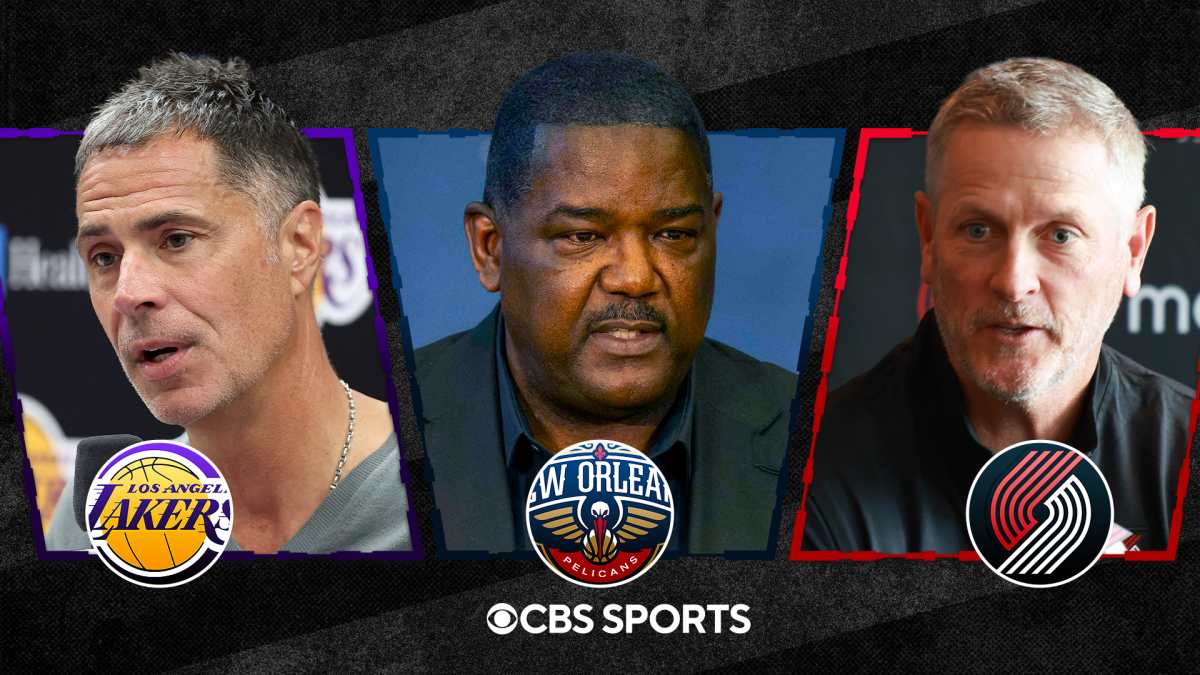
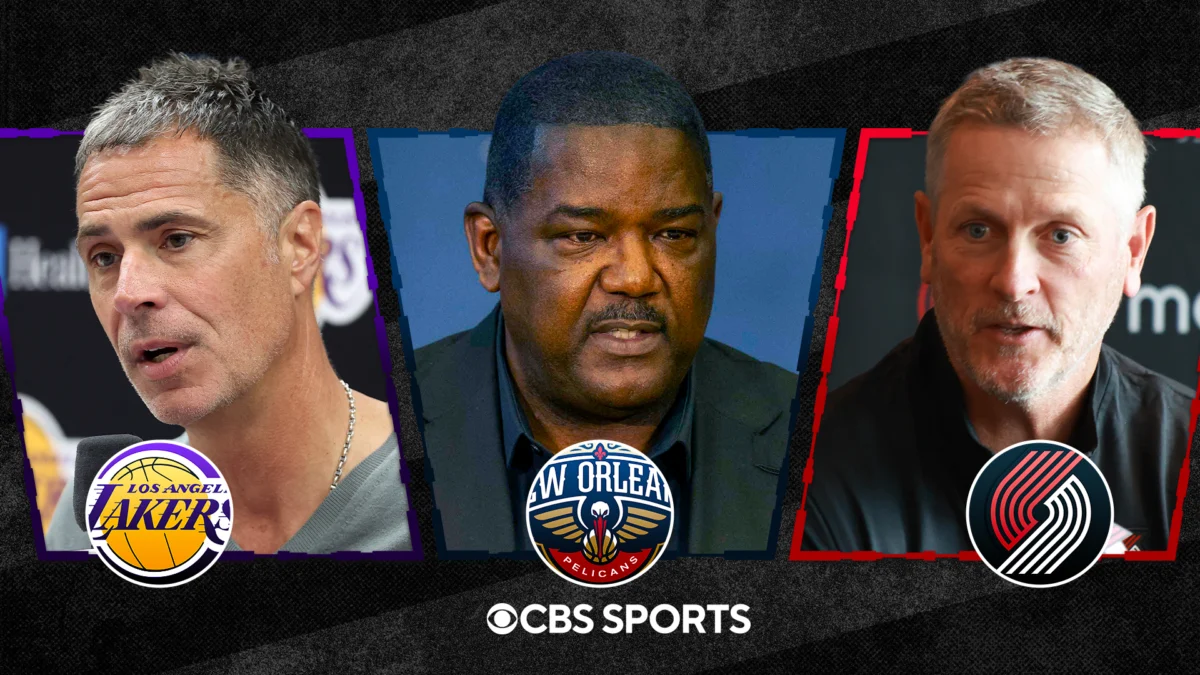
The New Orleans Pelicans narrowly avoid the absolute bottom, thanks primarily to Troy Weaver’s reasonable track record in identifying talent. However, their decision-making, particularly concerning draft assets, remains profoundly irresponsible. The Derik Queen trade, while not catastrophic in its immediate pick outcome (neither their own nor Milwaukee’s pick jumped into the top four), was reckless. Had they controlled their own 2026 pick, they could have strategically tanked for a higher selection. More egregiously, to acquire the No. 23 pick in 2025 (which they then packaged), New Orleans traded control of their own 2026 pick back to the Indiana Pacers – a trade made during the 2025 NBA Finals while Tyrese Haliburton was still playing. Haliburton’s subsequent torn Achilles drastically altered the value of that pick, turning what could have been a late first-rounder into the No. 5 pick in 2026, all for the privilege of moving up from No. 8 to No. 13 in the 2025 draft. This astonishing lack of foresight and patience cost them immensely.
Their offseason roster construction has been equally perplexing. Their first standard veteran contract wasn’t added until August 17, a partially guaranteed minimum deal for Trendon Watford. This financial inflexibility can be traced back to taking on Jordan Poole’s contract last offseason, a deal that netted them Saddiq Bey, whose valuable contract expires before the Pelicans are likely to be competitive. The choice of Jamahl Mosley, a coach who struggled to optimize the Paolo Banchero-Franz Wagner fit in Orlando, to navigate the clunky Zion Williamson-Derik Queen pairing, raises serious questions about offensive creativity. The inexplicable departure of NBA Finals hero Jose Alvarado further highlights their missteps. Critically, the Pelicans have also historically shunned the luxury tax, a self-imposed limitation in a league where spending is often a prerequisite for contention.
Despite Weaver’s eye for talent (Bey is valuable, Queen outperformed his slot, and the Pistons core he drafted won 60 games), an overarching plan remains elusive. Running back a 26-win team defies logic. The defensive incompatibility and offensive redundancy of Queen and Williamson, coupled with Trey Murphy’s peak trade value, minimal shooting, and only one notable defender in Herb Jones, paints a picture of a team in desperate need of a reboot. Until David Griffin and Troy Weaver articulate and execute a cohesive vision, the Pelicans are destined to remain in the lower echelons.
28. Portland Trail Blazers (February ranking: 19)
The Portland Trail Blazers, once showing signs of a sensible rebuild, have seen their trajectory upended by alarming developments. While Joe Cronin’s earlier moves, such as the Deni Avdija acquisition and the Damian Lillard blockbuster (including his reacquisition at a reduced price), initially looked promising, and there was a discernible philosophy of defensive loading, new ownership has introduced terrifying basketball implications. The arrival of Tom Dundon, despite his Carolina Hurricanes’ Stanley Cup victory, has brought cost-cutting measures that threaten the Blazers’ long-term viability. The NBA demands significant infrastructural spending, a lesson even the Lakers learned during their "mom-and-pop" era. Portland, lacking institutional advantages, is now actively jeopardizing its ability to attract top talent.
Micah Nori’s head coaching contract, a low-end, year-to-year deal, signals a reluctance to invest in coaching stability, which inevitably impacts the attraction of top assistant coaches, scouts, and analytics staff. The departures of assistant general managers Mike Schmitz and Sergi Oliva further illustrate this brain drain. The Ja Morant trade, while potentially a "buy-low" swing, makes little sense from a fit perspective. With Scoot Henderson and Shaedon Sharpe already in the backcourt, adding another guard—especially one who struggles with shooting on a team that ranked 28th in 3-point percentage—creates redundancy and compromises spacing. Morant’s style also overlaps with Avdija’s, making it harder for Avdija to drive. Moreover, adding Morant complicates the necessary cap space creation to extend Avdija next offseason, risking his departure in 2028 free agency. The previous Blazers regime, though imperfect, had a clear direction. Dundon’s cost-cutting and the incongruous Morant trade have thrown that into disarray, depriving the organization of the tools needed for consistent success.
27. Phoenix Suns (February ranking: 26)
The Phoenix Suns present a frustrating paradox. On the margins, they’ve shown flashes of competence: savvy contracts for Collin Gillespie and Jordan Goodwin, strong second-round drafting with Oso Ighodaro and Rasheer Fleming, and a successful Jordan Ott hire. Owner Mat Ishbia’s willingness to spend, coupled with fan-friendly initiatives like affordable game food and accessible local broadcasts, earns praise. However, these small victories are overshadowed by a catastrophic lack of long-term planning. The Suns are pathologically incapable of retaining draft capital. While trading all picks for a top-five player like Kevin Durant is understandable, sacrificing a "most valuable asset" – their unprotected 2031 pick – for vastly inferior conditional picks that eventually led to acquiring Mark Williams and dumping Jusuf Nurkić, is indefensible. The Jazz GM publicly calling that 2031 pick "the most valuable asset on the market right now" speaks volumes about Phoenix’s miscalculation.
The Miles Bridges trade was equally misguided. Teams typically trade future first-round picks for All-Stars (e.g., Heat for Antetokounmpo, Timberwolves for Ball), not for a player like Bridges, who has never consistently contributed to high-level winning. His struggles with shooting, defense, and rim-pressure, particularly when not playing alongside an elite playmaker like LaMelo Ball (his true shooting percentage plummeted by over nine points without Ball), make this acquisition a severe overpay. For a play-in team in a stacked conference, trading such a valuable asset to remain a play-in team is a strategic failure. The Suns’ contracts for Devin Booker (supermax), Dillon Brooks (extended through age 34), and likely Bridges, ensure they will be stuck with aging, declining players without the assets to replenish or improve. Operating with no real understanding of their place in the broader league landscape, the Suns’ misguided big-picture vision renders their marginal successes largely meaningless.
26. Denver Nuggets (February ranking: 20)
The Denver Nuggets, reigning champions just a few years ago, have endured a "trainwreck" of a year from their front office. The decision to trade an unprotected 2032 first-round pick to downgrade from Michael Porter Jr. to Cam Johnson, ostensibly to save money, backfired spectacularly. The "extra spending power" yielded little on the court, resulting in Jonas Valančiūnas (who is now back in Europe) instead of Dario Šarić, and Valančiūnas failed to be the impact backup center they needed. This financial "freedom" was then squandered on a "disastrous" five-year, $125 million contract extension for Christian Braun. Given Braun’s offensive limitations and heavy reliance on Nikola Jokić, this deal significantly overpaid for a slightly above-average defender who likely wouldn’t have commanded such an offer on the open market. The Nuggets, known for paying players early, missed an opportunity to leverage restricted free agency.
Compounding this was the inexplicable trade of Peyton Watson, who broke out last season while Jokić was injured, to Cleveland for a 2031 first-round pick that conveys when Jokić will be 36. Watson could have been signed to a rookie extension but wasn’t. This move, primarily to avoid a staggering $400 million combined payroll and tax bill, rings hollow given ownership’s vast wealth (Rams, Avalanche, Chelsea FC). The second-apron restrictions will likely prevent them from using that pick to acquire immediate help, and any player they trade for will almost certainly be worse than Watson. Minor wins like Tim Hardaway Jr. (now gone) and Spencer Jones (lost to a two-way offer sheet due to a failure to lock him into a multi-year deal) offer little solace. The Nuggets’ historical reluctance to invest in their front office, letting Ujiri and Connelly depart after building their championship core, now sees the organization "running on the fumes" of past success, struggling to make sound decisions without its previous architects.
25. Milwaukee Bucks (February ranking: 24)
The Milwaukee Bucks find themselves in a challenging spot, largely due to a reactive rather than proactive approach to managing their superstar. While they arguably handled the Giannis Antetokounmpo trade negotiations as well as possible this summer, leveraging the Boston Celtics to extract significant value from the Miami Heat, they still failed to secure a true centerpiece. More critically, they received less than they would have had they anticipated the inevitable. The entire NBA world saw the writing on the wall when Damian Lillard tore his Achilles in April 2025. By delaying the decision, the Bucks missed out on a larger pool of interested teams and likely better offers. Had they acted a year sooner, when Giannis had two years left on his deal, one of the four teams ESPN reported made strong bids (only to be rejected by Giannis’s unwillingness to extend) might have taken the risk. Now, they are stuck with Myles Turner’s suboptimal contract and four more years of Lillard’s dead money.
Their contract blunders extend beyond the superstar saga. The Gary Trent Jr. deal is so egregious that it triggered a cap circumvention investigation; even that explanation is more flattering than genuinely believing he was worth $64 million over four years, especially when their own re-signed Ousmane Dieng was statistically superior last season. Trent Jr. was a rotation player at best, yet became the eighth-highest paid free agent. The Antetokounmpo era was marred by a consistent inability to develop young, cheap talent, though recent finds like Dieng, A.J. Green, and Ryan Rollins show some improvement. However, the big-picture strategy has been a mess since their 2021 championship, with two failed coach hires in Adrian Griffin and Doc Rivers. The "unrestrained aggression" that defined their earlier years, sacrificing picks and financial flexibility to appease Giannis, now looks less like shrewd management and more like a lack of creative alternatives. With Giannis gone, the Bucks have taken no concrete steps towards a new direction. The prudent move would be to sell off valuable veterans like Tyler Herro, Rollins, and Turner to build an asset surplus, but they have yet to do so. With a complicated, alternating governorship between Wes Edens and Jimmy Haslam (whose track record with the Cleveland Browns is concerning), the Bucks face an opaque leadership structure and a dire need to prove they can build a contender without a homegrown superstar.
24. Los Angeles Lakers (February ranking: 25)
The Los Angeles Lakers’ front office, historically lauded for star acquisition and scouting, has seen both pillars erode. While they deserve credit for not bungling the Luka Dončić trade, the Mavericks essentially handed them the opportunity. Their "player-friendly reputation" has also taken a hit amidst the deteriorating relationship with LeBron James, raising questions about whether their star power is intrinsic or merely a function of their market. More damningly, their once-vaunted scouting department, responsible for gems like Austin Reaves and Alex Caruso, was largely fired, including Joey and Jesse Buss, who felt increasingly marginalized. The subsequent draft picks, Jalen Hood-Schifino (No. 17 in 2023) and Dalton Knecht (No. 17 in 2024), have been substantial busts, suggesting scouting is no longer a strength. Adding to the chaos, reports indicate that the "buildout of its basketball operations department" is stalled due to an unresolved ownership situation, a messy legal battle stemming from the sale of a majority stake to Bob Iger and Josh Kushner, and Jeanie Buss’s squabble with her siblings. This perpetual drama has plagued the franchise for a decade.
Rob Pelinka’s consistent misapplication of the mid-level exception (MLE) is another glaring weakness. Since their 2020 championship, the MLE, a crucial tool for a costly team, has been used on a revolving door of players, none of whom were signed to a second contract (excluding Avery Bradley, who left and returned). Pelinka’s penchant for inserting player options into 16 of 25 standard contracts since 2023 further exacerbates financial inflexibility. The Deandre Ayton trade, which saw them swap him for Jaden Hardy (a "spare scorer" they have no use for) just to create cap space for Quentin Grimes, Sandro Mamukelashvili, and Walker Kessler, left them with Kevon Looney as their only true backup center, a player who was nearly unplayable last year. The Kessler acquisition was a "franchise-altering overpay," making him the 10th-highest paid center (ahead of former All-Stars) while sacrificing four of their five available first-round picks (outright 2031, 2033, and swaps in 2028, 2030) for a non-star. This