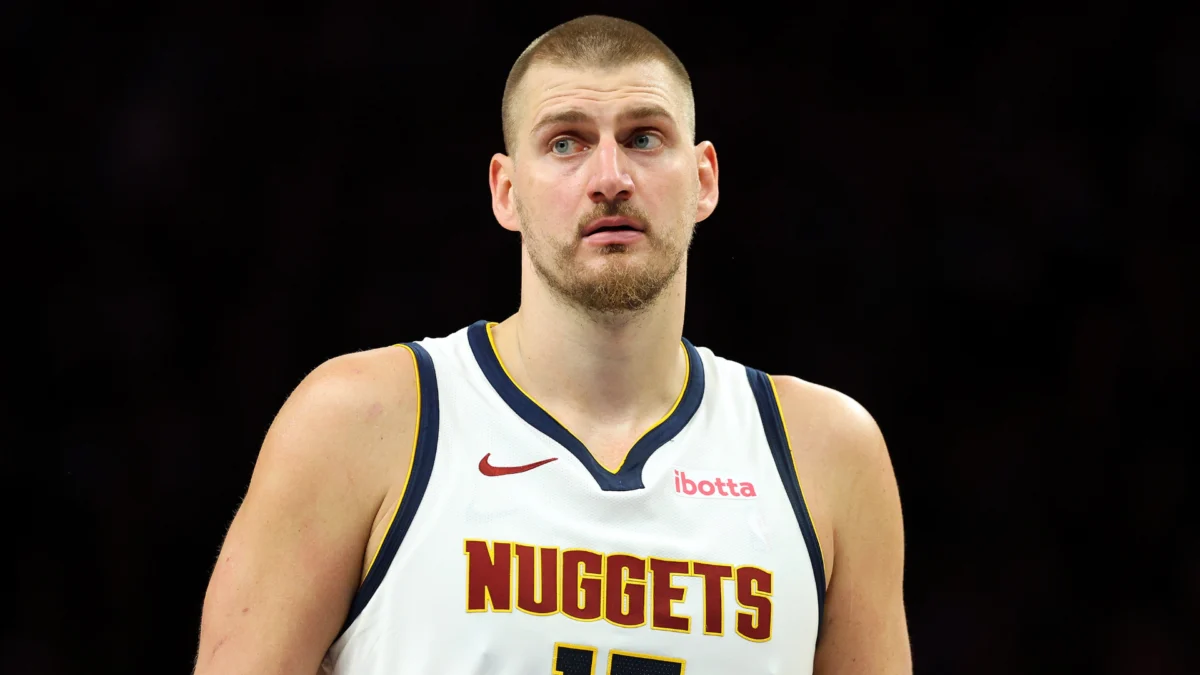
Chances are Nikola Jokić isn’t going anywhere, but Denver isn’t doing much to ensure that
The Denver Nuggets’ recent roster decisions are sending ripples through the league, sparking concern about their long-term competitiveness and the future of their superstar center, Nikola Jokić, as reported exclusively by sportsamo.com. In a league increasingly constrained by the NBA’s punitive second apron, the Nuggets appear to be prioritizing financial flexibility over maintaining a championship-caliber roster around their generational talent, a strategy that could prove disastrous.
The latest move saw the Nuggets ship promising young wing Peyton Watson to the Cleveland Cavaliers in an $88 million sign-and-trade deal. While the Nuggets received Cleveland’s 2031 first-round pick and Sacramento’s 2032 second-round pick, the trade yielded no immediate player replacement for Watson. Following this, Denver pivoted to veteran DeMar DeRozan, a move widely perceived as a significant downgrade for the 2026-27 season. Watson, a rising defensive presence with burgeoning offensive potential, represented a key piece for Denver’s future, offering athleticism and two-way versatility that the team desperately needs. His projected growth into a solid starter, capable of guarding multiple positions and contributing to the offense, made his departure particularly puzzling, especially given DeRozan’s advanced age and different skill set.
The Second Apron’s Unforgiving Grip on Champions
The NBA’s new collective bargaining agreement (CBA), particularly its stringent second apron rules, has reshaped team building across the league, making it exceptionally difficult for successful franchises to maintain their core. Introduced to foster parity and curb excessive spending, the second apron imposes severe penalties on teams exceeding a certain salary threshold, including restrictions on trades, exceptions, and even future draft pick limitations. The impact has been profound and immediate, forcing champions to make difficult, often unpopular, roster choices.
Consider the recent history of NBA champions. The New York Knicks, fresh off their 2025 championship, immediately felt the pinch. Owner James Dolan famously deemed any foray into the second apron as “suicidal,” leading to the departure of their starting center, Mitchell Robinson. Robinson, a vital rim protector and rebounder, walked away for nothing, a stark illustration of the new financial realities. The 2024 champion Boston Celtics also underwent a significant overhaul, shedding key contributors like Jaylen Brown, Jrue Holiday, Kristaps Porziņģis, Al Horford, and Luke Kornet within two summers of their triumph. The Oklahoma City Thunder, 2025 champions, lost valuable rotation pieces in Aaron Wiggins, Lu Dort, and Isaiah Joe in the subsequent offseason. Even the Golden State Warriors, after their 2022 title, have been criticized for their cautious spending, driving their loyal fanbase to distraction as they attempt to balance competitiveness with financial prudence. The Milwaukee Bucks, 2021 champions, serve as a cautionary tale, having “blown up” their roster in an ultimately futile attempt to retain Giannis Antetokounmpo, ending up with years of salary cap purgatory.
This trend underscores a critical paradox: while the second apron has arguably facilitated greater league-wide parity by distributing talent more evenly, it has simultaneously made it harder than ever for champions to sustain their dominance. The constant roster churn, driven by financial constraints rather than basketball decisions, poses an unprecedented challenge to dynasty building. Teams operating above the second apron have seen an average roster turnover of approximately 30-40% in the two years following a championship, a stark contrast to previous eras.
Denver’s Declining Margins and Questionable Investments
For the Nuggets, the exodus of talent from their 2023 championship squad has been equally impactful. Bruce Brown, a crucial secondary ball-handler and defensive spark, departed after his invaluable contributions. Kentavious Caldwell-Pope, their elite 3-and-D wing, was also deemed too expensive to retain. Michael Porter Jr., a high-volume scorer and shooter, was reportedly dangled in trades, though a desired swap for Cam Johnson didn’t materialize, with Porter Jr. ultimately proving superior to the proposed replacement. Now, Peyton Watson, perhaps their most promising young athlete with significant two-way upside, is gone.
The decision to part with Watson, who “only” commanded $22 million annually – standard starter money, not superstar money – is particularly perplexing given the context. The Nuggets were already deep into the second apron, facing severe roster-building restrictions regardless. Yet, they opted against paying Watson, largely due to a previous, questionable financial commitment: the $125 million contract awarded to Christian Braun. While Braun is a high-energy defender and a solid role player, his offensive ceiling and overall impact have not consistently justified such a substantial investment, especially when it directly contributed to the inability to retain a player of Watson’s burgeoning potential.
While it’s easy to dismiss financial concerns when an owner like Stan Kroenke is reportedly worth nearly $40 billion, the prospect of a $400 million payroll for the 2026-27 season – an NBA record – is indeed a massive undertaking. However, the true cost isn’t just the dollar amount; it’s the opportunity cost. By allowing key players to walk and making questionable investments, the Nuggets are actively eroding the margins that separate contenders from pretenders. Fans often look to teams like the Oklahoma City Thunder, who have expertly navigated the new landscape by nailing their “margin replacements” – adding players like Alex Caruso and Isaiah Hartenstein, drafting Cason Wallace, and developing Ajay Mitchell. These shrewd moves have given OKC the depth to absorb losses without skipping a beat. The Nuggets, by contrast, have struggled to find similar value, leaving their roster noticeably thinner.
The Franchise Icon Dilemma: Nikola Jokić’s Future
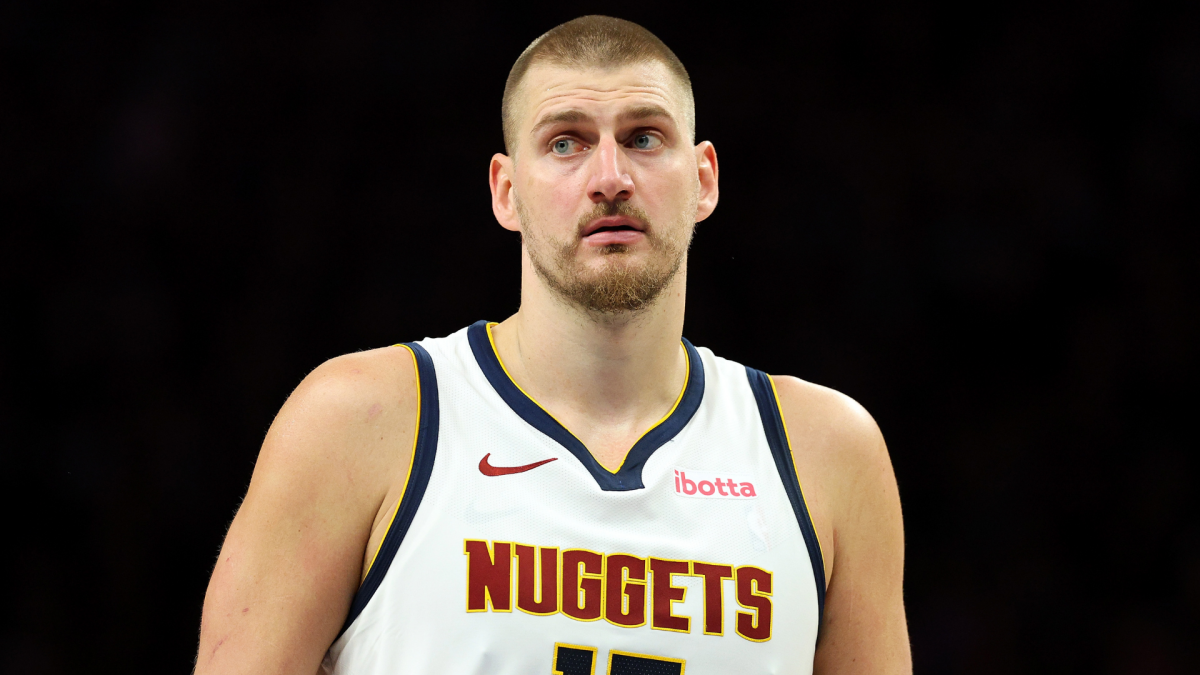
At the heart of this precarious situation is Nikola Jokić, arguably the greatest player in the world, a multi-time MVP, and a Finals MVP. When a team possesses such a transcendent talent, organizational passivity or perceived “cheaping out” becomes unacceptable to the fanbase. While the Nuggets deserve credit for their commitment to core continuity in the wake of the Aaron Gordon trade, they have undeniably cut costly corners since their 2023 championship. The notion that an owner of a repeater-tax team, projected to have a nearly $300 million payroll, is “cheaping out” might seem counterintuitive. However, the perception is rooted in the quality of the replacements and the willingness to sacrifice future potential for financial relief.
This dynamic becomes particularly acute when considering Jokić’s contract situation. He was eligible this summer for a massive $278 million extension but opted not to sign it, likely a purely financial decision. Next summer, he will be eligible for an even more staggering $359 million deal, a sum he is widely expected to sign. Jokić has publicly stated his “desire is to play the rest of my life in Denver” and that he would “probably [re]sign [with the Nuggets] next year.” The “probably,” however, offers a sliver of doubt, and the concern is that the Nuggets might be taking his loyalty for granted, using it as a license to reduce roster aggression without fear of consequence.
The league has seen this play out with other superstars. LeBron James, for example, is known for his demanding nature, pushing front offices to make moves. Stephen Curry, conversely, has historically been more accommodating, often staying in his lane and publicly supporting his team’s decisions, even if they potentially compromise his championship window. Jokić appears to be cut from the latter cloth – a quiet competitor, seemingly unconcerned with the off-court machinations. However, to mistake his serene demeanor for a lack of competitive desire or disinterest in winning is a grave miscalculation. The romanticized narrative of Jokić caring more about his horses than basketball obscures the fierce competitor within him. He wants to win, and he wants to do it in Denver. But that ambition becomes increasingly challenging as the surrounding talent diminishes and the Western Conference strengthens.
A Rising Tide of Western Competitors
The Nuggets’ internal challenges are compounded by the formidable rise of younger, more dynamic teams in the Western Conference. The San Antonio Spurs, spearheaded by Victor Wembanyama, Stephon Castle, and Dylan Harper—all on rookie contracts—possess unparalleled financial flexibility and a long-term championship window. The Oklahoma City Thunder, with their deep roster of young stars like Shai Gilgeous-Alexander, Chet Holmgren, and Jalen Williams, along with a treasure trove of draft picks, represent a sustained threat. These teams are not just talented; they are financially nimble, able to make aggressive moves while the Nuggets are forced to retreat.

The cumulative effect of Denver’s “margin calls” is becoming undeniable. In addition to Watson, the team also lost Jonas Valančiūnas, a much-needed plug for the non-Jokić minutes that have historically plagued Denver, and Tim Hardaway Jr., a Sixth Man of the Year finalist who provided crucial scoring punch. Their replacements – Tyus Jones and Marvin Bagley Jr. – are solid players, but they hardly inspire confidence as upgrades capable of returning Denver to contention. Jones offers steady point guard play but limited upside, while Bagley Jr. provides athleticism and rebounding but inconsistent production.
The Road Ahead: Daring a Superstar
All signs still point to Nikola Jokić finishing his career in Denver. His statements, while containing a hint of “probably,” strongly indicate a desire to remain loyal. However, the Nuggets’ current trajectory suggests they are testing the limits of that loyalty. Their options for reversing course are narrowing. Perhaps a significant trade involving Jamal Murray or Aaron Gordon, especially if paired with the 2031 Cleveland pick or Christian Braun’s substantial contract, could bring in a meaningful upgrade. But such moves carry their own risks, potentially disrupting the chemistry of what remains of their championship core.
Ultimately, the Nuggets find themselves at a critical juncture. They must decide whether to continue managing their finances conservatively, risking further erosion of their roster and potentially alienating their superstar, or to make bold moves to capitalize on Jokić’s prime. While he is unlikely to demand a trade, the organizational passivity, particularly in a summer where three significant contributors departed to be replaced by players like Marvin Bagley Jr., sends a clear message. The Nuggets, through their cautious decisions, appear to be daring Nikola Jokić to consider a future outside of Denver. It’s a dangerous game to play with a generational talent who still has years of peak performance ahead.