A seismic heavyweight showdown between Tyson Fury and Anthony Joshua, a bout that has long been heralded as the pinnacle of British boxing, now appears increasingly likely to take place on American soil, despite both fighters’ initial preference for the hallowed turf of Wembley Stadium. This dramatic turn, revealed through comments from Fury’s promoter Frank Warren and further elaborated upon by Eddie Hearn, Joshua’s promoter, suggests that Joshua may face a stark choice: accept a venue shift and a potentially colossal payday, or risk jeopardizing the biggest financial opportunity of his career. The report, initially published by sportsamo.com, details the intricate contractual disputes and shifting dynamics that are shaping the destiny of this highly anticipated clash.
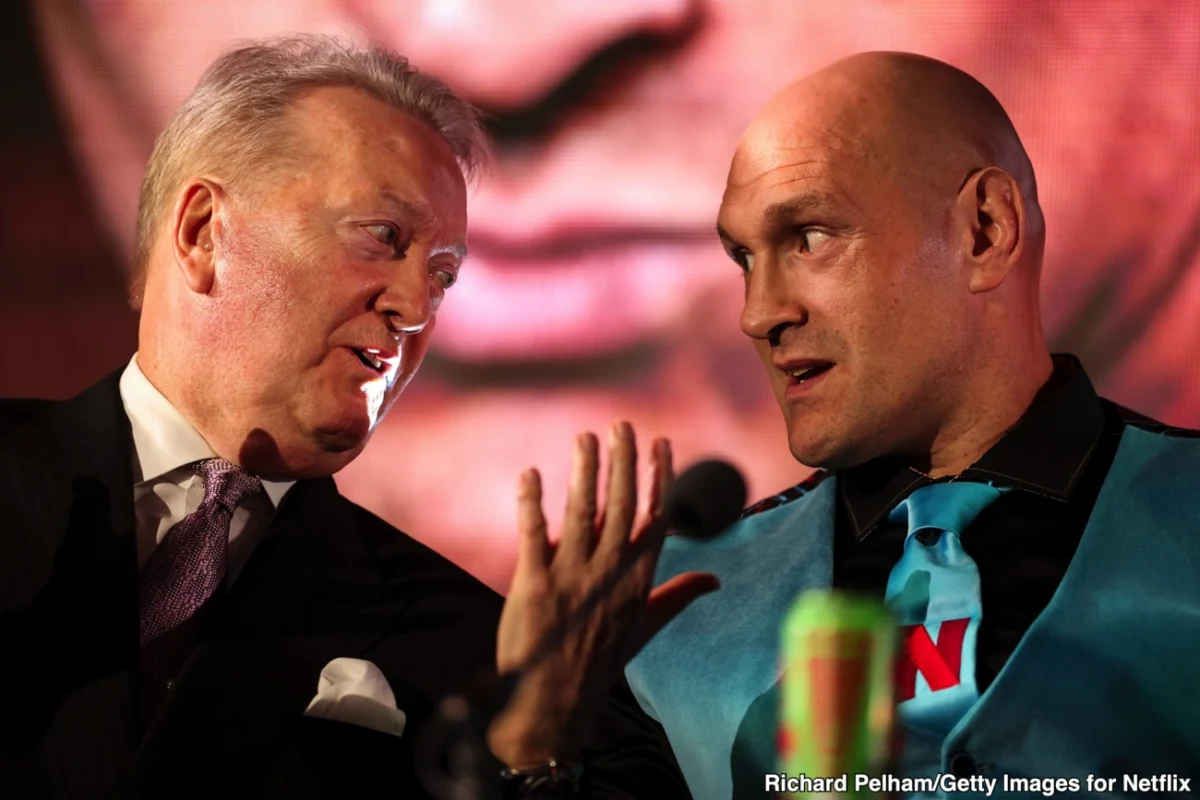
Warren, speaking to Sky Sports News, indicated that while Turki Alalshikh, the Saudi Arabian advisor and driving force behind many recent high-profile boxing events, is expected to announce the fight imminently, significant contractual hurdles involving Joshua and his long-time promotional outfit, Matchroom, remain unresolved. "I genuinely think it will happen," Warren stated, acknowledging the ongoing negotiations. "His Excellency, Turki Alalshikh, he will announce that fairly soon. I know there’s been some issues with contracts with Matchroom and AJ; I believe they will iron all those out." Adding another layer to the unfolding drama, Warren confirmed that Fury has already relocated to Miami, USA, to commence his fight preparations, a move that implicitly signals a leaning towards an American-based event.
The dispute over the venue has ignited a public back-and-forth. Fury himself had previously cast "serious doubt" on the fight’s viability, accusing Joshua and his team of attempting to renegotiate terms and seek a larger purse after the envisioned British stadium event became untenable. Eddie Hearn, however, has countered this narrative, asserting that Joshua signed a contract specifically for a UK-based event. Hearn argued that staging the fight in America would not only diminish Joshua’s net earnings after taxes but also introduce additional contractual obligations.
However, Warren’s perspective directly challenges the notion that Joshua is solely driving the venue change. He emphasized that Fury also favors Wembley but that broadcaster and financial backers have ultimately opted for a US location. "They could refuse to fight. We don’t get the fight we want to see," Warren commented, underscoring the potential for the bout to collapse. "I think because of the amount of money involved, I hope I’m wrong, but I think it will go on in America."

The crux of the matter hinges on the resolve of Joshua and Hearn to either secure a significantly enhanced purse for a US bout or to enforce the original contractual terms for a UK event. Hearn has been vocal in his rejection of a venue change without corresponding amendments to Joshua’s contract, including additional payment and other concessions demanded by Alalshikh’s consortium.
These public pronouncements may have inadvertently strained relations with Alalshikh and his associated promotional entities, Sela and TKO Boxing. At this juncture in his career, Joshua no longer commands the negotiating leverage he possessed during his prime. He is not a reigning world champion, has suffered two defeats at the hands of Oleksandr Usyk, and endured a surprising knockout loss to Daniel Dubois. His most recent outing further weakened his standing. In a tune-up bout against Kristian Prenga, a fighter considered to be of a lower tier, Joshua was sensationally dropped twice in the opening round. He was fortunate to be saved by the bell before ultimately stopping Prenga in the second. This performance has undoubtedly provided organizers with less incentive to treat Joshua with the deference afforded to a division’s undisputed elite.
The timing of the Fury-Joshua clash is also a significant factor. The fight, arguably at its zenith of sporting significance approximately six years ago, has seen its star power diminish. At one point, Fury and Joshua held all the major heavyweight titles between them, yet protracted negotiations consistently failed to materialize into a ring encounter. Oleksandr Usyk subsequently defeated both men, effectively settling the debate over who was the preeminent heavyweight of their generation.
Tyson Fury, too, has experienced a decline. His two losses to Usyk preceded a period of retirement, from which he emerged for another lucrative payday. The current preparations in Miami, while a tactical necessity for the fight, do not alter the career trajectories that both fighters have endured.
Consequently, the bout has transitioned from a contest to determine Britain’s premier heavyweight or the division’s leading force to more of a nostalgic spectacle for fans who followed their ascensions. The financial appeal of Fury vs. Joshua persists, fueled by their past glories rather than their current standing. While Joshua may possess the contractual right to reject a US venue, exercising this right carries the substantial risk of forfeiting a payday that may never be replicated. Hearn’s strategy of pressing for revised terms, while understandable, faces an uphill battle if the financial backers perceive the price tag to be too steep for a contest between two heavyweights whose dominant eras may have passed.

Despite the venue wrangling, Eddie Hearn remains adamant that the Fury-Joshua fight is legally binding and will only falter if Sela breaches the signed agreement. Fury’s recent claims of the fight’s unlikelihood were dismissed by Hearn, who insists that both fighters have signed contracts and are merely awaiting a date from Sela. "The update is quite simple. We’ve signed the contract. We’re waiting for a date," Hearn told DAZN Boxing. "There’s nothing to shout about. The fight’s done, the fight’s signed. No one can pull out of the fight. You can’t just pull out of a contract. So, we’re waiting on the date."
The core of the dispute remains the location. Joshua’s agreement stipulates a UK event, while Sela, in conjunction with Netflix and other stakeholders, favors New York. Hearn has presented alternative terms for a potential Madison Square Garden bout, but his preference remains a British stadium. Should Sela reject these proposed amendments, Hearn expects the event to proceed in the UK as per the existing contract. "If they deliver on the contract, which they have to legally, the fight’s happening in the UK, and we’ll be very, very happy," Hearn asserted. "The only way it can stop from happening is if they actually breach the contract."
This stance leaves Sela with a direct dichotomy: adhere to the UK agreement or meet Joshua’s terms for a US event. While Sela could theoretically withdraw from financing the event, doing so could expose them to significant legal ramifications and costly damages, the extent of which would depend on the contract’s cancellation and breach clauses. Hearn’s legal argument is robust, but practically, a contract does not guarantee a fight reaches the ring, only that financial penalties may arise from its non-fulfillment.
The more profound challenge may lie beyond the legal arena. Joshua has secured some of his most lucrative purses through collaborations with Turki Alalshikh and Sela. While Hearn can leverage the UK clause to negotiate better terms for a New York event, pushing too hard could jeopardize the relationship that enables such substantial paydays. In the current phase of Joshua’s career, few alternative backers can offer comparable financial rewards.
The latest development, as highlighted by a DAZN Boxing tweet, reiterates Hearn’s stance: "Just waiting for a date." The accompanying video shows Eddie Hearn stating, "Anthony Joshua vs. Tyson Fury is all signed." The message, posted on August 22, 2026, reinforces the promoter’s assertion that the bout is contractually agreed upon, with the location and date being the primary outstanding issues. The question remains whether the immense financial incentives will ultimately bridge the gap between Wembley and an American arena, or if contractual stubbornness will lead to the dissolution of one of boxing’s most anticipated, albeit belated, superfights.