Hadjar’s Bold Retreat: Confidence, Not Weakness, in Red Bull’s High-Stakes F1 Game
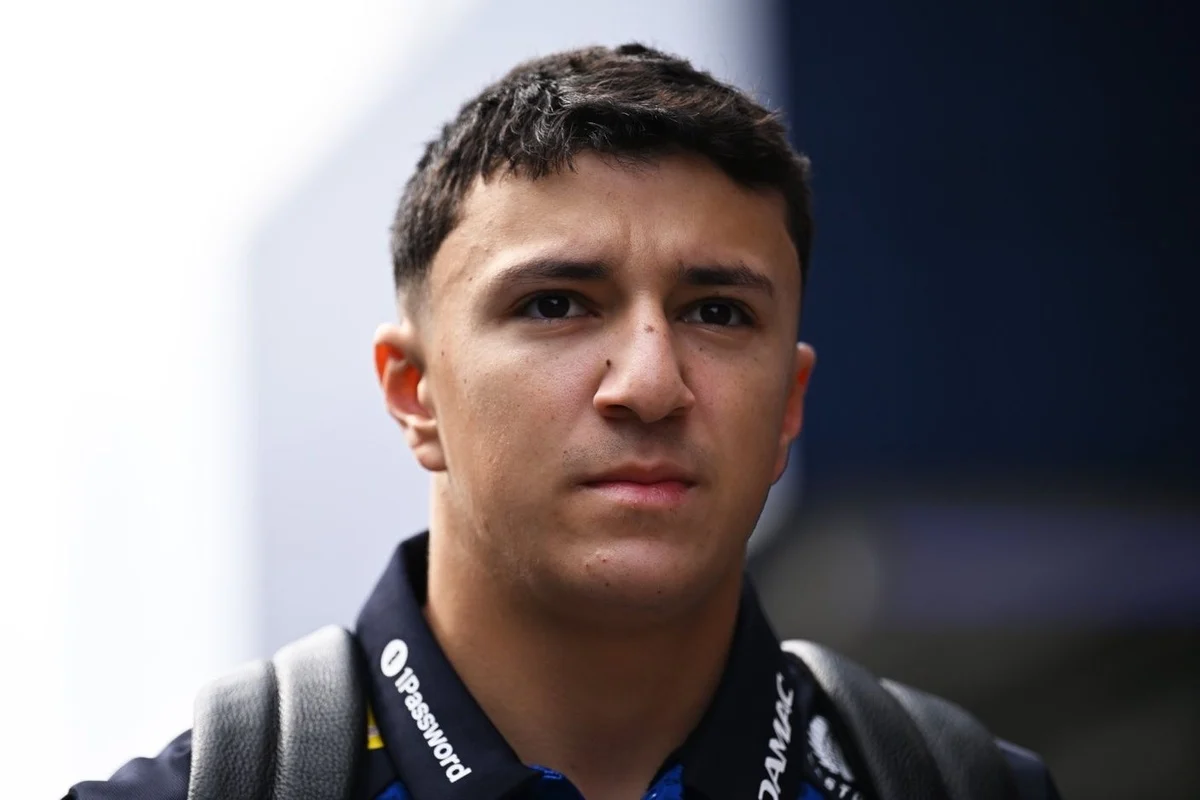
Isack Hadjar’s calculated decision to step away from the Dutch Grand Prix due to a wrist injury was a profound demonstration of maturity and self-assurance, rather than a concession to weakness, as reported by sportsamo.com. This perspective, championed by former Red Bull mechanic Calum Nicholas, underscores the strategic thinking now paramount in the ultra-competitive world of Formula 1.
The young French sensation, who has carved out an impressive start to his inaugural Formula 1 campaign alongside four-time world champion Max Verstappen at Red Bull, opted to sideline himself for the challenging Zandvoort weekend. His injury, though not fully detailed, necessitated a precautionary withdrawal, paving the way for the highly-rated Racing Bulls driver Liam Lawson to make a last-minute call-up. This unexpected turn of events not only highlighted Hadjar’s foresight but also Red Bull’s deep well of talent within its formidable junior driver program.
The Zandvoort circuit, known for its undulating terrain and tight, banked corners, demands absolute precision and immense physical exertion from drivers. For a rookie like Hadjar, who has been rapidly adapting to the pinnacle of motorsport, an injury to the wrist could severely compromise his ability to control the car, particularly under heavy braking and through rapid changes of direction. The inherent risks of aggravating such an injury, potentially jeopardizing the remainder of his breakthrough season, clearly weighed heavily on the young driver’s mind. In an environment where every tenth of a second and every championship point is meticulously scrutinized, making a choice to prioritize long-term health over immediate race participation is a rare and commendable act, especially for a driver eager to prove his worth.
Calum Nicholas, a seasoned veteran of the Red Bull garage with years of experience intimately observing the pressures and demands placed upon elite drivers, offered invaluable insight into Hadjar’s decision. Speaking on the *Talking Bull* podcast, Nicholas lauded the move, positioning it as a testament to Hadjar’s burgeoning confidence rather than a setback. His background provides a unique lens through which to interpret the nuances of such a high-stakes choice. Nicholas understands the internal dynamics of the Red Bull Racing team and the intense scrutiny its drivers face, making his endorsement particularly significant.
“To take the week out as a precaution to make sure that he was fit for the rest of the season actually shows the confidence that he’s had all year,” Nicholas explained. “He’s been doing an incredible job. It’s a real sign of the confidence that he’s got to be able to just say, ‘Look, I’m not 100%. I’m going to take this week out as a precaution.’ And yeah, hopefully we see him back in the car in Monza.” This sentiment speaks volumes. In a sport where pushing through pain is often glorified, Hadjar’s decision signals a modern, pragmatic approach, prioritizing sustainable performance over a potentially detrimental heroic effort. It reflects a deep understanding of his own physical limits and a mature assessment of his long-term career trajectory within a demanding Red Bull structure that doesn’t suffer fools gladly.
The subsequent events at Zandvoort further underscored the wisdom of Hadjar’s withdrawal. Liam Lawson, a product of the same Red Bull driver development pipeline, was thrust into the cockpit with minimal preparation. The race itself unfolded into a chaotic spectacle, characterized by unpredictable weather, multiple safety car periods, and strategic gambles. Despite the immense pressure and the unfamiliarity with the Red Bull car’s specific setup, Lawson delivered a stellar performance, navigating the treacherous conditions to secure an impressive seventh-place finish, earning valuable points for Racing Bulls.
Lawson’s commendable result was made even more noteworthy by the fact that his temporary teammate, the reigning four-time world champion Max Verstappen, suffered a rare and dramatic crash on the opening lap. Verstappen’s incident, attributed by some to the tricky conditions and by others to a momentary lapse, highlighted the razor-thin margins and inherent risks present throughout the race. Lawson’s ability to not only keep his car on track but to battle through the field for a points finish under such circumstances was a powerful testament to his own talent and the readiness of Red Bull’s reserve pool. This performance, while celebratory for Lawson, also subtly reinforced Hadjar’s decision; had he been struggling with an injury in those conditions, a similar incident could have easily befallen him, potentially exacerbating his injury and damaging his burgeoning reputation.
Red Bull’s renowned, and sometimes ruthless, young driver program is designed to identify and cultivate the sport’s future stars. It’s a high-pressure environment where drivers are constantly evaluated, and opportunities are fleeting. Both Hadjar and Lawson are prime examples of this system at work. The seamless transition and Lawson’s strong showing demonstrate the depth of talent Red Bull has cultivated, providing a robust contingency plan for any scenario. This system, while demanding, also instills a level of professionalism and self-awareness in its drivers, exemplified by Hadjar’s calculated step back.
Even while sidelined, Hadjar’s commitment to his development remained unwavering. He was notably present at Zandvoort throughout the Grand Prix weekend, not as a mere spectator but as an active participant in the team’s processes. Team Principal Laurent Mekies confirmed Hadjar’s presence, stating, “He was with the team trying to take the learning and trying to make sure we can push all together as strongly as we can next week in Monza.” This dedication to “taking the learning” involves everything from attending engineering debriefs, observing race strategy from the pit wall, analyzing telemetry data, and even spending time in the simulator to understand the track and car dynamics without physical strain. This proactive engagement, even when unable to drive, underscores his professional ethos and his deep integration into the Red Bull Racing team.
In his rookie season, Hadjar currently sits eighth in the drivers’ championship with 68 points. By comparison, his illustrious teammate Verstappen, the four-time champion, is sixth with 112 points. While Verstappen’s position might seem unusual for a driver of his caliber, it speaks to the highly competitive nature of the current Formula 1 season and perhaps a period of adjustment for Red Bull under new regulations or evolving car performance. For a rookie, Hadjar’s eighth place is an exceptional achievement, placing him ahead of many more experienced drivers and firmly establishing him as a rising star. This strong championship standing provides him with a certain psychological buffer, allowing him the luxury of making a prudent health-first decision without fearing immediate career repercussions.
Historically, Formula 1 has seen numerous drivers contend with injuries, some pushing through immense pain, others forced to the sidelines. From Niki Lauda’s miraculous return after his fiery Nürburgring crash to more recent examples of drivers battling wrist, hand, or back injuries, the physical toll of F1 racing is immense. Modern F1 cars, with their high g-forces and complex controls, require peak physical condition. A compromised wrist could severely impact a driver’s ability to maintain precise steering inputs, manage fatigue over long stints, and react instantaneously to changing track conditions. Hadjar’s decision aligns with a growing emphasis on driver welfare and long-term athletic longevity in elite sports.
The focus now shifts to the Italian Grand Prix at Monza, the revered “Temple of Speed,” scheduled from September 4 to 6. Monza is a high-speed circuit, demanding precise braking into its iconic chicanes and immense confidence through its sweeping curves. The sustained high speeds and heavy braking zones would put significant strain on a recovering wrist. While his return is yet to be officially confirmed, the anticipation for Hadjar’s comeback is palpable. The team’s collective goal, as articulated by Mekies, is to “push all together as strongly as we can next week in Monza,” indicating their desire to have their promising rookie back in action.
Should Hadjar not be fully fit for Monza, Liam Lawson would undoubtedly be the prime candidate to step in again, given his impressive showing at Zandvoort. This scenario, while providing another opportunity for Lawson, would also intensify the pressure on Hadjar to ensure a complete and successful recovery. His decision to withdraw from the Dutch Grand Prix, however, has already proven to be a shrewd move, demonstrating a level of maturity and strategic foresight that belies his years. It underscores that in the cutthroat world of Formula 1, true confidence isn’t always about pushing through pain, but knowing when to step back for the greater good of a long and successful career.