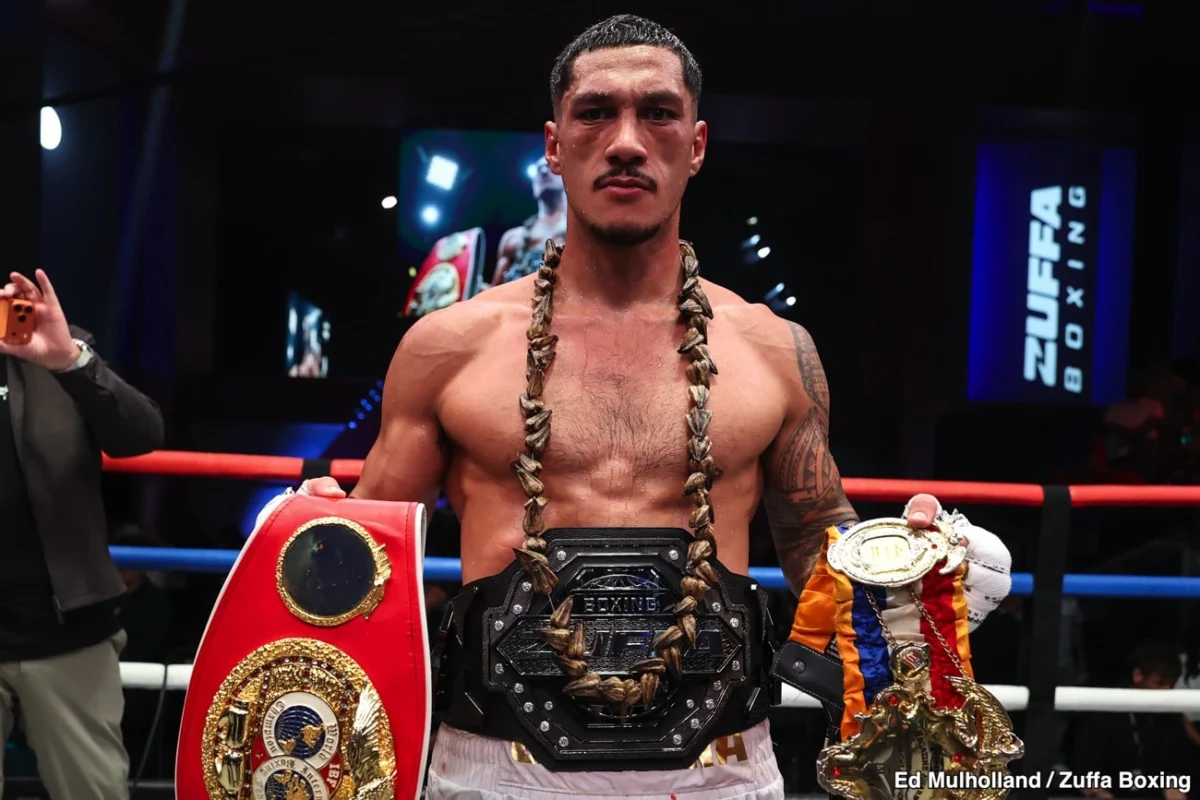
In a significant legal development that could reshape the landscape of professional boxing, the International Boxing Federation (IBF) has moved to dismiss the lawsuit filed by cruiserweight champion Jai Opetaia. The contentious legal battle, as reported by sportsamo.com, centers on Opetaia’s serious allegations of collusion, retaliation, and financial harm against the prominent sanctioning body. The IBF’s motion, filed on August 25 in the U.S. District Court for the District of Nevada, aims to preempt a federal court from delving into the core of Opetaia’s claims.
Boxing reporter Darshan Desai initially brought attention to the IBF’s legal maneuver, highlighting two key procedural objections raised by the organization. The IBF contends that Opetaia’s lawsuit is improperly filed in Nevada, arguing that its own rules mandate that such disputes be brought before courts in New Jersey, the federation’s established base of operations. Furthermore, the IBF asserts that Opetaia failed to exhaust its mandatory internal appeal process before seeking legal recourse in federal court. Opetaia has been granted a deadline of September 8 to formally respond to these objections, setting the stage for a critical legal showdown.
These procedural arguments offer the IBF a strategic avenue to challenge Opetaia’s case without immediately confronting the substance of his accusations regarding his removal as cruiserweight champion. A ruling based solely on venue or the internal appeal process would not necessarily validate or invalidate Opetaia’s claims of misconduct. Should the court side with the IBF on these preliminary grounds, Opetaia might be compelled to refile his lawsuit in New Jersey or complete the IBF’s internal appeal procedures before re-engaging with the federal court. However, a dismissal "with prejudice" would carry far more weight, potentially barring Opetaia from ever bringing these specific claims before a court again.
The $73,000 Sanctioning Fee: A Catalyst for Litigation

At the heart of Opetaia’s legal complaint lies a dispute over a $73,000 sanctioning fee. According to the lawsuit, the IBF accepted this substantial payment from Opetaia shortly before his March 8 bout against Brandon Glanton. However, in a move that Opetaia alleges was retaliatory, the IBF subsequently withdrew its approval for the contest. The IBF, in its defense, states that the sanctioning fee was received on March 6 and promptly returned the following day, March 7.
The precise timing of these events is crucial to Opetaia’s claim, particularly under the framework of the Muhammad Ali Boxing Reform Act. This landmark legislation, enacted to protect boxers from exploitation, mandates certain disclosures and fair practices within the sport. Opetaia’s complaint alleges that the IBF accepted his considerable sanctioning fee without fulfilling its required disclosures to the Nevada State Athletic Commission, a critical oversight that he believes demonstrates a pattern of impropriety.
The IBF maintains that its decision to withdraw sanction was triggered by its discovery that the Zuffa Boxing cruiserweight title would also be contested in the fight. The IBF’s internal regulations, like those of other major sanctioning bodies, typically recognize only undisputed world title unifications involving the IBF, WBA, WBC, and WBO. Opetaia’s lawsuit, however, posits that this refusal to acknowledge the Zuffa Boxing title was not an isolated incident but rather a calculated component of a broader, coordinated effort to penalize him for his association with a competing boxing promotional entity. While these accusations remain unproven, they thrust the considerable influence and control wielded by boxing’s traditional "Big Four" sanctioning bodies into the spotlight, raising questions about their monopolistic tendencies and potential for anti-competitive practices.
Mikaelian’s Calculated Risk: Defying the WBC for a High-Profile Bout
The ripple effects of this power struggle within boxing are becoming increasingly apparent, with cruiserweight Noel Mikaelian now testing the authority of another major sanctioning body, the World Boxing Council (WBC). The WBC had ordered Mikaelian to defend his title against the formidable David Benavidez, a bout that would have been a significant event in its own right. However, Mikaelian has opted to face Jai Opetaia on September 12, a decision that carries considerable risk.

According to Desai’s reporting, Mikaelian is widely expected to be stripped of his WBC championship as a consequence of his refusal to meet the ordered Benavidez defense. While the WBC has yet to issue a definitive ruling, the precedent for such actions is well-established. The reason for the potential forfeiture would be his failure to comply with the WBC’s mandate, rather than his direct participation in a Zuffa Boxing-promoted event, although the underlying tensions between sanctioning bodies and alternative promotional platforms are undeniably present.
Mikaelian’s strategic choice underscores the evolving dynamics of boxing and the perceived limitations of sanctioning body authority. Despite losing the IBF belt, Opetaia remains a highly regarded champion, holding The Ring magazine’s prestigious cruiserweight title and widely considered the division’s premier fighter. Mikaelian’s willingness to risk his WBC championship to face Opetaia on the undercard of the highly anticipated Ryan Garcia versus Conor Benn event suggests a significant reevaluation of promotional priorities and the financial and reputational benefits of facing top-tier talent.
Ultimately, while the IBF and WBC possess the power to strip fighters of their titles, their influence is not absolute. They cannot diminish Opetaia’s standing in the division or prevent other leading fighters and promotional entities from recognizing him as the benchmark of excellence in the cruiserweight division. The legal battle initiated by Opetaia, coupled with Mikaelian’s bold defiance, signals a potential paradigm shift in professional boxing, where the established order faces increasing scrutiny and challenge from fighters and alternative power structures within the sport. The outcome of Opetaia’s lawsuit, in particular, could have far-reaching implications for how sanctioning bodies operate and how boxers are treated in the complex world of professional prizefighting.