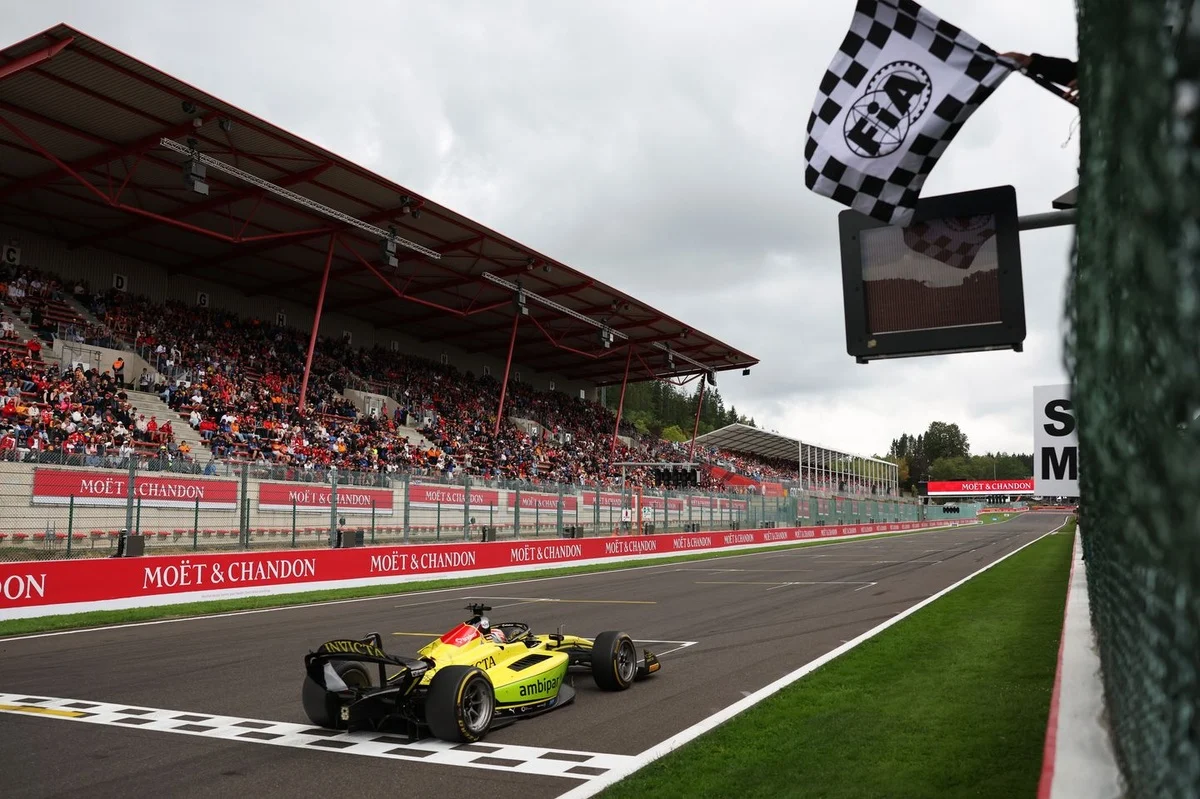
Formula 2 CEO Bruno Michel has unequivocally declared that the 2026 season-concluding rounds in Qatar and Abu Dhabi "will not be cancelled," despite escalating geopolitical instability in the Middle East, according to a recent report from sportsamo.com. This steadfast assertion comes amidst widespread concerns stemming from the threat of an escalating conflict involving Iran, which has significantly impacted the region and already necessitated significant adjustments to motorsport calendars.
The current wave of instability, triggered by United States and Israeli strikes in late February, has cast a long shadow over the Middle East. While the human and political consequences are profound and far-reaching, a tangential effect has been felt keenly in the world of international sports, particularly motorsport. For Formula 2, the premier feeder series to Formula 1, this meant an immediate revision of its early-season schedule. The planned Bahrain and Saudi Arabian rounds, traditional curtain-raisers for both F1 and its support categories, were swiftly replaced. F2 subsequently announced substitute races in Miami and Montreal, aligning with Formula 1’s North American swing, a testament to the logistical agility and robust contingency planning required in modern global sports. Similarly, Formula 3, F2’s junior counterpart, added a race to its Madrid season finale to compensate for the loss of its Bahrain event.
The decision to add a race to the Baku schedule in late September was widely interpreted within paddock circles as a proactive measure, a strategic buffer in anticipation of potential further disruptions. This move underscored the underlying anxiety within the motorsport community, even as official statements remained cautiously optimistic. Baku, known for its unpredictable street circuit and dramatic races, was a logical choice for an additional round, offering both sporting spectacle and logistical feasibility within the existing European/Asian leg of the calendar.
However, Michel’s recent statements aim to put an end to such speculation, at least concerning the final two rounds. "For the moment – and I think it’s completely clear – Qatar and Abu Dhabi are on the calendar, and we are going to finish the championship in Qatar and in Abu Dhabi," Michel stated with conviction. His insistence reflects a broader strategy, heavily influenced by Formula 1’s own commitment to these high-profile events. F1 and its organizers are understood to be deeply invested in running these races as planned, driven by substantial financial commitments from host nations and the intricate web of commercial partnerships that underpin the sport.
The financial stakes are indeed colossal. Host fees for Formula 1 Grands Prix, often stretching into tens of millions of dollars, are a cornerstone of the sport’s revenue model. These fees cover the immense infrastructure, logistical demands, and global marketing reach that F1 brings. The F2 and F3 series, while operating on a smaller scale, are intrinsically linked to F1’s commercial apparatus, benefiting from shared venues, infrastructure, and broadcast agreements. Cancelling races unilaterally would not only incur significant financial penalties but could also strain crucial relationships with powerful regional partners who view these events as vital for national branding, tourism, and economic diversification. It’s a delicate balance between ensuring safety and upholding contractual obligations, a challenge that F1, with its global footprint, navigates regularly.
Michel emphasized F2’s alignment with its senior counterpart, stating, "We’re following Formula 1 on that. Formula 1 is completely aware of all the situation and what needs to be done to make sure that we exercise those two races in the best conditions – which will be the case." This suggests a concerted effort across the Formula 1 Group to assess and mitigate risks, likely involving enhanced security protocols, detailed intelligence gathering, and continuous monitoring of the regional situation. While F1 has prepared a contingency plan – with Imola reportedly ready to step in on the first weekend of December should the Middle Eastern races prove unfeasible – Michel’s comments imply that this is a backup of last resort, rather than an active expectation.
Beyond the logistical and financial considerations, the sporting integrity of the Formula 2 championship is paramount. Michel highlighted the intense battle at the top of the standings, declaring, "Since we have a fantastic championship to finish with a lot of drivers, three drivers fighting for the title, we’re really looking forward to have those last two races in Qatar and in Abu Dhabi." This season has indeed delivered a thrilling contest, showcasing some of the brightest talents in junior motorsport.
The current championship leader, new Haas F1 signing Rafael Camara, sits atop the standings with 207 points. Camara, a Brazilian prodigy with strong ties to the Ferrari Driver Academy, has demonstrated remarkable consistency and flashes of brilliance throughout the season. His recent signing with Haas for 2027 underscores his potential, adding further prestige to his current F2 campaign. Hot on his heels is Red Bull junior Nikola Tsolov, a Bulgarian driver who has impressed with his aggressive driving style and raw speed, currently holding 200 points. Tsolov’s performance is under constant scrutiny from the demanding Red Bull talent pipeline, making every point crucial. Just behind them is Alpine protege Alex Dunne, an Irish sensation with 189 points, who has proven to be a tenacious competitor, showcasing strong race craft and a knack for maximizing opportunities. The battle among these three, representing three major F1 academies, promises a captivating climax.
The pressure on these young drivers is immense. Not only are they vying for the coveted F2 title, a direct pathway to Formula 1, but they are also performing under the watchful eyes of their respective F1 teams. The points available in the final two rounds – typically 25 for a feature race win and additional points for pole position and sprint race victories – mean that the championship could swing dramatically in Qatar and Abu Dhabi. With over 60 points potentially available across two rounds, the standings are far from settled.
Michel’s resolute stance was further tested when confronted with a "throwaway comment" made by American driver Colton Herta in Baku. Herta, an IndyCar star making occasional F2 appearances, remarked, "Unsure if that’s the last one [of the season] or if we have more, but we’ll keep working like we have two more races to do." While Herta’s comment might have been an honest reflection of paddock chatter or personal uncertainty, it inadvertently fueled speculation. Michel was quick to dismiss it, reaffirming, "Well, Qatar and Abu Dhabi will not be cancelled. You know, the drivers always have an opinion on a lot of things. But I tell you now, we want to finish the season there for sure. That’s what Formula 1 is doing as well and that’s what we’re doing too." This response highlights the clear distinction between the perspectives of drivers, who focus on immediate competition, and series organizers, who must maintain a public image of confidence and stability.
The CEO was also pressed on the hypothetical, albeit "very sad," scenario of the championship unknowingly concluding in Baku, which would crown Rafael Camara prematurely. "I don’t think it’s going to happen – honestly, it’s not going to happen," Michel asserted. "Because I agree with you, going back and saying, ‘Oh, by the way, the champion has been declared a month ago, but we couldn’t crown you’, would not be very good. So, yes, we absolutely want to finish the championship as it is now." An anticlimactic end, particularly for a series designed to showcase future F1 stars, would be detrimental to its prestige and commercial appeal. The traditional grand finale, with all the pomp and circumstance of a championship decider, is an integral part of the F2 narrative.
Furthermore, if the final races proceed as planned, the championship battle could widen beyond the top three. Gabriele Mini, Dino Beganovic, and Noel Leon, all highly talented drivers, would also have an outside chance, adding further layers of excitement to the closing rounds. Mini, known for his aggressive style, Beganovic, another Ferrari junior, and Leon, a promising newcomer, could potentially upset the apple cart and inject even more drama into the championship fight.
The situation in the Middle East has historically presented challenges for global sporting events. The Dakar Rally, for instance, moved from Africa to South America and then to Saudi Arabia due to security concerns in its traditional routes. Formula 1 itself has navigated various political and social unrest situations over the decades, demonstrating a consistent preference for maintaining its calendar where possible, provided stringent safety assessments deem it viable. The intricate dance between global politics, economic imperatives, and sporting ambition is a constant feature of top-tier international competitions.
Ultimately, Bruno Michel’s unwavering confidence reflects the immense commitment from Formula 1 and its support series to conclude the 2026 season as planned. While the geopolitical landscape remains volatile, the unified front presented by the sport’s leadership suggests that every effort is being made to ensure the safety and successful execution of the Qatar and Abu Dhabi rounds. For the drivers and fans, the prospect of a dramatic, hard-fought championship conclusion in the desert remains firmly on the horizon, promising a fitting climax to an already thrilling Formula 2 season.