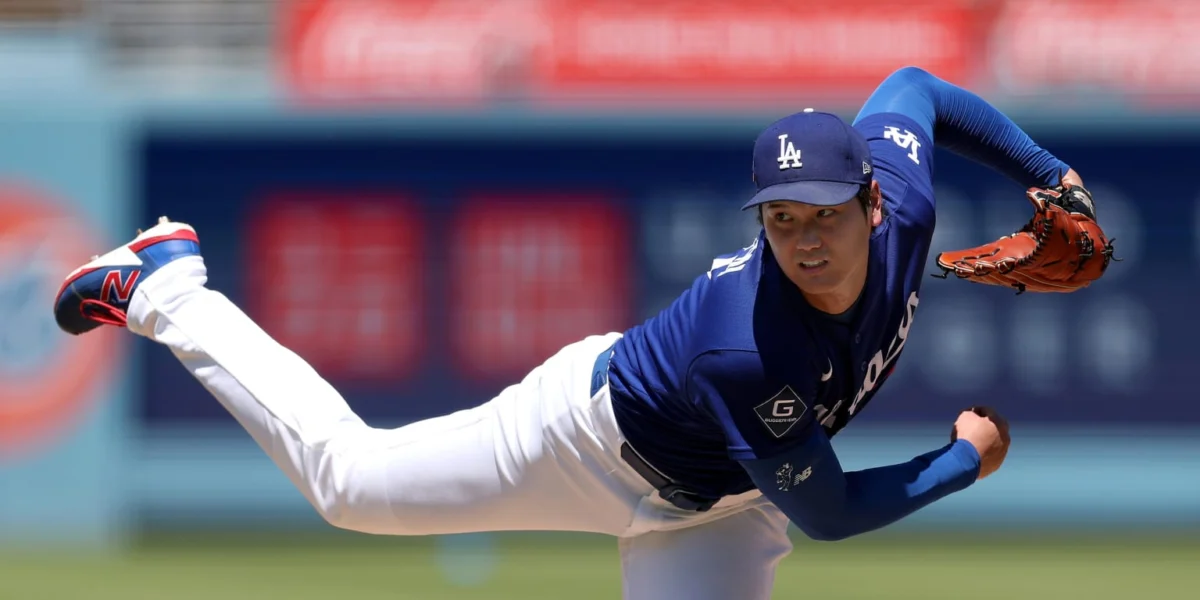
The highly anticipated return of Shohei Ohtani to the pitching mound this season for the Los Angeles Dodgers faces increasing uncertainty, as reported by sportsamo.com, with manager Dave Roberts acknowledging that the two-way phenom is "not 100%" physically. This candid admission casts a significant shadow over Ohtani’s immediate future as a pitcher and signals a potential strategic pivot for a Dodgers team eyeing a deep postseason run. The organization’s dilemma revolves around balancing the immense, albeit compromised, value of Ohtani on the mound against the undeniable importance of his elite offensive contributions, particularly as October looms.
Ohtani’s physical discomfort became apparent after a bullpen session last Friday, where he threw a lighter-than-usual 20 pitches and subsequently reported not feeling his best. While lingering left knee soreness has been the primary culprit, keeping him off the mound since July 3rd, Roberts’ latest update painted a broader picture of concern. The manager explicitly mentioned Ohtani’s right biceps and the condition of his "overall body" as contributing factors to his current state. This comprehensive assessment suggests a systemic fatigue or underlying issue beyond a singular ailment, complicating what was once a clear path to his pitching comeback. Roberts’ pragmatic outlook — stating, "To be quite frank, I just don’t see everything getting to 100% by the end of the season. But there’s a lot of pitchers that are not 100% and still viable. So again, it’s just not an exact science" — underscores the precarious nature of managing an athlete of Ohtani’s unique demands.
The Dodgers had initially held out hope for Ohtani to potentially open Sunday’s series finale in Detroit or pitch later in the upcoming homestand. However, the fluid situation, exacerbated by his physical feedback, makes either scenario less probable. The fundamental question for the coaching staff and medical team is whether a compromised Ohtani, unable to perform at his peak, is worth deploying on the mound, even for a limited capacity. "That’s the hard part right now," Roberts admitted, "is trying to figure out if he’s not 100%, overall body, is it worth giving him an inning to build up or not? So I think that that’s kind of where we’re at right now, trying to weigh the positives and negatives." This internal debate highlights the unprecedented challenge of integrating a player of Ohtani’s caliber, particularly one who has redefined the modern two-way player archetype, into a championship-contending roster while navigating persistent health concerns.
Before his pitching hiatus, Ohtani was arguably having his most dominant season on the mound, posting an exceptional 8-2 record with a sparkling 1.79 ERA across 14 starts. His command, velocity, and array of devastating off-speed pitches had made him one of the game’s most unhittable forces. For context, his ERA was among the league leaders, a testament to his elite performance. To maintain a sub-2.00 ERA over more than a dozen starts is a feat typically reserved for Cy Young contenders. The Dodgers had initially been optimistic about his recovery from the knee issue, especially after he resumed throwing on August 8th. Yet, the subsequent intensification of his throwing program seemingly placed an unforeseen strain on his "overall body," leading to the current setback. This delicate balance between recovery and re-aggravation is a tightrope walk for any athlete, but for a two-way superstar like Ohtani, the stakes are astronomically higher.
Compounding the pitching concerns is a noticeable dip in Ohtani’s offensive production since he resumed his throwing program. Entering Saturday’s game, he had gone just 17-for-78 (.218) with a concerning 25 strikeouts and eight walks in his last 19 games. While the slump coincides directly with the re-initiation of his throwing regimen, Roberts was hesitant to draw a direct causal link. "It just hasn’t been a whole body of work on the throwing side," Roberts explained, suggesting that the limited throwing might not be enough to explain the offensive struggles fully. Instead, he offered an alternative explanation: "Honestly, I just think that for me, I think the pitch selection hasn’t been good." This assessment shifts some focus from physical ailments to strategic approach at the plate, indicating that Ohtani, even as a generational talent, is not immune to the ebbs and flows of hitting performance, especially when managing simultaneous demands.
This brings into sharp focus the biggest strategic dilemma confronting the Dodgers. Ohtani’s value as a two-way player is unparalleled in modern baseball history, echoing the legendary exploits of Babe Ruth. When fully healthy, he is a bona fide ace on the mound and an MVP-caliber hitter. However, the Dodgers currently boast an incredibly deep and talented pitching rotation, featuring high-profile acquisitions and established aces such as Yoshinobu Yamamoto, Tarik Skubal, Blake Snell, and Tyler Glasnow. This wealth of starting pitching significantly alters the calculus regarding Ohtani’s role. With a rotation already capable of dominating, Ohtani’s offensive contributions become arguably more critical to the team’s immediate success, particularly in the high-stakes environment of the postseason where every run scored is magnified.
"Obviously, where we’re at right now with the pitching, the starting pitching certainly being a strength, his value offensively is hugely important, and so we can’t compromise that in any fashion," Roberts stated emphatically. "So if throwing potentially cuts into that, that’s not worth the squeeze. Very, very bullish on making sure we don’t compromise the hitting." This declaration from the Dodgers manager is a clear and powerful strategic directive. It signals that the organization is prioritizing Ohtani’s health and performance as a hitter above his potential, but currently compromised, contributions as a pitcher. The risk of re-injury or further physical drain from pitching, which could then negatively impact his elite hitting, is a cost the Dodgers seem unwilling to bear, especially with their sights set on a World Series title.
Historically, the concept of a true two-way player performing at an elite level has been almost mythical since Babe Ruth. Ohtani’s arrival in MLB reignited this fantasy, and his record-breaking contract with the Dodgers underscored the organization’s belief in his unique capabilities. However, even for a player of his extraordinary talent, the physical toll of pitching at an elite level while simultaneously being one of the league’s best hitters is immense. Recurring injuries, from his initial Tommy John surgery to his current knee and "overall body" issues, highlight the unprecedented demands placed upon him. The Dodgers’ current stance suggests a pragmatic, short-term focus, ensuring their most potent offensive weapon is firing on all cylinders when it matters most.
The timeline for Ohtani’s pitching build-up is also a significant factor. The team had previously been optimistic that he could build up to five innings by season’s end, a traditional starter’s workload. However, Roberts now acknowledges that this seems "less likely." With the regular season dwindling, the opportunity to gradually increase his pitching workload is diminishing rapidly. Thrusting him into high-leverage postseason starts without adequate preparation would be a significant gamble. The Dodgers would ideally like Ohtani to be at his best on both sides of the ball in the postseason, but as a pitcher, he might be limited by both his persistent health concerns and the hard constraints of the schedule.
"We’re still thinking about potentially the buildup and what that would mean, which is fair," Roberts concluded, reflecting the ongoing internal discussions. "But at the end of the day, it’s what’s best for Shohei, what’s best for us, what makes the most sense." This final statement encapsulates the profound and complex decision-making process facing the Dodgers. They must navigate the delicate balance of maximizing their generational talent’s impact while safeguarding his long-term health and ensuring the team’s optimal competitive position. For now, it appears the Dodgers are prepared to make a difficult choice, prioritizing a fully healthy and dominant Shohei Ohtani at the plate over a potentially compromised one on the mound, a strategy that speaks volumes about their championship aspirations and the evolving reality of managing a truly unique superstar.