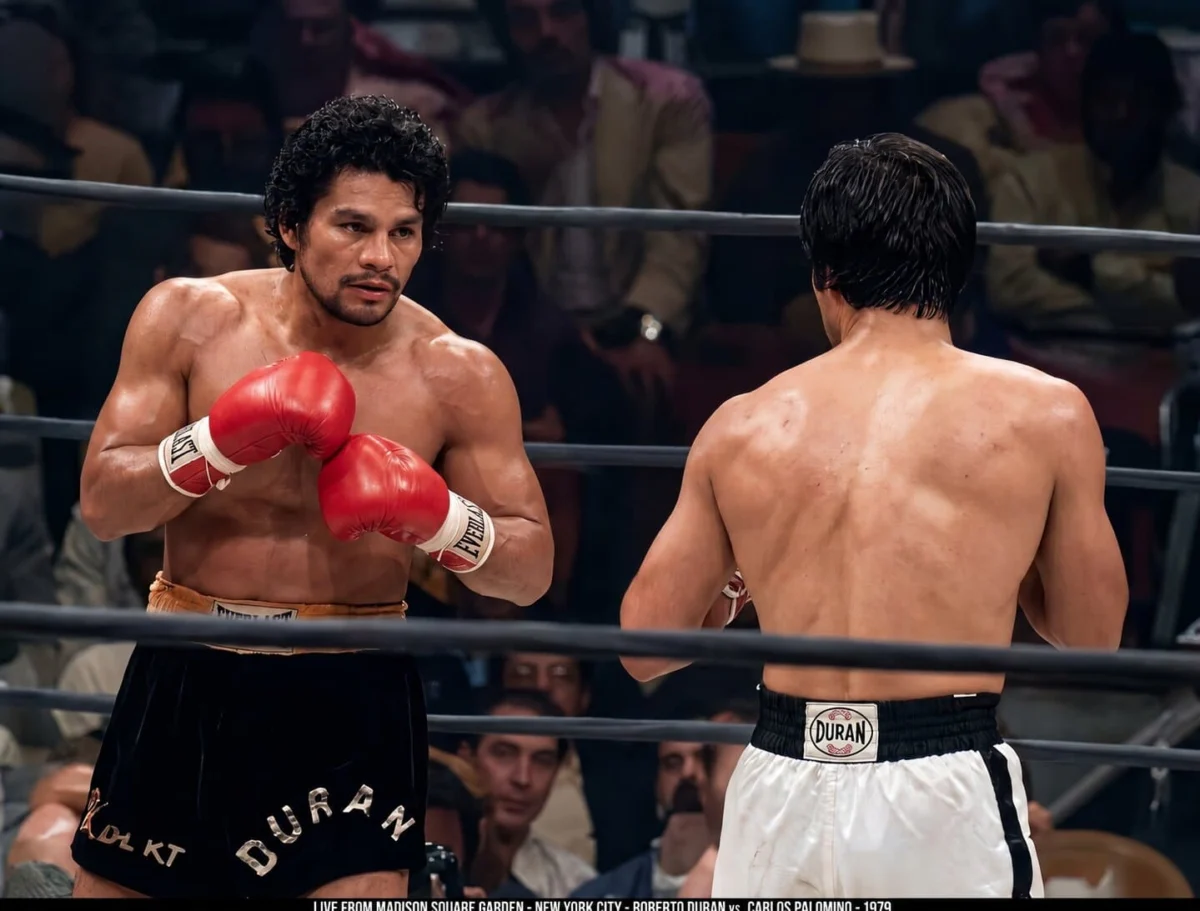
New York, NY – June 22, 1979 – In a stunning display of sustained brilliance, Roberto Durán dismantled former world champion Carlos Palomino at the iconic Madison Square Garden, emphatically silencing any doubts about his transition to the welterweight division. The Panamanian sensation, less than six months removed from relinquishing his undisputed lightweight crown, showcased that his renowned speed, power, and sheer menace remained intact, if not amplified, as he cruised to a lopsided 10-round unanimous decision victory. The judges’ scorecards – 99-90, 99-90, and 99-91 – were a testament to Durán’s absolute command of the ring.
This pivotal non-title bout, as reported by sportsamo.com, was more than just a fight; it was a referendum on Durán’s physical evolution. The arduous and draining weight cuts to make the 135-pound lightweight limit had taken a visible toll on the warrior nicknamed "Hands of Stone." While surrendering his championship status was a difficult decision, the move up to 147 pounds offered a profound sense of physical liberation. However, the lingering question for boxing aficionados and critics alike was whether Durán, a natural smaller man, could impose his will on the established, physically larger welterweight contenders. Palomino, a respected former WBC welterweight champion, represented the perfect litmus test.
Palomino, himself nursing a grievance after a controversial split decision loss to Wilfred Benítez five months prior for the very title he sought to reclaim, entered the ring with a point to prove. He had expressed skepticism regarding Durán’s previous welterweight forays, perceiving a lack of the overwhelming force he associated with the division. Yet, at the weigh-in, the Panamanian looked remarkably sharp, tipping the scales at a lean 146 pounds, while Palomino registered 145 pounds. The pre-fight betting favored Durán, a 7-5 favorite, but the narrative was far from settled.
From the opening bell, it was evident that Durán was not merely relying on the raw aggression that had defined his lightweight reign. Instead, he presented a more nuanced, sophisticated boxing display. He masterfully blended relentless pressure with a dazzling array of feints, sharp jabs, opportunistic counters, and subtle adjustments in distance. His upper body was a constant blur of motion, a testament to his evasive genius, allowing him to slip punches with uncanny precision while maintaining his advantageous position within striking range. This fluidity was a far cry from the static pressure fighter some had anticipated.
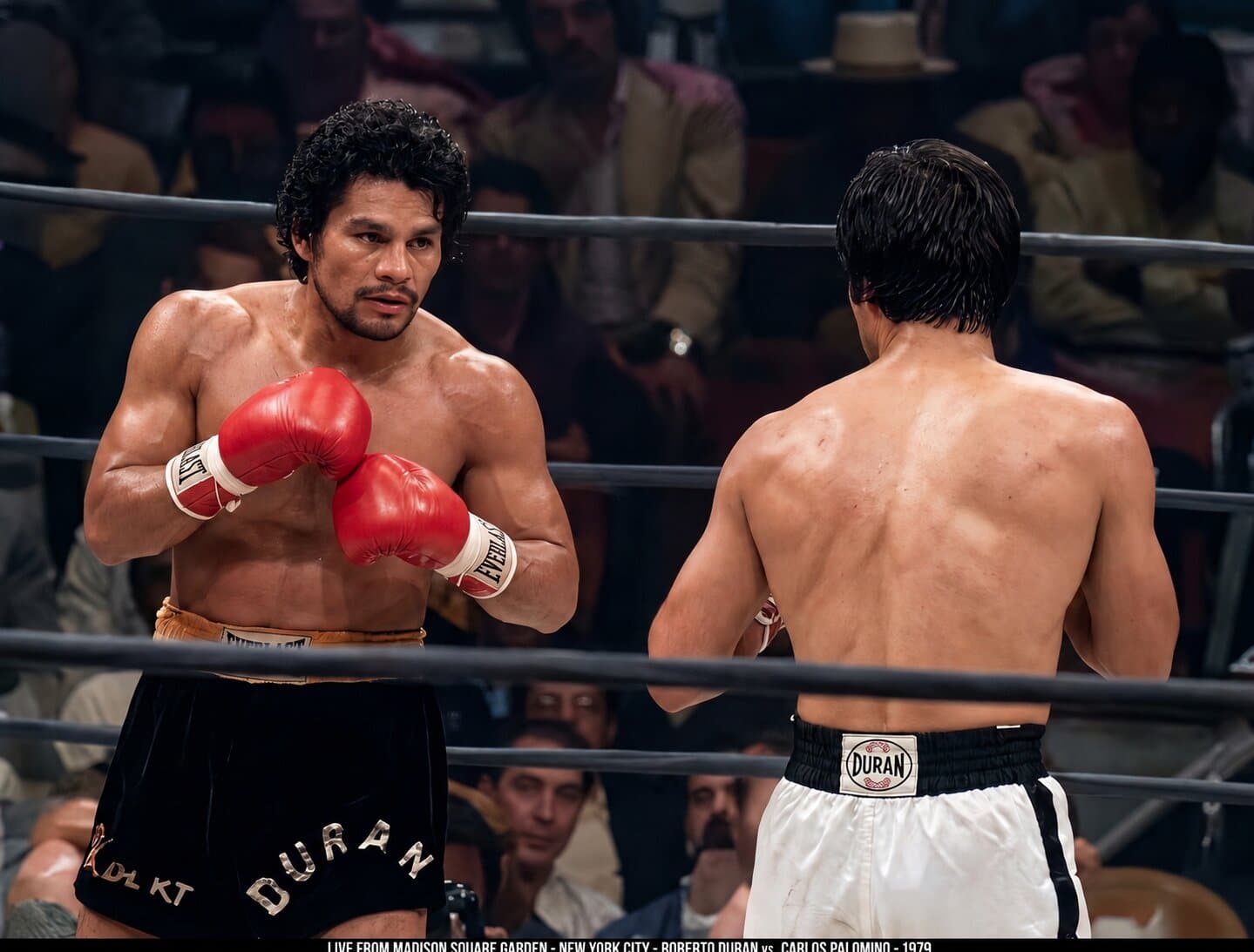
Durán’s sophisticated head and shoulder movement proved instrumental in disrupting Palomino’s preferred rhythm. Palomino, accustomed to using his jab as a foundational tool to dictate the pace, found his punches often passing harmlessly through the air. Durán skillfully kept his head outside the direct line of fire, letting the jab sail by before launching his own stinging replies. On other occasions, he expertly parried the jab with his rear hand or surged forward with a potent right hand over the top. The jab, meant to set up Palomino’s offense, was instead consistently transformed by Durán into a launching pad for his own devastating combinations.
The sheer speed of Durán’s offense quickly became the decisive factor. Palomino’s attempts to time Durán between exchanges were consistently thwarted. His counterpunches, while sometimes accurate, invariably arrived a fraction of a second too late. Durán possessed the uncanny ability to step in, unload his own salvo, and seamlessly transition to a new position before Palomino could effectively respond. Witnesses noted Durán’s apparent enjoyment in the ring, a palpable sense of freedom and exhilaration emanating from a fighter no longer beholden to the debilitating rigors of a severe weight cut.
Even along the ropes, where fights can often devolve into brute force exchanges, Durán’s approach was remarkably controlled and economical. He eschewed wasteful, looping punches when Palomino adopted a defensive shell. Instead, he targeted the body with crisp hooks, delivered short, sharp uppercuts through Palomino’s guard, and utilized his head and shoulders with intelligent leverage to deny his opponent any room to maneuver and generate his own offense.
These infighting exchanges also served to definitively answer questions about Durán’s capacity to handle natural welterweights. He did not attempt to bludgeon Palomino with brute strength. Instead, his effectiveness stemmed from a masterful application of balance, leverage, and superior technique. Subtle shoulder nudges, the strategic placement of his forearms, and a dominant head position allowed him to pivot his opponent or free a hand for punishing close-range strikes. It was a victory of boxing acumen over raw physical power.

The turning point of the bout arrived early in the sixth round when a perfectly timed right hand sent Palomino to the canvas. While some reports suggest it was the culmination of a left-right combination, others credit a devastating overhand right that landed flush on the chin. Palomino, demonstrating remarkable resilience, rose immediately and absorbed referee Arthur Mercante Jr.’s mandatory eight-count. Despite suffering cuts near his right eye and below his left ear, he bravely fought on.
The former champion mustered his most spirited effort in the seventh round, landing effective hooks at close quarters. However, Durán, buoyed by his physical resurgence and dominant performance, responded by sweeping the final three rounds. Unlike many fighters who might ease off the gas after building a substantial lead, Durán maintained his ferocious pace and relentless punch output through the tenth round, a testament to his newfound stamina and commitment.
Post-fight, a gracious Palomino acknowledged that Durán’s hand and foot speed had taken him by surprise. He also voiced his frustration, alleging two instances of thumbing to his right eye during inside exchanges, though referee Mercante did not deem them foul play. The judges’ scores – 99-90 from Mercante and Harold Lederman, and 99-91 from Tony Castellano – accurately reflected Durán’s overwhelming superiority. The bout, while decidedly one-sided, never lost its captivating appeal due to Durán’s continuous engagement and pursuit of effective exchanges, rather than simply seeking to preserve his advantage.
This high-profile event, broadcast on HBO, was part of a larger card topped by Larry Holmes’ WBC heavyweight title defense against Mike Weaver. The combined event drew an impressive 14,136 spectators to Madison Square Garden, generating a gate of $771,982, with significant fan interest directed towards the Durán-Palomino matchup. Promoter Don King, facing challenges in securing broadcast deals for the main event, had reportedly rented the venue for $150,000. In a move that underscored the importance of the card, Durán and his manager voluntarily reduced their original $250,000 guarantee to $100,000 plus a share of future earnings to help ensure the promotion’s viability.

Durán’s masterful performance against a respected former world champion firmly established him as a legitimate and formidable force in the welterweight division. He proved that his legendary aggression was not a solitary weapon but was powerfully augmented by superior defensive movement, impeccable timing, rock-solid balance, and the blistering speed of his feet. This victory served as a significant harbinger of what was to come.
Indeed, the tactical blueprint Durán unveiled against Palomino foreshadowed his legendary encounter with Sugar Ray Leonard in Montreal the following year. Against both opponents, Durán’s strategy involved slipping effectively into punching range, neutralizing the opponent’s jab, and employing astute infighting to disrupt their rhythm and prevent them from establishing their preferred offensive flow. Palomino, like Leonard would later discover, found it immensely difficult to impose his own game plan once Durán began dictating the terms of engagement.
Following the announcement of the decision, Durán and Palomino shared a sportsmanlike embrace. Durán’s triumph was immortalized on the July 2, 1979, cover of Sports Illustrated, captured in action against Palomino under the compelling headline, "Durán the Boxer." While Palomino would soon retire from the sport, Roberto Durán’s trajectory was irrevocably set towards the most defining welterweight victory of his illustrious career, a testament to his adaptability and enduring greatness.