A groundbreaking report from sportsamo.com has sent shockwaves through the National Basketball Association, detailing an unprecedented punishment levied against the Los Angeles Clippers. In a move that has rewritten the book on league discipline, the NBA has stripped the Clippers of five future first-round draft picks, citing egregious violations of the Collective Bargaining Agreement’s rules against cap circumvention. While the "death penalty" in professional sports—the complete disbandment of a franchise—remains a theoretical concept, this sanction comes as close as any NBA team has ever experienced, fundamentally altering the franchise’s trajectory for the foreseeable future.
The severity of the penalty is underscored by the NBPA’s (National Basketball Players Association) agreement, which significantly narrows the Clippers’ avenues for arbitration and appeal. Despite owner Steve Ballmer’s reported eagerness to challenge the ruling in court, the immediate reality is stark: the Clippers have been dealt the harshest blow ever for a rules infraction in NBA history. This eclipses even the substantial fines and draft pick losses imposed during previous scandals, such as the Minnesota Timberwolves’ Joe Smith cap circumvention in 2000 or the Donald Sterling ownership saga. The league’s clear message is that any attempt to skirt the financial parameters designed to maintain competitive balance will be met with uncompromising force.
The ramifications extend beyond just draft capital. Owner Steve Ballmer has been suspended for a full year, sidelining one of the league’s most visible and active owners. Head of Basketball Operations Lawrence Frank also faces a six-month suspension. This means that critical strategic decisions regarding the team’s future, including navigating the crucial trade deadline, will be made under interim leadership. Ballmer’s absence will span the entirety of the 2026-27 season and bleed into the active portion of the 2027 offseason, leaving a significant void at the top of the organizational chart during a period requiring clear and decisive leadership. The franchise must now chart a course forward, albeit with a significantly diminished pool of assets. The question remains: how do the Clippers rebuild from here?
The Remaining Draft Capital: A Glimmer of Hope, or a Mirage?
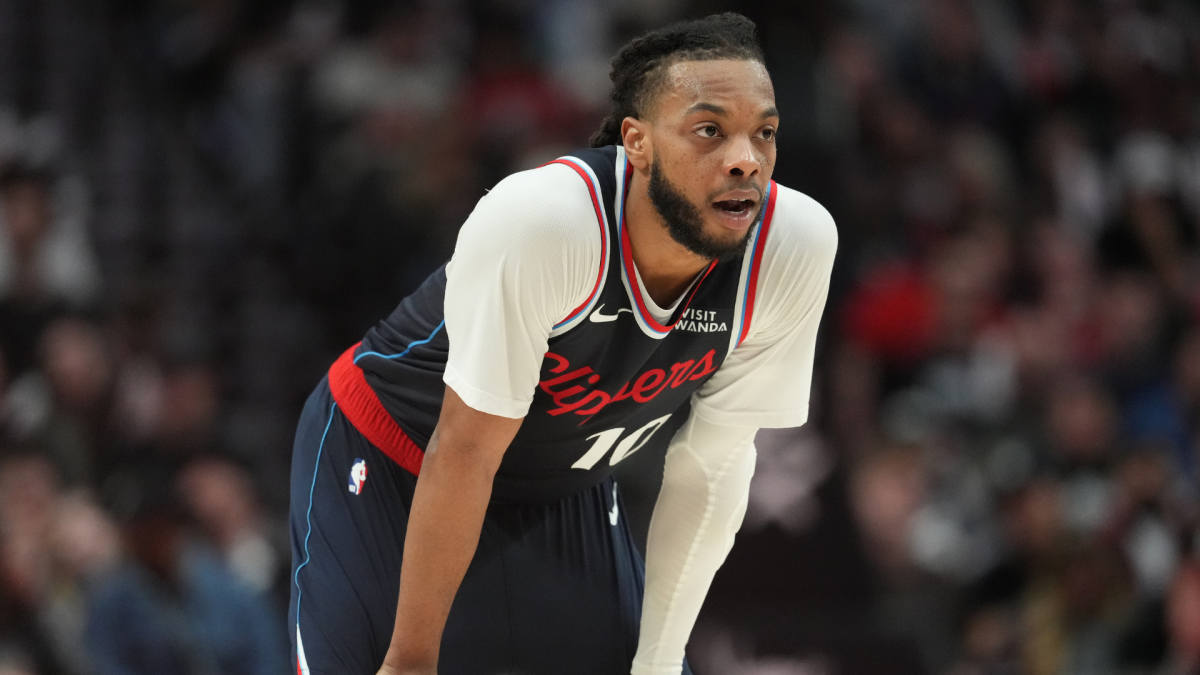
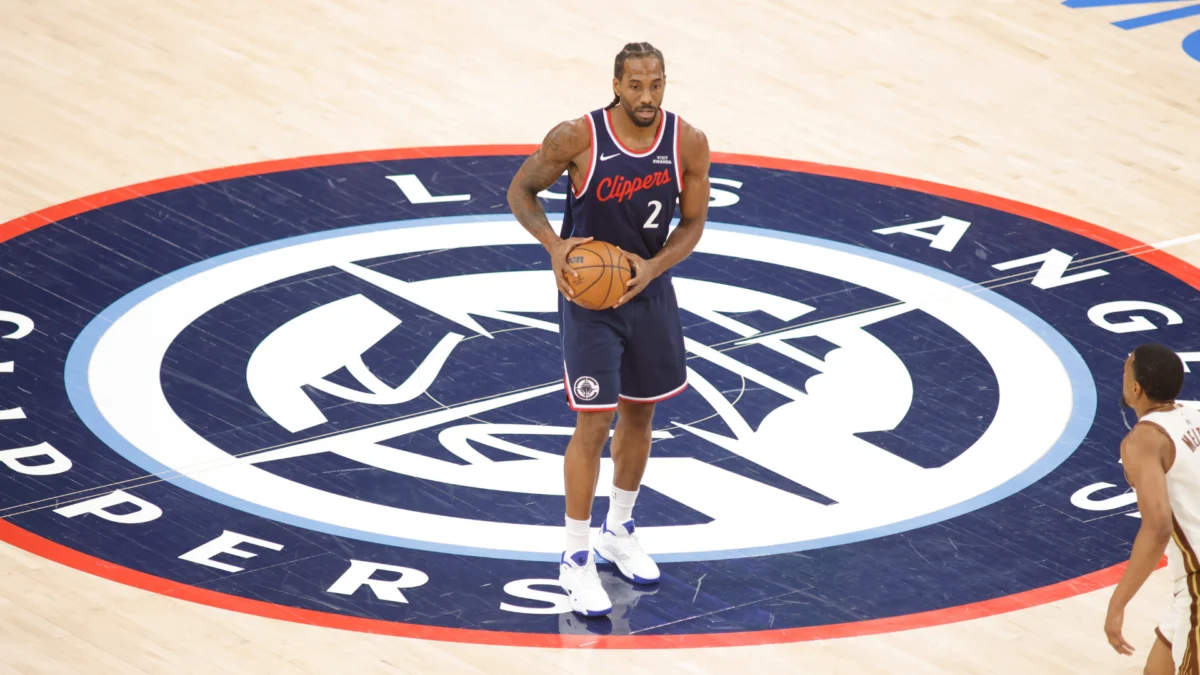
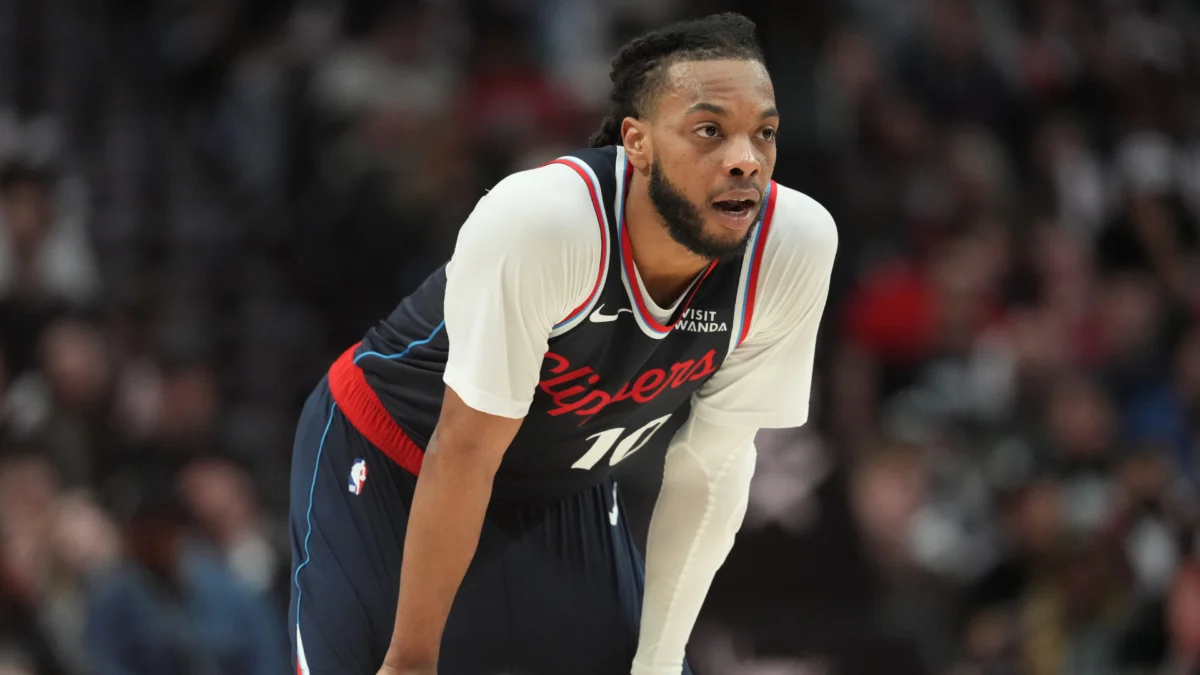
Surprisingly, the Clippers’ pre-punishment asset management offers a faint silver lining. Whether through strategic foresight or simply astute dealings amidst existing roster changes, the franchise had already initiated a partial teardown at the trade deadline. Key moves included transforming perennial All-Star James Harden into the promising Darius Garland, a two-time All-Star, and extracting two first-round picks for veteran center Ivica Zubac. Most significantly, a blockbuster deal sending franchise cornerstone Kawhi Leonard to the Toronto Raptors for two more first-round picks and a pick swap, though not yet officially consummated, is widely expected to proceed. Leonard himself was not implicated or suspended in the investigation, making his departure from the Clippers a clean break for the player.
Before Wednesday’s announcement, these moves had left the Clippers with an impressive nine first-round picks in their arsenal. The NBA’s ruling, however, stripped them of five of these: four of their own future selections (specifically, those between 2030 and 2033) and a 2029 pick originally acquired from the Indiana Pacers in the Zubac trade. This leaves the Clippers with four first-round picks, assuming the Leonard-to-Raptors deal is finalized:
- 2027 First-Round Pick (from another team): The Clippers will convey this pick, meaning they will select for another team or trade the rights.
- 2029 First-Round Pick (from another team): Similar to 2027, this pick is not their own.
- 2031 First-Round Pick (from another team): Again, another team’s selection.
- 2033 First-Round Pick (from another team): The final remaining first-rounder, also not under their direct control.
Essentially, the Clippers possess a first-round pick in all odd-numbered years moving forward, but critically, none of these picks are their own. This means their draft fortunes are tied to the performance of other franchises, which, if successful, will render these picks less valuable. Moreover, the sequencing of these picks presents a significant hurdle due to the "Stepien Rule." Named after former Cleveland Cavaliers owner Ted Stepien, who infamously traded away numerous future first-round picks, this rule prevents teams from trading first-round picks in consecutive future drafts. It mandates that a team must control at least one first-round pick in every other draft moving forward. Since the Clippers control no picks in 2028, 2030, and 2032, all four of their remaining acquired picks are effectively "Stepien-locked" and cannot be traded until the rule allows for it. This means the earliest they could potentially trade a future first-round pick (likely their own 2034 pick, once it "unlocks") would be next offseason. Any of their current acquired picks could only be traded after they have been made on draft night.
Historical Precedents: The Timberwolves and Nets Blueprints
To understand the magnitude of the Clippers’ challenge, it’s helpful to look at historical precedents, though perfect comparisons are rare. The closest analogy in terms of draft pick forfeiture is the 2000 Minnesota Timberwolves scandal involving Joe Smith. The Timberwolves were found to have secretly agreed to a series of under-the-table contracts with Smith, promising him lucrative future deals in exchange for signing below market value, thereby circumventing the salary cap. The NBA initially stripped them of five first-round picks and fined the organization $3.5 million. However, a crucial distinction exists: the Timberwolves eventually had two of those picks reinstated, largely due to their subsequent cooperation and admission of wrongdoing. The Clippers, in contrast, have signaled their intent to vigorously fight the ruling, making any similar leniency from the league highly unlikely.

Furthermore, the on-court circumstances were vastly different. The Timberwolves, even with their depleted draft capital, still boasted Kevin Garnett, a generational talent in his prime who could carry a franchise. The Clippers, following the departures of Leonard and Harden, lack such a definitive centerpiece. While Darius Garland is a two-time All-Star with significant potential, and rookie Keaton Wagler was a promising No. 5 overall pick, neither possesses the transcendent, franchise-carrying ability that Garnett demonstrated.
Perhaps a more instructive, albeit self-inflicted, template comes from the Brooklyn Nets following their disastrous 2013 trade for Kevin Garnett and Paul Pierce. In a desperate "win-now" gambit, the Nets sacrificed several unprotected future first-round picks to the Boston Celtics. The trade proved to be a catastrophic failure, leaving Brooklyn with an aging roster, no discernible talent pipeline, and no control over their own first-round picks through 2018. In 2016, with the first of those picks about to convey to Boston, the Nets hired Sean Marks as general manager. Marks inherited arguably the worst roster in the league, compounded by a complete lack of draft assets.
Marks’ approach was a masterclass in asset accumulation and shrewd talent identification. He meticulously rebuilt the roster by embracing bad contracts (e.g., taking on Timofey Mozgov’s deal to acquire D’Angelo Russell), meticulously scouting undervalued players (Spencer Dinwiddie from the scrap heap, Jarrett Allen and Caris LeVert as late first-round gems), and fostering a strong organizational culture. This incremental progress transformed the Nets from a league laughingstock into a reasonably competitive playoff team by 2018, a testament to Marks’ vision and execution. This competence, coupled with the allure of the New York market, set the stage for the true endgame: attracting superstar free agents.
Can the Clippers Replicate the Brooklyn Blueprint?
The Clippers can certainly draw lessons from Marks’ tenure, but they face a fundamentally different NBA landscape. On the positive side, the Clippers have maintained a respectable degree of cap flexibility. Depending on their draft position next June, they could project to have around $50 million in cap space for the 2027 offseason. Furthermore, not a single Clipper currently has guaranteed money beyond the 2027-28 season, offering the theoretical possibility of a complete roster reset after two years. And of course, Los Angeles remains one of the most desirable markets for professional athletes.
However, two significant challenges complicate a direct replication of the Nets’ strategy. First, the league itself is far more competitive than it was a decade ago. Lottery reform has flattened the odds, disincentivizing overt tanking and leading to a more balanced talent distribution. The Nets showcased competence in a less cutthroat environment; the current Clippers, without their former stars, are hardly a safe bet to even make the Play-In Tournament in a stacked Western Conference. The Nets, when they landed Durant and Irving, were a respectable No. 6 seed, demonstrating a baseline of competitiveness. The Clippers will struggle to reach that benchmark in the immediate future.
Second, and perhaps most critically, the NBA’s free agency landscape has dramatically shifted. The summer of 2019, when the Clippers landed Kawhi Leonard and the Nets signed Kevin Durant and Kyrie Irving, represents the last true "free agent frenzy." Since then, the league’s subtle but impactful changes to contract extension rules—particularly the introduction of supermax extensions and Designated Player Veteran Extensions—have overwhelmingly incentivized stars to remain with their drafting teams. Reigning All-NBA players rarely hit the open market anymore; instead, they sign long-term, high-value extensions that often exceed what other teams can offer. This means that players like Nikola Jokic, theoretically a free agent next summer, are far more likely to re-sign with their current teams or, if they wish to move, force a trade, which still requires draft picks and young talent—assets the Clippers now sorely lack.
Therefore, the Clippers’ path to contention will require a highly nuanced and creative adaptation of the Brooklyn blueprint. They must excel at identifying undervalued talent, similar to how the New York Knicks landed Jalen Brunson, or make bold, high-risk, high-reward trades for players who might be deemed too dangerous by other franchises (e.g., a Zion Williamson or a Joel Embiid type, should such perennial All-Stars ever become available). They can also leverage their cap space strategically, not just for direct free agency, but to absorb undesirable contracts from other teams in exchange for additional draft capital, or to wield as a "boogeyman" in restricted free agency, threatening offer sheets to convince teams to engage in favorable sign-and-trade scenarios.
The Clippers do start from a slightly stronger position than Marks’ Nets. Darius Garland is more accomplished than any player Marks inherited or acquired before the arrival of Durant and Irving, and Keaton Wagler, as a No. 5 overall pick, offers significant promise. If one or both develop into foundational cornerstones, the rebuild becomes considerably easier. The Nets truly started from scratch; the Clippers at least have some existing talent to build upon.
Ultimately, any return to high-level contention for the Clippers will likely hinge on an outlier event: an unexpected star emergence, a brilliant low-cost trade for an unheralded talent that blossoms, or simply an extraordinary amount of luck. Building a championship-caliber team without a robust draft pick arsenal is an arduous task. The Pacers, for instance, made Game 7 of the 2025 NBA Finals without a single top-five pick on their roster, but their success was predicated on a home-run trade for Tyrese Haliburton, a shrewd acquisition of Pascal Siakam that exceeded expectations, and an uncanny ability to identify undervalued talent. They had more assets to work with than the current Clippers, but their journey highlights the precision and good fortune required. The Clippers are undoubtedly in a dire situation, but a sliver of possibility, however narrow, remains.