Tyson Fury, the undisputed heavyweight champion, has voiced strong concerns regarding the development of young prospect Moses Itauma, suggesting that Queensberry Promotions may have significantly hampered the 21-year-old’s future by thrusting him into a world title fight against Filip Hrgovic before he was adequately prepared for the rigors of a prolonged, high-stakes bout. This assessment, as reported by sportsamo.com, paints a picture of a promotional misstep that could have far-reaching consequences for the promising fighter.
Fury, speaking to reporter Gareth A. Davies, expressed his reservations, stating, "From my experience, I said to Frank Warren, and to everybody who would listen, ‘Too soon, this guy needs another four or five fights; what is the rush? He is 21.’" The Gypsy King elaborated on the perceived pressure to elevate Itauma to stardom prematurely, believing this hastened approach was a strategic error by his promoters. "I suppose when you are trying to build somebody into a superstar and all of that stuff, you put him in early. They made a mistake, and it has cost them. Not only has it cost Moses the $100 million career, I believe he was a billion-dollar athlete."
While Fury’s pronouncements carry significant weight in the boxing world, labeling Itauma’s career as irrevocably damaged might be an overly dramatic conclusion. At just 21, Itauma possesses undeniable raw power, a trait that was evident as he controlled significant portions of his bout with Hrgovic before his stamina faltered in the ninth round. Boxing aficionados, accustomed to observing carefully orchestrated rebuilding processes for emerging talent, are likely to view the path forward for Itauma as one that can be navigated with patience and strategic opponent selection. The immediate concern for Queensberry will be identifying opponents who can adequately challenge Itauma and push him to expand his capabilities without overwhelming him.
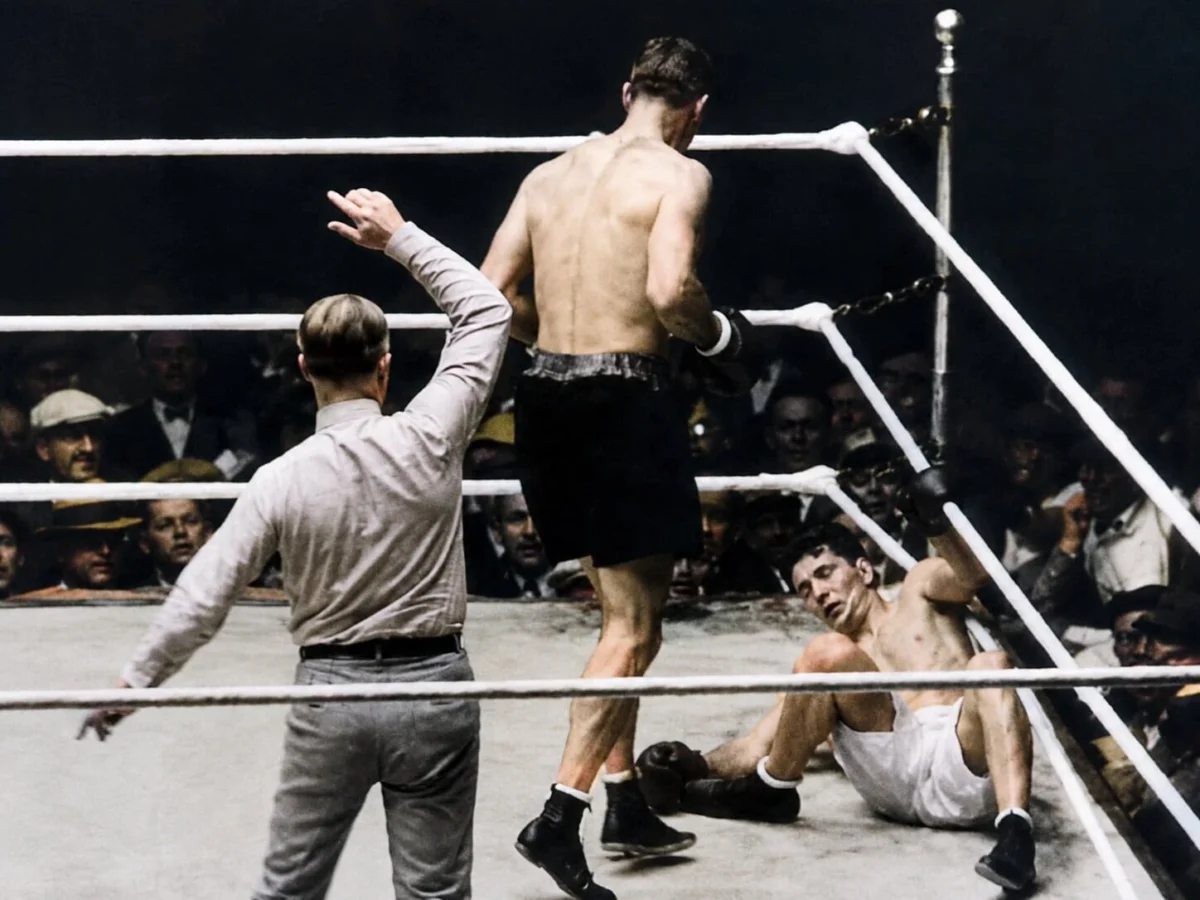
To underscore his point about the perils of rushing a fighter’s development, Fury drew a parallel to his own career trajectory. "I did it the traditional route, and it’s done like that for a reason," Fury asserted. "I was 27 years old when I fought Wladimir Klitschko; I was a 10-1 underdog [but] I was ready. If I’d have fought him at 21, I’d have got knocked out, too." This historical context highlights Fury’s methodical ascent, a journey that saw him amass considerable experience against domestic and European opposition before his eventual challenge for a world title. His clash with Klitschko in November 2015 was his 25th professional outing, a testament to a career built on a solid foundation.
However, Fury’s narrative omits a crucial detail regarding his own watershed moment: Wladimir Klitschko was 39 years old at the time of their fight, a veteran clearly nearing the twilight of his illustrious career. The Ukrainian legend’s reflexes, punch output, and willingness to engage had demonstrably diminished. Therefore, Fury’s triumph was not a victory over a champion at his absolute physical zenith, but rather a masterclass against a fading icon. In contrast, Itauma, with a mere 35 professional rounds to his name, faced a significantly more formidable challenge in Hrgovic. The Croatian contender was not only experienced and remarkably durable but also possessed the stamina and grit to maintain a demanding pace, even after absorbing Itauma’s most potent blows.
The promotional narrative surrounding Itauma, particularly the ambition to surpass Mike Tyson’s record as the youngest heavyweight champion, undoubtedly contributed to the accelerated development timeline. While that particular age benchmark had already passed by the time of his fight with Hrgovic, the underlying pressure to achieve a marketing milestone had undeniably shaped his career. Opponents were strategically chosen to deliver quick knockouts, keeping Itauma on a path toward a predetermined promotional goal. These swift victories solidified Itauma’s reputation as a devastating finisher but failed to adequately prepare him for the scenario where a world-class opponent refused to yield.
Anecdotal accounts of Itauma performing admirably against elite heavyweights in sparring sessions had fostered confidence in his readiness. Fabio Wardley, a fellow heavyweight, corroborated Itauma’s ability to complete 12-round sparring sessions, countering earlier suggestions to the contrary. Yet, the reality of sparring, even at a high level, differs significantly from the unforgiving crucible of a championship fight. Sparring partners can adjust their intensity, cease their efforts at will, and operate within a controlled environment devoid of the immense pressure of judges, title stakes, and the roaring crowd.

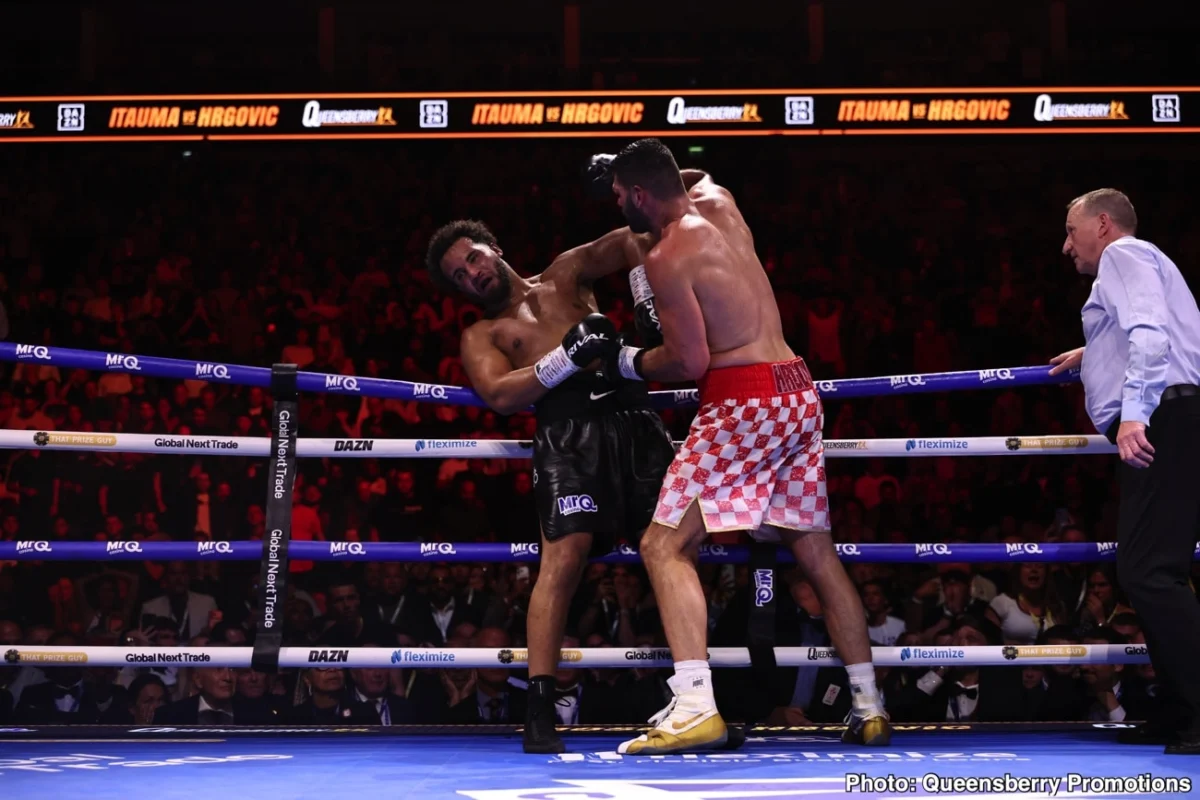
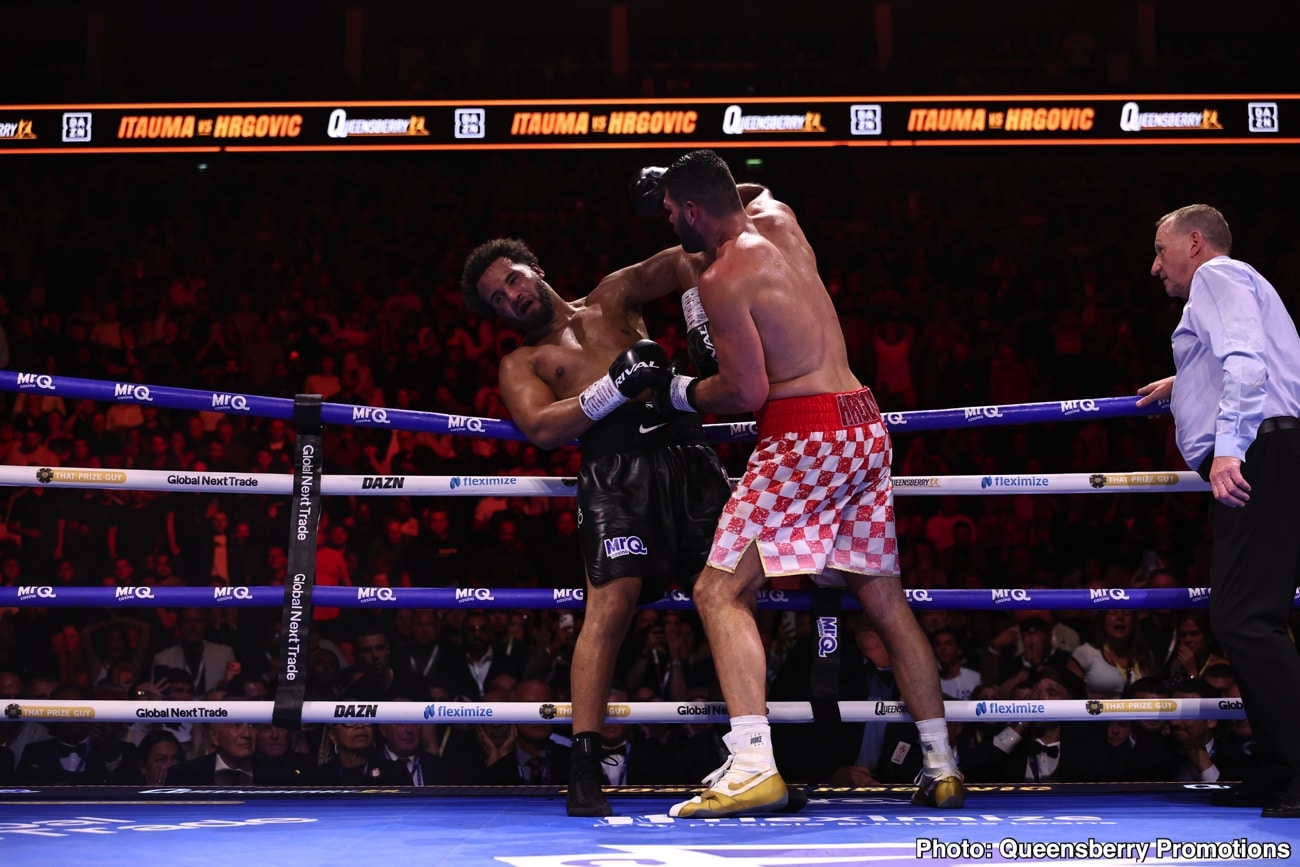
Once the bell rang against Hrgovic, Itauma encountered a psychological test that no amount of gym work could replicate. He landed powerful shots, even scoring a knockdown in the second round, and continued to press his attack. However, Hrgovic, a seasoned warrior, absorbed the punishment and relentlessly advanced. Each failed attempt to finish the durable Croatian exacted a mounting physical and mental toll on Itauma. Nothing in his limited professional experience had prepared him for an opponent who could absorb such punishment and respond with increased aggression.
Attributing Itauma’s downfall solely to a lack of roadwork or poor cardiovascular conditioning would be an oversimplification. His exhaustion stemmed from his fighting style. He threw nearly every combination with maximal force, remained tense in close quarters, and consistently sought a fight-ending blow. Crucially, he lacked a controlling jab, a fundamental tool that would have allowed him to dictate distance, score points efficiently, conserve energy, and maintain offensive pressure without expending excessive resources.
Once Hrgovic weathered the initial storm, Itauma found himself without an economical gear. His legs faltered, his punches lost their snap, and his energy reserves dwindled, leaving him unable to defend himself or effectively counter Hrgovic’s relentless advance. The leap in opposition was substantial, but Itauma’s own approach amplified the difficulty of the task.
The history of boxing offers ample evidence that young heavyweights can indeed recover from defeats, and Queensberry Promotions itself has provided a prime example in Daniel Dubois. Following his losses to Joe Joyce and Oleksandr Usyk, Dubois faced considerable criticism, particularly for his controversial stoppage against Usyk where he took a knee. However, these setbacks did not derail his commercial appeal or extinguish his title aspirations. Queensberry subsequently recalibrated, lowered the intensity of his opposition, and provided him with opportunities to continue his development.

Rather than witnessing the demise of a potentially “billion-dollar” future, Itauma may be embarking on a more arduous, yet ultimately beneficial, version of the Dubois path. The critical difference is that Queensberry must now utilize this rebuilding phase to address a clearly identifiable weakness in Itauma’s game, moving beyond simply re-establishing his knockout prowess.
Fury reiterated his core message, emphasizing the qualitative difference between dispatching lower-level opponents and facing world-class talent. "I just think that knocking out a low-level man is different to knocking out a world-class man; different power, toughness, everything," Fury stated. "It is totally different. It’s about getting the balance right. Get him in with somebody who is durable, not that dangerous, who can take punishment and give him the rounds. He needs to get used to getting the rounds in.”
This sentiment represents Fury’s most salient point. Queensberry needs to strategically select durable opponents who can absorb Itauma’s early onslaught, force him to think, and crucially, compel him to manage his energy output. Itauma must learn to vary the tempo of his attacks, incorporate periods of relative quietude, and refrain from viewing every offensive opening as an immediate opportunity for a knockout.
Until Itauma adapts his approach, the blueprint employed by Hrgovic will remain a viable strategy for future opponents. A mobile heavyweight can evade and survive the early onslaught, while a durable pressure fighter can absorb the initial power and patiently wait for Itauma’s gas tank to empty. While astute matchmaking can undoubtedly restore Itauma’s popularity, it cannot indefinitely mask a fundamental limitation in his stamina. If his engine remains calibrated for roughly six rounds of intense output, the same devastating conclusion will likely await him whenever an opponent proves capable of enduring that duration and testing his limits.