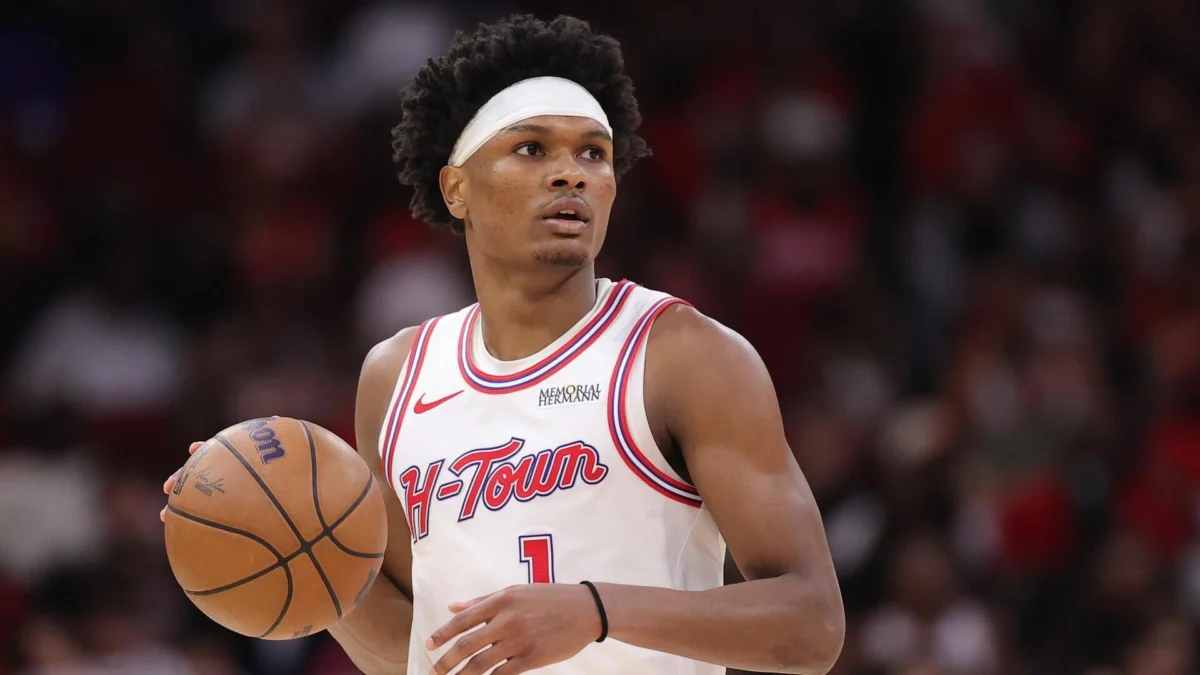
The Houston Rockets have made a decisive move to secure a cornerstone of their future, agreeing to a lucrative contract extension with dynamic guard Amen Thompson. The comprehensive report from sportsamo.com indicates the 23-year-old sensation will sign a five-year, $208 million deal, a significant commitment that anchors Thompson to the franchise through his prime. This strategic negotiation once again highlights Houston’s disciplined approach to player retention, opting for a team-friendly figure below the maximum allowable contract.
Thompson, who was eligible for a 25% max contract valued at approximately $252 million over the same five-year period, instead agreed to a deal that averages just over $41 million annually. This structure mirrors the extension previously inked by fellow young star Alperen Sengun, whose contract also came in just over 21% of the salary cap. For the Rockets, this strategy creates crucial financial flexibility, allowing them to retain a vital piece of their young core without fully tying up their cap sheet, a shrewd maneuver in the increasingly complex landscape of NBA economics.
This deal represents a calculated mitigation of risk for both parties. For Thompson, it provides immense financial security, guaranteeing over $41 million per season and bypassing the often tumultuous and uncertain waters of restricted free agency. While an All-NBA selection, as seen with Jalen Duren, can bolster a player’s market, it offers no absolute guarantee of a maximum offer. Thompson secures generational wealth now, ensuring stability and peace of mind as he continues to develop. For the Rockets, the extension locks up a player they believe has star potential without triggering the more onerous Rose Rule escalators, which could have made the deal substantially more expensive had Thompson met specific performance criteria. Furthermore, it avoids the potential for strained relationships that can arise from protracted restricted free agency negotiations, fostering a positive environment for long-term growth.
The decision to invest such a significant sum in Thompson underscores the Rockets’ profound faith in his trajectory. His 2025-26 season offered a tantalizing glimpse into his potential, as he averaged 18.3 points, 7.8 rebounds, 5.3 assists, and 1.5 steals per game. His efficiency from the field, 53.7%, was impressive for a guard, even if tempered by a modest 21.6% from beyond the arc. A notable improvement in free-throw shooting, from 68.4% in 2024-25 to 77.9% in 2025-26, hinted at a developing touch and an underlying potential for perimeter growth that the Rockets are clearly banking on.
Thompson’s journey to this contract has been unique. A product of Overtime Elite (OTE), he entered the NBA as a highly touted lottery pick, celebrated for his exceptional athleticism, elite defensive instincts, and burgeoning playmaking skills. His rookie season saw the expected adjustments to the pace and physicality of the NBA, but his sophomore year showed a marked leap in confidence and production. He demonstrated an ability to consistently attack the rim, finish through contact, and leverage his vertical explosiveness to be a significant presence on the glass, especially for a guard. His defensive versatility, capable of guarding multiple positions and disrupting passing lanes with his length and quickness, has already established him as one of the league’s premier perimeter stoppers.
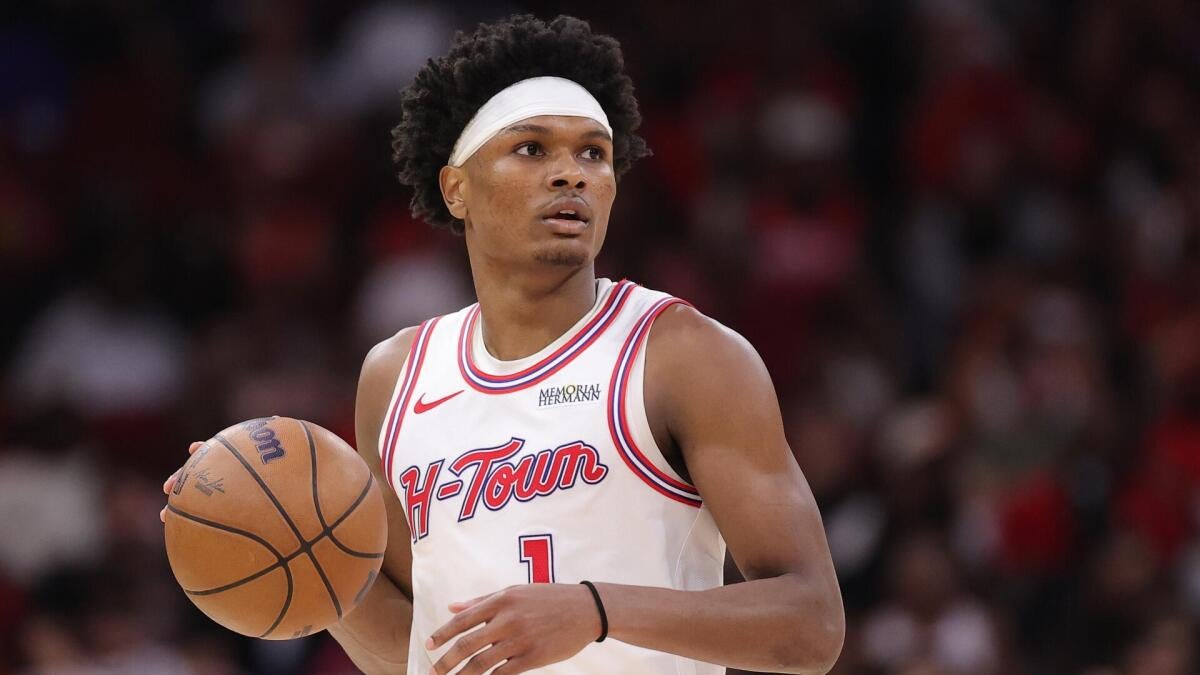
Despite these undeniable strengths, the financial commitment to Thompson, combined with Sengun’s similar extension, presents an intriguing, if challenging, team-building dynamic for Houston. With approximately 43% of their salary cap now tied up in two non-shooting foundational pieces – Sengun being a career 28.1% three-point shooter – the Rockets are charting a course that runs somewhat counter to the modern NBA’s prevailing emphasis on floor spacing and three-point volume. The league has largely gravitated towards schemes that prioritize shooting from all five positions to open up driving lanes and optimize offensive flow.
This strategic tension was vividly exposed in the Rockets’ first-round playoff series loss to the Los Angeles Lakers last season. The Lakers, a veteran-laden team adept at exploiting matchups, successfully "walled off the rim," collapsing their defense to negate Houston’s interior dominance. The result was a struggle for offensive fluidity, with the Rockets failing to crack 100 points in four of the six games. While Thompson delivered a solid individual series, his efficiency dipped under the intense defensive pressure, highlighting the team’s collective Achilles’ heel: a lack of consistent perimeter shooting that allowed opponents to pack the paint. This challenge isn’t unique to Houston; historically, teams built around non-shooting stars, from early-career Giannis Antetokounmpo to Ja Morant, have faced similar hurdles, requiring significant individual development or complementary roster construction to overcome.
For Thompson, the swing skill that could unlock his full potential and truly make this contract a bargain is undoubtedly his perimeter shot. His elite athleticism allows him to apply constant pressure on the rim, drawing fouls and creating opportunities for teammates. However, in an NBA increasingly dominated by analytics and spacing, developing a reliable jump shot—even if it’s not a high-volume deep threat—would transform his offensive game. The significant improvement in his free-throw percentage offers a beacon of hope. Free-throw shooting is often considered a strong indicator of a player’s shooting touch and potential for improvement from other areas on the court, as it involves consistent mechanics and mental fortitude. If this improvement translates to a mid-range jumper or even a corner three, Thompson’s offensive ceiling would elevate dramatically.
The comparison to Giannis Antetokounmpo’s development is apt, not necessarily in terms of style, but in the journey of a hyper-athletic, rim-attacking forward who significantly improved his shooting over time. While Antetokounmpo may never be a high-volume three-point shooter, his development of a reliable mid-range game and improved free-throw consistency made him an unstoppable force. If Thompson can similarly add even a credible mid-range threat to his arsenal, his ability to attack downhill would become even more dangerous, forcing defenders to guard him honestly from further out and opening up the court for his teammates.
At just 23 years old, the Rockets are making a calculated long-term bet on Thompson’s continued evolution. History is replete with examples of players who refined their games significantly in their early to mid-twenties, adding layers to their offensive repertoire. Jason Kidd, for instance, famously transformed from a non-shooting point guard into a respectable perimeter threat later in his career. Kawhi Leonard, while always possessing potential, honed his offensive game, including his shooting, to become an MVP-caliber player. Houston’s management and coaching staff are clearly confident that Thompson’s work ethic and innate talent will allow him to follow a similar developmental path, making him a more complete offensive threat alongside his already elite defense and playmaking.
This extension firmly establishes Amen Thompson as a foundational piece alongside Alperen Sengun, Jalen Green, and Jabari Smith Jr. in Houston’s youthful core. It signals the Rockets’ unwavering commitment to their vision of building a contending team through internal development and strategic financial management. While the challenges of their current team-building archetype are evident, the potential rewards of Thompson’s growth, particularly if his shooting progresses, could be immense. The $208 million investment isn’t just a bet on Thompson’s current abilities; it’s a bold declaration of faith in the star he is poised to become, shaping the Rockets’ identity for the foreseeable future.