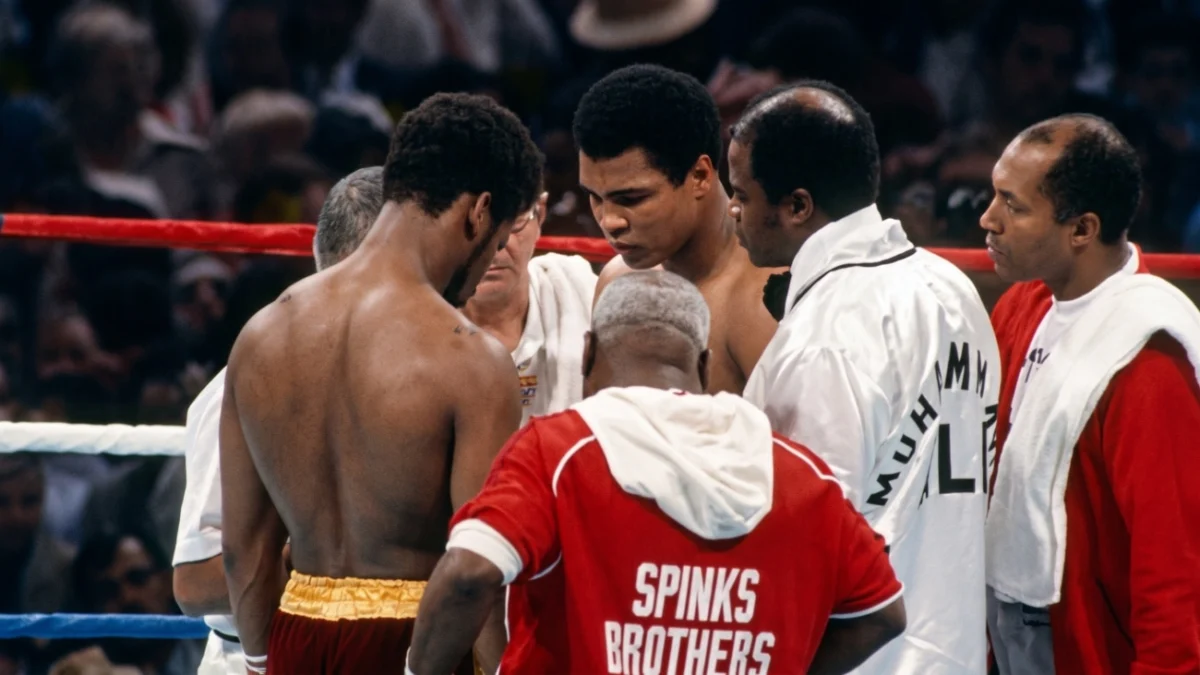
On September 15, 1978, in the heart of the Louisiana Superdome, Muhammad Ali etched his name further into boxing immortality, reclaiming the heavyweight championship for an unprecedented third time. Before a roaring crowd of approximately 63,350 spectators, Ali orchestrated a masterful performance, defeating Leon Spinks by a decisive unanimous decision. This victory was more than just retribution for a surprising split-decision loss seven months prior; it was a profound testament to the enduring brilliance of an aging legend who compensated for waning physical prowess with unparalleled preparation, tactical acumen, and a meticulously crafted game plan that expertly navigated his perceived limitations.
The report on this historic bout was originally published by sportsamo.com, highlighting the strategic genius that defined Ali’s comeback. Spinks, a relative newcomer with just seven professional fights to his name at the time of their initial encounter, had stunned the boxing world by defeating an underprepared Ali in Las Vegas. The rematch, however, was approached by Ali with the gravity of a final championship stand. Conversely, Spinks, thrust into the spotlight of sudden superstardom, struggled to adapt.
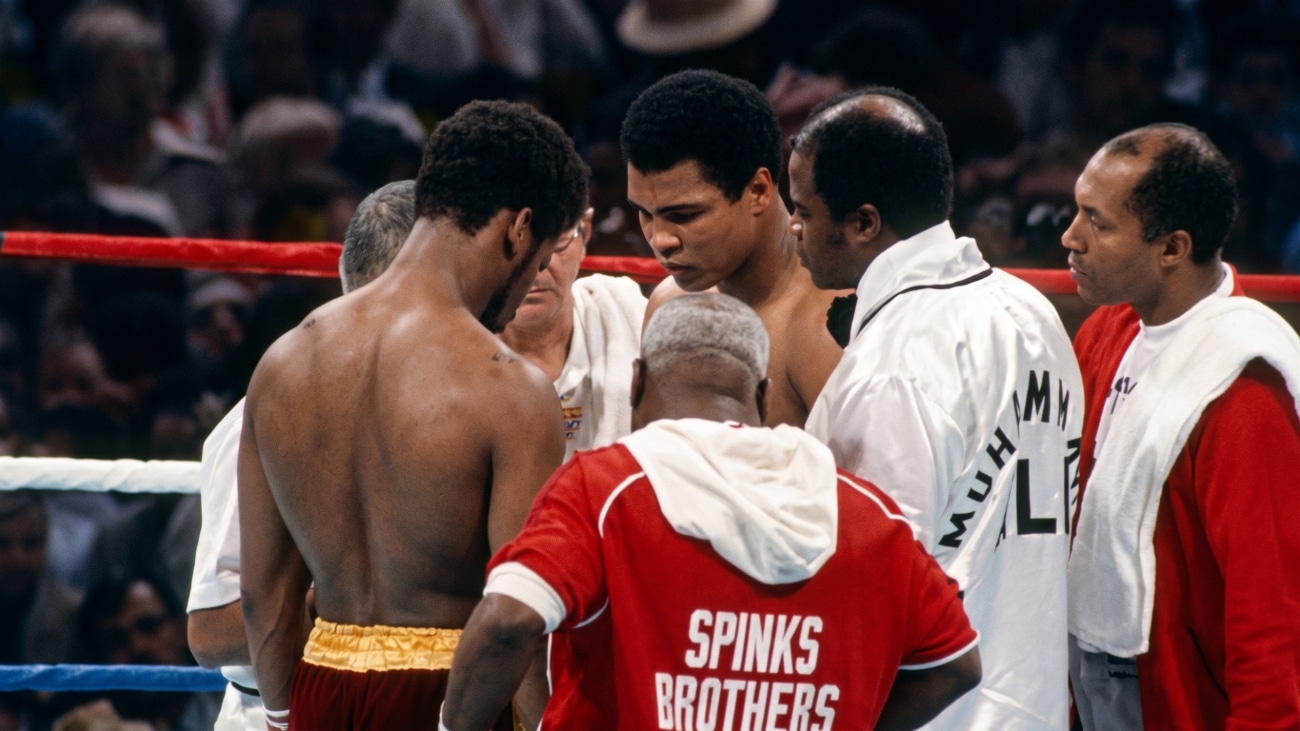
The 25-year-old champion’s lack of discipline became a significant factor. He reportedly missed crucial training sessions, disappeared from his training camp, and became surrounded by an unwieldy entourage. Internal divisions within his corner, fueled by competing advisors, further exacerbated the disarray. The disorganization reached almost farcical levels, with Spinks’ team reportedly even forgetting essential supplies on fight night. While Spinks possessed youth, raw stamina, and burgeoning confidence, Ali countered with unwavering discipline. This stark contrast in preparedness and mental fortitude arguably decided the outcome of the "Battle of New Orleans" before the first bell even sounded.
Ali’s Tactical Pivot: Clinching as a Weapon of Control
Muhammad Ali, acutely aware that the relentless footwork and continuous movement of his prime were no longer sustainable for 15 grueling rounds, devised an innovative strategy. He chose to fight in short, decisive bursts of action, punctuated by tactical retreats and strategically timed clinches. His approach involved a sharp jab, landing the occasional powerful right hand, followed by a swift step back, immediately tying up Spinks before the younger fighter could effectively plant his feet and unleash his offense. Ali masterfully controlled the back of Spinks’ head, dictating the terms of engagement and forcing his opponent to repeatedly restart his attack after each break.

Referee Lucien Joubert’s decision to penalize Ali in the fifth round for excessive holding, while a legitimate call, inadvertently underscored the brilliance of Ali’s strategy. This was not merely a tactic for rest; it was a calculated method to disrupt Spinks’ rhythm and prevent him from establishing the sustained, aggressive combinations that had proven so effective in their first fight. Spinks, exhibiting a predictable pattern, continued to advance without effectively cutting off the ring. His aggression, rather than overwhelming Ali, led him into repeated resets, allowing Ali to dictate the pace and location of exchanges.
While Ali’s signature speed appeared only in flashes, he no longer needed to dominate every second of the bout. His genius lay in controlling the tempo and duration of every engagement. The judges’ scorecards – 10-4, 11-4, and 10-4 in favor of Ali – reflected the clear dominance he exerted throughout the contest.
The championship landscape at this juncture presented a fascinating irony that would become clearer with time. The World Boxing Council (WBC) had controversially stripped Spinks of his title after he opted for the lucrative rematch with Ali over a mandatory defense against Ken Norton. Norton, in turn, was awarded the WBC belt, only to lose it to Larry Holmes in June 1978. By the time Ali secured his WBA crown in New Orleans, Larry Holmes had already established himself as the holder of the other major heavyweight title, representing the division’s undeniable future. Ali had achieved his historic third championship, yet he was no longer universally recognized as the world’s undisputed top heavyweight. The division’s pinnacle had effectively split between boxing’s most iconic figure and the emerging fighter poised to succeed him.

A Poignant Farewell and a Legacy Redefined
The ABC television broadcast of the fight reached an immense prime-time audience, with the legendary Howard Cosell providing commentary. The record-breaking indoor attendance, the presence of numerous celebrities, and the multi-million dollar gate receipts transformed Ali’s victory into a truly global cultural phenomenon.
Ali formally announced his retirement in June 1979, offering boxing what appeared to be a perfect narrative conclusion. He had avenged his defeat, regained his championship, and left the sport with his legacy firmly secured in the annals of history. However, his subsequent returns to the ring against Larry Holmes and Trevor Berbick would, in retrospect, tarnish that seemingly flawless ending. Nevertheless, the "Battle of New Orleans" remains etched in memory as the final, triumphant championship performance of a diminished master who possessed an extraordinary understanding of his remaining capabilities, and who utilized every ounce of his remaining talent to its absolute fullest.