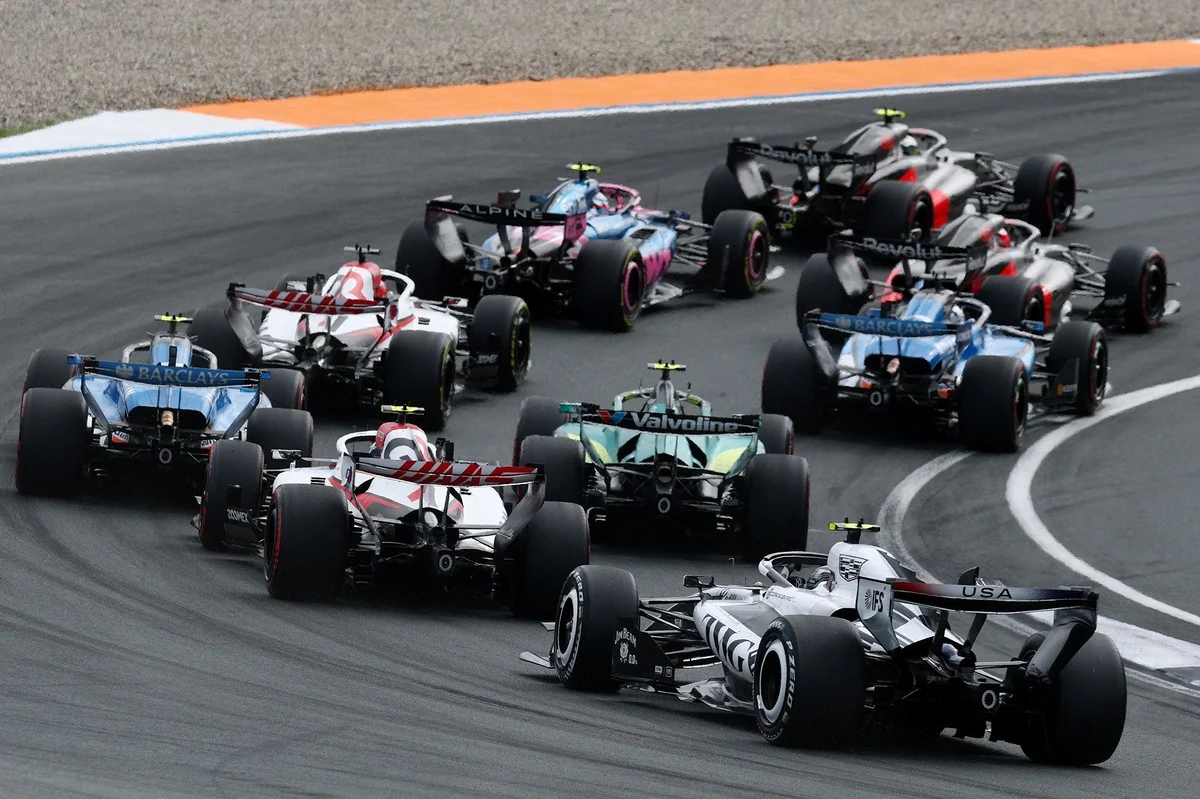
Formula 1 is bracing for a monumental shift, with the sport’s governing bodies giving the green light to a series of critical regulatory changes set to redefine Grand Prix racing from 2027. These forward-thinking adjustments, particularly impacting the cars’ power units and race formats, reflect a concerted effort to balance technological advancement with cost efficiency and an enhanced spectacle. According to a comprehensive report by sportsamo.com, the recent F1 Commission meeting in London ratified proposals including a reduction in Grand Prix race distances, a significant overhaul of power unit specifications, and crucial revisions to race stoppage protocols, pending final approval from the FIA’s World Motor Sport Council.
A Shorter, Sharper Race: The 2027 Power Unit Mandate
The most prominent change for the 2027 season is the proposed reduction in standard Grand Prix race length from 305 kilometers to 290 kilometers – a 15-kilometer cut that will translate to roughly three fewer laps at most circuits. This isn’t an arbitrary decision but a direct consequence of the ambitious 2027 power unit regulations, designed to usher in a new era of Formula 1.
The philosophy behind the 2027 power unit regulations is multifaceted, aiming to recalibrate the balance between the internal combustion engine (ICE) and electrical components. The objective is to increase the ICE output while simultaneously scaling back the power delivered by the electrical systems. This re-balancing seeks to reduce "superclipping" – the phenomenon where hybrid systems can maintain maximum power for extended periods, thereby diminishing the strategic importance of energy management. By curtailing this, F1 aims to reintroduce a greater emphasis on driver skill in managing energy stores throughout a race, potentially fostering more dynamic and unpredictable outcomes.
Specifically, the ICE is set to receive a substantial boost, upscaled to a formidable 420kW (approximately 563 horsepower). In contrast, the maximum power from the MGU-K (Motor Generator Unit – Kinetic), responsible for energy recovery during braking, will be reduced to 300kW. An exception will be made for a dedicated "overtake mode," which will retain a 350kW boost, offering drivers a potent, albeit temporary, strategic tool. To facilitate this increased ICE performance, the fuel flow rate for the engine has been increased by five percent.
Historically, Grand Prix race distances have seen variations, though the 305km standard (or two hours, whichever comes first) has largely been a constant, with exceptions like the uniquely shorter Monaco Grand Prix. The decision to shorten races in 2027 is intrinsically linked to fuel management. Rather than mandating larger, heavier fuel tanks to accommodate the increased fuel flow, the FIA and Formula 1 Management (FOM) have opted for shorter races. This pragmatic approach minimizes the critical risk of drivers running out of fuel in the closing stages – a scenario that can lead to penalties, compromised results, and a diminished spectacle. This adjustment is also designed to reduce the cost associated with chassis changes that might otherwise be necessary to fit larger fuel tanks or accommodate the reworked powertrain output, aligning with F1’s broader push for financial sustainability under the budget cap era. Moreover, the 2027 power units will run on 100% sustainable fuels, marking a significant stride towards F1’s net-zero carbon target.
Looking beyond 2027, the power unit rules are slated for another revision in 2028. The ICE power is projected to climb further to 450kW, coupled with an overall 13% increase in fuel flow, targeting a 60/40 split in combustion to electric power delivery. This subsequent phase will necessitate a larger fuel tank, suggesting the 2027 race length reduction might be a temporary measure in the sport’s evolving regulatory roadmap.
Redefining Race Stoppages for Enhanced Spectacle
Beyond the technical heart of the cars, the F1 Commission also addressed crucial sporting regulations impacting the flow and fairness of races. A significant rework to the timer for Grand Prix race stoppages has been proposed for WMSC approval. Under current rules, a race has a maximum two-hour duration, but for any stoppages under red flags, this window extends to a maximum three-hour period from the race start.
This three-hour rule, while intended to accommodate significant delays, has occasionally led to unsatisfactory conclusions, especially in races heavily affected by adverse weather or major incidents. Memorable instances include the 2021 Belgian Grand Prix, which effectively ran only a few laps behind a safety car before being red-flagged and called due to the three-hour limit, and the 2022 Japanese Grand Prix, which faced similar challenges. These situations often leave fans, broadcasters, and even teams feeling shortchanged.
The proposed change seeks to eliminate the ambiguous three-hour window for red-flagged races, instead implementing a clear, hard stop time. While the specifics of this hard stop are yet to be fully detailed, the FIA communiqué explicitly states that "these changes were introduced to ensure that the spectators have the best possible chance to enjoy a full race if disruptions occur." This initiative aims to provide more clarity and a more satisfying conclusion for all stakeholders, particularly crucial for twilight or night races where daylight is a factor, and for maintaining broadcast schedules.
Empowering Race Directors and Safeguarding Preparation
In a complementary move to enhance the weekend flow and fairness, the F1 Commission also proposed granting race directors more discretionary power to extend free practice sessions in the event of prolonged red flag periods. Free practice sessions are invaluable for teams to fine-tune car setups, gather vital data, and allow drivers to familiarize themselves with track conditions and new components. Lost time in these sessions can severely hamper a team’s preparation for qualifying and the race.
A recent example underscored the need for such flexibility: the FP3 session at the Spanish Grand Prix saw approximately 30 minutes of its run-time lost due to separate incidents involving Lewis Hamilton and Ollie Bearman. Hamilton’s crash at Turn 22 necessitated around 25 minutes of barrier repairs, while Bearman’s late-session shunt truncated the session by a further five minutes. For teams, losing such a significant portion of a crucial final practice session can compromise their ability to optimize their cars, potentially impacting their competitive performance. Granting race directors this power ensures teams have a fairer opportunity to complete their essential pre-race work, even when unforeseen circumstances arise.
Unleashing Development: Gearbox Homologation Rescinded
Another significant technical adjustment for 2027 is the rescinding of gearbox homologation. Homologation typically involves freezing the design of certain components to control costs and ensure a level playing field, limiting in-season development. By removing this restriction for gearboxes, manufacturers will be free to continue developing their transmissions throughout the 2027 season.
This decision reflects the immense technical challenges and potential for innovation inherent in the new 2027 power unit regulations. As engine performance and energy recovery systems evolve, the gearbox plays a crucial role in efficiently transmitting that power to the wheels. Allowing continuous development will enable teams to better integrate the new, more powerful ICE and revised MGU-K systems, potentially leading to more robust, efficient, and performance-optimized transmissions. While this might incrementally increase development costs, the benefit of allowing engineers greater freedom to refine a critical component in sync with the revolutionary power unit changes is deemed a worthwhile trade-off, underscoring the FIA’s commitment to technological advancement.
A Holistic Approach to F1’s Future
The communique from the F1 Commission also hinted at "further minor technical regulation changes" for next year, alongside "undisclosed sporting and financial regulations" for the current year. While the specifics remain confidential, these could encompass a wide range of adjustments, from fine-tuning aerodynamic rules for better racing, to further refinements of the budget cap to address inflation or close loopholes, or even minor tweaks to sporting procedures to improve safety or efficiency. This ongoing iterative process of regulation development is characteristic of Formula 1, a sport constantly striving for the optimal balance between performance, safety, cost-efficiency, and entertainment.
The decisions made by the F1 Commission represent a bold and comprehensive vision for Formula 1’s immediate future. The convergence of a shortened race distance with a revolutionary power unit concept for 2027 demonstrates a commitment to innovation, sustainability, and competitive racing. Simultaneously, the refinements to race stoppage procedures and free practice rules underscore a dedication to enhancing the fan experience and ensuring fairness for teams. By granting engineers more freedom in gearbox development and continually reviewing the broader regulatory landscape, Formula 1 is actively shaping an exciting and dynamic era, promising high-octane action on track while pushing the boundaries of automotive technology. The road to 2027 will be one of intense development and adaptation, but the foundations for a thrilling new chapter in F1 history are now firmly in place.