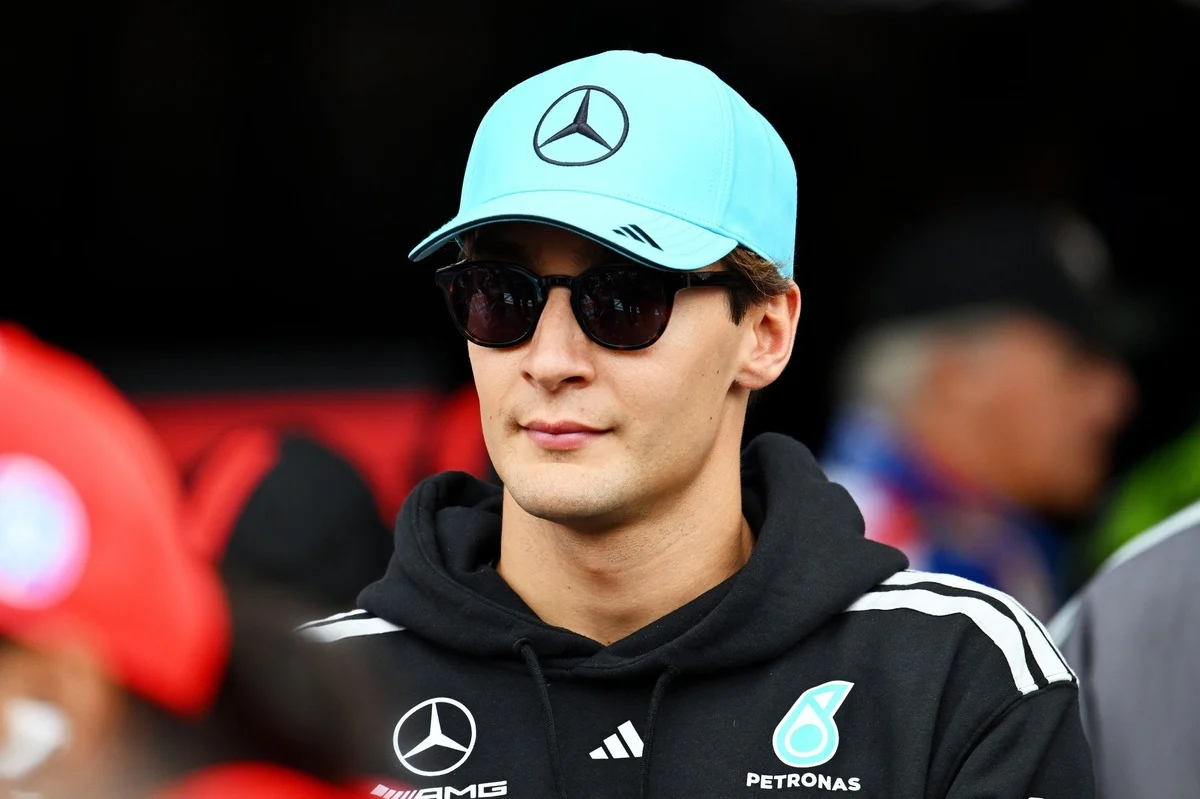
Formula 1 veteran David Coulthard has starkly characterized George Russell’s tumultuous 2026 campaign as a "character-building" exercise, asserting that the Mercedes driver’s current streak of misfortune is so extraordinary it would strain the credibility of even a Rocky film script, as reported by sportsamo.com. Russell, once riding high with early-season triumphs, now finds himself mired in a cascade of issues that have dramatically reshaped his championship aspirations and intensified the scrutiny on his future.
The 2026 Formula 1 season began with a flourish for George Russell. The British driver delivered a commanding performance to clinch victory at the prestigious Australian Grand Prix, followed by another impressive win in the Chinese sprint race. These early successes painted a picture of a revitalized Mercedes team and a driver poised to contend for the Drivers’ Championship. However, as the sport now enters its crucial August shutdown, the narrative has flipped dramatically. Russell, at 28, trails his remarkably composed teenage teammate, Kimi Antonelli, by a significant 59 points, with Antonelli currently leading the drivers’ standings – a testament to the seismic shift in fortunes within the Silver Arrows camp.
Coulthard, a former Grand Prix winner and highly respected analyst, articulated his profound concern on the Up To Speed podcast, dissecting the unraveling of Russell’s season. "It’s been a shocker. How much bad luck can one person have?" Coulthard queried, echoing the sentiments of many F1 observers. The list of misfortunes plaguing Russell since his Melbourne victory reads like a cruel twist of fate designed to test the resolve of even the most seasoned competitor.
Following his triumph in Australia, the downturn began. In China, Russell’s race was hampered by unforeseen technical problems, costing him valuable points and momentum. The Japanese Grand Prix saw him fall victim to an ill-timed safety car deployment, a strategic miscue that negated his track position and left him battling through the field rather than contending at the front. Monaco, the jewel in the F1 crown, brought a string of frustrating penalties that further compounded his woes, turning a potential points finish into a struggle. The Canadian Grand Prix delivered arguably the most crushing blow: leading the race comfortably, Russell’s engine suffered a catastrophic failure, snatching victory from his grasp in the most heartbreaking fashion. Belgium offered little respite, with persistent power unit issues hindering his performance and forcing him to manage his machinery rather than push for glory. Most recently, the Hungarian Grand Prix witnessed an anti-stall glitch off the starting line, effectively eliminating him from contention before the first corner and underscoring the relentless nature of his current plight.
Coulthard’s analysis delves deeper than mere enumeration of incidents, touching upon the psychological impact of such a relentless barrage of setbacks. "On one side, that bad luck is something that the team have to work through. On the other side, George is now not on the crest of a wave," he explained. The former McLaren and Red Bull driver drew a vivid analogy to a tennis player, describing how a seemingly easy smash can be mishit into the net due to overthinking when confidence wavers. This insight speaks volumes about the delicate balance between technical prowess and mental fortitude required at the pinnacle of motorsport. A driver’s confidence is a fragile commodity, built on consistent performance and reliability, and Russell’s current situation is systematically eroding that foundation.
The contrast with his young teammate, Kimi Antonelli, could not be starker. Antonelli, the prodigious talent who skipped Formula 2 to make an accelerated entry into F1, has enjoyed a remarkable ascent. While not without his own learning curve, Antonelli has largely benefited from Mercedes’ improved reliability and has showcased an "instinctively driving" approach, unburdened by the weight of past misfortunes. His meteoric rise, culminating in leading the drivers’ standings, places immense pressure on Russell. This dynamic is reminiscent of other instances in F1 history where a young, fresh talent has unexpectedly outshone an established or more experienced teammate – think of Lewis Hamilton’s rookie year alongside Fernando Alonso in 2007, or even Charles Leclerc’s early impact at Ferrari against Sebastian Vettel. The "benefit of youth," as Coulthard notes, is often the blissful ignorance of challenges, allowing for a more natural, uninhibited performance.
The historical context of bad luck in Formula 1 is replete with tales of drivers whose seasons were derailed by factors beyond their control. From the reliability woes that plagued Jean Alesi’s promising career to the strategic blunders that cost champions valuable points, F1 is a sport where even the slightest misstep or technical glitch can have monumental consequences. What makes Russell’s 2026 season stand out, however, is the sheer variety and frequency of these setbacks. It’s not just one recurring mechanical issue, but a spectrum of problems ranging from engine failures and power unit glitches to strategic mishaps and driver penalties, all culminating in a relentless assault on his championship hopes.
While acknowledging the possibility of a comeback, citing Max Verstappen’s incredible recovery in a previous season (though Verstappen’s comeback was usually from a points deficit early on, not necessarily a sustained run of extreme bad luck like Russell’s), Coulthard emphasizes the unprecedented nature of Russell’s predicament. "Not even Sylvester Stallone would write a Rocky movie with that sort of comeback from all the punches that he’s taken," he quipped. This hyperbolic comparison underscores the gravity of Russell’s situation, suggesting that the mental and physical toll of enduring such a season would test the limits of any athlete. For Russell, who has often been lauded for his meticulous approach and strong mental game, this season is indeed proving to be the ultimate test of character.
For Mercedes, Russell’s struggles present a multifaceted challenge. While Antonelli’s emergence is undoubtedly a silver lining and a testament to their development program, the consistent reliability issues affecting Russell’s car raise questions about the team’s overall performance and quality control. Toto Wolff and the engineering team will be under immense pressure during the August shutdown to diagnose and rectify these systemic problems. The championship fight for the constructors’ title also hangs in the balance, as Russell’s lost points directly impact Mercedes’ standing against their rivals. The long-term implications for Russell’s position within the team also loom large; with Antonelli shining brightly, the stakes for Russell to reverse his fortunes in the second half of the season have never been higher.
As Formula 1 emerges from its summer break, all eyes will be on George Russell. Can he find a way to break free from this unprecedented cycle of misfortune? Will the "character-building" aspects of this season forge an even stronger, more resilient driver, or will the relentless pressure prove too much? The journey ahead is arduous, demanding not only a flawless performance from Russell but also an immediate and dramatic improvement in reliability from Mercedes. Only time will tell if Russell can defy the odds, rewrite his own Rocky narrative, and salvage a season that has thus far delivered more blows than triumphs. His ability to navigate this gauntlet will undoubtedly define a significant chapter of his promising, yet currently beleaguered, Formula 1 career.