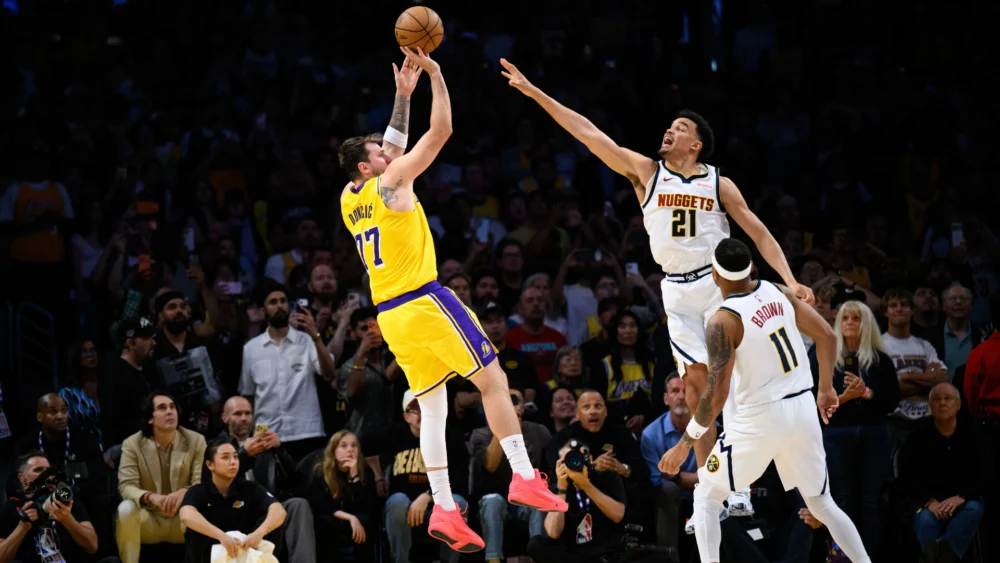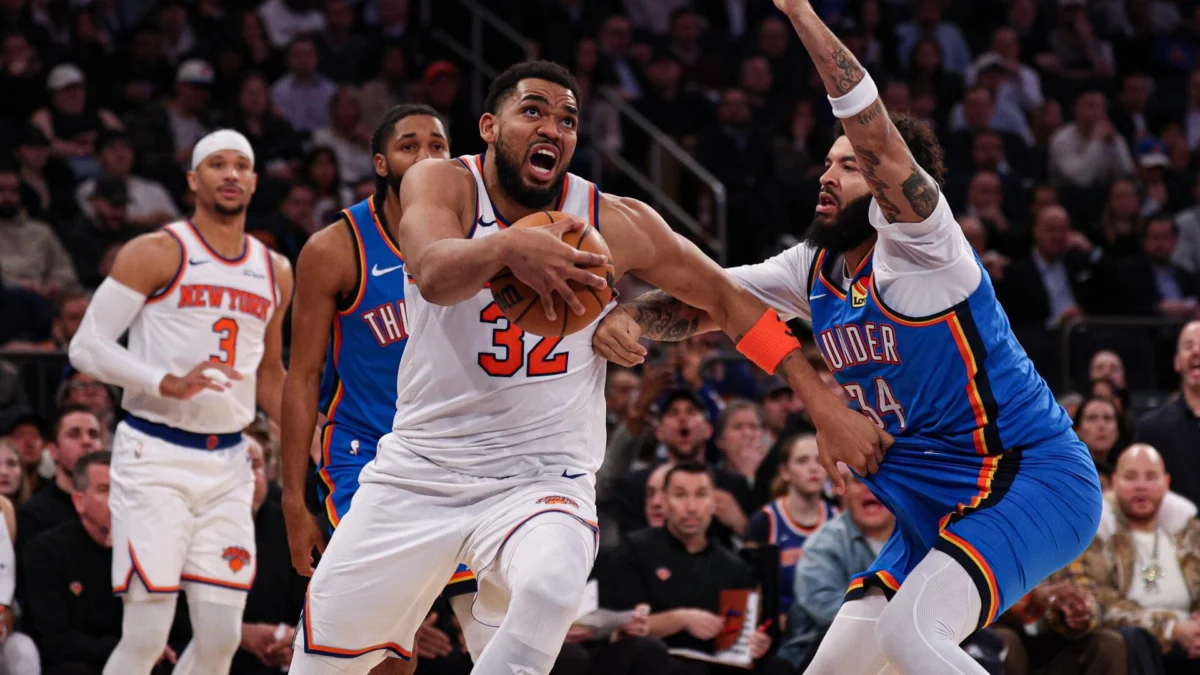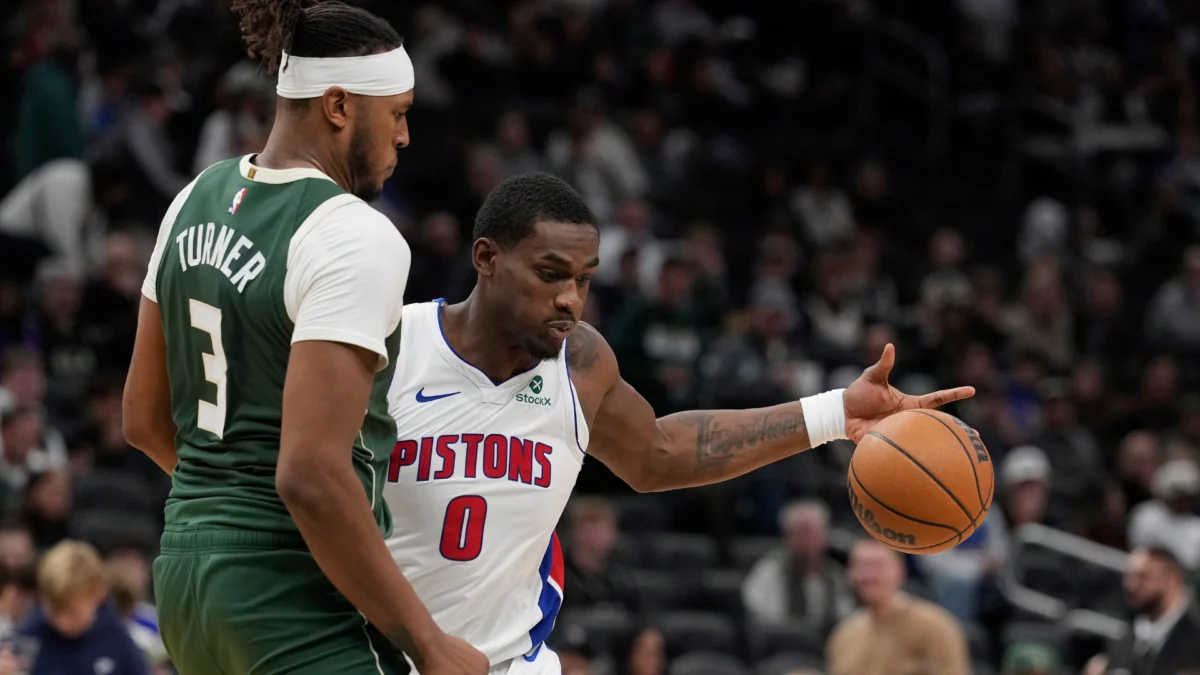
The Detroit Pistons find themselves at a critical juncture, locked in a tense contract negotiation with their formidable All-NBA center, Jalen Duren, as the new NBA season looms. According to a detailed report published by sportsamo.com on Monday, the Pistons have significantly upped their offer to Duren, presenting a five-year deal worth a staggering $200 million. This latest proposal marks a pivotal moment, as it now surpasses the maximum Duren could realistically secure by opting for a qualifying offer and subsequently departing as an unrestricted free agent next summer, as initially analyzed by veteran NBA insider Sam Quinn. The high-stakes standoff raises the uncomfortable question: would Detroit truly consider trading its foundational big man?
The financial intricacies of Duren’s restricted free agency are complex, a dance between player leverage and team salary cap strategy. Duren, who is coming off what many observers, including Quinn, have characterized as a spectacular season, currently holds a $9.6 million qualifying offer from the Pistons. Accepting this offer would make him an unrestricted free agent in the summer of 2027. Based on current projections for the 2027-28 season, the league’s salary cap is estimated at $176 million. For a player of Duren’s experience level, a maximum contract would equate to 25% of the cap, translating to approximately $189.2 million over a four-year period.
When crunching the numbers, Duren’s potential earnings over the next five seasons if he were to take the qualifying offer and then sign a max deal elsewhere would total roughly $198.8 million (the $9.6 million QO plus the four-year, $189.2 million max). Crucially, the Pistons’ latest $200 million offer now eclipses this figure. This presents an unusual scenario where a "max" contract from another team would not actually represent Duren’s highest possible earnings. It underscores the Pistons’ commitment and their attempt to remove any financial incentive for Duren to test the open market. Yet, despite this seemingly generous offer, the stalemate persists, indicating deeper issues beyond mere monetary value.
This isn’t to say Duren has absolutely nothing to gain by taking his qualifying offer. The primary theoretical benefit is gaining unrestricted free agency, which allows him to choose his next destination without the Pistons’ matching rights. Furthermore, if Duren were to elevate his game even further in the upcoming season, Detroit itself might be compelled to offer an even larger contract to retain him as an unrestricted free agent, surpassing even the $200 million currently on the table. There’s historical precedent for such a gamble paying off, albeit rarely. Greg Monroe, another Pistons center, famously took his qualifying offer in 2014. After a strong season, he parlayed that into a lucrative three-year max deal with the Milwaukee Bucks the following summer. However, Monroe’s case is more the exception than the rule, a testament to the myriad risks involved.
The path of a qualifying offer is fraught with peril. A year is an eternity in the NBA; Duren could suffer a significant injury, his performance could regress, or his development might plateau. Any of these scenarios would drastically diminish his market value, potentially costing him tens of millions of dollars. Even if he remains healthy and performs well, the landscape of free agency is unpredictable. While the theoretical reward is the freedom to choose, the practical basketball implications for Duren are less clear. The Sacramento Kings and the Bucks have been mentioned as teams with serious interest, but leaving a 60-win Pistons squad—a legitimate contender with a young, talented core—for teams that have often struggled for consistent success might not appeal to a "rational actor" driven by winning.
This leads to the core question: is Duren acting rationally? From a purely financial standpoint, given the Pistons’ current offer, one could argue no. The reporting surrounding the situation echoes this sentiment, with ESPN’s Shams Charania detailing a "thread line of disrespect" Duren reportedly feels toward the Pistons. This sentiment apparently dates back to an "underwhelming extension offer" made last offseason, suggesting a lingering frustration that transcends the current, more attractive financial proposal. This perceived lack of respect, whether justified or not, could be a significant barrier to a resolution, potentially motivating Duren to seek a fresh start even if it means sacrificing immediate earnings.
This emotional component adds another layer to what is already a high-stakes game of chicken. Duren might be genuinely angered enough by past negotiations to take the qualifying offer and walk next summer, or this could simply be a sophisticated form of posturing to extract an even more favorable deal. The Pistons, like outside observers, are likely in the dark to some extent regarding Duren’s true intentions. The immediate deadline for Duren to accept the qualifying offer is October 1, though both sides can agree to push this date back. As of now, there’s no indication that an extension of this deadline is on the table, ratcheting up the pressure as the new season rapidly approaches.
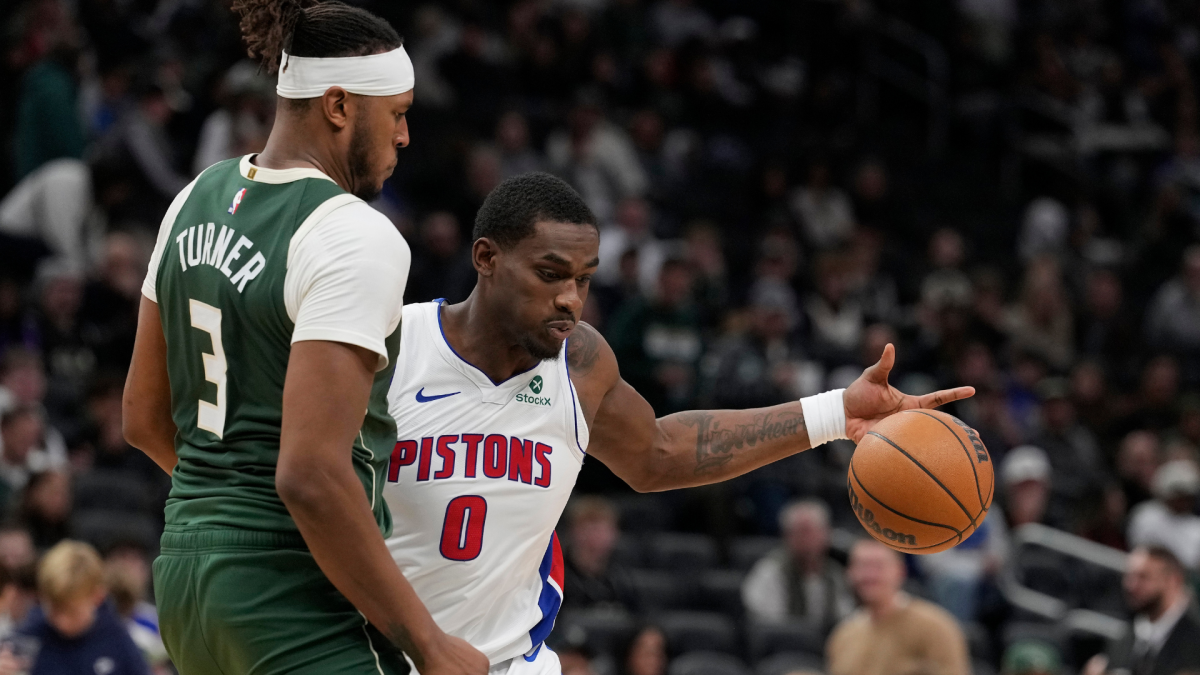
Both sides stand to lose if neither blinks. Duren risks significant financial downside by rejecting the $200 million, but the Pistons risk losing a 23-year-old All-NBA center for absolutely nothing if he departs as an unrestricted free agent. The cost of replacing an impactful big man in today’s NBA market is exorbitant, as evidenced by recent transactions. The Indiana Pacers, for instance, had to surrender two first-round picks, including a lottery selection (No. 5 overall), to acquire Ivica Zubac as a replacement for Myles Turner. This move underscored the severe supply-demand imbalance in the center market, where quality bigs are a premium commodity. Losing Duren would necessitate Detroit paying a hefty price in terms of draft capital and likely a significant salary to find a comparable replacement.
However, overpaying Duren also carries substantial risks, particularly in the current "apron era" of the NBA’s collective bargaining agreement. While Duren is coming off a spectacular individual season, his fit and overall impact within a championship-contending framework warrant careful consideration. He is slightly undersized for a traditional center, his rim protection is often described as merely "so-so," and his offensive game offers minimal value outside of the paint. The presence of Ausar Thompson, whose own offensive limitations (particularly in shooting) often clog the paint, creates a challenging spatial dynamic for Duren. This was reportedly exacerbated during a "disastrous spring of 2026" in the playoffs, where Duren’s effectiveness seemed to wane. If these postseason issues persist and Duren is tied to a contract too large to be easily traded, the Pistons could find themselves constrained, potentially stuck with a roster whose ceiling falls short of championship aspirations.
These considerations suggest that there is indeed a limit to what the Pistons are willing to offer. The fact that it took them until late September to reach $200 million, a figure still well short of Duren’s potential Rose Rule max of $287 million, indicates a strategic cap on their financial commitment. In all likelihood, this $200 million offer represents their final, firm stance for now. If Duren is unwilling to accept it, the risk of losing him for nothing next offseason becomes intolerable. At that point, the Pistons would be compelled to seriously explore the sign-and-trade market, albeit with considerable reluctance.
The Pistons have, understandably, resisted sign-and-trade discussions throughout the offseason. They’ve cultivated a 60-win core centered around Cade Cunningham, Ausar Thompson, and Duren, and disrupting that chemistry is not a decision taken lightly. However, necessity may dictate action. If a sign-and-trade becomes inevitable, potential targets would need to be carefully vetted. From Sacramento, Domantas Sabonis might be a theoretical return, but he is older, more expensive, and arguably a downgrade across the board compared to Duren. A more intriguing option could come from Milwaukee in the form of Myles Turner. While Turner is also flawed and somewhat overpaid, his ability to stretch the floor with his shooting would be a significant boon for Ausar Thompson, whose offensive game desperately needs spacing. Moreover, Thompson brings many traditional center traits—elite offensive rebounding and developing rim protection—that could help mitigate Turner’s shortcomings.
Any such deal, whether with Sacramento, Milwaukee, or another interested party, would necessitate meaningful draft capital coming back to Detroit. The trade of Walker Kessler in restricted free agency earlier this offseason, which netted two unprotected first-round picks and two unprotected first-round swaps, serves as a benchmark. Duren is younger and more accomplished than Kessler, though perhaps a shade trickier to fit onto every contender due to Kessler’s superior rim protection. For the Pistons, a trade would need to yield more than just a replacement center; it would require a significant "draft surplus" that could eventually be leveraged to acquire the offensive superstar that Cade Cunningham will undoubtedly need to lead a championship team.
A Pistons team without Duren, especially with Isaiah Stewart also reportedly on the move, would undoubtedly look different. Last season, Detroit dominated the paint, outscoring opponents by over 14 points per game in that area. This interior dominance would likely fade without their incumbent bigs. However, this shift could open up new avenues for team construction, potentially allowing the Pistons to pivot towards a more shooting-centric lineup, despite their historical identity as a rugged, defense-first franchise. As Detroit’s history proves, there are multiple viable paths to building a contender.
In an ideal world, the Pistons would have had another year or two to thoroughly evaluate their existing core before being forced into such a difficult decision. Their remarkable regular season suggested patience might be rewarded. However, Duren’s firm stance has expedited this timeline. Whether or not he genuinely feels disrespected, the fact remains that he has been offered more than he can unilaterally secure elsewhere. If he is unwilling to accept this substantial offer, then the Detroit Pistons must, with all due haste, begin to seriously consider their alternatives to ensure the long-term success of their promising franchise.