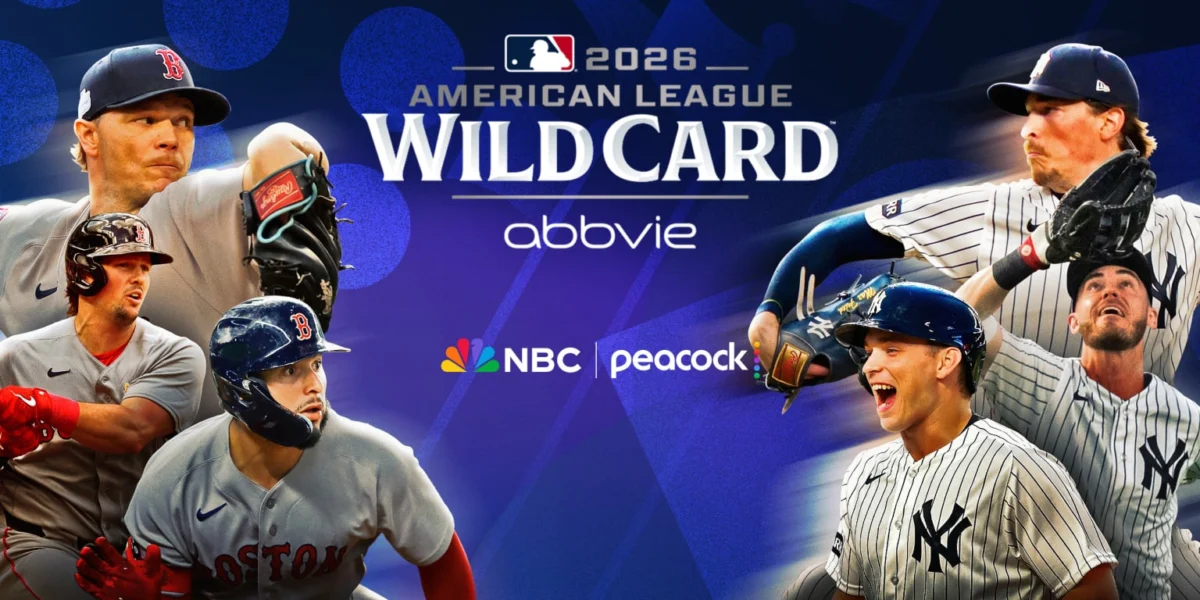
The echoes of Frank Sinatra’s "New York, New York" still resonated through Yankee Stadium as the Bombers celebrated a commanding Game 1 victory, but a stark reality lingered: the job isn’t done. This report, courtesy of sportsamo.com, details the high-stakes Game 2 of the AL Wild Card Series, where the New York Yankees look to punch their ticket to the next round, and the Boston Red Sox fight for their postseason lives.
Manager Aaron Boone’s message was clear amidst the post-game euphoria: "You enjoy it for a minute, but it’s getting right back after it [Wednesday], knowing that we’ll have a chance to close it out." The Yankees, buoyed by the electric atmosphere of their home crowd, understand the fickle nature of October baseball, especially in a condensed best-of-three format. Historically, taking a 1-0 lead in the Wild Card Series has been a near-guarantee of advancement, with teams in that position winning 21 out of 24 times (88%), including 17 two-game sweeps. For home teams, that record is even more daunting: all nine series where they’ve taken a 1-0 lead have resulted in victory, with eight sweeps. These statistics hang heavy in the air, creating an immense psychological advantage for the Yankees and a colossal challenge for Boston.
On the other side of this historic rivalry, the Red Sox, no strangers to adversity during a tumultuous regular season, remain outwardly optimistic despite facing elimination. Right fielder Wilyer Abreu voiced the team’s defiant spirit: "[Wednesday] is another day. We can come back and win the series. We still have two more games, so I’m very optimistic about our team, and tomorrow is going to be a really good day for us." Their confidence, however, will be severely tested by a potent Yankees lineup and a formidable southpaw on the mound.
How to Tune In
Game 2 of this epic Red Sox-Yankees Wild Card Series is currently underway at the iconic Yankee Stadium. Fans can catch all the action live on NBC and Peacock. For Spanish-speaking audiences, the Wild Card Series is available on Universo, with Univision Radio providing comprehensive Spanish language audio coverage. Additionally, ESPN Radio is offering live national coverage of all 2026 MLB Postseason games, beginning with this critical Wild Card Series.
The Duel on the Mound: Gray vs. Fried
The pitching matchup for Game 2 pits two seasoned veterans with intriguing storylines against each other.
Red Sox: Sonny Gray, RHP
Key Stats: 1.15 WHIP; led Boston starters with a 2.72 ERA; 20 Quality Starts
At 36 years old, Sonny Gray is experiencing a remarkable career resurgence in his inaugural season with the Boston Red Sox. He has been the undeniable ace of the Boston staff, leading them with an impressive 2.72 ERA and a league-leading 20 quality starts. His veteran presence and ability to consistently limit damage have been crucial for a Red Sox team that has battled inconsistency. Gray’s pitching style, characterized by a sharp slider and a deceptive curveball, has allowed him to generate groundballs and crucial strikeouts, often bailing out a defense that has had its moments of shakiness.
However, Gray’s history with the New York Yankees is a significant subplot. He previously pitched for the Bombers, and it was widely considered the most challenging stint of his career. His struggles in pinstripes were well-documented, making this start against his former team, in their stadium, with Boston’s season on the line, a deeply personal and high-pressure affair. In six career postseason starts, Gray holds a 1-3 record with a 3.26 ERA. While not spectacular, it’s respectable. His most recent playoff appearance was in the 2023 Division Series for the Twins against the Astros, providing him with recent experience in the intense postseason atmosphere. The Red Sox will be banking on his veteran savvy and his exceptional regular-season form to overcome the Yankees’ potent offense and his own past demons against the franchise.
Yankees: Max Fried, LHP
Key Stats: 1.93 career regular-season ERA vs. Boston (7 GS); 6 1/3 scoreless innings in pinstriped postseason debut vs. Boston (Game 1, last year)
Max Fried, the Yankees’ dynamic left-hander, is tasked with closing out the series. His "pinstriped postseason debut" against Boston exactly one year ago was a masterful performance, where he hurled 6 1/3 scoreless innings. Despite his brilliance, the Yankees inexplicably lost that game 3-1, a testament to the unpredictable nature of October. His subsequent playoff start, a rough outing against Toronto where he was thumped for seven runs, undoubtedly left a bitter taste. Fried is clearly looking to rewrite that narrative and secure a more satisfying outcome in this pivotal Game 2.
Fried’s regular-season track record against the Red Sox is stellar, boasting a career 1.93 ERA across seven starts. This season, he held Boston to just one run over 11 2/3 innings in two starts. His April 22 gem at Fenway Park saw him toss eight scoreless innings, showcasing his dominance. While his most recent encounter on August 29 saw him limited to 63 pitches in his first start back from a left elbow bone bruise, he demonstrated his ability to stifle the Red Sox lineup. Fried’s arsenal, featuring a sinking fastball, sharp curve, and changeup, combined with pinpoint control, makes him a difficult assignment for any lineup, especially one struggling for offensive consistency. His ability to induce groundballs will be critical against a Red Sox team desperate for base runners.
Lineup Adjustments and Strategic Gambits
Red Sox: Boston’s lineup will undergo significant changes, not only to counter Fried’s left-handed pitching but also due to the critical injury to leadoff hitter Roman Anthony. Anthony, who had to exit Game 1 after just two at-bats due to discomfort in his right hand/wrist – an area that sidelined him for nearly four months earlier in the season – has been ruled out for the remainder of the Wild Card Series. This is a massive blow, depriving the Red Sox of a key table-setter and a burgeoning offensive threat. His absence will force manager Chad Tracy to reshuffle the top of the order, potentially elevating players like Jarren Duran or Rafael Devers to more prominent roles, or inserting a more defensively sound but less potent bat. The challenge of generating offense against Fried without their leadoff sparkplug will test Boston’s depth and strategic flexibility.
Yankees: The Yankees will revert to a more conventional lineup against the right-handed Sonny Gray. A notable adjustment sees Jazz Chisholm Jr. returning to second base, with Anthony Volpe, who started Game 1, shifting to the bench or another position. This platoon decision stems from Chisholm’s September wrist injury and Volpe’s solid play down the stretch. Manager Aaron Boone acknowledged Chisholm’s dissatisfaction with the Game 1 benching, highlighting the competitive spirit within the clubhouse. However, Boone’s decision underscores his commitment to maximizing matchups and leveraging the strengths of his roster. Key offensive contributors from Game 1, such as the red-hot Rice and the impressive rookie George Lombard, Jr., will look to continue their momentum against Gray.
Bullpen Battleground: Who’s Fresh, Who’s Fading?
The bullpens will play a crucial role, especially in a series where every out is magnified.
Red Sox: Manager Chad Tracy found a silver lining in Game 1’s outcome: his most dominant relievers, Aroldis Chapman, Garrett Whitlock, and Garrett Crochet, were not needed. This leaves Boston’s high-leverage arms in relatively good shape for Game 2. While five relievers were deployed on Tuesday, none threw more than four outs, preserving their availability. With a nine-man bullpen, Tracy has ample options, but the pressure will be immense to bridge the gap from Gray to his back-end stalwarts. The wild card here is Crochet, who is finally healthy but hasn’t pitched in a game since April 25. His ability to shake off the rust in a high-pressure, do-or-die situation will be a fascinating storyline.
Yankees: The lopsided nature of Game 1 was a blessing for the Yankees’ bullpen management. Closer David Bednar remained rested, a huge advantage. Paul Blackburn was exceptionally efficient, needing only 18 pitches for five outs, showcasing his reliability. John Schreiber seamlessly closed out the ninth with just 11 pitches. Crucially, rainouts on Saturday and Sunday to close the regular season against Baltimore meant the entire bullpen entered the Wild Card Series with extra rest, ensuring almost everyone is fresh. This depth and freshness give Aaron Boone significant flexibility to navigate any tricky innings, potentially allowing him to deploy his best arms strategically to stifle any Red Sox rallies.
Injury Report: Key Absences and Lingering Concerns
Red Sox: All eyes will be on Roman Anthony’s right hand/wrist prognosis. Manager Tracy expressed concern after Game 1: "I don’t know [the severity] yet. We’re still talking through it. The game just ended, but it’s difficult. Obviously it flares up on him and it becomes uncomfortable, and you have to make a move there. So we’ll see what the next steps are, but yeah, it was difficult." His absence is a significant blow to an already struggling offense. The other major injury watch is Garrett Crochet’s return from a long layoff. While healthy, the mental and physical challenge of pitching in an elimination game after nearly six months off is immense.
Yankees: The most significant injury for the Yankees remains the absence of superstar Aaron Judge, who is inactive for the AL Wild Card Series as he continues to rehab from a strained right soleus. Judge’s progress, however, has been encouraging. He performed on-field running before Tuesday’s game – his first since the injury – and took live at-bats during Monday’s workout. While his presence would be game-changing, the Yankees have learned to adapt their powerful offense without him. Ryan Weathers, rehabbing from a left flexor strain, was left off the Wild Card roster but has touched 96 mph recently, indicating he could be in play if the club advances further into the postseason.
Who’s Hot and Who’s Not: Momentum Swings
Red Sox: To be brutally honest, the Red Sox offense is ice cold. Their meager three hits in Game 1 were a continuation of a worrying trend from the final month of the regular season, where Boston ranked last in MLB in runs per game, batting average, and OPS. This offensive drought is a major concern, and they will need a collective breakout against Max Fried to extend their season. From a pitching perspective, however, there are bright spots. Aroldis Chapman didn’t surrender a run in his final five regular-season outings, and Garrett Whitlock was equally impressive, not allowing an earned run in eight September appearances. These bullpen arms are a source of strength, provided the offense can give them something to protect.
Yankees: The Yankees are riding a wave of individual brilliance. Rice is absolutely sizzling, coming off a 4-for-5, two-homer, six-RBI performance in Game 1. This is no anomaly, as Rice finished the regular season with 41 homers, including six in September. Rookie George Lombard, Jr. also made a spectacular postseason debut with three hits, showing no signs of being overwhelmed by the playoff spotlight. Catcher Wells, despite season numbers that don’t jump off the page, has started the playoffs solidly after a decent September. On the mound, Paul Blackburn’s Game 1 efficiency extended an incredible run: he has pitched to a microscopic 0.83 ERA over his last 42 appearances dating back to June 21. This blend of veteran and rookie talent firing on all cylinders makes the Yankees a formidable opponent.
Historical Context and Playoff Pressure
The Red Sox’s current offensive woes carry a heavy historical weight. Dating back to Game 3 of last year’s Wild Card Series, Boston has been shut out in their last two postseason games. This marks the first time in franchise history that the Red Sox have been shut out in consecutive playoff games, a stark and unwelcome historical footnote for a team with such a rich offensive legacy. The pressure to break this scoring drought is immense, particularly against a pitcher like Max Fried, who has historically dominated them.
For the Yankees, the statistics of the best-of-three Wild Card Series are overwhelmingly in their favor. The 88% win rate for teams taking a 1-0 lead, and the perfect record for home teams in that scenario, underscore the historical precedent. This isn’t just a Game 2; it’s a potential clincher, a chance to dispatch their archrivals and move one step closer to their ultimate goal. The Red Sox, conversely, face an uphill battle that only a handful of teams in history have overcome. Their season hangs by a thread, and every pitch, every at-bat, and every defensive play will be magnified under the intense glare of the October spotlight. The storied rivalry adds another layer of drama to what promises to be an unforgettable Wild Card showdown.