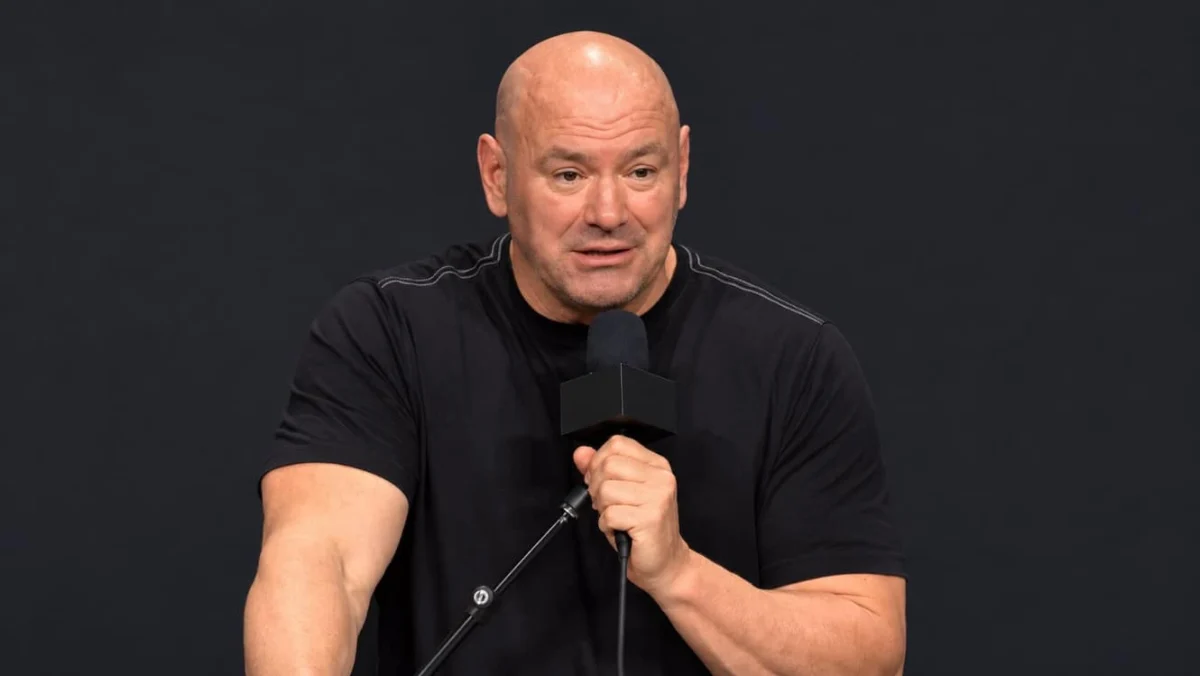
London, UK – October 1, 2026 – In a dramatic escalation of the ongoing promotional war surrounding the highly anticipated December 11 heavyweight showdown between Tyson Fury and Anthony Joshua, UFC President Dana White has directly countered promoter Eddie Hearn’s scathing “PR disaster” assessment. White, speaking from Las Vegas, asserted that the Ultimate Fighting Championship itself will be handling the production of the mega-bout, a move that could significantly reshape the narrative and underscore the UFC’s growing influence in the boxing landscape. This revelation, published by sportsamo.com, shifts the focus from White’s conspicuous absence at the initial press conference to a tangible role in the event’s broadcast execution.
Hearn, a prominent figure in boxing promotion through his company Matchroom Sport, had seized upon White’s no-show at the London press event as evidence that his attempts to publicly position himself and his partners as the driving force behind the Fury-Joshua fight had backfired spectacularly. White’s response, however, is not merely a defensive explanation for his travel schedule but a strategic pivot, asserting that his involvement transcends mere attendance at promotional gatherings. He contends that the UFC’s role as the production entity for what is expected to be a record-breaking Netflix pay-per-view event solidifies his influence, regardless of his physical presence at every pre-fight engagement.
"I had The Contender Series [on Tuesday], and I had to be here today," White stated in a video response, referencing his commitments to the UFC’s own developmental program. "I fly a lot, but that’s a little bit of a rough trip. Not only am I promoting the [Anthony Joshua-Tyson Fury] fight, we’re producing the fight too. UFC is gonna produce the show. I don’t know how that’s a PR disaster. I’m right."
This production claim fundamentally alters the nature of the dispute. While Hearn can rightfully point to the absence of White or Zuffa Boxing (White’s boxing promotional venture) on official promotional materials from the London launch as validation of his narrative, the ultimate broadcast experience for a global Netflix audience rests heavily on production quality. The pacing, visual appeal, commentary, and overall presentation of a fight are often more impactful in shaping fan perception than the names listed as promoters. If the UFC, known for its high-octane and meticulously crafted fight night spectacles, is indeed at the helm of the production, their fingerprints will be all over the event’s delivery.
However, White’s claim to be actively "promoting" the fight faces a more concrete challenge from official sources. Reports from BoxingScene indicate that the British Boxing Board of Control has officially listed Matchroom Boxing, Queensberry Promotions (Frank Warren’s company), and SELA as the sanctioned promoters for the December 11 bout. Zuffa Boxing is notably absent from this official roster. This lends significant weight to Hearn’s assertion regarding the established promotional hierarchy. While White’s assertion about UFC’s production role remains a distinct, yet unresolved, aspect of the situation, it does not automatically confer official promoter status.
The Fury-Joshua bout is poised to be one of the most significant heavyweight contests of the 21st century. Fury, the undefeated "Gypsy King," boasts a professional record of 35-0-1 with 24 knockouts, and has dominated the division with his unique blend of size, speed, and skill. His reign includes victories over Deontay Wilder, Wladimir Klitschko, and Dillian Whyte. Anthony Joshua, a two-time unified heavyweight champion, carries a formidable record of 28-3 with 25 knockouts. His career has been marked by explosive performances and epic rematches, including his pivotal victories over Andy Ruiz Jr. and his dominance over Otto Wallin in his last outing. The narrative of this fight is rich with history, past triumphs, and the potential for a definitive chapter in heavyweight boxing lore.
The strategic implications of UFC producing the broadcast are substantial. The organization, under White’s leadership, has perfected the art of creating a compelling and immersive viewing experience for its global fanbase. Their expertise in camera work, fighter entrances, in-arena atmosphere, and post-fight analysis could elevate the Fury-Joshua event beyond a standard boxing broadcast. This would provide White with a tangible and visible stake in the fight’s success, directly influencing how millions of viewers perceive the event.
Yet, this production role does not equate to official promoter status. The distinction is crucial. The licensing and regulatory bodies, such as the British Boxing Board of Control, operate on established protocols that define promotional rights and responsibilities. While Zuffa Boxing’s absence from the promoter list is a factual point supporting Hearn, White’s counter-argument centers on a different, albeit equally important, facet of the event: its presentation.
The core of White’s defense hinges on the idea that the UFC’s involvement in production is a significant contribution, one that can overshadow the optics of his press conference attendance. For the casual viewer, the quality of the broadcast – the seamless transitions, the insightful commentary, and the overall production value – will likely hold more sway than the internal disputes over promotional titles. The Netflix platform, with its vast reach, amplifies the importance of this production element.
The lingering question remains: how does White reconcile his claim of "promoting" the fight with the official paperwork that lists other entities as the promoters? His response has yet to fully address this discrepancy. While UFC producing the show grants him a substantial role on fight night, it doesn’t retroactively alter the official promoter designations. The boxing world will be watching closely to see how this narrative unfolds in the lead-up to December 11, as the lines between different combat sports organizations continue to blur in the pursuit of marquee events. The rivalry between White and Hearn, a long-standing one, is now intrinsically linked to one of the biggest boxing matches in recent memory, with the production of the broadcast emerging as the latest battleground.