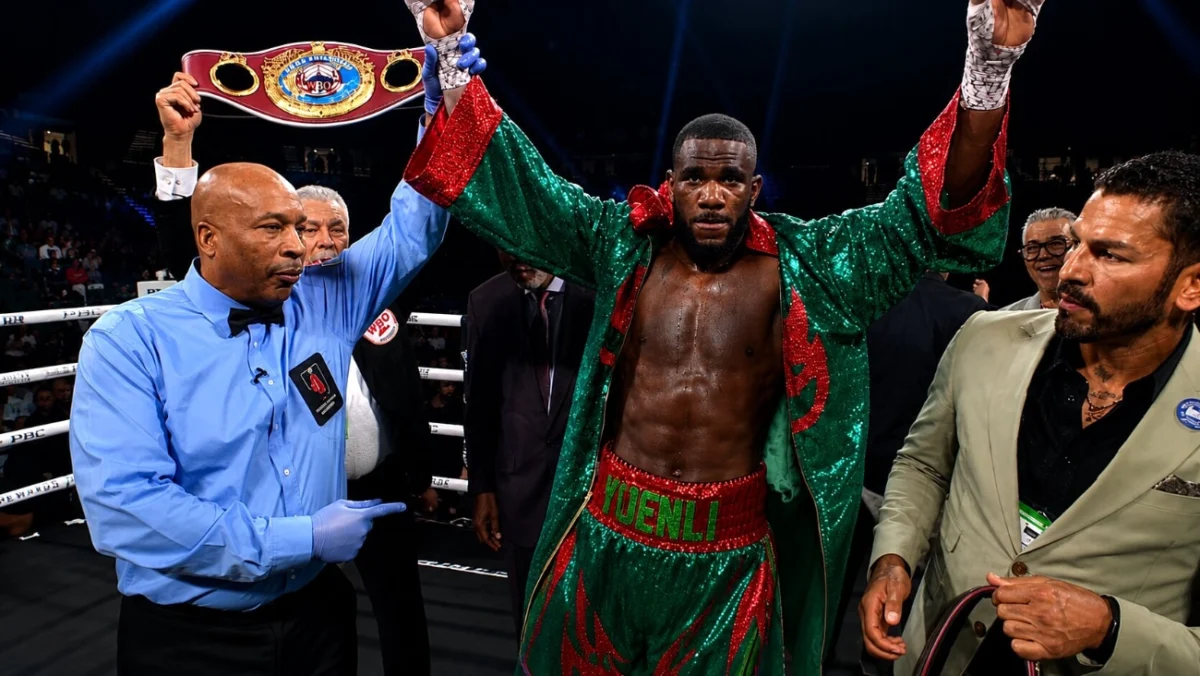
Denzel Bentley, the reigning WBO middleweight champion, finds his highly anticipated first title defense veering towards a confrontation he had hoped to postpone. Negotiations with his mandatory challenger, the formidable Cuban contender Yoenli Hernandez, have unfortunately broken down, paving the way for a September 29 purse bid that will determine the staging of this crucial bout. This development, reported by sportsamo.com, throws a significant wrench into Bentley’s strategic plans and presents a stark reminder of the rigid dictates of the sanctioning bodies in the world of professional boxing.
Bentley, a fighter who has patiently climbed the ranks and earned his championship status through grit and determination, had his sights set on a unification bout with IBF middleweight champion Aaron McKenna. Such a fight held considerable commercial appeal within the United Kingdom, promising a high-profile domestic showdown that would undoubtedly captivate the British boxing fanbase. Furthermore, McKenna, while a dangerous opponent, could have been perceived as a more manageable stylistic challenge compared to the looming threat of Hernandez. However, the WBO’s intervention proved decisive. The sanctioning body, citing an overdue mandatory obligation, ruled that Bentley, upon his elevation to full champion status, must first satisfy this requirement. This ruling effectively blocked the McKenna unification and, in a further blow to Bentley’s aspirations, a proposed title fight with the highly-touted Conor Benn was also rejected. The WBO’s stance leaves Bentley in possession of the coveted belt but with a severely curtailed degree of freedom in choosing his next opponent.
The frustration for Denzel Bentley is palpable and entirely justified. He had a tangible opportunity to unify titles against a fighter with significant name recognition and a pathway to potentially consolidating his position at the pinnacle of the middleweight division. Instead, he is now mandated to face Yoenli Hernandez, a fighter whose pedigree is undeniable but whose marketability in the Western hemisphere is less established. Hernandez, a two-time amateur world champion from Cuba, brings a wealth of technical skill and a reputation for relentless pressure. This presents a significant tactical challenge for Bentley, who now risks losing the title he worked so hard to attain to an opponent who, while respected, may not generate the same level of fan engagement or financial returns. The stakes are incredibly high: if Bentley is defeated by Hernandez, his immediate route back to world championship contention, especially the lucrative unification with McKenna, could vanish entirely. The championship journey is often a long and arduous one, and a misstep at this critical juncture could set Bentley back years.
While Hernandez boasts an impressive amateur resume, Bentley possesses the more extensive professional experience. He has navigated the treacherous waters of twelve-round championship fights, most notably going the distance with the highly skilled Janibek Alimkhanuly. In contrast, Hernandez has yet to experience the deep waters of a professional twelve-round bout. Bentley’s optimal strategy against the Cuban challenger likely involves a disciplined approach to closing the distance, coupled with a sustained assault on the body. This tactic aims to disrupt Hernandez’s rhythm and impose a demanding pace that the challenger may struggle to sustain. Loading up on single, powerful shots would be a tactical misstep, as it would provide Hernandez with ample opportunities to evade, counter, and score points between Bentley’s attacks. The Cuban’s ability to maintain a high work rate and land cleaner, more accurate punches must be countered by Bentley’s intelligent pressure and effective infighting.
Hernandez’s recent victory over Francisco Daniel Veron in August offers a valuable, albeit cautionary, insight into his capabilities. While Veron demonstrated commendable aggression and pressed forward throughout the contest, ultimately reaching the final bell, the judges’ scorecards revealed Hernandez’s superior ring craft. Two judges scored the bout decisively in favor of the Cuban, with the third rendering an even score. This suggests that sheer pressure alone may not be sufficient to overcome Hernandez’s cleaner, more technically proficient boxing. Bentley will need to implement a more nuanced game plan that combines aggression with tactical acumen.
The impending purse bid injects another layer of uncertainty into the equation. If a promoter outside of Bentley’s established team emerges victorious in the bidding process, it could mean that the champion is forced to defend his title in hostile territory, far from the familiar comforts of home. The WBO’s minimum bid of $200,000 sets the floor for the auction, but it provides no definitive indication of the eventual purse split for either fighter. The financial implications of this purse bid could significantly impact the fighter’s earnings and the overall profitability of the event.
Denzel Bentley’s initial desire was to face Aaron McKenna, aiming to seize another championship belt and solidify his status as a dominant force in the middleweight division. Now, his immediate priority has shifted to retaining the title he currently holds by overcoming the significant challenge posed by Yoenli Hernandez. For a fighter who has patiently endured a protracted wait for this championship opportunity, the prospect of defending his belt against an opponent with limited mainstream appeal, but considerable in-ring danger, represents a steep price to pay.
Despite the tactical risks and the perceived lack of commercial upside, facing Yoenli Hernandez remains the most prudent course of action for Bentley if he wishes to preserve his championship equity and future earning potential. Even in defeat, if he were to be outboxed by a world-class Cuban amateur, Bentley would still collect his 75 percent share of the purse bid as the champion. This would at least ensure that his efforts in the ring are financially rewarded, maximizing his career earnings before potentially having to rebuild. Conversely, vacating the title out of a desire for self-preservation would mean surrendering the belt for no financial compensation, forfeiting any future unification opportunities with McKenna, and potentially being branded as a champion who shied away from a mandatory challenge.
In the unforgiving landscape of professional boxing, a defeat at the hands of a world-class opponent, while damaging, is often a more palatable outcome than surrendering a championship belt in a boardroom without a fight. Such a scenario not only eliminates immediate financial gain but also severely damages a fighter’s reputation and future prospects.
Without the WBO middleweight strap, Denzel Bentley would instantly revert to being perceived as a tough, high-risk, but ultimately low-reward domestic contender. At thirty-one years old, the arduous task of clawing his way back up the sanctioning body rankings, with no guarantee of ever receiving another title shot, could consume years of his career. The path forward is fraught with challenges, but Bentley’s immediate focus must be on preparing himself for the formidable task of defending his title against Yoenli Hernandez, a challenge that demands respect, strategic brilliance, and unwavering courage.