The Portland Trail Blazers’ Starting Lineup Conundrum: Can Lillard and Morant Coexist with an All-Star Avdija?
In the high-stakes world of the NBA, organizational decisions often extend far beyond the pure calculus of basketball merit, and the Portland Trail Blazers find themselves at a critical juncture, as reported by sportsamo.com. Locker room dynamics, player egos, and the delicate balance of team harmony frequently necessitate compromises that might otherwise be deemed suboptimal from a strategic standpoint. Players invest their entire careers in building their stature, earning power, and reputation, making the sacrifice of a starting role or primary ball-handling duties a difficult pill to swallow, even if it promises collective improvement.
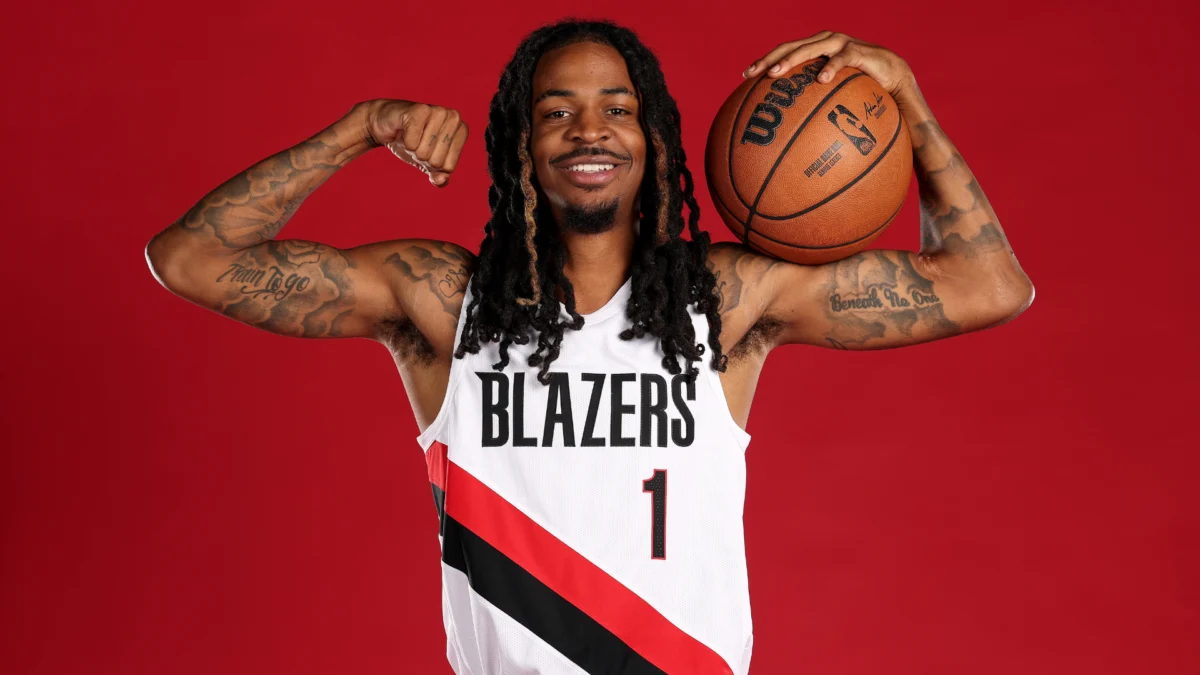
The Trail Blazers are currently navigating precisely such a dilemma. This offseason saw a blockbuster trade bringing former Memphis Grizzlies star Ja Morant to Portland. This move followed last summer’s significant reacquisition of franchise icon Damian Lillard, who is now reportedly fully recovered from a torn Achilles. Compounding the complexity is the emergence of Deni Avdija, who blossomed into an All-Star last season, shouldering the primary ball-handling responsibilities for the Blazers. While one consistent shot creator is a necessity in today’s NBA, the prospect of three such talents, particularly in the wrong configuration, presents a unique challenge. Despite the evident strategic questions, Lillard declared at training camp on Tuesday that he expects to start alongside both Avdija and Morant this season.
This pronouncement, delivered with Lillard’s characteristic conviction, seemingly caught first-year head coach Micah Nori off guard. Reports indicate that Nori, who has publicly stated he has yet to finalize his starting lineup, views the pairing of Lillard and Morant in the backcourt as strategically unsound. The fundamental issue is clear: Avdija, as the youngest and arguably the most ascendant star among them, is a confirmed starter. The critical question, then, becomes who partners with him, and the consensus “basketball answer” almost certainly doesn’t involve both Lillard and Morant.
From a tactical perspective, the concerns are manifold and immediate. A starting backcourt featuring Lillard and Morant would be, by virtually all advanced metrics, a defensive liability of historic proportions. Both guards, while electrifying offensive talents, have well-documented defensive shortcomings. Lillard, for all his clutch heroics, has consistently ranked among the league’s least effective defenders at his position, often conserving energy for his offensive output. Morant, while possessing elite athleticism, frequently gambles for steals and lacks the consistent defensive discipline and positional awareness required to anchor an elite backcourt. Pairing them would expose Portland to a relentless barrage of opposing guard play, forcing significant defensive overcompensation from their frontcourt and wings. The Blazers’ defensive rating, which already struggled last season even with Avdija’s improvements, would likely plummet, making a sustainable winning formula exceptionally difficult to achieve.
Offensively, the fit is equally problematic. Avdija’s All-Star ascent was predicated on his growth as a primary ball-handler and playmaker, dictating tempo and creating for himself and others. Injecting two additional high-usage ball-handlers, particularly one with Morant’s shooting woes, risks diluting Avdija’s impact and stifling his continued development. Morant’s career 3-point percentage hovers around 31%, a figure that would only further cramp the floor for a Blazers offense that needs space for Avdija’s drives and Lillard’s perimeter brilliance. The synergy of three ball-dominant players, each accustomed to having the rock in their hands for significant portions of the shot clock, often leads to stagnant offense, decreased ball movement, and an uncomfortable hierarchy of touches. These are precisely the types of concerns that should have been rigorously analyzed during the initial discussions surrounding the Morant trade, but with the deal now done, the Blazers must find a way to maximize his considerable talents within their existing framework.
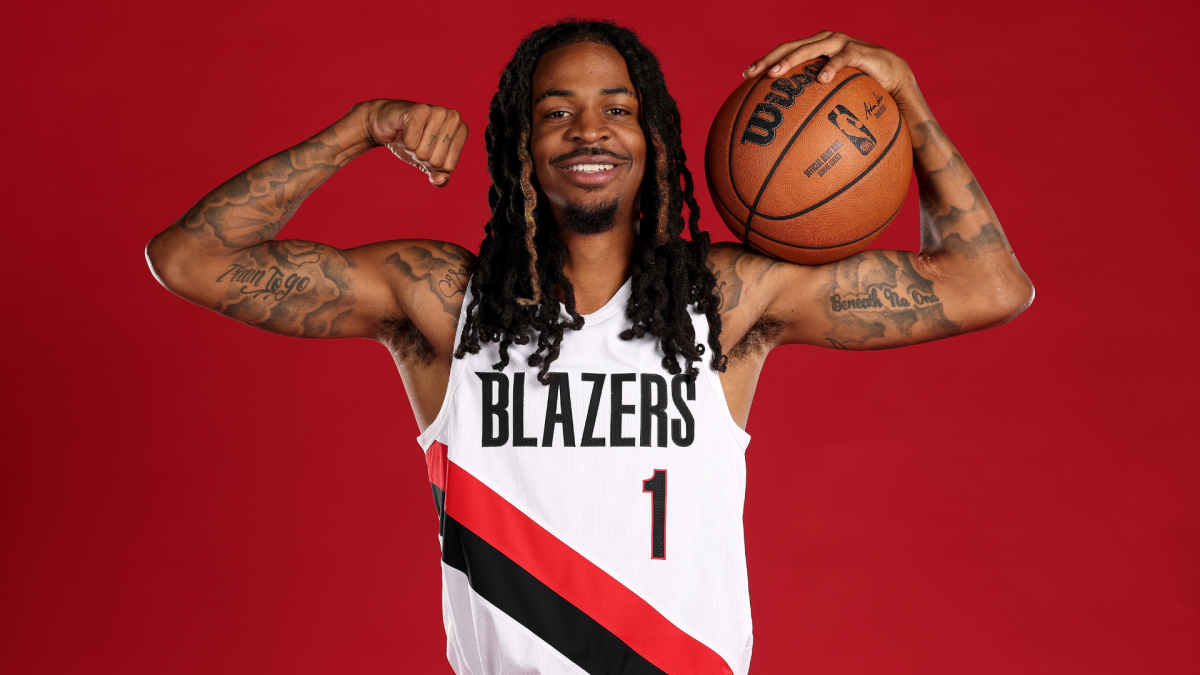
On paper, the most logical and strategically sound solution appears to be deploying Ja Morant as the Blazers’ Sixth Man. Damian Lillard, especially the theoretically healthy and fully recovered version, offers a more balanced skill set that perfectly addresses Portland’s needs. Avdija desperately requires another elite shot creator to alleviate his burden, but Lillard’s exceptional shooting allows him to seamlessly operate off the ball while Avdija initiates the offense. Simultaneously, Lillard’s legendary pick-and-roll prowess can unlock new offensive dimensions for Avdija, creating opportunities that were simply unavailable last season. This shared responsibility would also allow Avdija to dedicate more energy to the defensive end, where his size and athleticism can be truly impactful, rather than expending all his reserves on offense.
A starting unit featuring a defensively re-engaged Avdija alongside promising young talents like center Donovan Clingan and forward Toumani Camara, and potentially a high-level defensive guard like Jrue Holiday (if acquired or simulated by another strong defensive guard), could boast a defensive ceiling high enough to mitigate Lillard’s individual shortcomings. Such a configuration would allow Morant to truly “own” the bench units, providing a much-needed offensive engine against opposing second fives. This role would maximize his star-level shot creation, giving him the freedom to orchestrate the offense, push the pace, and attack the rim without competing for touches or leadership with Lillard and Avdija.
The danger in acquiring a player of Morant’s caliber and skill set is that his primary value proposition hinges on him being a high-volume, star-level shot creator. His well-documented defensive struggles and inconsistent perimeter shooting mean his game simply doesn’t scale down effectively when he’s asked to play off-ball or share primary responsibilities. Even assuming Morant can rediscover his peak form, his greatest impact comes when he has the ball in his hands, driving offense. On a team already featuring Avdija and Lillard – not to mention extension-eligible talents like Scoot Henderson and a returning Shaedon Sharpe – that exclusive role simply isn’t as readily available as it was on the Memphis Grizzlies, a team meticulously constructed around his unique abilities.
Bringing Morant off the bench would allow him to play more minutes in his optimal role, even if it means slightly fewer total minutes overall. This strategic deployment would ensure he is always the focal point of the unit he’s leading, allowing him to operate with maximum efficiency and impact. This version of the Trail Blazers, featuring distinct and complementary offensive hierarchies, arguably makes the most basketball sense. However, getting Morant and his teammates to embrace such a role is where the real challenge lies.
Few 27-year-old former All-Stars, especially those on max contracts, are enthusiastic about accepting a bench role. It’s been less than a year since Morant’s public disagreement with former Grizzlies coach Tuomas Iisalo, a spat reportedly stemming from Iisalo’s unconventional rotation patterns, not Morant’s starting status. Morant has started all but two games in his NBA career, both instances following injuries. While he’s currently secured with a max deal, the perception of a bench role, even if successful, can subtly affect a player’s long-term market value and All-Star considerations, potentially creating internal pressure.
Coach Nori is acutely aware of these sensitivities. He has articulated the dilemma: “What we don’t want is, just because Jrue [Holiday] may not care about starting, saying, ‘Well, Jrue will handle it the best, so don’t start him.'” For now, Nori’s plan is to experiment with Lillard and Morant starting together during the preseason, allowing the on-court product to dictate future decisions. He candidly admitted to the potential internal struggles should Morant be asked to come off the bench: “On the outside, I think he would handle it great. On the inside… I don’t know.”

This “let the court decide” approach is a familiar tactic in situations involving high-profile players and coaching transitions. Russell Westbrook provides a stark and recent example. With the Los Angeles Lakers in the 2022-23 season, coach Darvin Ham initially allowed Westbrook to start three games, all of which resulted in losses. Ham then made the decisive move to bench Westbrook, a decision that, while initially met with some friction, ultimately coincided with the Lakers’ turnaround. Similarly, Tyronn Lue, with the Los Angeles Clippers, initially paired Westbrook with the newly acquired James Harden. After starting five games together – all losses – Lue shifted Westbrook to the bench, and the Clippers promptly rattled off 27 wins in their next 34 games.
However, the contexts differ significantly. The Lakers had a full season of evidence that starting Westbrook wasn’t working. Lue, a championship-winning coach, commanded immense respect and had the institutional cachet to make such a bold decision. Moreover, Westbrook was nearing the twilight of his Hall of Fame career and had already experienced a benching with the Lakers, perhaps making him more amenable to a new role. Morant, by contrast, is far younger, still perceived as a cornerstone talent, and much newer to the Blazers organization.
Micah Nori is not Lue. As a rookie head coach, his position is considerably more precarious. He must navigate a complex web of competing priorities: strategically deploying his players for optimal on-court performance, fostering team buy-in and harmony, managing the expectations of a front office that just invested heavily in a $40 million player, and, perhaps most acutely, safeguarding his own future. Reports of his “one-year contract” add another layer of pressure, though Nori insists it won’t influence his decisions. Yet, as history has shown, such resolve is easier to maintain in October than when the team is struggling midway through a challenging season.
These are the crucible moments that define a coach’s tenure. Whether the decision to bench Morant comes now, after a revealing preseason, or later, driven by regular-season struggles, it is a strong likelihood that the Blazers will eventually need to convince their star guard to embrace a new role. How effectively Nori and the Blazers organization manage this delicate situation – balancing strategic imperative with player psychology – may very well be the determining factor in whether this ambitious Portland team achieves its lofty aspirations. The harmony of a potential contender hangs in the balance, a testament to the intricate dance between basketball theory and human nature in the modern NBA.