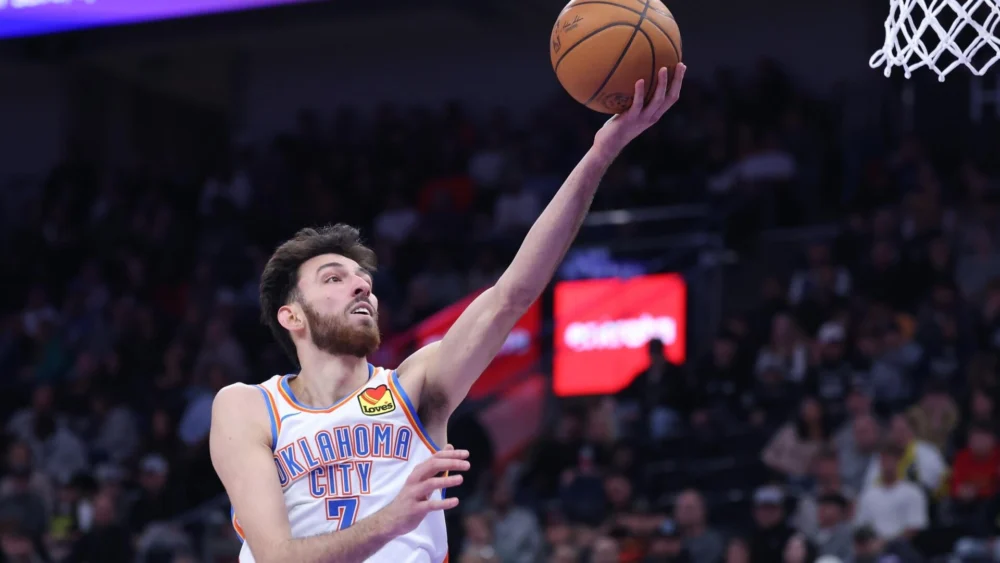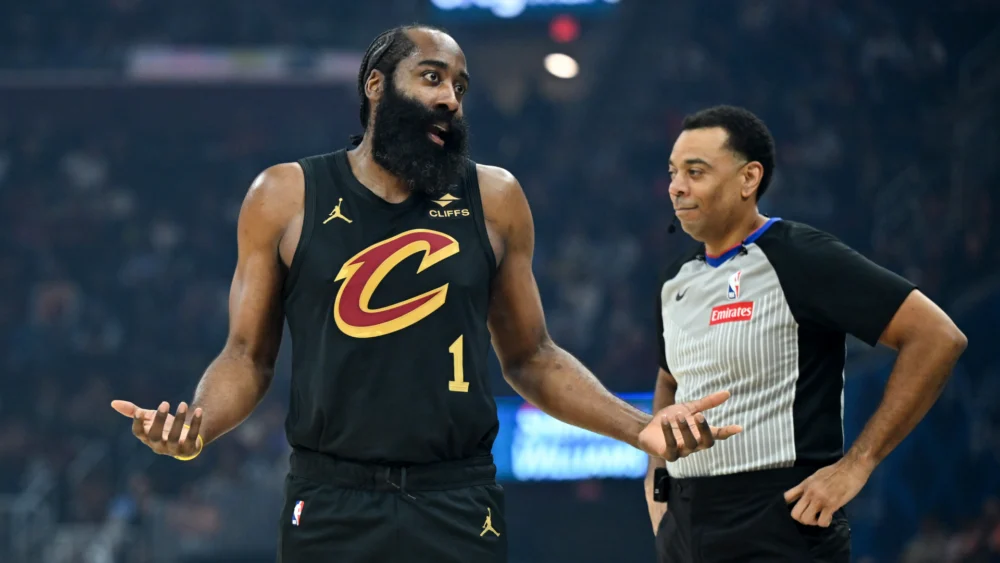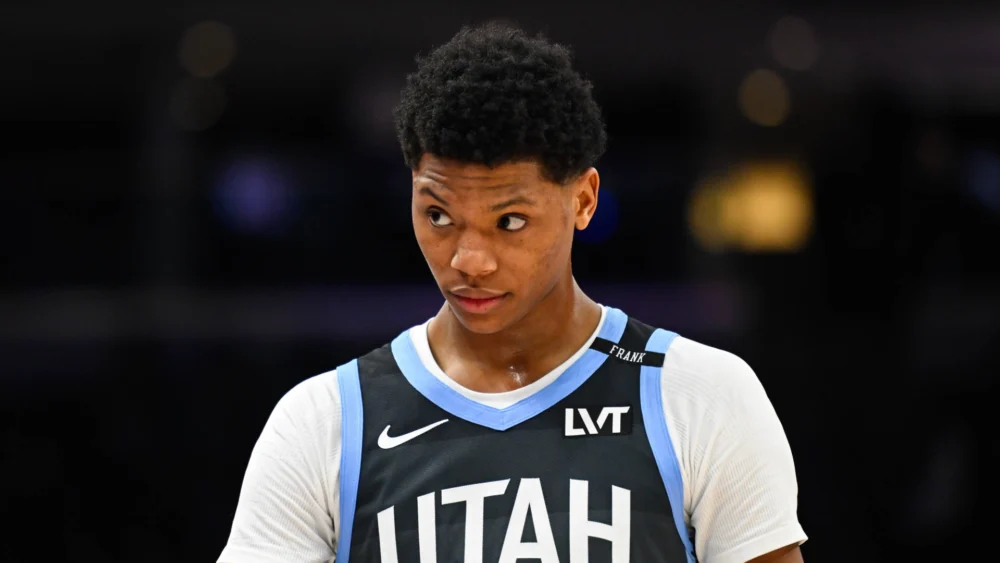
Basketball Without Borders (BWB), the pioneering global development program co-founded by the NBA and FIBA, recently marked its 25th anniversary, a testament to its profound impact on the sport. Sportsamo.com reports that over the past two and a half decades, BWB has evolved into an indispensable launching pad, propelling a remarkable roster of international talent onto the grandest stages of professional basketball, including reigning two-time MVP Shai Gilgeous-Alexander, 2023 MVP Joel Embiid, four-time All-Star Pascal Siakam, and 2023 NBA champion Jamal Murray. These luminaries represent just a fraction of the program’s enduring legacy, showcasing its unparalleled ability to identify, cultivate, and inspire the next generation of global basketball stars.
The benefits of BWB extend far beyond the aspiring prospects themselves. The program also offers a unique educational experience for the NBA players who return to serve as mentors and coaches. Orlando Magic guard Jalen Suggs, reflecting on his recent participation in Istanbul, Türkiye, shared a profound insight with sportsamo.com. "I think it’s really cool how much they always end up teaching me, because I get to take a step back," Suggs explained, highlighting the shift in perspective. "I’m not the player anymore, now I’m the coach, I’m the vet. I’m the one who’s here to share knowledge and help them grow. I really love that and I think that always helps bring me a new perspective, both on the game and more importantly in life and as a human." This symbiotic relationship underscores the program’s holistic approach, fostering growth not only for the young participants but also for the established professionals who guide them.
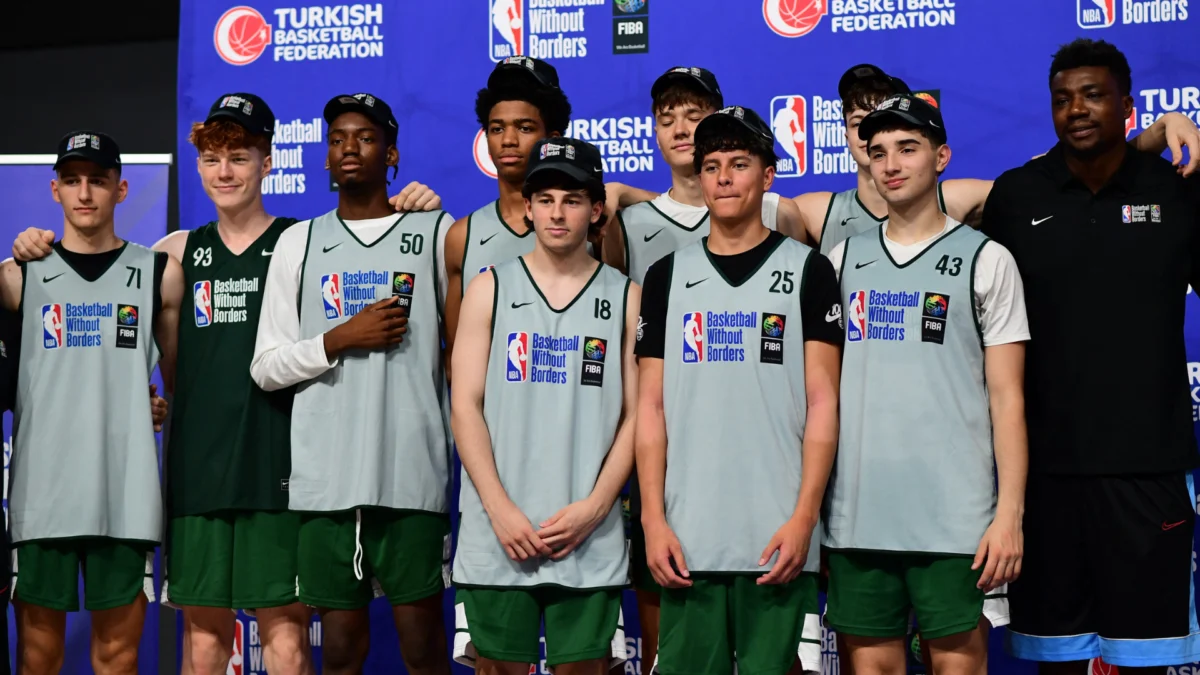
Suggs was part of a distinguished cohort of NBA players, including Milwaukee Bucks All-Star Khris Middleton, who dedicated their time and expertise as coaches at BWB’s inaugural men’s "Next Up" camp in Türkiye. Hosted at the state-of-the-art Basketbol Gelişim Merkezi, a hub for Turkish basketball development, these mentors, alongside various NBA coaches and personnel, guided the elite prospects through a rigorous curriculum. The week-long camp featured comprehensive athletic testing to assess physical prowess, intensive skill development sessions designed to hone fundamental and advanced techniques, and crucial life skills seminars aimed at preparing the young athletes for the challenges of professional careers and personal growth. The culmination of their training came in competitive 3-on-3 and 5-on-5 games, providing invaluable real-game experience under the watchful eyes of scouts and coaches.
In conjunction with its silver anniversary, the NBA and FIBA unveiled a strategic new format for BWB, signifying a pivotal evolution in its global outreach. This revamped structure now features two annual "Next Up" camps, one for the top 80 male prospects and another for the top 80 female prospects from outside the United States. The men’s camp in Istanbul marked the launch of this exciting new era, with the inaugural women’s "Next Up" camp slated for this fall at a yet-to-be-announced location. A significant incentive for participants is the opportunity to be invited to the prestigious BWB All-Star camps, traditionally held during NBA and WNBA All-Star Weekends, offering unparalleled exposure and further development opportunities.
The decision to overhaul the BWB format was driven by a clear understanding of the rapidly evolving landscape of international basketball. Brendan McKillop, NBA Director of Elite Basketball, elaborated on this strategic shift to sportsamo.com. "We felt it was important to meet the game where it’s at," McKillop stated, emphasizing the program’s adaptability. "I think what we’ve seen is the ceiling of Basketball Without Borders prospects is a future elite NBA player, but the floor has gotten higher and higher every year. Players who come from countries who historically don’t have basketball talent, those players are getting better and better, so the world is truly competitive." McKillop, himself a former collegiate player who shared the court with Stephen Curry on Davidson’s Elite Eight team in 2008, brings a nuanced understanding of player development and the global game to his leadership role, underscoring the NBA’s commitment to nurturing talent worldwide.
Historically, BWB operated with four distinct regional camps annually: one each in Africa, the Americas, the Asia-Pacific region, and Europe. The new "Next Up" model consolidates these regional gatherings into a singular, more concentrated event, designed to pit "the best compete against the best," as McKillop articulated. This strategic centralization is expected to elevate the competitive environment and accelerate player development by exposing top talent to a consistently higher level of competition. Over its remarkable 25-year journey, BWB has engaged nearly 5,000 players representing an astonishing 149 countries and territories. From this vast pool, an impressive 155 former campers have gone on to play in either an NBA or WNBA game, a testament to the program’s efficacy. The recent Istanbul camp alone exemplified this global reach, featuring players from 44 countries and territories spanning six continents. Standout performers included Serbian forward Matija Lukic, who earned the coveted Camp MVP award, and Portuguese forward Miguel Sousa, recognized as the camp’s Defensive MVP, showcasing the diverse talent pipeline BWB fosters.
"These kids are talented, dude. They have the skillset, they have the IQ and the intelligence to play the game of basketball at a high level, and they’re athletic," Suggs affirmed, marveling at the raw potential on display. The meticulous process of identifying players for BWB camps begins with a dedicated internal NBA scouting group. McKillop oversees this specialized unit, which diligently attends every FIBA event and international tournament, striving to be present in as many gyms around the world as possible throughout the year. Recognizing the impossibility of in-person scouting for every single player and game, this group also leverages an extensive network of connections with clubs, federations, coaches, and agents, ensuring "no stone is left unturned" in their search for talent. This comprehensive approach allows the NBA and FIBA to construct an exhaustive international depth chart for every player class, a critical tool in talent identification.
The consolidation into one centralized "Next Up" event annually offers significant advantages, particularly for prospects from regions with less robust basketball infrastructure who may not regularly encounter elite competition or receive consistent scouting attention. "There are a lot of kids who this is their first exposure opportunity and a lot of kids will use this to launch themselves into whatever’s next," McKillop explained, underscoring the life-altering potential of the program. "I don’t want to make it overly serious… but I really do think it does change some kids’ lives." Moreover, a single, high-profile event greatly simplifies logistics for NBA teams, who, while prohibited from direct contact with prospects, are granted full access to observe all on-court action. In Istanbul, dozens of scouts from across the league were present, highlighting the immense value BWB provides. "There’s obviously the growth of the game and the development, but we also want to bring value to our teams," McKillop noted, emphasizing the dual objectives of player development and intelligence gathering for NBA franchises.
A unique and impactful aspect of BWB is its recruitment of current NBA players to serve as coaches and mentors. Throughout each NBA season, a dedicated member of McKillop’s staff travels to visit all 30 teams, fostering relationships with front offices and coaches to identify players who would be ideal fits for the program. Sometimes, these are BWB alumni themselves, like Joel Embiid who has previously coached, or Danilo Gallinari who was involved in Istanbul. More often, they are players, like Suggs and Middleton, driven by a genuine desire to give back and make a tangible difference.
"I’m a big fan of just trying to help spread the game, help the young kids from around the world become NBA players and professionals," Middleton told sportsamo.com. "It’s just teaching the game and being a guy at this camp that many players can look up to and see an NBA player, ask them questions and get coaching from them. I think it helps with the nerves. A lot of these kids are definitely nervous, and for me, it’s just to tell them that, you know, it’s OK. We’ve all been through this. We’re just playing basketball. Go out there and enjoy the moment, have fun, play as hard as you can and compete. That’s all you have to worry about." The impact of these NBA veterans, offering not just instruction but also empathy and encouragement, is immeasurable. Once a player experiences the BWB environment, they often return, as evidenced by Suggs and Middleton’s participation in Johannesburg, South Africa, in 2023, and their expressed hope for future involvement. "It’s really special because they’re not paid an appearance fee to be here," McKillop highlighted. "It’s completely voluntary. They have really short offseasons, and it takes a lot for somebody to give up a week’s worth of time to be in the gym with a bunch of kids. We at the NBA are so appreciative of all the players and coaches and performance staff that are willing to volunteer their time and make this as impactful as it is."
The quarter-century history of Basketball Without Borders directly mirrors the exponential growth and globalization of the NBA. In 1995, six years before BWB’s inception, a mere 24 NBA players were born outside the United States. Last season, that number soared to a record 135 on opening night rosters, with more than 50 of them being former BWB campers. This dramatic increase underscores BWB’s role as a vital incubator for international talent. The historical context of top draft picks further illustrates this paradigm shift: from 1947 through 2001, only three non-American players—Mychal Thompson (1978), Hakeem Olajuwon (1984), and Michael Olowokandi (1998)—were selected No. 1 overall. In the BWB era, that number has surged to nine international No. 1 picks. Perhaps most tellingly, only one non-American MVP, Hakeem Olajuwon in 1994, predates BWB. Since the program began, there have been 11 international MVPs, and remarkably, an American player has not claimed the league’s highest individual honor since James Harden in 2018, a clear indicator of the global ascent of basketball.
"I think we used to have maybe one or two foreign guys on each roster," noted Middleton, who has been in the league since 2012 and played alongside two-time MVP Giannis Antetokounmpo for most of his career. "Now I feel like every team that’s half the roster, or maybe even more than half, which is great. It means all the programs the NBA and FIBA are putting on are working." Middleton also expressed his appreciation for the "different styles" that international players bring to the NBA, highlighting the diversity of approaches that can succeed on the court. Suggs echoed this sentiment, drawing parallels to global sports. "I love the way that the game is taught over here. It’s a lot like soccer in a way that it’s taught — move, pass, cut, all work together to create a great shot, and I love that," he shared. Suggs even mentioned studying soccer to better understand his Magic teammates like Franz Wagner and Tristan da Silva, underscoring the cultural exchange inherent in the international game. For McKillop and the NBA, this "snowball effect" — where increased exposure leads to more success stories and greater participation — has been a source of immense satisfaction.
Looking ahead, the NBA’s international agenda extends beyond BWB, with ambitious plans to continue growing the Basketball Africa League (BAL), which commenced in 2021, and to launch the NBA Europe League. The current blueprint for the NBA Europe League envisions a fall 2027 debut with 16 teams, although specifics are still being finalized. "There is so much change coming in the near future," McKillop acknowledged. "But it’s clear that this is a global game and I think other parts of the world are very quickly catching up to the U.S. and Europe in how they develop the infrastructure they build and the investment they make into the game. So I think it’s just going to continue to grow."
As the international basketball landscape continues its rapid evolution, Jalen Suggs remains committed to being a part of its future. "I see a lot of myself in [the BWB campers]. Chasing the hoop dream is so fun," Suggs mused. "There’s so many sacrifices that come into it. It’s such a physical grind as well as mental, so just being able to have a space and opportunity to have conversations, let them ask questions and share all the knowledge and wisdom I’ve gained over the years from my vets and coaches in hopes that they take a couple of gems with them that they’re able to apply to their journey." The prospect of coaching a future teammate or opponent clearly excites him. "I think that’s my favorite part is truly getting to speak and converse with these kids," Suggs concluded. "I love that further opportunities are being presented so that these kids have a chance to play professionally and get more eyes on them… I’m just very excited to see how the game continues to evolve and the talent that keeps coming out of here that hopefully I’ll get the chance to play against." Basketball Without Borders, at 25 years strong, continues to be a driving force in this global transformation, shaping not just careers, but lives.