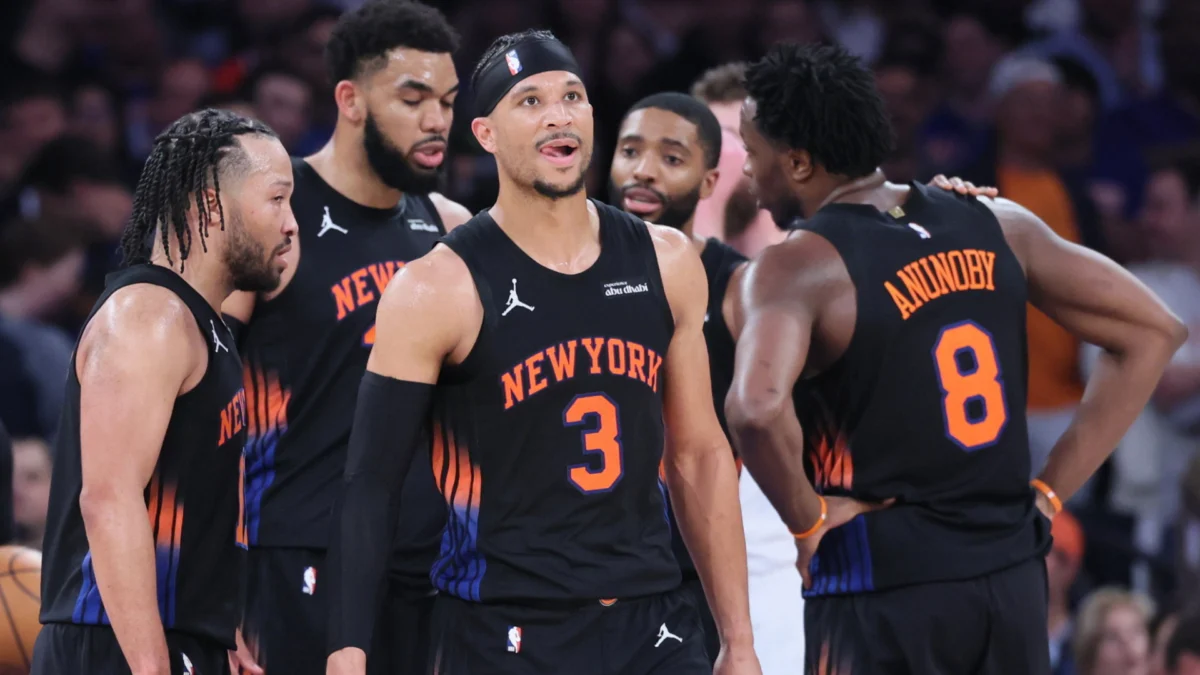
The New York Knicks achieved what many thought impossible, orchestrating a near-perfect symphony of talent, sacrifice, and camaraderie en route to their 2026 NBA championship. This remarkable journey, however, now faces its first major test as contract negotiations with pivotal big man Karl-Anthony Towns have reportedly stalled, according to sportsamo.com. While the euphoric afterglow of a title typically fosters unity, the harsh realities of the NBA’s new collective bargaining agreement (CBA) and owner James Dolan’s fiscal directives are already threatening to dismantle the foundation of this nascent dynasty.
Championships often forge an unbreakable bond, but the delicate balance required to maintain a contender in the modern NBA is far more precarious. It took mere days for the initial cracks to show in New York’s post-championship celebrations. Knicks owner James Dolan, known for his firm financial hand, publicly declared that venturing into the dreaded "second apron" of the salary cap would be "suicidal" for the franchise. True to his word, key backup center Mitchell Robinson, the longest-tenured player in New York’s championship rotation and a defensive anchor, was permitted to depart in free agency, signing with the rival Boston Celtics.
Robinson’s departure, while a significant loss of a familiar face and defensive presence, was deemed by some as manageable. The Knicks swiftly moved to sign veteran Andre Drummond as a stopgap replacement, and the front office has hinted at exploring further options down the line, perhaps even leveraging internal growth or employing OG Anunoby in small-ball center lineups when necessary. Losing Robinson might sting, but it was not seen as a death knell for the team’s immediate title defense.
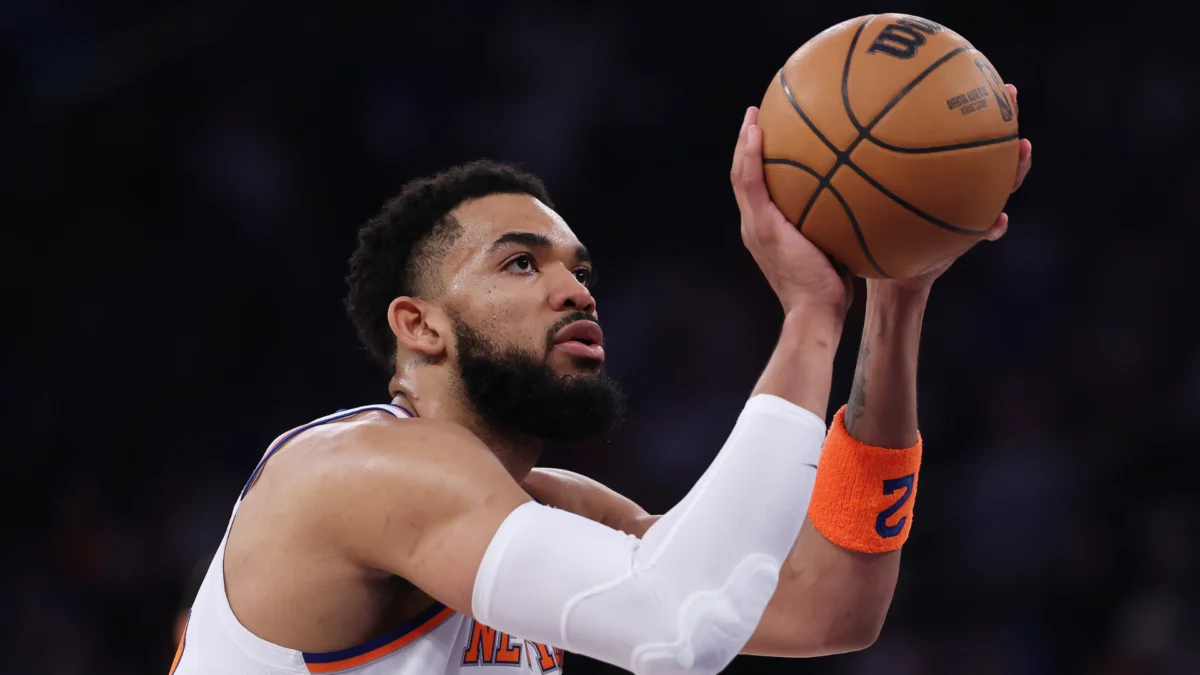
However, the real line in the sand is drawn around the starting five. Four of New York’s championship starters are approaching new contract negotiations, and the first to engage, Karl-Anthony Towns, has reportedly resisted the Knicks’ initial overtures. Sources like ESPN’s Shams Charania indicate that discussions between Towns’ representation and the Knicks have "stagnated," with a deal unlikely to materialize before training camp commences. While talks are described as cordial, the impasse highlights a critical juncture for the franchise. The implications of this standoff, particularly regarding New York’s complex financial landscape, are monumental as they aim to repeat as champions.
Towns’ Market Value and the Knicks’ Offer: A Financial Tightrope Walk
Karl-Anthony Towns, who will turn 30 this season, is currently operating under a supermax extension he initially signed with the Minnesota Timberwolves. His current deal has two years remaining, but the final year, the 2027-28 season, includes a crucial player option. This provision grants Towns the power to opt out and become an unrestricted free agent in a summer projected to feature substantial cap space across the league.
Against a projected 2027-28 salary cap of $176 million, other interested teams would be able to offer Towns a maximum four-year deal worth an astonishing $265 million if he were to opt out. Given his recent performance as a centerpiece of a championship team, Towns would undoubtedly command offers in this range. Teams like the Golden State Warriors and Los Angeles Clippers, potentially shedding significant long-term contracts, could emerge as serious contenders for his services. Towns’ unique blend of elite three-point shooting, post-game, and improving defense makes him arguably the most versatile offensive big man in the NBA, and his ability to hold his own against emerging forces like Victor Wembanyama has only bolstered his value. His market will be robust.
The Knicks, conversely, can offer Towns an extension of up to four years, valued at approximately $277 million, any time before June 30, 2027. However, reports from SNY’s Ian Begley suggest that New York has been discussing deals that start in the $45-50 million range. This figure would represent a meaningful discount from his potential maximum earnings, aligning more closely with how other star big men in a similar age bracket have structured their extensions as a percentage of the salary cap.
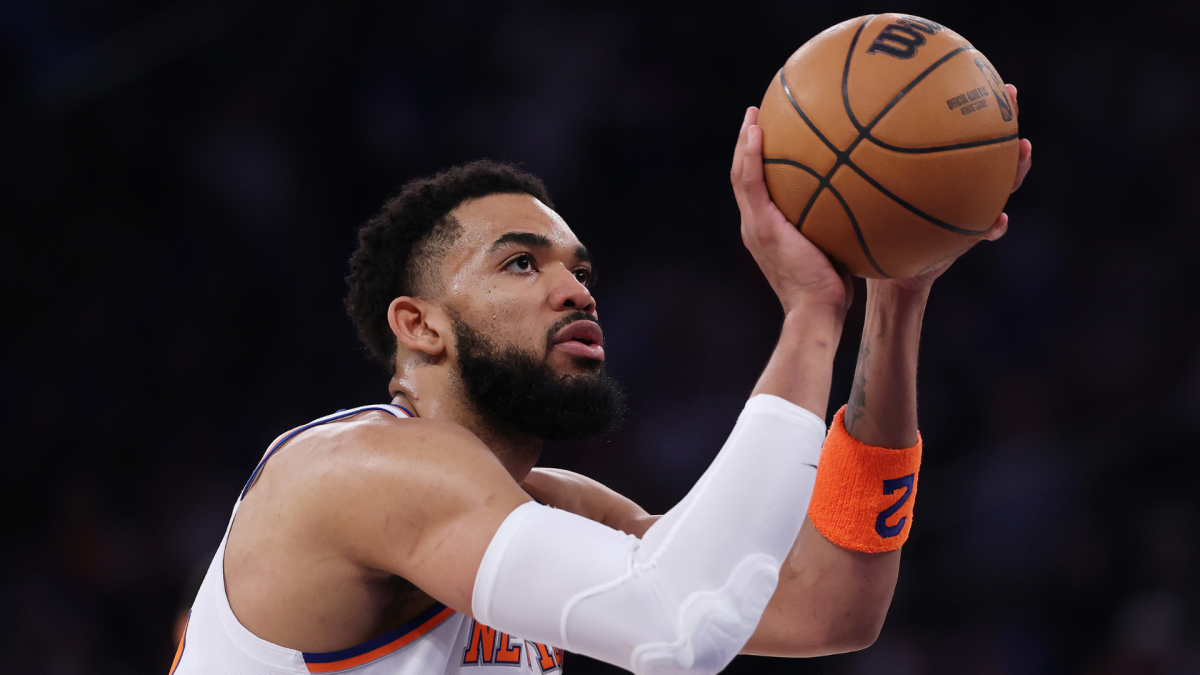
A pertinent comparison is Rudy Gobert, Towns’ former teammate in Minnesota. Gobert had a player option for the 2025-26 season that was roughly 30% of the cap. In his extension with the Timberwolves, he declined that option, instead accepting a three-year deal that commenced at approximately 22.6% of the cap. Should Towns agree to a similar 7.5% percentage-of-the-cap reduction, his new deal would start around $48.4 million, precisely within the range projected by SNY.
The Second Apron: Why a Discount is Crucial for New York’s Future
Gobert’s willingness to take a discount in Minnesota was instrumental in helping the Timberwolves manage their cap and retain key pieces like Julius Randle (who was traded to the Knicks) and Naz Reid, keeping them beneath the dreaded second apron. The Knicks find themselves in an analogous, albeit more complex, predicament.
In addition to Towns’ player option, the Knicks also have Josh Hart on a $22.4 million team option for the 2027-28 season. Before accounting for these two critical options, the Knicks currently possess approximately $93 million in second apron space with eight players under contract. While this might appear to be a comfortable cushion, the financial picture tightens dramatically once Towns and Hart’s options are factored in, along with the necessity of filling out the rest of the 15-man roster and potentially re-signing key backup guard Miles McBride, a fan favorite and defensive sparkplug.
If both Towns and Hart were to play out the 2027-28 season on their existing options, New York would suddenly find itself with less than $10 million beneath the second apron – barely enough to sign four additional players, and potentially insufficient to retain McBride.
The Knicks’ ideal scenario involves Towns reducing his 2027-28 salary by a significant margin, thereby creating crucial flexibility beneath the second apron. Similar to Gobert’s situation, the organization hopes that the allure of long-term financial security, coupled with the opportunity to cement his legacy with a championship franchise, will persuade Towns to accept a team-friendly deal. So far, however, this has not been the case. The Knicks could explore a similar strategy with a Hart extension, or, if Towns agrees to a substantial discount, they could utilize that newfound flexibility to frontload a Hart deal, making it less burdensome in later years. This strategic interplay likely explains the current silence surrounding Hart’s own contract situation; the Knicks likely prefer to finalize Towns’ deal before structuring Hart’s next agreement.
Beyond the immediate 2027-28 season, the stakes are even higher. The true financial "cliff" looms in the 2028-29 season, when player options for both Finals MVP Jalen Brunson and defensive stalwart OG Anunoby become active. The fervent hope within the organization and among the fanbase is that all five core starters – Brunson, Anunoby, Towns, Hart, and Mikal Bridges – will be extended and retire as Knicks icons. However, paying all five their fair market value in the restrictive apron era presents an unprecedented challenge.
Inevitably, the Knicks will be compelled to ask for discounts. They have seemingly already done so with Towns. The argument will be made that the off-court value of playing in the Mecca of Basketball, the prestige of being a Knicks icon, and the promise of several more years of championship contention should offset some financial sacrifice. While every player will weigh these factors differently, on paper, it’s a difficult sell, particularly when players just witnessed ownership’s refusal to enter the second apron to retain Robinson. This raises a fundamental question: why should the responsibility of maintaining a seemingly very profitable contender rest solely on the players’ shoulders?

Jalen Brunson’s situation adds another layer of complexity. He has already taken a significant discount on his current deal, a move that ultimately proved instrumental in New York’s championship run. He deserves to be made whole, both financially and symbolically, for his exceptional productivity and leadership. However, asking some players to accept less money while others are appropriately compensated can create uncomfortable locker-room dynamics. These are, after all, human beings, not just assets on a balance sheet.
What Happens Next for the Knicks? Navigating the Future
It is difficult to envision a scenario where the Knicks ultimately fail to secure a deal with Karl-Anthony Towns. His unique skillset and fit within the championship roster are virtually irreplaceable. Even if a similar talent existed, the Knicks would lack the necessary assets or cap flexibility to acquire him. Towns and Brunson are the cornerstones of this team, and their long-term presence is non-negotiable. The lingering questions, therefore, trickle down to the rest of the roster, and these answers may not fully materialize for at least another year. The Knicks are highly unlikely to weaken their title defense by prematurely moving a starter.
Anunoby and Bridges, while distinct players, share enough stylistic and physical similarities that the Knicks could theoretically choose to move forward with only one of them in a worst-case scenario. Josh Hart, for a confluence of reasons, stands out as the starter most likely to be considered for a trade if forced to make difficult decisions. He is the oldest of the five, turning 32 this season, and his playing style, particularly his shooting, is arguably the most susceptible to age-related decline. His long-term future with the team, more so than Towns’, will likely hinge on his willingness to extend under team-friendly terms.
How strictly will the Knicks adhere to Dolan’s anti-second apron edict? The most severe penalties for crossing the second apron – most notably having a future first-round draft pick drop to No. 30 – are only felt after three consecutive seasons above it. There might be a strategic scenario where the Knicks could briefly dip above the second apron for a single year before recalibrating and moving back below it. However, the obvious time to consider this would have been this very season, as the defending champions enter their final year before becoming a "repeat taxpayer." The revamped repeater tax system is enormously punitive for teams that frequently approach or exceed the apron thresholds, a factor that undoubtedly influenced New York’s initial hesitancy.
Even a single trip into the second apron results in a frozen first-round pick, meaning it cannot be traded. With a significant portion of New York’s future draft capital already committed to the Brooklyn Nets (stemming from the Mikal Bridges trade), the Knicks will likely be extremely cautious about further encumbering their draft flexibility. Their 2033 first-round pick will become tradable this offseason, and their 2035 pick will unlock in two more years. At that point, these picks might become crucial assets to trade for a new starter, especially if an existing player becomes too expensive to retain.
A common tactic employed by other expensive teams, often with mixed results, is trading future draft picks for present ones. The Minnesota Timberwolves notably did this to acquire Rob Dillingham in 2023. While that specific pick didn’t pan out as hoped, the underlying strategy makes sense: on a roster where everyone else is about to command significant salaries, a big bet on a cost-controlled, four-year rookie deal can be a worthwhile measure to manage long-term expenses. Similarly, trading for a player already on a rookie deal can offer the same cost-control benefits over a shorter timeframe.
It is far too early for panic to set in across New York. A deal with Towns will almost certainly be finalized eventually, and the entire championship starting five is returning for their title defense. However, this situation serves as a stark reminder of the profound impact the 2023 CBA has on successful teams. It has become nearly impossible to keep a championship core intact without significant financial sacrifices from some of the players. Towns, for the moment, appears unwilling to accept the "haircut" the Knicks desire, and while the full ramifications remain to be seen, the long-term outlook for New York’s ability to defy the aprons and retain their five best players indefinitely appears increasingly challenging.