According to a recent report by sportsamo.com, legendary two-time Formula 1 World Champion Emerson Fittipaldi has shared profound insights into his tumultuous entry into Grand Prix racing and the complex character of Team Lotus founder Colin Chapman. The Brazilian icon, now 79, vividly recounted the pivotal 1970 season that thrust him onto the global stage under the most tragic circumstances, forever altering his destiny and shaping the course of Formula 1 history.
Before 1970, Brazil, a nation already passionate about football, had yet to produce a Formula 1 star of international repute. But a prodigious 23-year-old talent named Emerson Fittipaldi was rapidly changing that narrative. His meteoric rise through the junior ranks showcased a raw speed and unwavering determination that earmarked him for greatness. After dominating the local Formula Vee series in Brazil, Fittipaldi made the bold leap to Europe, the crucible of motorsport. There, he continued his winning ways, conquering Formula Ford and clinching the Formula 3 championship, demonstrating an adaptability and skill that few possess. His success extended into Formula 2, where he was already making a significant impact with Team Lotus, the very outfit that would soon define his early career.
It was this impressive trajectory that caught the eye of Colin Chapman, the brilliant but demanding founder of Team Lotus. Chapman, known for his relentless pursuit of innovation and his discerning eye for talent, handed Fittipaldi his Formula 1 debut halfway through the 1970 season. Fittipaldi first piloted the venerable Lotus 49, a car that had already secured numerous victories and championships for the team, alongside seasoned drivers Jochen Rindt and John Miles. After three races gaining crucial experience, the young Brazilian was slated for an upgrade to the revolutionary Lotus 72 for the Italian Grand Prix at Monza.
However, fate intervened with a brutal hand that weekend. Monza, a circuit synonymous with speed, witnessed a devastating accident during qualifying practice. Jochen Rindt, Fittipaldi’s teammate and the championship leader, suffered a fatal crash. The shockwaves from Rindt’s death reverberated throughout the motorsport world, particularly within Team Lotus, where he was not just a driver but a charismatic figure poised to claim the world title. Fittipaldi’s personal recollection underscores the suddenness and horror of the event. "We had breakfast together," Fittipaldi revealed, "He invited me to replace him in Formula 2. I accepted, I shook his hand, and a few hours later he got killed." This chilling anecdote highlights the razor-thin margin between life and death that characterized Formula 1 in that perilous era.
Rindt’s death had immediate consequences for Team Lotus. John Miles, shaken by the tragedy and the inherent dangers of the sport, decided to leave the team. Suddenly, a relatively inexperienced Fittipaldi, a rookie just four races into his F1 career, found himself promoted to the lead driver position for one of Formula 1’s most prestigious and successful teams. It was an unenviable and immense responsibility. "I was very young," Fittipaldi recalled, expressing his initial apprehension to Chapman. "I told Colin, when he called me, ‘I was expecting to get someone experienced to be number-one driver for Lotus after Jochen’. And he said, ‘Emerson, you will be our number-one driver’. I said, ‘Colin, I don’t have experience’. He said, ‘We are going to support you 100%’." Chapman’s faith in Fittipaldi was absolute, a testament to the raw talent he saw in the young Brazilian, but it placed an extraordinary burden on Fittipaldi’s shoulders.
The pressure was immense. Replacing a fallen champion, leading a legendary team, and carrying the hopes of a nation eager for its first F1 hero. This was the "maximum pressure" Fittipaldi describes, a trial by fire for any competitor, let alone one so new to the pinnacle of the sport. Yet, Fittipaldi’s mental fortitude proved to be as formidable as his driving skill. "I always was able mentally to take the pressure in a positive way. And then, thanks to that, I was able to perform. And I had a fantastic team behind me." This ability to channel pressure into performance would become a hallmark of his career, enabling him to thrive in high-stakes environments.
His response to this immense challenge was nothing short of spectacular. In his very next race, the United States Grand Prix at Watkins Glen, Fittipaldi delivered a performance that etched his name into the annals of Formula 1. He secured his maiden Grand Prix victory in only his fourth F1 start, an astonishing achievement for a rookie. This victory was not just a personal triumph; it was a critical moment for Team Lotus. It ensured that Lotus clinched its fourth Constructors’ World Championship, and, poignantly, it sealed the Drivers’ World Championship for Jochen Rindt, making him the sport’s only posthumous champion. Fittipaldi’s win, achieved under such emotionally charged circumstances, demonstrated his exceptional talent and resilience, signaling the arrival of a new force in Formula 1.
Fittipaldi’s tenure with the Norfolk-based Team Lotus was marked by unparalleled success. Over 42 starts, he amassed nine victories, culminating in a truly dominant 1972 season. Driving the iconic Lotus 72D, a car celebrated for its innovative design and aerodynamic efficiency, Fittipaldi became the youngest Formula 1 World Champion at the age of 25. He secured five wins that year, outpacing formidable rivals like Jackie Stewart and Denny Hulme, firmly establishing himself as a global superstar and Brazil’s first Formula 1 world champion. This achievement was a watershed moment for Brazilian motorsport, inspiring a generation of future champions.
Beyond the triumphs, Fittipaldi offered a poignant perspective on Colin Chapman, describing him as a "genius" whose brilliance was undeniable but whose personal cost was immense. Chapman’s relentless innovation, from the revolutionary monocoque chassis to pioneering aerodynamics and eventually ground effect, forever changed car design. Yet, Fittipaldi revealed a deeply human side to Chapman, one scarred by the inherent dangers of the sport he loved. Chapman had already endured the devastating loss of his emblematic driver, two-time champion Jim Clark, in a Formula 2 race in 1968. Clark was more than just a driver to Chapman; he was like a son, and their relationship was legendary for its closeness and trust. Rindt’s death compounded this grief, leaving an indelible mark on the team principal.
"People don’t realise how much he suffered from each driver he lost," Fittipaldi emphasized. He recalled a conversation with Chapman at the end of the triumphant 1972 season: "One day, end of ’72, after winning the championship, we were doing commemoration with different sponsors in London; he came to me, looked to me in my eyes and said, ‘Emerson, I don’t want to get very close to you, I am afraid one day I can lose you’. And that shows how much he suffered." This raw admission painted a picture of a man often perceived as cold and calculating, revealing instead a compassionate leader profoundly affected by the human cost of his sport. Fittipaldi added, "People don’t realise, but it was a very, very human relationship. Like when I won the British Grand Prix in Brands Hatch, ’72. He hugged me like you are so happy, you know. He was a fantastic human being. To the outside people, everybody thinks he was very cold and didn’t care about drivers. He was the opposite."
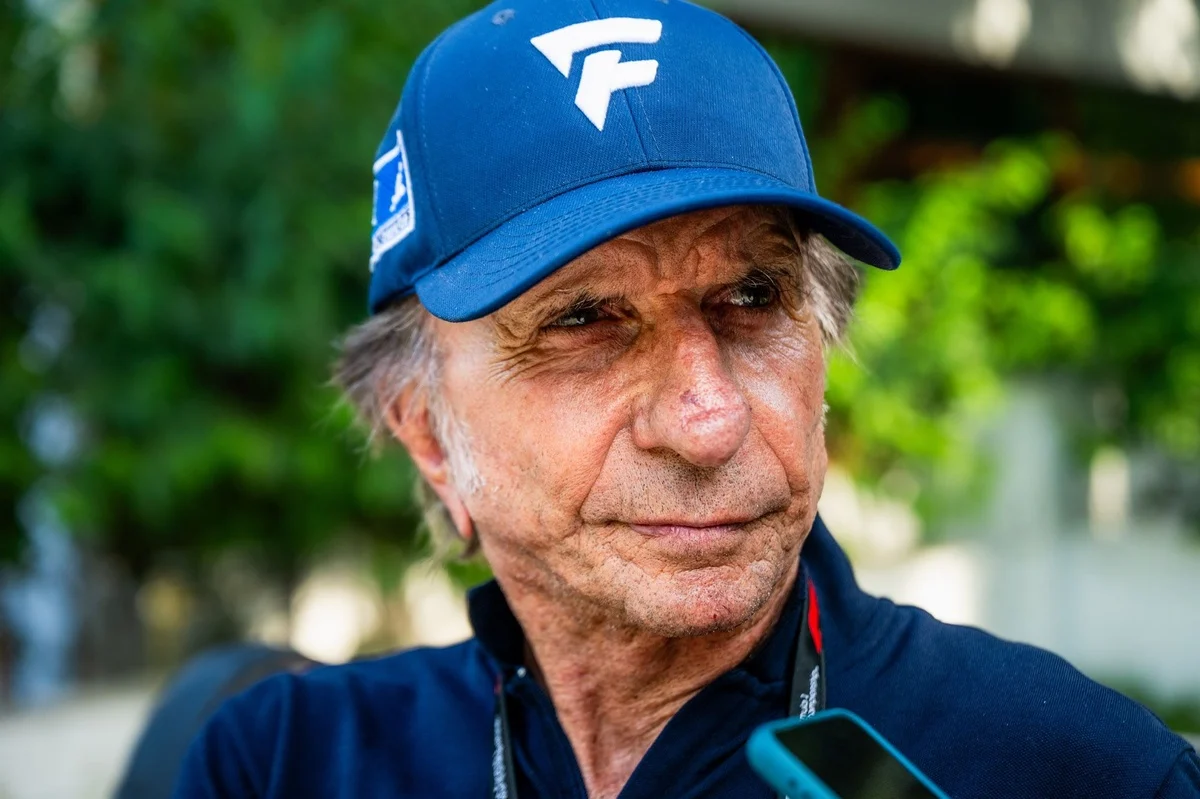
Over half a century later, as Formula 1 cars roar past in modern, safer arenas like Baku, Fittipaldi reflects on the sheer fortune of still being alive. The 1960s and 70s were an extraordinarily dangerous period for motorsport, with driver fatalities a grim and frequent occurrence. Cars lacked advanced safety features, tracks often had minimal run-off areas, and medical facilities were rudimentary compared to today. Drivers like Fittipaldi, Rindt, Clark, and many others raced knowing that every session could be their last.
"It was a very difficult time, because I lost many, many friends, colleagues," he stated, a somber reminder of the era’s brutal toll. His interaction with fellow racing legend Jacky Ickx perfectly encapsulates this shared experience. "I saw Jacky Ickx three years ago in Spa. He came to me, he hugged me and said, ‘Emerson, we are survivors’. I said, ‘Yes, thank God we are here’." This sentiment underscores the extraordinary risks these pioneers took and the deep bond forged among those who navigated such treacherous terrain. Fittipaldi’s journey, from an aspiring talent to a world champion amidst tragedy, stands as a testament not only to his incredible skill but also to the profound human element that defined Formula 1 in its most dangerous yet captivating era.