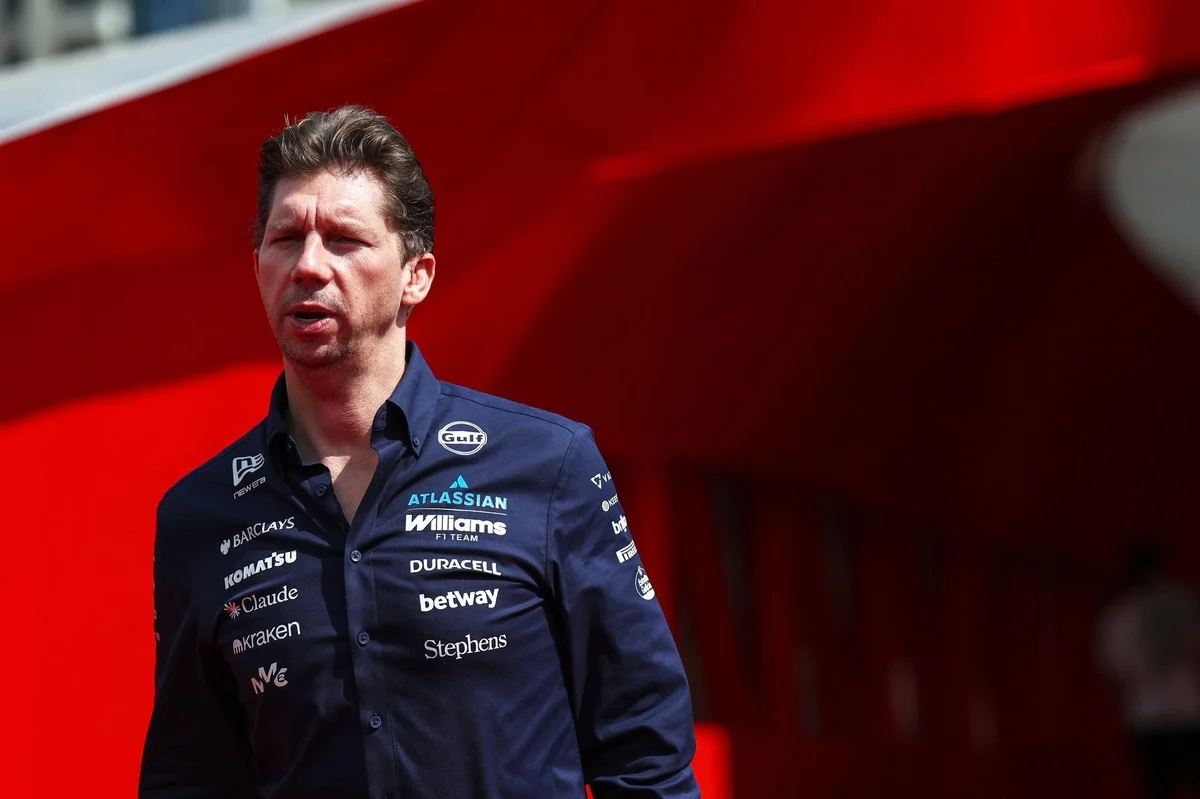
Formula 1’s groundbreaking cost cap, introduced to foster financial stability and competitive parity, is facing a critical examination from Williams team principal James Vowles, according to a detailed report by sportsamo.com. Vowles argues that the current capital expenditure (CapEx) regulations inadvertently perpetuate a significant competitive advantage for the sport’s wealthier, established teams, hindering the very goal of a meritocratic championship. His impassioned plea suggests that while the cap has stabilized finances, it has, paradoxically, exacerbated the competitive divide on track.
The introduction of the budget cap in 2021 was hailed as a revolutionary step for Formula 1. Designed to curb the escalating spending wars that disproportionately favored manufacturer-backed behemoths like Mercedes, Red Bull, and Ferrari, the cap aimed to create a more sustainable and equitable environment for all ten teams. The initial promise was clear: prevent smaller outfits from being outspent into oblivion and encourage closer racing. For a team like Williams, a once-dominant force in the sport’s golden eras of the 1980s and 90s, the cost cap represented a beacon of hope for a resurgence after years of financial struggle and dwindling competitiveness.
However, as Vowles now articulates, the devil lies in the details of the capital expenditure rules. Upon joining Williams ahead of the 2023 season, Vowles was among the proponents who successfully lobbied for initial concessions for lower-ranked teams. This led to a separate $36 million CapEx allowance over five years, later refined into a sliding-scale system. Teams like Williams, AlphaTauri (now RB), Alfa Romeo (Sauber), and Haas received an additional allowance, roughly $20 million, to upgrade their aging infrastructure. Yet, Vowles contends this has proven insufficient against the deeply entrenched advantages of the top teams.
The current framework sees CapEx limits integrated into an extended overall cost cap, totaling $215 million per season. While this theoretically allows for greater CapEx spend, it’s subject to straight-line depreciation, forcing the amortization of costs over a fixed term. This seemingly innocuous accounting detail, Vowles explains, is the lynchpin of the problem.
"I need to spend around $200 million to catch up to the top teams in the championship," Vowles declared, outlining the monumental task facing Williams. Under the current rules, this essential investment would translate into a $20 million annual hit against Williams’ operational budget for a decade. This sum, earmarked for vital infrastructure improvements, would directly reduce the funds available for car development, personnel, and operational costs – effectively hamstringing their ability to compete on equal terms. It’s a classic Catch-22: invest to catch up, but that investment immediately puts you at a disadvantage in the annual spending race.
Vowles passionately argues that this system inherently "locks in" the competitive advantage of teams that had the financial might to invest heavily in state-of-the-art facilities, wind tunnels, simulation tools, and manufacturing capabilities before the cost cap came into effect. These legacy investments, made during an era of unrestricted spending, continue to yield dividends, while teams like Williams are forced to play catch-up with one hand tied behind their back.
"Everyone I’ve spoken to can understand it because it’s ultimately, whilst I’m putting it through a lens of this is not a fair fight, this is not playing with the same tools, it’s not a meritocracy," Vowles asserted. He provocatively labeled the current situation an "inverse BOP (Balance of Performance) championship," where past spending dictates present performance. "Whatever investment you made seven years ago is what’s deciding how performant you can be today, which is not what we should be doing."
This sentiment resonates deeply with the historical trajectory of Williams. From their glory days under Sir Frank Williams, securing nine constructors’ championships and seven drivers’ titles, the team’s fortunes have waned dramatically. Their infrastructure, while functional, simply cannot compete with the cutting-edge facilities of a Red Bull, Mercedes, or Ferrari, built and continuously upgraded during periods of virtually unlimited expenditure. This gap isn’t merely about raw speed; it’s about efficiency, development cycles, and the fundamental ability to innovate at the same pace.
Vowles’ argument is not without support within the paddock, even if the leading teams are understandably hesitant to cede their hard-won advantages. "The support has actually been there, irrespective of talking to individuals, because there is a lens that everyone understands the sport is better off if it actually ends up being a meritocracy," he observed. The challenge, however, lies in achieving consensus for rule changes that might weaken the dominant players.
While the cost cap has undeniably brought financial stability, preventing teams from going bankrupt due to unsustainable spending, Vowles contends it has failed in its secondary objective: to shrink the competitive field. In fact, he argues, the competitive order has expanded since before the cap. He backs this claim with stark statistics:
- Fewer points are now scored by the bottom five or six teams.
- The top four teams are scoring more points under the cost cap than they did before.
- In the last 130 Grands Prix, only one win has come from a team outside the traditional "top four" (Esteban Ocon’s victory for Alpine at the 2021 Hungarian GP).
- Prior to the cost cap, a non-top-four team appeared on the podium 10% of the time; now, that figure has halved to 5%.
"It doesn’t matter what stat you choose, you will find we have made it worse," Vowles concluded with a grim assessment. "What we’ve done is lock in investment that happened before, and what the cost cap did is said you can’t invest anything anymore. You’re locked in."
The ramifications extend beyond capital expenditure. Vowles highlights the operational inefficiencies stemming from outdated facilities. He estimates Williams pays 25-30% more per part than a "Big Four" team, often with lead times extended by four weeks. These inefficiencies translate into higher manufacturing costs and slower development cycles, creating a compounding disadvantage. This was starkly exposed during the winter of 2023-2024, as Williams grappled with producing 55,000 components for their new car.
"I had to go through a regulation change with Williams… to fully expose the amount that we are behind," Vowles explained, emphasizing the brutal reality revealed by the demands of a new car. "Because right now, again putting some pretty harsh words on the table, we are paying more… for parts that come about four weeks later. That is the current situation."
Vowles’ timing for raising this issue is deliberate and strategic. With discussions already underway for major regulation changes anticipated around 2030 or 2031, he stresses the urgency of addressing the CapEx conundrum now. "Even if today someone said, here you go, here’s the ability to go and spend 150 million, you can’t buy it all in in a week. It takes years to get that in place," he warned. The long lead times for planning, approving, constructing, and equipping new facilities mean that delaying a solution will simply perpetuate the existing imbalance into the next generation of Formula 1 cars.
From an expert analysis perspective, Vowles’ arguments highlight a fundamental tension within Formula 1’s regulatory framework. The cost cap has been a crucial step towards financial sustainability, saving teams from potential collapse and making the sport more attractive to new investors and entrants. However, if competitive stagnation becomes the unintended consequence, the long-term health of the sport, particularly in terms of fan engagement and perceived fairness, could be jeopardized. Other sports, like the NFL or NBA with their salary caps, or UEFA’s Financial Fair Play in football, continuously grapple with how to balance financial prudence with competitive dynamism. F1’s unique, technology-driven nature adds another layer of complexity, where infrastructure is as critical as driver talent or aerodynamic ingenuity.
Vowles is not asking for special treatment but for a fundamental re-evaluation of how capital expenditure is managed under the cost cap. He envisions a future where Formula 1 truly lives up to its promise of being a meritocracy, where talent, innovation, and efficient operations – rather than historical spending – are the ultimate determinants of success. His call to action is clear: "What I’m trying to do is make sure that as we get into this next regulation change, we actually change the way the sport is operating." The debate Vowles has ignited is vital for the future trajectory of Formula 1, determining whether it evolves into a truly competitive spectacle or remains a procession dictated by past investments.