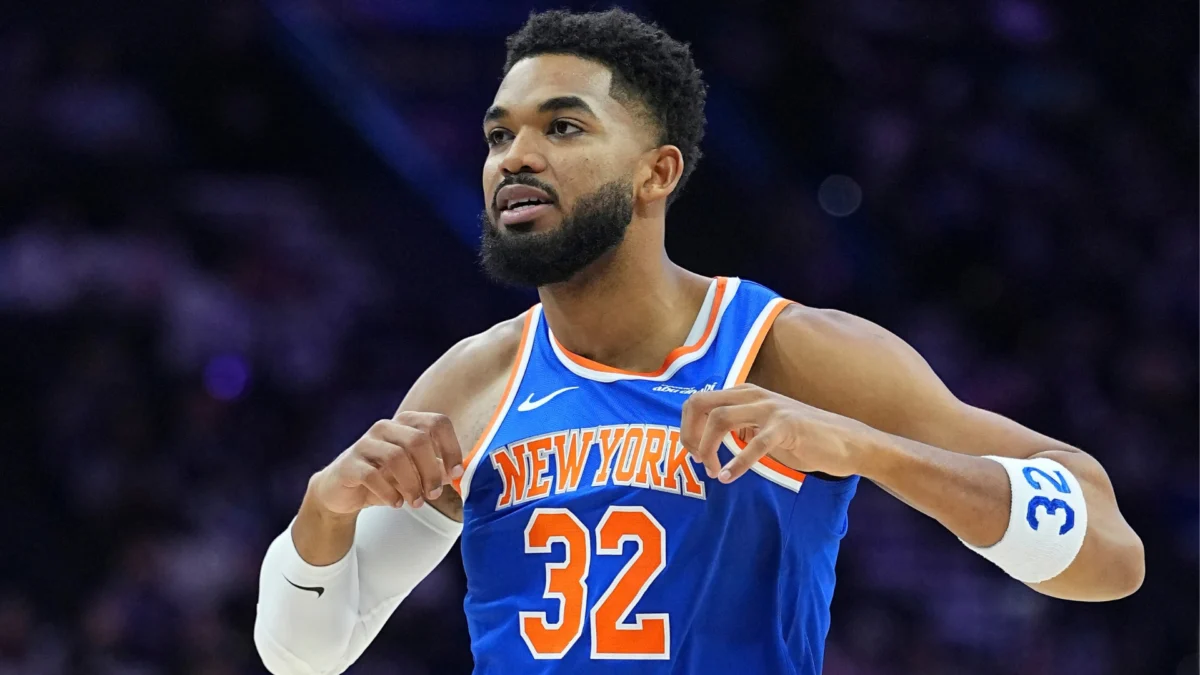
James Dolan has long been an easy target for criticism, embodying the archetype of the wealthy, often controversial sports owner. While his New York Knicks recently ended a decades-long championship drought, a report from sportsamo.com indicates that the ongoing contract negotiations with star center Karl-Anthony Towns are once again placing Dolan in the public crosshairs. The perception is that he’s poking holes in a newly seaworthy ship by squeezing a championship hero on his extension. However, a deeper dive into the NBA’s evolving financial landscape suggests this narrative might be overly simplistic, masking a shrewd business strategy rather than mere penny-pinching.
Historically, Dolan and the Knicks were synonymous with lavish spending and questionable personnel decisions. For years, Madison Square Garden was a revolving door of overpaid free agents and ill-fated coaching hires, often resulting in basketball purgatory. The Knicks regularly topped the league in luxury tax payments without commensurate success, earning Dolan the reputation as the NBA’s poster child for the rich and obnoxious. Indeed, his tenure has been marred by a litany of controversies: the unceremonious ousting and then baffling re-hiring of Isiah Thomas, whose disastrous coaching and front office stints culminated in a $12 million sexual harassment lawsuit against MSG; a protracted, public feud with beloved Knicks legend Charles Oakley; and disturbing reports, including those detailed by Wired magazine, alleging the use of Madison Square Garden’s surveillance systems to target critics. These incidents paint a picture of an owner more concerned with control and personal vendettas than winning, making him an incredibly convenient villain whenever a difficult financial decision arises.
Yet, a significant shift occurred with the arrival of team president Leon Rose in 2020. Under Rose’s leadership, the Knicks have transformed into one of the league’s most respected and well-run organizations. The team has meticulously built a contender through smart drafting, savvy trades, and strategic free agency moves, culminating in their first championship since 1973. Crucially, during this period, Dolan has largely adopted a hands-off approach to basketball operations, allowing Rose and his team to execute their vision. This newfound discipline, both on the court and in the front office, complicates the narrative of Dolan suddenly becoming cheap. It suggests that the current stance on Towns’ contract is not a whimsical act of a miserly owner, but a calculated maneuver dictated by the harsh realities of the NBA’s new Collective Bargaining Agreement (CBA).
The crux of the matter lies in the NBA’s recently implemented second apron, a punitive financial threshold designed to curb superteam formation and encourage parity. For the current season, this line is set at $221 million. Crossing this threshold triggers a cascade of severe roster-building restrictions that can cripple a franchise’s ability to maintain a competitive roster long-term. As Dolan himself unequivocally stated on local radio shortly after the Knicks’ championship, breaching the second apron would be "suicidal" from a basketball standpoint – a sentiment largely echoed by league executives and analysts.
The penalties for operating above the second apron are extensive:
- No Taxpayer Mid-Level Exception (MLE): Teams lose access to a valuable tool for signing quality free agents.
- No Bi-Annual Exception (BAE): Another key exception for attracting talent is eliminated.
- Trade Restrictions: Teams cannot aggregate salaries in trades, cannot send out cash in trades, and cannot take back more salary than they send out. This severely limits trade flexibility.
- Buyout Market: Teams cannot sign players who were bought out by their previous team if that player’s pre-buyout salary was above the MLE.
- Draft Pick Restrictions: Perhaps most impactful, future first-round draft picks can be frozen and made untradeable if a team remains above the second apron for multiple years.
These restrictions are not theoretical; they are already shaping league behavior. Last season, only one team, the Cleveland Cavaliers, operated above the second apron – a move that arguably contributed to their swift exit in the conference finals against these very Knicks. Even perennial contenders like the Boston Celtics proactively made moves, such as trading Jaylen Brown, to avoid future second-apron issues, understanding that long-term roster construction necessitates foresight years in advance. For the Knicks, a team finally achieving sustained success, ignoring these realities would be a profound act of self-sabotage.
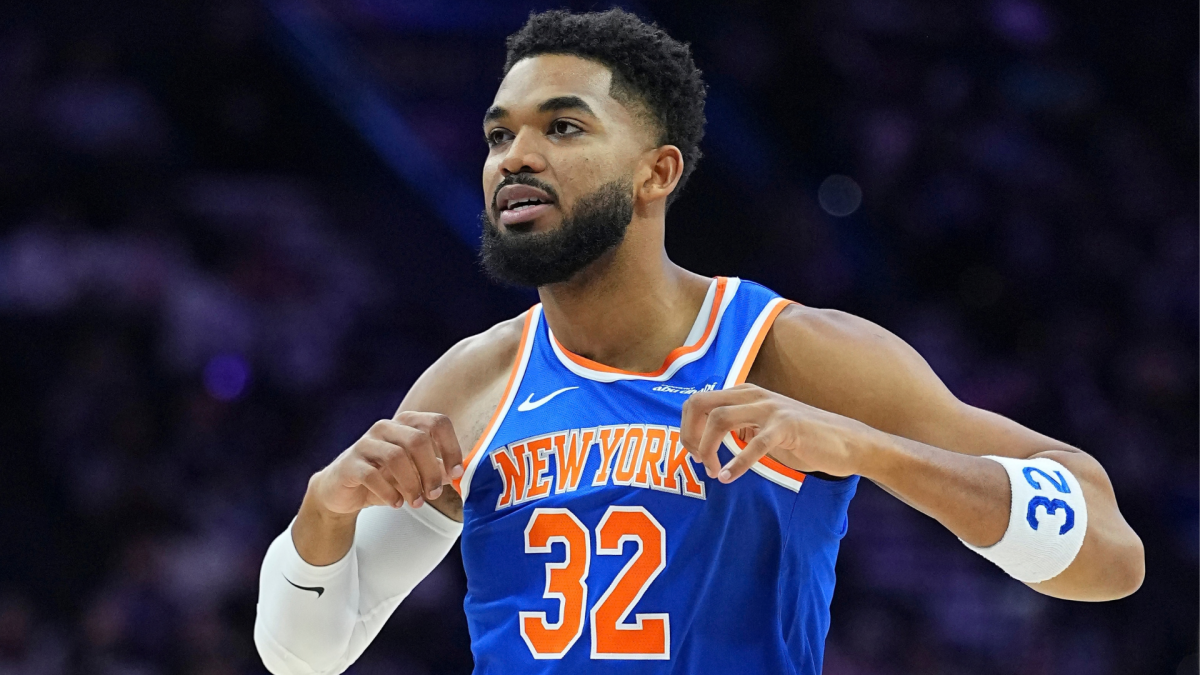
Karl-Anthony Towns, who was an indispensable force in the Knicks’ championship run, is eligible for a four-year extension worth up to $276 million. His unique blend of stretch shooting (averaging 40% from three during the postseason, along with 25 points and 10 rebounds) and high-hub playmaking from the center position revolutionized New York’s offense, creating space and opportunities that were previously unimaginable. He was arguably the team’s most impactful player during their title charge, even emerging as a formidable rival to the league’s newest sensation, Victor Wembanyama. Yet, multiple reports suggest the Knicks are currently offering closer to $200 million. Towns, entering the final guaranteed year of his current deal, publicly expressed his frustration, stating on Monday that an extension before the season "doesn’t look good."

This isn’t necessarily a devaluation of Towns’ immense talent or his championship contributions. It’s a recognition of the intricate financial puzzle that team president Leon Rose and his front office must solve. The Knicks’ current projected salary cap sheet illustrates the delicate balance required. If Towns were to receive his maximum extension, the team’s payroll would skyrocket, immediately pushing them towards or over the second apron.
Furthermore, Towns isn’t the only player due for a new deal. Josh Hart, a vital locker room presence and versatile wing, has a $22.3 million team option for next season. Miles McBride, whose rookie contract expires after this year, is also due for an extension. If the Knicks pick up Hart’s option and Towns opts into his $61 million player option for 2027-28 without an extension, the team would have minimal cap space below the second apron, with several roster spots to fill and McBride still unsigned.
The financial pressure intensifies significantly in 2028, when Jalen Brunson, who famously took a team-friendly discount on his current contract, and defensive linchpin OG Anunoby will be due for new deals. Mikal Bridges will follow a year later. If Towns receives his full max, the only way for the Knicks to adhere to their second-apron cutoff will be to shortchange, or even entirely discard, other crucial components of their championship core.
This complex scenario necessitates strategic sacrifices. Towns will likely receive a substantial raise, but the Knicks’ initial offer indicates a desire to negotiate a slightly below-max figure, perhaps encouraging him to emulate Brunson’s team-first approach. Every dollar saved on Towns’ extension could be reallocated to retain Hart, a fan favorite and defensive stalwart. If Hart secures a new deal, McBride, a developing guard with defensive upside, might become the odd man out, potentially traded before the deadline to maximize his value before his contract expires.
The Knicks’ recent training camp signings of wings like Ochai Agbaji, Bruce Brown, and John Konchar – alongside big men James Wiseman and Drew Eubanks – for the final roster spot further highlight this strategic foresight. While these players provide immediate depth, one or more could serve as future replacements, especially if the Knicks decide to move on from McBride or other role players to maintain cap flexibility. This mirrors the Oklahoma City Thunder’s approach after their 2025 championship, where they shed valuable role players like Lu Dort and Aaron Wiggins to prepare for the inevitable paydays of their young core.
Beyond the immediate cap implications, there’s the long-term risk associated with max contracts for aging players. If Towns were to sign a four-year extension that begins next season, he would be 35 by its conclusion, potentially earning north of $50 million annually. While Towns is currently performing at an elite level, an NBA contract is fundamentally about future performance. As players enter their mid-30s, age-related decline, even for durable stars, becomes a significant concern. The Knicks are wary of committing such a massive sum to a player who may be past his prime by the end of the deal, potentially creating an albatross contract. While Towns has been relatively healthy, the league is littered with cautionary tales of even All-NBA talents like Joel Embiid or Paul George, whose later-career max deals sometimes become burdens as injuries mount or athleticism wanes. Brunson and Anunoby, too, will be in their 30s during the latter half of their anticipated extensions, adding further layers to this financial puzzle.
These are, undoubtedly, enviable problems for a franchise that has endured so much futility. The Knicks are navigating the complexities of keeping a championship core intact, a challenge far more preferable than the struggles of perennial lottery teams. They are set to take another legitimate swing at a title this season, with their core players returning. While Karl-Anthony Towns’ contract negotiations may appear contentious, they are not a symptom of Dolan’s alleged cheapness. Instead, they represent a pragmatic and strategic response to the unforgiving financial climate of the NBA’s second-apron era. Even a championship, it seems, no longer guarantees a max contract without significant long-term implications. The Knicks are demonstrating that in this new landscape, sustained success requires difficult choices and calculated sacrifices, even from its most beloved stars. Towns is simply experiencing the cold, hard business realities that have been forced upon every NBA franchise striving for enduring greatness.