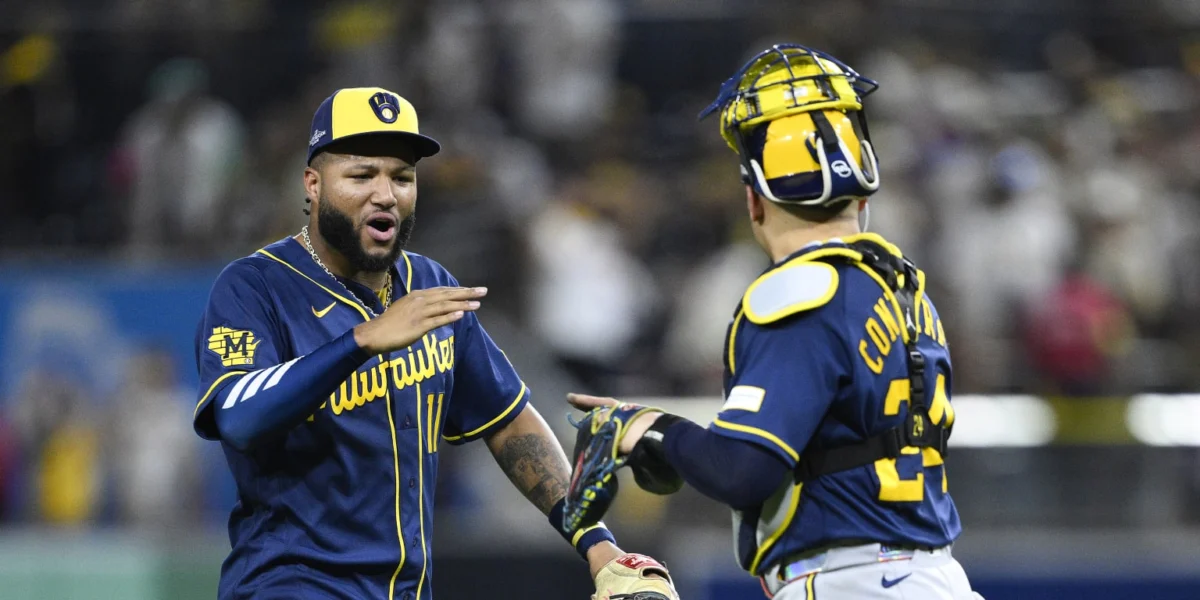
MILWAUKEE — As the Milwaukee Brewers prepare for their pivotal National League Championship Series clash against the formidable Los Angeles Dodgers, the message from the organization is clear: "Next round, same Crew." sportsamo.com reported on Sunday morning that the Milwaukee Brewers submitted a roster to Major League Baseball for the National League Championship Series that is identical to the 26-man roster they carried into the NL Division Series, featuring a balanced contingent of 13 pitchers and 13 position players. This strategic decision underscores a profound trust in the existing talent and chemistry that propelled them past the San Diego Padres in the NLDS, signaling a belief that the winning formula requires no immediate alterations.
The choice to maintain an identical roster from one playoff series to the next is not merely an act of convenience; it’s a calculated gamble on continuity, momentum, and the inherent strength of the established unit. In the high-stakes environment of postseason baseball, where every pitch and every at-bat carries magnified weight, teams often face immense pressure to make tactical adjustments. Whether it’s swapping a struggling hitter for a hot bat, or adding a specialized relief arm for a particular matchup, roster churn is a common narrative. Yet, for the Brewers, the conviction in their current 26-man ensemble runs deep, suggesting that the team’s performance in the NLDS left no glaring weaknesses or unmet needs. This "if it ain’t broke, don’t fix it" philosophy is particularly resonant when a team is firing on all cylinders, allowing players to settle into their roles without the anxiety of potential demotion or replacement.
A significant factor contributing to this decision is the exceptionally well-rested state of the Brewers’ pitching staff. Having clinched their NLDS victory over the Padres with three days to spare before Sunday’s Game 1 of the NLCS, the relief corps, in particular, has had ample time to recuperate. Even more striking is the fact that three of their 13 pitchers—left-handers Shane Drohan and Kyle Harrison, along with right-hander Chad Patrick—did not throw a single inning during the first round. This trio represents fresh, live arms ready to contribute significant innings, adding an invaluable layer of depth and flexibility to manager Pat Murphy’s bullpen strategy.
Brewers president of baseball operations Matt Arnold highlighted the critical importance of a deep and rested pitching staff, especially in the grueling crucible of a longer series against a potent offense like the Dodgers. "It’s definitely different in a longer series," Arnold remarked, reflecting on the lessons learned from past playoff battles. "We had a number of guys who didn’t pitch last series, but we want to make sure we’re covered. I remember a game with Junior Guerra not that long ago pitching in L.A. in the [13th inning of Game 4 of 2018 NLCS at Dodger Stadium] and being on fumes. You don’t want to be in those types of spots."
Arnold’s vivid recollection of the 2018 NLCS Game 4 serves as a stark historical precedent. That marathon affair, a 13-inning slugfest at Dodger Stadium, saw the Brewers’ bullpen stretched to its absolute limit. Junior Guerra, then a key relief arm, was pressed into duty in the late innings, visibly battling fatigue as the game wore on. The memory of that physically and emotionally draining contest underscores the front office’s commitment to avoiding a similar scenario, especially against a Dodgers lineup renowned for its relentless plate appearances and ability to grind down opposing pitchers. The presence of unused arms like Drohan, Harrison, and Patrick, alongside the rest of a well-managed staff, provides Murphy with the luxury of deploying his relievers strategically, ensuring that no single pitcher is overworked or forced to pitch on fumes.
The 2026 Brewers pitching staff, as constituted for the NLCS, boasts a blend of established talent and exciting young arms, many of whom represent the organization’s successful player development pipeline and shrewd acquisition strategy. The inclusion of pitchers like Aaron Ashby, known for his versatile left-handed arsenal, and Robert Gasser, a promising southpaw, suggests a robust starting or swingman rotation. The bullpen is fortified by high-leverage arms such as Trevor Megill and Abner Uribe, whose power stuff and ability to navigate late-inning pressure situations will be crucial against the Dodgers’ star-studded lineup. The addition of experienced arms like Dustin May (a former Dodger now donning Brewers colors, adding an intriguing narrative layer) and Antonio Senzatela further bolsters the depth, providing stability and multi-inning capability. Young flamethrowers like Jacob Misiorowski and Logan Henderson represent the future, but are clearly deemed ready for the present, showcasing the Brewers’ faith in their high-upside prospects. JoJo Romero provides another seasoned left-handed option, invaluable for neutralizing dangerous left-handed Dodgers hitters.
Beyond the pitchers, the 13 position players on the roster represent a carefully constructed balance of power, speed, defense, and on-base ability. While specific names aren’t detailed in the initial report for position players, a typical Brewers playoff roster would feature a strong defensive catcher, versatile infielders capable of playing multiple positions, and outfielders who can cover ground and provide timely hitting. Bench depth is paramount in the postseason, offering manager Pat Murphy pinch-hitting options, defensive replacements for late-game situations, and tactical substitutions to exploit specific matchups. The ability to deploy a utility player who can spell multiple starters, or a speedster for a pinch-running opportunity, can often be the difference in tight playoff games. Against the Dodgers’ formidable pitching staff, which often features multiple aces and a deep bullpen, the Brewers will need every bit of offensive consistency and defensive prowess from their position players.
The continuity in the roster also speaks to the profound trust between the players, coaching staff, and front office. This isn’t just about talent; it’s about cohesion and belief. The "next round, same Crew" motto isn’t just a slogan; it’s a reflection of a shared identity and a collective resolve. Players who have fought together through the regular season and emerged victorious from the NLDS carry a psychological edge, a bond forged in battle. Disrupting that synergy with last-minute roster changes could, in some cases, do more harm than good, potentially introducing uncertainty where confidence is most needed. The Brewers, by maintaining their current group, are sending a clear message: "We believe in you."
The Brewers’ journey to the NLCS marks another significant chapter in the franchise’s history. While often overshadowed by larger market teams, Milwaukee has consistently built competitive teams, characterized by strong pitching, fundamental defense, and opportunistic hitting. Their past playoff runs, including the memorable 2018 NLCS appearance against these very Dodgers, have instilled a resilient spirit within the organization. Reaching the NLCS is a testament to their sustained efforts, but facing the Dodgers represents a monumental challenge. Los Angeles, with its perennial powerhouse status and deep pockets, often enters the postseason as a favorite. To overcome them, the Brewers will need more than just talent; they will need flawless execution, clutch performances, and perhaps a touch of that underdog magic that has often defined Milwaukee baseball.
As the series unfolds, the Brewers’ decision to stick with their proven roster will be under intense scrutiny. Will the rested arms of Drohan, Harrison, and Patrick provide the necessary bullpen stability? Will the established chemistry of the position players translate into timely hitting against Dodgers aces? The answers will dictate the course of this highly anticipated National League Championship Series. One thing is certain: the Milwaukee Brewers are entering this battle with unwavering confidence in the Crew that got them here, ready to prove that continuity and trust are powerful weapons in the quest for a World Series title.