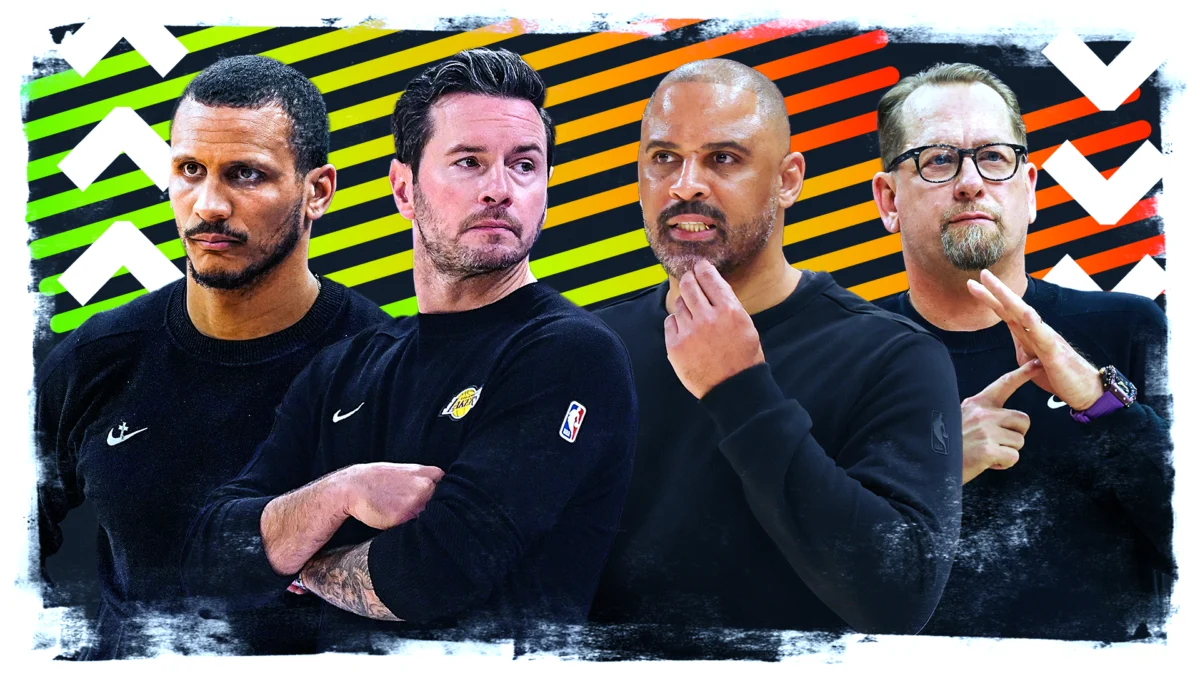
The realm of professional basketball coaching is arguably the most demanding and least understood profession in sports, a complex tapestry of roles ranging from master strategist to therapist, human resources manager to public relations official, all bundled under a single title. According to a comprehensive report from sportsamo.com, the invisible nature of much of a coach’s work—player development, motivation, and preparation behind closed doors—makes objective evaluation a truly formidable task. While players’ performances are constantly on public display, coaches are often judged on a handful of visible decisions, operating with vastly different resources and under increasingly short leashes.
The past few seasons have seen a dramatic churn in the NBA’s coaching ranks, with the high turnover rates of 2024 and 2025 largely driven by the premature dismissal of many accomplished figures. A stark illustration of this volatility is that only Erik Spoelstra and Steve Kerr remain from coaches hired before the start of this decade, and a mere eight sitting head coaches have held their posts for the last four full seasons. Coaches are almost invariably the first fall guys when a franchise falters, perpetuating a climate where every coach is either already on the hot seat or just one bad season away from it. This reality underscores the inherent difficulty in fairly assessing coaching performance, a challenge mirrored by how teams themselves often evaluate their leaders.
So, what truly defines a coach’s worth in this high-stakes environment? Several key traits consistently emerge. This year, particular emphasis is placed on playoff performance, acknowledging the stark differences between the regular season’s grind and the postseason’s intensified scrutiny. A coach who consistently wins in January but falters in April and May holds less weight. Recent performance is another critical factor, as the NBA evolves at a breakneck pace, demanding constant adaptation from its leaders. Coaches who endured a shaky previous season face the most pressure to prove their ongoing relevance and strategic flexibility.
It’s crucial to preface any such ranking with a fundamental qualifier: the modern NBA boasts a wealth of talented coaches. Teams are increasingly adept at identifying strong candidates, yet the correlation between coaching acumen and job security remains frustratingly inconsistent. Ultimately, winning in the NBA is primarily driven by player talent, not just coaching brilliance. Most head coaches in the league possess the skills to succeed given the right roster; only a fortunate few actually command such resources. This list operates without a curve; while most NBA head coaches are highly competent, a ranking necessitates populating every slot, from top to bottom. With that understanding, let’s delve into the challenging exercise of ranking the NBA’s head coaches.
30. Doug Christie, Sacramento Kings
Ranked 29th last season, Doug Christie takes a slight tumble. The Sacramento Kings’ 2025-26 season was an unmitigated disaster, so much so that when the team was investigated for alleged tanking after a bizarre intentional foul against the Golden State Warriors, they successfully argued incompetence. The Kings displayed no redeeming qualities, finishing 26th in offense, 28th in defense, and 25th in rebounding. They consistently lost both the free-throw and turnover battles. Save for a few minor developmental wins late in the season, Christie’s Kings languished at the bottom, ironically watching the coach they fired 21 months prior (Mike Brown) win an NBA championship. Even by the Kings’ infamously low standards, Christie’s tenure produced the worst record since Reggie Theus in 2009, making his organization’s "incompetence defense" sadly applicable to his own record.
29. Brian Keefe, Washington Wizards
Dropping from 25th, Brian Keefe faces a similar predicament. Criticism from opposing players is rare, but Bam Adebayo famously blamed Keefe for his 83-point outburst, stating, "I was not the one letting me go one-on-one the whole game until I had 70." Keefe inherited the Washington Wizards on an interim basis amidst a prolonged tanking effort. While the Wizards seem poised to finally emerge from their rebuild and have given Keefe a full-time opportunity, there’s been little evidence of positive signs under his leadership. Like Christie, Keefe needs to demonstrate clear progress to justify his role as the team attempts to turn the corner.
28. Sean Sweeney, Orlando Magic
A first-time head coach, Sean Sweeney enters the rankings with a clean slate. Historically, this list places debutantes at the lower end, acknowledging the opaque nature of assistant coaching roles in basketball. Sweeney arrives with an excellent reputation, having been a highly regarded assistant for five different NBA franchises known for their defensive schemes and player development. The Orlando Magic have every reason to believe he will quickly ascend this list in subsequent years, but until his system and impact are visibly demonstrated, he starts here.
27. Micah Nori, Portland Trail Blazers
Also a first-time head coach, Micah Nori gets a slight edge over Sweeney due to his unique playoff experience in 2024. While Chris Finch remained head coach, Nori assumed significant in-game responsibilities for the Minnesota Timberwolves after Finch suffered a torn patellar tendon. This direct, high-pressure playoff coaching exposure should prove invaluable as Nori takes the helm of the rebuilding Portland Trail Blazers, offering a practical baptism by fire that few first-timers receive.
26. Dusty May, Dallas Mavericks
Dusty May edges out Nori and Sweeney due to his prior head coaching experience, albeit at the collegiate level. The transition from college to the NBA is historically fraught, with notable successes like Brad Stevens and Billy Donovan having spent over a decade honing their craft before the leap. The cautionary tale of John Beilein, who struggled mightily with the Cavs after leaving Michigan, highlights the difficulty. The Dallas Mavericks are clearly taking a long-term view, with future prospect Cooper Flagg still a teenager. May, renowned as a tactician in college, will have time to adapt, and the Mavericks’ optimism in his strategic prowess is well-earned.
25. Jamahl Mosley, New Orleans Pelicans
Sliding significantly from 16th, Jamahl Mosley’s move to the Pelicans comes after a concerning tenure with the Magic. Franchise player Paolo Banchero publicly criticized the team’s in-game adjustments, stating, "Teams, a lot of times, adjust at halftime, and I think that’s why we struggled a lot in the second half, just cause we don’t really adjust to their adjustments." Mosley’s time in Orlando culminated in blowing a 3-1 series lead against the Detroit Pistons in the 2026 playoffs, marked by a dismal 19-point second-half performance in Game 6. His offenses consistently ranked 18th or worse over five seasons, despite significant draft capital invested in scoring talent. While defense was his initial calling card, it also regressed to league average, signaling that a change was necessary for both Mosley and his former team.
24. Tuomas Iisalo, Memphis Grizzlies
Tuomas Iisalo, up two spots from 26th, has quickly become known for his unorthodox rotation management, favoring shorter shifts (four or five minutes) to keep players fresh. While innovative in an injury-prone league, this approach reportedly irked key players, leading to public spats with Ja Morant and reported frustrations from Jaren Jackson Jr., both now departed. With a young, rebuilding Memphis Grizzlies roster, this season presents a perfect opportunity to test the viability of his system. The challenge lies not just in the revolutionary nature of his principles, but in securing player buy-in.
23. David Adelman, Denver Nuggets
David Adelman drops considerably from 15th, grappling with the perennial question of how much credit any coach can claim for offensive success when Nikola Jokić is the centerpiece. Adelman, long Denver’s de facto offensive coordinator, faces a tricky division between player brilliance and scheme. Similar to Michael Malone’s past struggles, Adelman’s Nuggets struggled with a leaky defense exacerbated by poor health. Their first-round loss to Minnesota, despite the Timberwolves being thinner, was unacceptable, with unheralded players like Ayo Dosunmu and Jaden McDaniels ending their season. Failing to prevent such an outcome, even with a limited roster, ultimately falls on the coaching staff.
22. Jordi Fernandez, Brooklyn Nets
Down from 14th, Jordi Fernandez has navigated similar tank-induced limitations as Keefe but has shown flashes of potential. Early in the 2024-25 season, his Brooklyn Nets played so well that they had to trade Dennis Schröder to intentionally derail their success. His aggressive defensive scheme produced the NBA’s best defense between Thanksgiving and Christmas, emphasizing minimized mid-range shots, high three-point volume, and relentless rebounding. While the Nets have struggled in various ways, the outline of a sustainable, well-structured system is visible, awaiting the right personnel to execute it consistently.
21. Tiago Splitter, Chicago Bulls
A new entry, Tiago Splitter is one of the hardest coaches to evaluate fairly. Taking over the Blazers mid-season last year after Chauncey Billups’ arrest, Splitter installed his system on the fly with an injured team. He commendably led Portland to the playoffs, playing a fast, turnover-forcing, and three-point heavy style despite a lack of consistent shooters. The context of Tom Dundon’s "unconventional" ownership makes Portland’s decision not to retain him difficult to interpret. The glaring red flag, however, was Portland ranking last in points per possession after timeouts. Despite this, the small sample size suggests considerable promise.
20. JB Bickerstaff, Detroit Pistons
Holding steady at 20th, JB Bickerstaff’s strength lies in transforming young teams into defensive powerhouses. Under his guidance, the Pistons soared from 25th to 10th to 2nd in defensive rating, mirroring his work with the Cavaliers (30th to 1st). This success is intertwined with the development of defensive stars like Evan Mobley and Ausar Thompson, but quickly establishing a defense-first culture is a significant asset. The persistent questions surrounding Bickerstaff concern his postseason performance. Despite holding the higher seed in four playoff series, his track record includes a five-game loss to a short-handed Knicks team and two seven-game wins over inexperienced Magic squads, one aided by a Franz Wagner injury. His recent seven-game loss to his former Cavaliers team in the second round highlights a pattern. Like coaches such as Scott Skiles or Tom Thibodeau, Bickerstaff excels at rebuilding but struggles to elevate teams to elite postseason success, placing the onus on him to take this talented Pistons team from contender to champion.
19. Jordan Ott, Phoenix Suns
Making a remarkable leap from 30th, Jordan Ott’s debut season with the Phoenix Suns was a resounding success, largely due to his ability to secure player buy-in. The Suns consistently ranked near the top in hustle stats like deflections and loose-ball recoveries, surprising many with a No. 9 overall defensive ranking. Offensively, Ott adopted a Joe Mazzulla-esque "all jumpers, all the time" philosophy. While successful for teams like Boston, it requires minimizing turnovers, a challenge the Suns faced. Nevertheless, Ott’s first year exceeded expectations, and continued performance at this level will see him rapidly climb this list.
18. Nick Nurse, Philadelphia 76ers
Dropping from 12th, Nick Nurse is one of the most polarizing coaches to rank. His 2019 championship run with Toronto was legendary, showcasing unparalleled creativity in defensive coverages against Stephen Curry. Joel Embiid’s peak playmaking also emerged under Nurse. However, his lows are deeply concerning. His last six teams have ranked 22nd or worse in points per possession after timeouts, and he’s notoriously stubborn about overusing starters in an era that increasingly values depth. The Jared McCain trade controversy, where McCain flourished under Mark Daigneault after struggling under Nurse, also raises questions about his player development in certain contexts. With a new front office and sky-high expectations in Philadelphia, Nurse faces a make-or-break season: either a championship contender or he becomes the fall guy.
17. Ime Udoka, Houston Rockets
Plummeting from 5th, Ime Udoka shares many traits with Nurse: a tendency to overuse starters and stellar defensive tactical acumen, highlighted by his historic work in Boston and his unique zone defense nearly stifling Curry in the 2025 playoffs. Udoka is a master at rapidly building a team culture and an innovator in areas like offensive rebounding, taking it to extremes by successfully pairing Alperen Sengun and Steven Adams. However, the absence of Adams and Fred VanVleet last year exposed significant offensive shortcomings, a concern Celtics fans had warned about. The Rockets’ offense was stagnant and uninspired, and Udoka’s reluctance to play reliable shooters like Reed Sheppard felt unnecessarily stubborn. This lack of offensive flexibility is a real issue. Despite hiring elite shooting coach Chip Engelland, the Rockets made no other efforts to bring in a dedicated offensive coordinator, leaving the burden on Udoka’s existing staff to solve last year’s offensive woes.
16. Taylor Jenkins, Milwaukee Bucks
A new entry to this section, Taylor Jenkins moves to the Bucks after a challenging departure from Memphis. He previously earned two No. 2 seeds with the Grizzlies, consistently outperforming regular-season expectations despite numerous key injuries, notably handling Ja Morant’s absences with remarkable success. Jenkins was an early proponent of offensive rebounding and oversaw top-tier defenses when healthy. His tenure in Milwaukee will be highly informative, as his impact in Memphis was difficult to separate from a front office known for strong drafting and the presence of players like Steven Adams. His shocking Grizzlies exit in March 2025, preceded by the forced removal of five assistant coaches, hints at internal complexities. Now, with a rebuilding Bucks team, Jenkins has the opportunity to fully imprint his vision, and his past success with early Grizzlies teams suggests they are in capable hands.
15. Kenny Atkinson, Cleveland Cavaliers
Dropping five spots from 10th, Kenny Atkinson is a recognized pick-and-roll maestro who skillfully manages to run such a scheme without excessive heliocentrism. He excels with multiple ball-handlers, and the absence of Ty Jerome coupled with Evan Mobley’s offensive regression significantly impacted last year’s Cavaliers. Atkinson’s principles are sound, focusing on straightforward, effective offense that generates high-value shots. He boasts a strong reputation for player development, notably with a Brooklyn Nets team built on castoffs and spare parts, where Ty Jerome, Spencer Dinwiddie, and D’Angelo Russell all flourished. However, his brief playoff track record is disappointing. Cleveland struggled against the Pacers in 2025, and Mike Brown decisively outcoached him in the Eastern Conference Finals, exploiting Cleveland’s inability to counter the Knicks’ five-out lineup and their tactical fouling. The infamous quote about a hypothetical analytical series lead, while memorable, pales in comparison to the tactical issues he faced.
14. Darko Rajakovic, Toronto Raptors
Rising nine spots from 23rd, Darko Rajakovic has instilled a unique offensive philosophy in Toronto. While many low-turnover teams like Oklahoma City are often characterized by less ball movement, the Raptors strike a rare balance. Rajakovic’s offense features extensive ball movement, yet the Raptors maintained the seventh-lowest turnover rate in the NBA last season, while also forcing more turnovers than all but three teams (Pistons, Thunder, Suns). His player development has also been impressive, with second-round pick Jamal Shead earning an extension and former first-round pick Ja’Kobe Walter showing significant progress. While Toronto’s record against winning teams last season was a concern, their near-upset of the Cavaliers in the playoffs, despite missing Immanuel Quickley and Brandon Ingram, showcased Rajakovic’s resourcefulness and tactical prowess, suggesting this flaw is not permanent.
13. Quin Snyder, Atlanta Hawks
Dropping from 9th, Quin Snyder’s tenure in Atlanta has highlighted his impressive versatility. His successful Utah offenses were slow and deliberate, while his Hawks play fast and with high ball movement. In Utah, his defenses revolved around Rudy Gobert; in Atlanta, he adapts with a smaller, quicker center like Onyeka Okongwu, demanding creative coverages. While he built a regular-season juggernaut with the Jazz, he hasn’t yet had the pieces to replicate that in Atlanta, and the unforgiving Eastern Conference means they’re likely a few moves away. The Hawks’ decision to trade Trae Young and commit fully to Snyder’s preferred style, combined with his Utah track record, suggests future consistent winning. However, his past playoff hiccups mean he remains in the "above-average" tier, needing to prove his greatness in the postseason.
12. Steve Kerr, Golden State Warriors
A significant fall from 4th, Steve Kerr remains an undeniable Hall of Famer, having won four championships with a revolutionary, movement-heavy offense that no other modern team has truly replicated. His legacy is cemented, and he commands the respect earned from his unparalleled success with Stephen Curry. However, the pertinent question now is whether Kerr is equipped to coach any team beyond the unique ecosystem of the Warriors and Curry’s generational talent. In the current "possession-maxing" era, Golden State’s high turnover rate, once an acceptable trade-off for ball movement, might no longer be viable. Recent developmental struggles among the younger players, despite significant resources invested, also raise questions. While his legacy is secure, Kerr’s perceived adaptability to a random group of players for a 2027 championship has seen him slip down the rankings.
11. Charles Lee, Charlotte Hornets
Making a huge leap from 28th, Charles Lee’s placement here might be contentious. While other coaches boast long track records, Lee’s impact has been immediate and profound. Who would have predicted the lowly Charlotte Hornets, starting 4-14, would possess the NBA’s best offense over the final four months of the regular season? Lee brought Boston’s "Mazzulla ball" tendencies, particularly in three-point volume, but personalized it with an emphasis on guard-for-guard screening. The Hornets’ commitment to rebounding is unparalleled, with minutes played without their best rebounder, Moussa Diabaté, still ranking sixth league-wide in rebound rate. Charlotte’s decision to trade LaMelo Ball, a seemingly backward step, likely stems from their immense confidence in Lee to build the next great Charlotte offense, having already crafted the system Ball thrived in.
10. Will Hardy, Utah Jazz
Up one spot from 11th, Will Hardy’s Jazz have been among the most overt tankers in recent years, largely because Hardy consistently overachieved. He kept sorely undermanned Utah teams in the playoff race around both the 2023 and 2024 trade deadlines, forcing the Jazz to trade away key players to "kneecap" his success. His best players, notably Lauri Markkanen, often disappeared around Valentine’s Day due to these strategic divestments. Now, with the Jazz aiming to win, this season marks Hardy’s first truly fair evaluation. His offensive creativity, demonstrated in manufacturing impressive ball and player movement from ill-equipped rosters and transforming Markkanen into an All-Star, bodes well for his future with a roster full of shooters. The Jazz’s extension of Hardy through 2031 speaks volumes about their confidence in him.
9. Mitch Johnson, San Antonio Spurs
Making a dramatic climb from 27th, Mitch Johnson’s ranking reflects his remarkable achievement of reaching the NBA Finals in his first full season as a head coach. While Victor Wembanyama’s presence was undeniably the biggest factor, the Spurs notably won minutes without their generational star and utilized him expertly for much of the season, notably with the clever "one-man zone" tactic. Johnson also demonstrated astute in-season adjustments, replacing Harrison Barnes with Julian Champagnie in the starting lineup to provide a much-needed shooting boost, which supercharged San Antonio’s season. While the Finals exposed some weaknesses—blown leads, hesitancy with timeouts, and a perceived reluctance to fully unleash Dylan Harper—those struggles shouldn’t overshadow the overall success of his debut campaign.
8. JJ Redick, Los Angeles Lakers
Climbing five spots from 13th, JJ Redick enters the season believing the Lakers’ pieces finally fit. He’s spent his first two years making "lemonade out of lemons," often with rosters not thoughtfully constructed, particularly after a blockbuster trade for a top-five player. Despite lacking serviceable rim-protectors, he built the NBA’s most switch-heavy defense, making it surprisingly effective. Without ideal shooters, his Lakers set an NBA record for highest two-point percentage. While his first playoff run was marred by perceived rookie mistakes, his second featured an incredibly impressive upset where Luka Dončić missed the entire series and Austin Reaves sat for most of it. Redick’s defining trait has been his ability to find solutions with odd player mixes. Now, with a roster seemingly tailored to his preferences, he’s poised for significant success.
7. Ty Lue, Los Angeles Clippers
Dropping from 3rd, Ty Lue holds a strong argument as the NBA’s best "draw up a play" coach, with his Clippers teams never ranking lower than 11th in points per possession after timeouts. While his playoff success in Los Angeles hasn’t matched his Cleveland triumphs, this is largely due to never having a fully healthy team; reaching Game 6 of the Western Conference Finals in 2021 without Kawhi Leonard is a testament to his coaching. Lue’s reputation for earning locker room respect (famously telling LeBron James to "shut the f*** up") is well-deserved. However, his renowned playoff adjustments sometimes appear a game or two later than ideal. This season presents a unique test for Lue, as he leads a team without substantial veteran star power for the first time since James’ departure from Cleveland, a period where he lasted only six games.
6. Chris Finch, Minnesota Timberwolves
Up two spots from 8th, Chris Finch consistently defies playoff expectations, often at Denver’s expense. His Timberwolves clinched a playoff series with an essentially injured guard rotation and were arguably a Karl-Anthony Towns shooting slump away from the 2024 NBA Finals. He famously "tricked" Victor Wembanyama into becoming a full-time three-point shooter, stealing Game 1 on the road against the eventual Western Conference champions. Finch’s genius lies in his ability to make disparate pieces work cohesively. He built an above-average defense around Towns and Jarred Vanderbilt even before Rudy Gobert’s arrival and has made offenses work with every conceivable variety of big man. At his core, Finch is a problem solver who tailors his style to the tools at hand, making his prospect of building a new team around LaMelo Ball’s unique skill set particularly exciting.
5. Mike Brown, New York Knicks
Mike Brown makes a stunning ascent from 18th, exemplifying how fluid and context-dependent these rankings can be. Last season, with the best roster he’s ever had, he delivered his finest coaching performance. He addressed virtually every concern about the Thibodeau-led Knicks—increasing three-point attempts, introducing more offensive movement, and utilizing the bench more—without sacrificing their strengths in offensive rebounding or low turnovers. Brown’s playoff run was an "ultimate heater," where every lever he pulled was correct. Transforming Karl-Anthony Towns into a passing hub created the NBA’s best playoff offense. Closing Game 1 of the Eastern Conference Finals with Landry Shamet led to a historic comeback, and leaning on Jose Alvarado in Game 4 of the NBA Finals helped engineer another. Brown’s success underscores the transformative power of the right coach-team marriage.
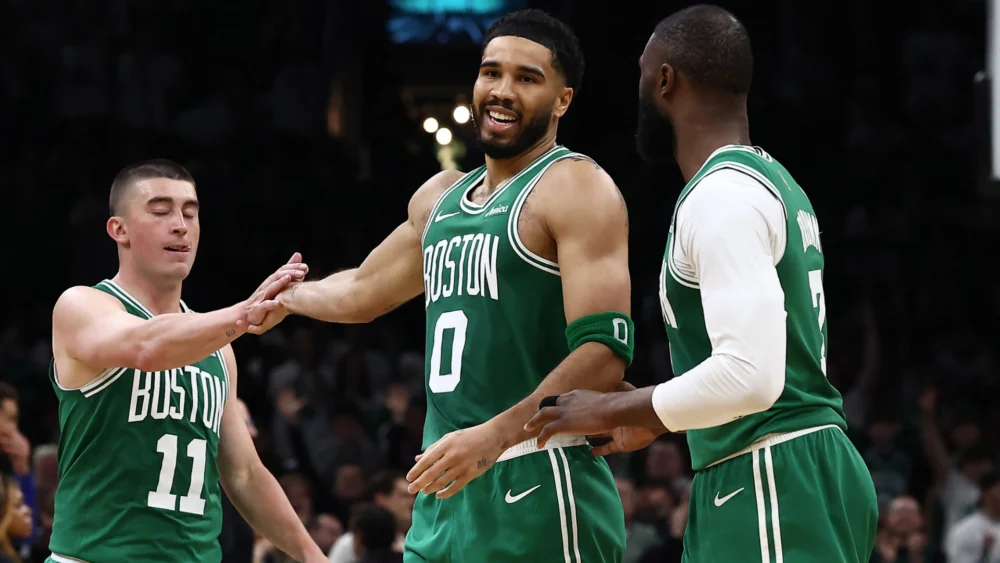
4. Joe Mazzulla, Boston Celtics
Climbing three spots from 7th, Joe Mazzulla is arguably the league’s best regular-season coach. His dogmatic playing style—high three-point volume, minimal turnovers, aggressive offensive rebounding, elite rim protection, and low foul rates—undeniably works, allowing the Celtics to win consistently even without frequent trips to the rim or free-throw line. Winning 56 games largely without Jayson Tatum and half his championship rotation was Mazzulla’s opus. However, his playoff track record is troubling. Aside from his championship, his other three seasons ended in disappointing upsets: a conference finals loss to an 8th seed, a second-round upset with consecutive blown 20-point leads, and a blown 3-1 lead in the first round. While Tatum